
Cosmos
Cosmos Detailed Encyclopedia Introduction
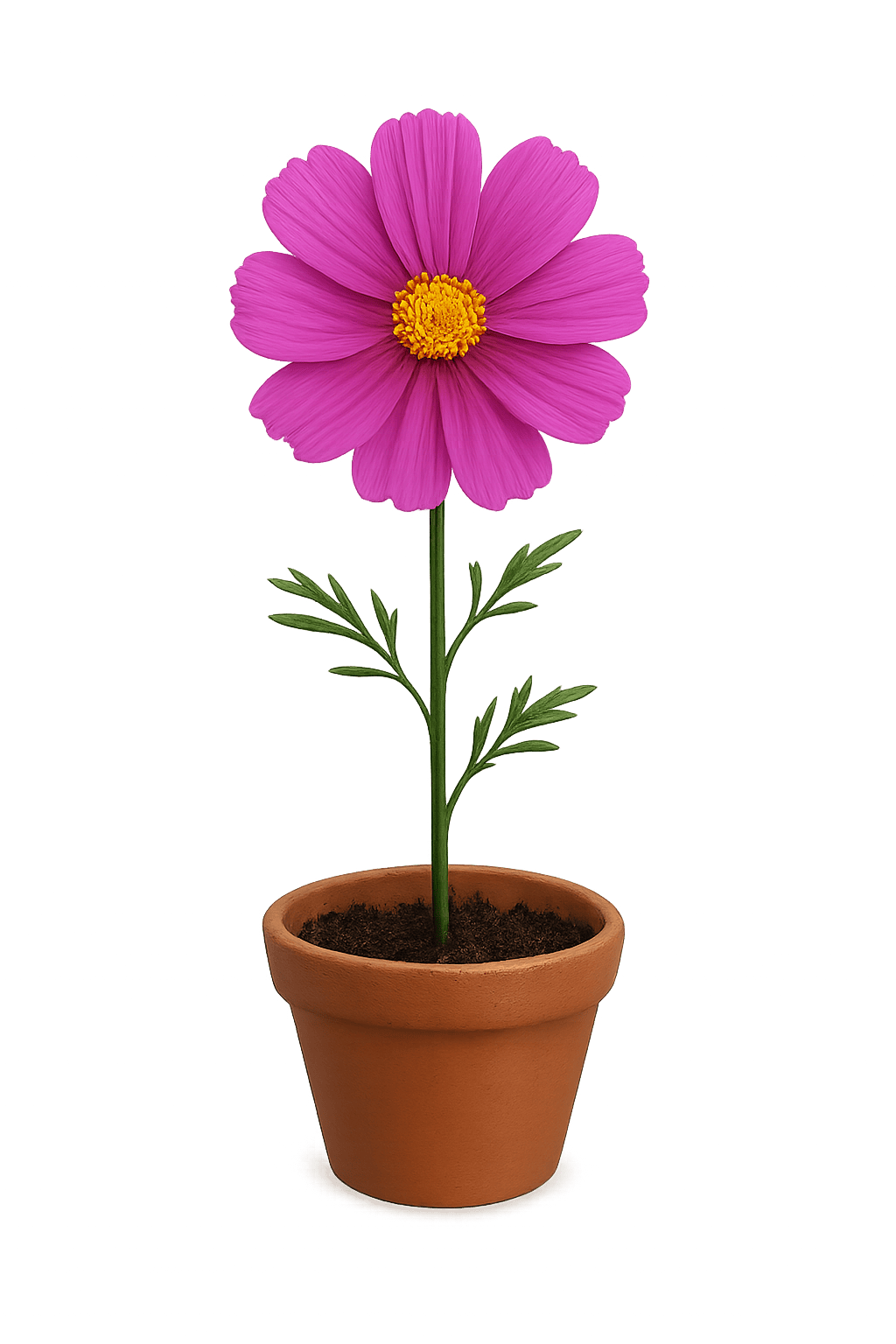
Annual herbaceous plant with elegant flowers in rich colors, highly adaptable and excellent ornamental flower.
Basic Info
Family:Asteraceae
Scientific Name:Cosmos bipinnatus
Origin:Mexico
Flowering Period:Summer to autumn (June-October)
Height:30-120 cm
Lifespan:Annual
Morphology
Leaves:Bipinnately deeply divided, linear or thread-like segments, opposite
Flowers:Capitulum with 8 ray flowers in pink, white, red, purple, with yellow disc flowers in center
Roots:Taproot system with well-developed main root
Stem:Upright, slender, multi-branched, hollow
Growth Habits
Soil Requirements:Not strict soil requirements, prefers loose, fertile, well-drained sandy loam
Watering Needs:Drought tolerant, keep soil slightly moist during growing season
Light Requirements:Sun-loving, needs full sunlight, more than 6 hours daily
Temperature Requirements:Warm-loving, optimal growing temperature 15-25°C
Classification & Varieties
Main Classifications
Ornamental Varieties
Professional Care
✂️ Pruning Management
Pruning Timing:Pinching during growing season and pruning after flowering
Pruning Method:Pinch seedlings to promote branching, promptly remove spent flowers
Pruning Purpose:Control plant height, promote branching, extend flowering period
Required Tools:Garden shears, gloves
🛡️ Pest & Disease Management
Common Pests:
Common Diseases:
Prevention Measures:Avoid dense planting, maintain ventilation, moderate watering
Treatment Methods:Spray biological or chemical pesticides promptly when pests and diseases are found
🌱 Fertilization Management
Fertilizer Type:Compound fertilizer, organic fertilizer
Fertilization Frequency:1-2 times monthly during growing season
Fertilization Timing:During vigorous growth and flower bud differentiation periods
Fertilization Amount:Light and frequent application, 15-20 grams per plant each time
💧 Water Requirements
Watering Frequency:Every 3-5 days in spring/summer, every 5-7 days in autumn
Watering Amount:Water when dry, avoid waterlogging
Watering Method:Water at root zone
Dehydration Signs:Wilted, drooping leaves with dull color
Basic Care Tips
- •Direct sow seeds in spring when soil temperature reaches above 15°C
- •Choose sunny location with well-drained soil
- •Keep soil moderately moist during growing period
- •Remove spent flowers promptly during flowering to extend bloom period
- •Strong drought tolerance, reduce watering frequency after establishment
Ecology Value
Pollinators:Bees, butterflies, moths and other insects
Wildlife:Provides food for various pollinating insects and birds
Environmental Value:Beautifies environment, attracts pollinators, improves ecology
Cultural Symbolism
Symbolic Meaning:Maiden's purity, eternal happiness, harmony and fulfillment
Historical Background:Native to Mexico, introduced to Europe in 17th century, now widely cultivated worldwide
Related Festivals:Commonly used in autumn flower exhibitions and garden beautification
Artistic Expression:Common material for pastoral landscapes and natural flower borders