
Periwinkle
Periwinkle Detailed Encyclopedia Introduction
Apocynaceae perennial herbaceous or semi-shrub plant, flowering year-round with rich colors, having high ornamental and medicinal value.
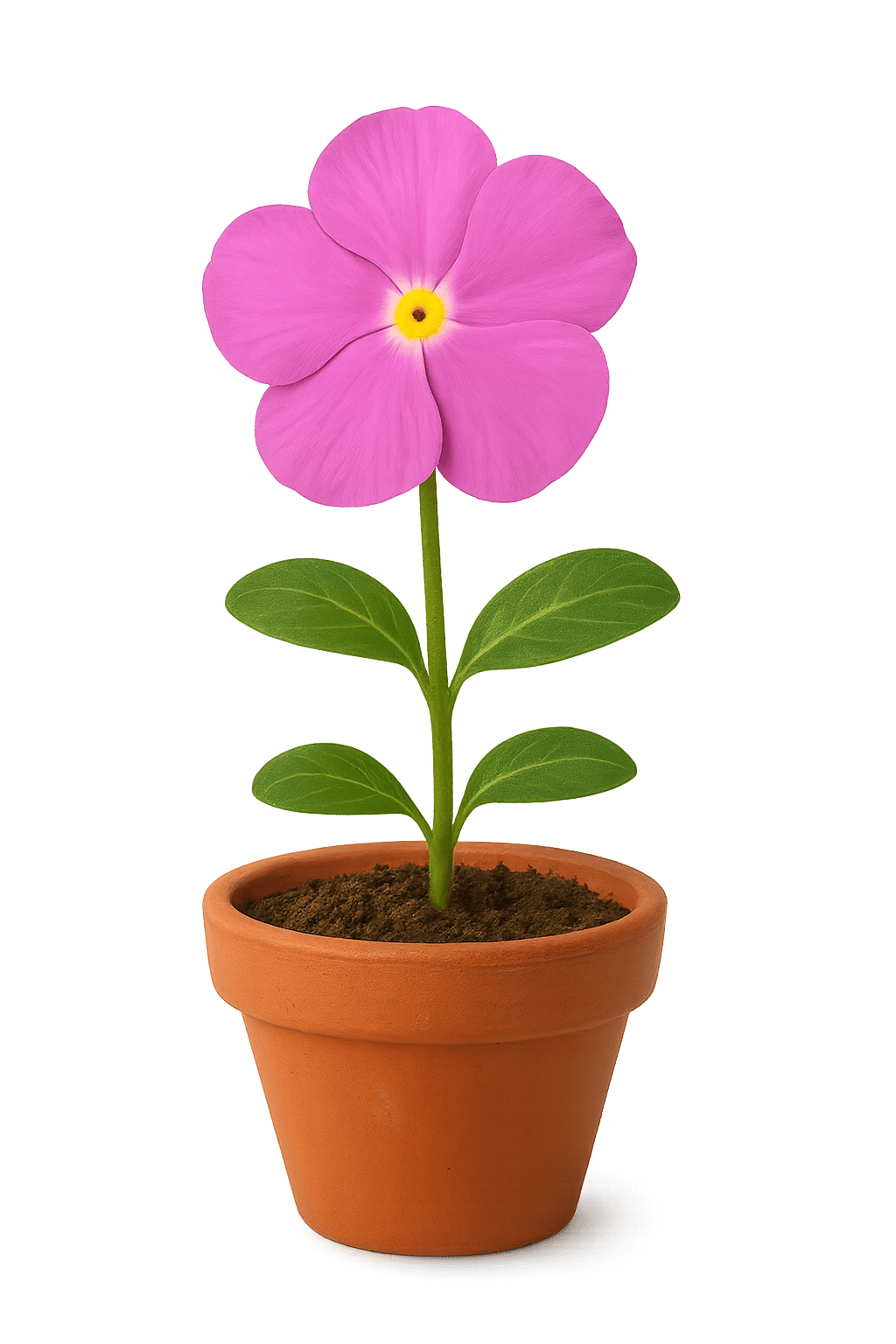
Basic Info
Family:Apocynaceae
Scientific Name:Catharanthus roseus
Origin:Eastern Africa, India, Madagascar
Flowering Period:Year-round flowering, mainly concentrated in spring and summer
Height:30-60 cm
Lifespan:Perennial
Morphology
Leaves:Opposite, oblong to obovate, dark green glossy surface, entire margins
Flowers:Salverform, 5 petals, colors include white, pink, rose, purple-red, often with dark eye spot in center
Roots:Prominent taproot with well-developed lateral roots, relatively shallow root system
Stem:Upright, multi-branched, young stems green, old stems woody
Growth Habits
Soil Requirements:Prefers loose, fertile, well-drained sandy loam or humus soil
Watering Needs:Drought tolerant, keep soil slightly moist during growing season, avoid waterlogging
Light Requirements:Sun-loving, tolerates partial shade, 4-6 hours of light daily is optimal
Temperature Requirements:Warm-loving, optimal growing temperature 20-33°C, not cold hardy
Classification & Varieties
Main Classifications
Ornamental Varieties
Professional Care
✂️ Pruning Management
Pruning Timing:During vigorous spring growth and after flowering
Pruning Method:Pinch growing tips to promote branching; remove spent flowers and leggy stems
Pruning Purpose:Control plant shape, promote branching, extend flowering period, increase bloom quantity
Required Tools:Garden shears, gloves
🛡️ Pest & Disease Management
Common Pests:
Common Diseases:
Prevention Measures:Maintain good ventilation, avoid overwatering, regularly inspect leaves
Treatment Methods:Remove diseased leaves promptly when pests and diseases are found, use biological or chemical pesticides for control
🌱 Fertilization Management
Fertilizer Type:Compound fertilizer, organic fertilizer, phosphorus and potassium fertilizer
Fertilization Frequency:Every 15-20 days during growing season
Fertilization Timing:Spring through autumn vigorous growth period
Fertilization Amount:Light and frequent application, 10-20 grams per plant each time
💧 Water Requirements
Watering Frequency:Every 2-3 days in spring/summer, every 5-7 days in autumn/winter
Watering Amount:Water when dry, water thoroughly, avoid waterlogging
Watering Method:Water at root zone, avoid wetting leaves and flowers
Dehydration Signs:Wilted drooping leaves, dull leaf color, slow growth
Basic Care Tips
- •Highly adaptable, prefers partial shade or filtered light environment
- •Good drought tolerance, but maintain moderate moisture during growing season
- •Not strict soil requirements, but drainage must be good
- •Can divide in spring to expand planting area
- •Strong cold hardiness, can overwinter outdoors in most regions
Ecology Value
Pollinators:Bees, butterflies, moths and other insects
Wildlife:Provides nectar for various pollinating insects
Environmental Value:Beautifies environment, purifies air, has important medicinal value
Cultural Symbolism
Symbolic Meaning:Pleasant memories, eternal youth, steadfastness
Historical Background:Native to tropical regions, introduced to Europe in 18th century, now widely cultivated worldwide
Related Festivals:Commonly used for garden beautification and holiday decoration
Artistic Expression:Common material for garden landscaping and flower bed arrangements