
Goji Berry
Goji Berry Detailed Encyclopedia
Goji berry is a precious tonic Chinese herbal plant, known as the longevity fruit, with effects of nourishing liver and kidney, benefiting essence and improving vision, nourishing blood and calming the mind. Mainly distributed in Ningxia, Qinghai, and Gansu of China, it is one of the most important tonic herbs in traditional Chinese herbal practice.
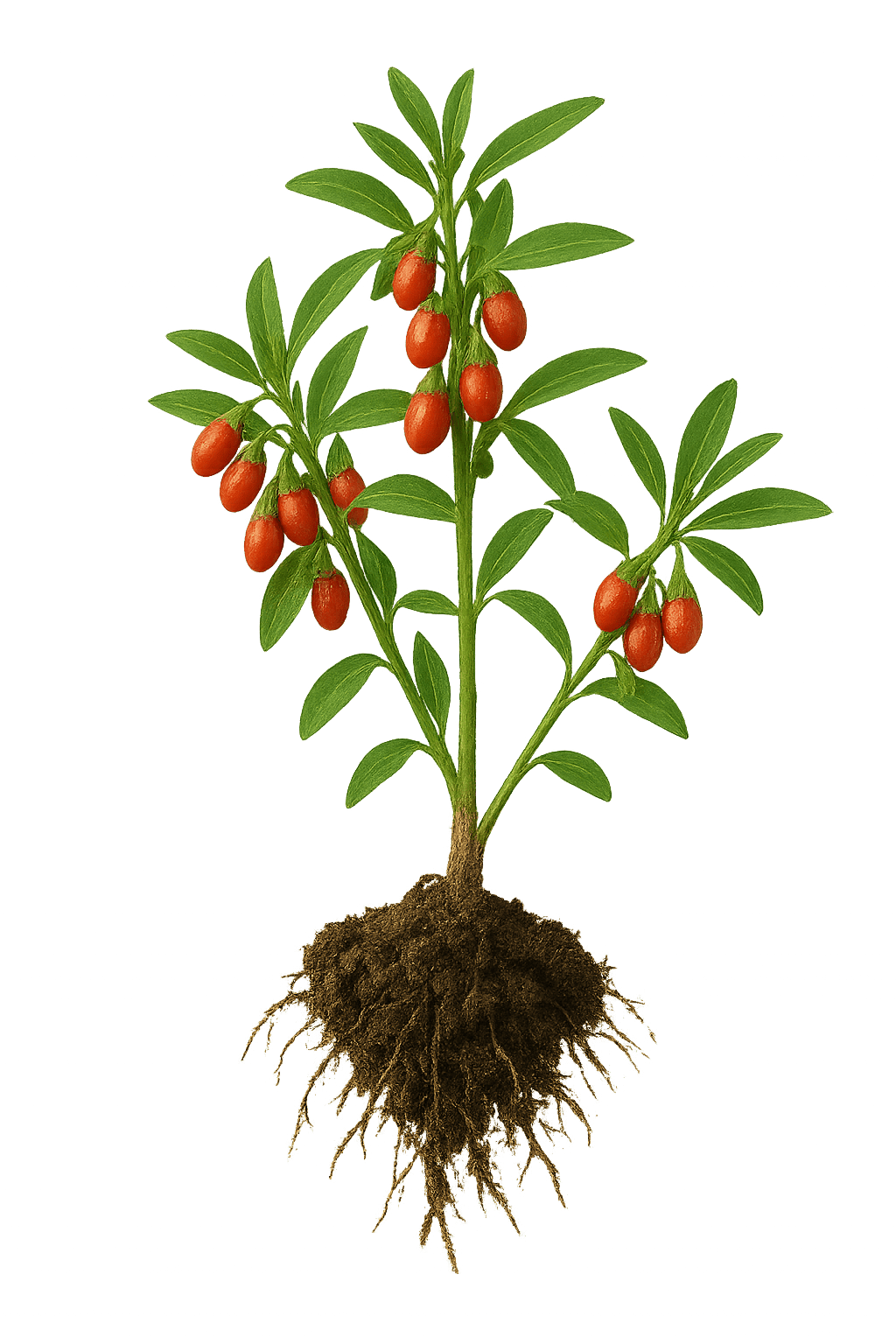
Basic Information
Family:Solanaceae
Scientific Name:Lycium barbarum
Origin:Ningxia, Qinghai, Gansu, Xinjiang of China
Harvest Period:Summer and autumn (June-November)
Growth Years:2-3 years to start fruiting
Plant Height:1-2 meters
Morphological Characteristics
Leaves:Lanceolate or oblong-lanceolate, entire, grayish-green
Flowers:Funnel-shaped, pale purple, blooming May-October
Roots:Well-developed root system with deep taproot and many lateral roots
Stem:Slender branches with short spines or spineless, grayish-white
Growth Environment
Soil Requirements:Adaptable, prefers loose fertile sandy loam, pH 7.0-8.5
Water Requirements:Drought-tolerant, keep soil moist during growth, avoid waterlogging
Light Requirements:Sun-loving, requires full sunlight, 8+ hours daily
Temperature Requirements:15-25°C, cold and heat tolerant, can withstand -25°C
Humidity Requirements:Relative humidity 40-60%, drought-tolerant
Classification & Varieties
Main Varieties
Processing Types
💊 Health Benefits
Nature & Taste:Sweet, neutral
Meridian:Enters Liver, Kidney meridians
Main Efficacies
- •Nourishes liver and kidney, suitable for liver-kidney yin deficiency, soreness of waist and knees, dizziness
- •Benefits essence and improves vision, improves vision decline, dry eyes, night blindness
- •Nourishes blood and calms the mind, treats blood deficiency with sallow complexion, palpitations and insomnia
- •Moistens lung and stops cough, improves deficiency cough and thirst
- •Enhances immunity, delays aging, anti-fatigue
Active Ingredients
📖 Usage Methods
Dosage
- •Decoction: 6-12g
- •Powder: 3-5g
- •Stew: Simmer with meat or soup
- •Tea: 10-20 berries steeped in water
⚠️ Contraindications
- •Use with caution in external excess heat and spleen deficiency with diarrhea
- •Hypertension patients use in moderation
- •Pregnant women can use in moderation
- •Children use in moderation, not excessive
🌱 Cultivation Techniques
Cultivation Points
- •Select sunny location with good drainage
- •Deep tillage, apply sufficient organic fertilizer
- •Spring cutting or sowing, plant spacing 1.5-2m
- •Regular pruning, timely watering and fertilizing
Common Pests & Diseases
Prevention Measures:Strengthen field management, maintain ventilation and light, rational fertilization
Treatment Methods:Spray carbendazim or methylthiophanate at early stage
✂️ Harvest & Processing
Harvest Timing:Summer-autumn June-November, harvest when fruits turn red and mature
Harvest Method:Pick mature fruits in batches, avoid damaging branches
Processing Methods
- •Fresh fruit: Wash and eat directly or juice
- •Dried fruit: Sun-dry or oven-dry until skin wrinkles
- •Red dried goji: Natural sun-drying, maintain bright red color
Storage:Store in cool, dry place, sealed to prevent moisture and insects
🏛️ Cultural Value
History:Goji has been used for over 3000 years, listed as superior grade in Shennong's Classic of Materia Medica
Symbolism:Symbolizes sootheth, longevity, and happiness
Gift Culture:Traditional tonic gift for friends and family
Modern Research:Modern research confirms antioxidant, vision-protecting, and immune-regulating effects
Market Value:Ningxia goji is renowned worldwide, an important economic crop and export commodity