
Cherry Blossom
Cherry Blossom Detailed Encyclopedia Introduction
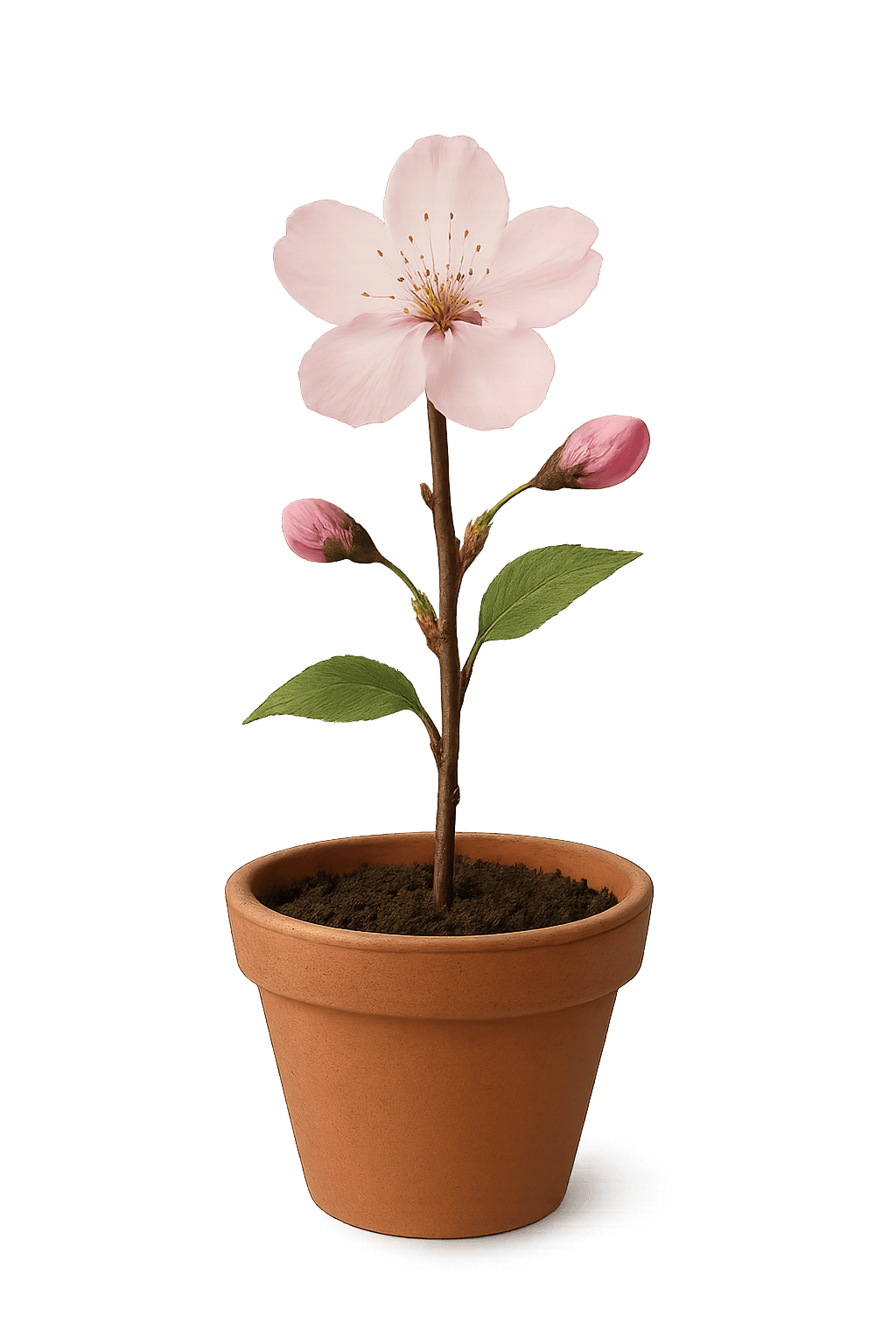
Cherry blossoms are beautiful flowering trees known for their spectacular spring blooms in pink and white, symbolizing renewal and the ephemeral nature of life.
Basic Info
Family:Rosaceae
Scientific Name:Prunus
Origin:East Asia
Flowering Period:Spring
Height:5-15 meters
Lifespan:Perennial
Morphology
Leaves:Oval-shaped leaves with serrated edges, green in summer
Flowers:Delicate pink or white flowers with five petals
Roots:Deep taproot system
Stem:Woody trunk with spreading branches
Growth Habits
Soil Requirements:Well-drained, fertile, organic-rich soil
Watering Needs:Keep soil consistently moist, especially during dry periods
Light Requirements:Full sun to partial shade
Temperature Requirements:5-25°C
Classification & Varieties
Main Classifications
Ornamental Varieties
Professional Care
✂️ Pruning Management
Pruning Timing:Late winter or early spring before buds break
Pruning Method:Remove dead wood, thin crowded areas, shape canopy
Pruning Purpose:Maintain tree health, improve air circulation, enhance flowering
Required Tools:Pruning shears, loppers, saw (for large branches)
🛡️ Pest & Disease Management
Common Pests:
Common Diseases:
Prevention Measures:Good air circulation, proper spacing, regular inspection
Treatment Methods:Remove infected parts, use fungicides, improve drainage
🌱 Fertilization Management
Fertilizer Type:Balanced tree fertilizer
Fertilization Frequency:Once in early spring
Fertilization Timing:Before new growth begins
Fertilization Amount:Moderate application around drip line
💧 Water Requirements
Watering Frequency:Deep watering weekly during dry periods
Watering Amount:Thorough soaking to reach deep roots
Watering Method:Water at base, avoid wetting foliage
Dehydration Signs:Wilted leaves, drooping branches
Basic Care Tips
- •Plant in well-drained, well-ventilated soil
- •Protect from strong winds and late frosts
- •Prune during dormancy to maintain shape and health
- •Mulch around base to retain moisture and regulate temperature
- •Enjoy the brief but spectacular spring flowering period
Ecology Value
Pollinators:Bees, butterflies, birds
Wildlife:Provides food and habitat for various wildlife
Environmental Value:Urban beautification, air purification, cultural significance
Cultural Symbolism
Symbolic Meaning:Renewal, beauty, ephemeral nature of life, spring
Historical Background:Cherished in Japanese culture for over 1000 years
Related Festivals:Cherry blossom festivals worldwide, Hanami in Japan
Artistic Expression:Widely featured in Japanese art, poetry, and culture