
How Do You Grow and Care for Chives?
Everything from seed to harvest, plus the fixes when chives yellow or stall.
Chives (Allium schoenoprasum) are the easiest perennial herb to keep: a clump of thin, hollow green leaves that comes back every spring and asks only for sun and steady moisture. Most problems come from dry soil, crowded clumps and harvesting the whole plant at once. This article covers what chives are, the types worth growing, how to plant and water them indoors or out, how to divide and harvest, and how to dry or freeze the cut leaves so nothing goes to waste.
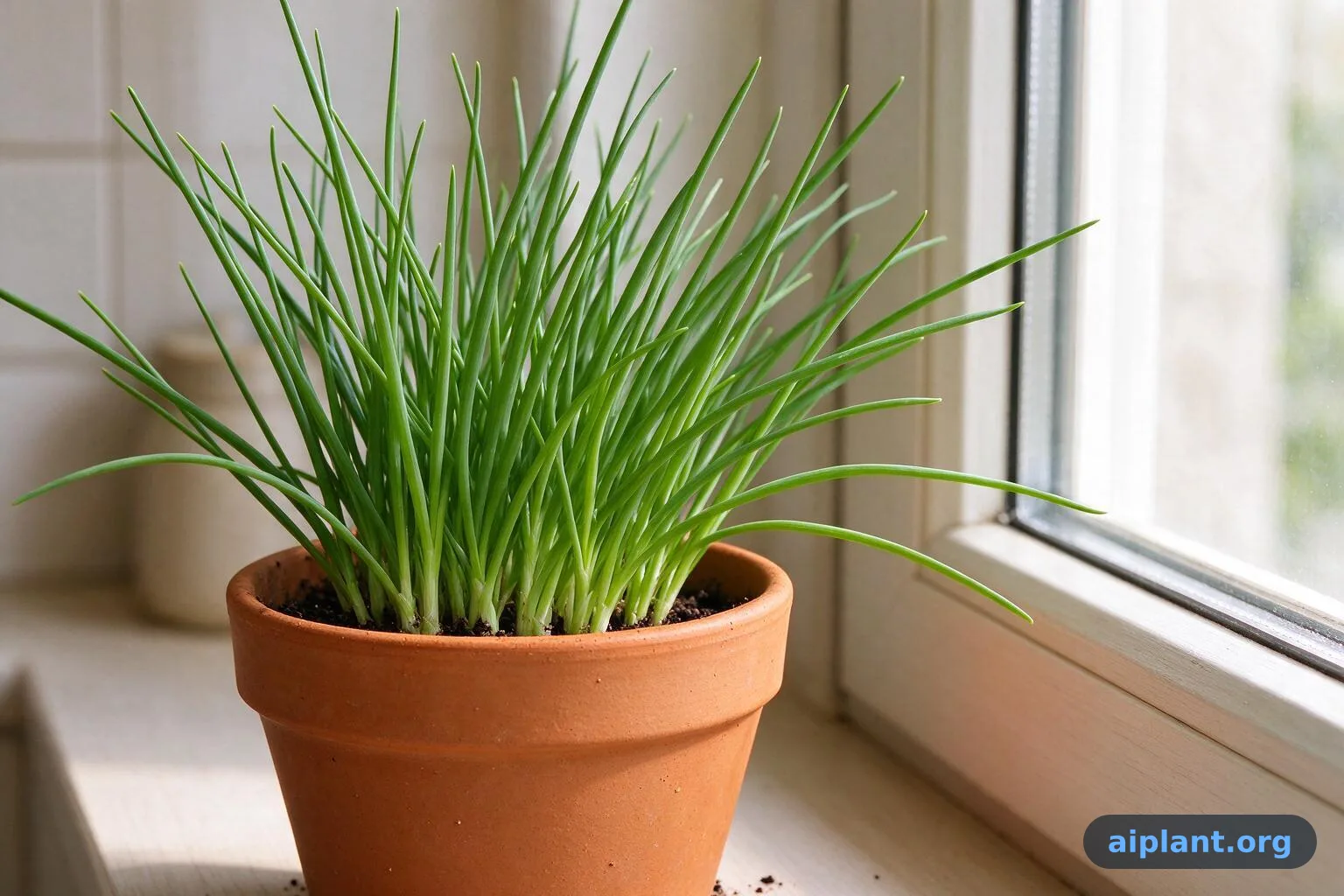
Chives Growing and Care Essentials
- Plant chives in full sun to part shade in moist, well-drained soil; they are hardy in USDA zones 3-9 and return each spring.
- Water when the top 2.5 cm (1 inch) of soil is dry, keep clumps spaced 20-30 cm (8-12 inches) apart, and divide crowded clumps every 2-3 years.
- Harvest leaves 5-10 cm (2-4 inches) above the base, never cut more than one-third of a clump at a time, and snip flowers to keep leaves coming.
- Dry chives at 35-40 °C (95-104 °F) or freeze chopped leaves; fresh chives keep about a week wrapped in the refrigerator.
What Chives Are and Which Types to Grow
Chives (Allium schoenoprasum) are a clump-forming perennial in the onion family, grown for their thin, hollow, grass-like leaves and mild onion flavour. They are the smallest edible Allium, native to cool parts of Europe, Asia and North America, and they die back to the ground each winter before regrowing in spring.
The common type is the one sold as chives: it grows 20-50 cm (8-20 inches) tall, has tubular leaves, and produces round, pink-purple flower heads in late spring and early summer. The flowers are edible and attract pollinators.
Garlic chives are a separate species: Allium tuberosum has flat, solid leaves rather than hollow ones, white flowers in late summer, and a distinct garlic flavour. It is larger, reaching 50-70 cm (20-28 inches).
Other named selections exist: 'Forescate' has larger flowers, and some seed catalogues offer fine-leaved or late-flowering strains. For cooking, the standard common chive is the best choice.
Giant or Siberian garlic chives (Allium ledebourianum and similar) are sometimes sold; they are larger and later than common chives, so check the label before planting.
Chives vs. other Alliums at a glance: the table below separates the ones most often confused in gardens and markets.
Chives and Their Look-Alikes Compared
How to Plant Chives Outdoors and Indoors
Chives grow best in full sun to part shade with moist, well-drained soil, and they can be started from seed, divided clumps or nursery pots. Outdoor planting is easiest in spring or early autumn; indoor pots need a bright windowsill and steady watering.
Where to plant chives in the garden: choose a spot with at least 4-6 hours of direct sun and soil that drains but does not dry out completely. Chives tolerate part shade, especially in hot climates, but full sun gives the thickest leaves. Keep clumps 20-30 cm (8-12 inches) apart so air moves between them.
What kind of light chives need: full sun for best growth, with part shade acceptable in hot summer areas. Indoors, a south- or west-facing window is the strongest choice; a dim corner produces pale, thin leaves.
The best soil for growing chives: a fertile, moisture-retentive loam with a pH of 6.0-7.0. Improve poor soil with 5-8 cm (2-3 inches) of compost before planting. Chives dislike waterlogged ground, so add grit to heavy clay.
Growing chives in pots: use a container at least 20 cm (8 inches) wide with drainage holes and a peat-free multipurpose compost. One clump per pot is enough; overcrowding is the main reason potted chives yellow.
Growing chives indoors: give them 6 hours of bright light or a grow light, keep the compost lightly moist, and expect slower, thinner growth than outdoors. Indoor clumps benefit from a cool room and good airflow.
Repotting potted chives: move them to a pot one size larger every 12-24 months, or when roots fill the drainage holes. Spring is the best time, just as new growth starts.
Watering chives: water when the top 2.5 cm (1 inch) of soil feels dry, roughly every 3-5 days in summer and every 7-10 days in cool weather. Potted chives dry faster than garden clumps.
Fertilising chives: a light feed is enough. Apply a balanced liquid fertiliser at half strength every 4-6 weeks from spring to midsummer; rich feeding produces soft, weak leaves and fewer flowers.
Chives Quick Care Facts
- Part Used
- Leaves and edible flowers
- When to Harvest
- Snip 5-10 cm above base, spring to autumn
- How to Dry
- 35-40 °C (95-104 °F) or freeze chopped
- Storage Life
- Wrap fresh in fridge up to 1 week
- Light
- Full sun to part shade
- Water
- When top 2.5 cm (1 inch) is dry
- Safe for Cats & Dogs?
- Check the ASPCA toxic plant list
When Chives Come Back and How to Keep Them Productive
Chives are a hardy perennial that returns every spring in USDA zones 3-9, surviving winter as a small bulb underground. In cold climates the leaves die back in late autumn and regrow in early spring; in mild climates they may stay green all year.
Can chives survive winter: yes, established clumps tolerate frost and snow, and they need no protection in most temperate gardens. In containers, move pots against a sheltered wall or wrap them so the roots do not freeze solid.
The climate chives grow best in: cool to temperate conditions with a distinct winter. They grow well in USDA zones 3-9 and struggle in long, humid heat, where leaves turn tough and flowering stops.
How tall chives get: common chives reach 20-50 cm (8-20 inches), garlic chives 50-70 cm (20-28 inches). Height depends on light, moisture and how often you harvest.
How long chives take to grow: from seed, expect 8-12 weeks to a harvestable clump; from a divided clump or nursery pot, you can cut leaves within 4-6 weeks. Germination takes 14-21 days at 15-20 °C (59-68 °F).
Keeping chives flowering: flowers form on mature clumps in late spring. To encourage them, leave some clumps unharvested in spring, keep plants in full sun, and avoid heavy nitrogen feeding, which pushes leaves instead of buds. Deadhead spent flowers if you want a second flush.
Pruning chives: cut the whole clump back to 5 cm (2 inches) after flowering or when leaves turn tough, and it will push fresh growth within 2-3 weeks. Remove yellow or damaged leaves at any time.
Dividing chives: lift a clump every 2-3 years in spring or early autumn, split it into 3-5 sections with a knife or two forks, and replant the healthiest pieces at the same depth. This restores vigour and prevents the hollow centre that signals an old clump.
Propagating chives: division is the fastest method; seed is the alternative. Both are covered in the next section.
Chives Watering by Season
Growing Chives From Seed and by Division
Chives grow easily from seed or from divided clumps, and division gives a harvestable plant far sooner. Seed is cheap and gives you many plants; division keeps a named clump true to type.
Can you grow chives from seed: yes. Sow indoors 6-8 weeks before the last frost, or direct-sow outdoors in spring once the soil reaches 10 °C (50 °F). Cover seed lightly with 3 mm (1/8 inch) of soil; light helps germination, so do not bury it deeply.
Starting chives indoors from seed: fill modules with seed compost, sow 3-4 seeds per cell, keep at 15-20 °C (59-68 °F) and moist. Germination takes 14-21 days. Pot on when seedlings are 5 cm (2 inches) tall.
Direct sowing outdoors: sow in rows 20 cm (8 inches) apart, thin seedlings to 10-15 cm (4-6 inches) apart. Keep the bed watered through the first summer.
Dividing an existing clump: water the plant the day before, lift it with a fork, and split it into sections each with roots and leaves. Replant at the same depth 20-30 cm (8-12 inches) apart and water well for two weeks.
Propagating chives in pots: tip a potted clump out, tease the root ball apart into 2-3 pieces by hand, and repot each piece in fresh compost. This is also the moment to refresh tired soil.
How long chives take to grow: seedlings need 8-12 weeks to reach a clump you can cut; divisions settle in 4-6 weeks. In warm conditions, seed sown in spring can be harvested by midsummer.
Chives From Seed vs. Division
Harvesting, Drying and Storing Chives
Harvest chives by snipping leaves 5-10 cm (2-4 inches) above the base, starting in spring once the clump is established. Regular cutting keeps plants productive; cutting the whole clump at once sets it back for weeks.
When and how to harvest chives: cut leaves from the outside of the clump first, never more than one-third at a time, and use sharp scissors. Harvest in the morning when leaves are crisp. Stop heavy harvesting in late autumn so the clump can store energy for winter.
How to dry chives: chives lose much of their flavour when dried, but a gentle dry preserves some. Spread chopped leaves on a tray and dry at 35-40 °C (95-104 °F) in a dehydrator or oven with the door ajar for 2-4 hours, until brittle. Air-drying in a warm, dark room takes 3-5 days.
How to store fresh chives: wrap unwashed leaves in a damp paper towel, place in a sealed bag in the refrigerator, and use within 5-7 days. Wash only just before use.
Can you freeze chives: yes, and freezing preserves flavour better than drying. Chop leaves, spread on a tray to freeze individually, then bag them; or freeze chopped chives in ice-cube trays with a little water. Use within 6 months.
What chives are used for in cooking: raw or added at the end of cooking in soups, eggs, potatoes, salads, soft cheese and butter. Heat destroys the delicate flavour, so add them off the heat.
Can you make tea from chives: chives are commonly brewed as a mild onion-flavoured tea by steeping a small handful of fresh chopped leaves in hot water for 3-5 minutes. Traditionally used in folk preparations, it is a gentle kitchen infusion rather than a strong brew.
Who should avoid eating chives: people who are pregnant or breastfeeding, children with sensitive digestion, and anyone taking medication should ask a doctor or pharmacist before using chives or chive tea regularly. Chives are in the onion family, so people with known Allium sensitivity should avoid them.
Chives Harvest and Storage by Method
Chives Turning Yellow, Pests and Slow Growth Fixes
Yellowing and slow growth in chives usually come from waterlogging, drought or a clump that has become too crowded. Matching the fix to the symptom restores green leaves within a few weeks.
Why chives turn yellow: the most common cause is soggy soil that rots the roots. Check drainage, reduce watering, and repot indoor clumps in fresh compost. Drought also yellows leaf tips, and a clump that has not been divided for 3-4 years yellows from the centre outward.
Why chives stop growing: crowding, shade and cold soil are the usual reasons. Divide congested clumps, move pots to a brighter spot, and wait for soil above 10 °C (50 °F) in spring. Heavy feeding can also push soft growth that stalls.
Aphids on chives: small green or black insects cluster on new leaves. Wash them off with a strong jet of water or insecticidal soap, and encourage ladybirds.
Onion thrips and allium leaf miner: thrips cause silvery streaks, leaf miners leave pale winding trails. Remove affected leaves, keep the area weed-free, and use fine mesh over young plants.
Slugs and snails: they chew young shoots in damp weather. Set traps or barriers around new plantings.
Rust and mildew: orange pustules or white powder on leaves signal poor airflow. Space clumps, water at the base, and cut back affected foliage.
What plants look like chives: wild onion, wild garlic and garlic chives all resemble chives. Crush a leaf: chives smell of mild onion, garlic chives and wild garlic of garlic, and wild onion of strong onion. Never eat a look-alike unless you are certain, because some bulb plants with grass-like leaves are not edible.
Chives Problems and Their Fixes
Chives Growing and Care Questions Answered
What are chives?
Chives (Allium schoenoprasum) are a clump-forming perennial in the onion family, grown for thin, hollow, grass-like leaves with a mild onion flavour. They are the smallest edible Allium, native to cool parts of Europe, Asia and North America, and they die back to the ground each winter before regrowing in spring. Common chives grow 20-50 cm (8-20 inches) tall.
What are the different types of chives?
The common type sold as chives has tubular leaves and round pink-purple flower heads in late spring and early summer. Garlic chives (Allium tuberosum) are a separate species with flat, solid leaves, white late-summer flowers, a garlic flavour and a taller 50-70 cm (20-28 inches) habit. Named selections include 'Forescate' with larger flowers, plus fine-leaved and late-flowering strains.
How do you grow chives?
Chives grow best in full sun to part shade with moist, well-drained soil, started from seed, divided clumps or nursery pots. Outdoor planting is easiest in spring or early autumn, with clumps spaced 20-30 cm (8-12 inches) apart. From seed, expect 8-12 weeks to a harvestable clump; from a divided clump or nursery pot, leaves can be cut within 4-6 weeks.
Can chives grow indoors?
Yes, chives can grow indoors, though growth is slower and thinner than outdoors. Give them 6 hours of bright light or a grow light, ideally on a south- or west-facing windowsill, keep the compost lightly moist, and provide a cool room with good airflow. Use a pot at least 20 cm (8 inches) wide with drainage holes and one clump per pot.
Where should you plant chives in the garden?
Plant chives in a spot with at least 4-6 hours of direct sun and soil that drains but does not dry out completely. They tolerate part shade, especially in hot climates, but full sun gives the thickest leaves. Keep clumps 20-30 cm (8-12 inches) apart so air moves between them and humidity-related problems stay low.
What kind of light do chives need?
Chives need full sun for best growth, with part shade acceptable in hot summer areas. Indoors, a south- or west-facing window is the strongest choice, and a dim corner produces pale, thin leaves. Aim for at least 4-6 hours of direct sun outdoors, or 6 hours of bright light or a grow light for indoor pots.
How often should you water chives?
Water chives when the top 2.5 cm (1 inch) of soil feels dry, roughly every 3-5 days in summer and every 7-10 days in cool weather. Potted chives dry faster than garden clumps, so check them more often. Avoid soggy soil, since waterlogging rots roots and is the most common cause of yellowing.
What is the best soil for growing chives?
The best soil for chives is a fertile, moisture-retentive loam with a pH of 6.0-7.0. Improve poor soil with 5-8 cm (2-3 inches) of compost before planting. Chives dislike waterlogged ground, so add grit to heavy clay, and use a peat-free multipurpose compost for pots at least 20 cm (8 inches) wide with drainage holes.
Can chives grow in pots?
Yes, chives grow well in pots. Use a container at least 20 cm (8 inches) wide with drainage holes and peat-free multipurpose compost, and plant one clump per pot, because overcrowding is the main reason potted chives turn yellow. Potted chives dry out faster than garden clumps, so water when the top 2.5 cm (1 inch) of compost feels dry.
When should you repot chives?
Repot chives every 12-24 months, or sooner when roots fill the drainage holes. Spring is the best time, just as new growth starts, and the plant should move to a pot only one size larger. Repotting is also the moment to refresh tired compost and to split an overcrowded clump into two or three pieces.
Should you fertilize chives?
Yes, but only lightly. Apply a balanced liquid fertiliser at half strength every 4-6 weeks from spring to midsummer; rich feeding produces soft, weak leaves and fewer flowers. Heavy nitrogen also pushes leaf growth instead of buds, so if you want the pink-purple flowers, keep feeding modest and leave some clumps unharvested in spring.
How do you prune chives?
Cut the whole clump back to 5 cm (2 inches) after flowering or when leaves turn tough, and fresh growth appears within 2-3 weeks. Remove yellow or damaged leaves at any time. For normal harvesting, snip leaves 5-10 cm (2-4 inches) above the base from the outside of the clump, never more than one-third at a time.
How do you propagate chives?
Division is the fastest method. Lift a clump every 2-3 years in spring or early autumn, split it into 3-5 sections with a knife or two forks, and replant the healthiest pieces at the same depth, 20-30 cm (8-12 inches) apart. Water well for two weeks. Seed is the alternative, though it is slower to reach a harvestable size.
Can you grow chives from seed?
Yes. Sow indoors 6-8 weeks before the last frost, or direct-sow outdoors once the soil reaches 10 °C (50 °F). Cover seed with only 3 mm (1/8 inch) of soil, because light helps germination. Keep modules at 15-20 °C (59-68 °F) and moist; germination takes 14-21 days, and seedlings can be potted on at 5 cm (2 inches) tall.
How long do chives take to grow?
From seed, expect 8-12 weeks to a harvestable clump, with germination taking 14-21 days at 15-20 °C (59-68 °F). From a divided clump or nursery pot, leaves can be cut within 4-6 weeks. Seed sown in spring in warm conditions can be harvested by midsummer.
How tall do chives get?
Common chives reach 20-50 cm (8-20 inches) tall, while garlic chives (Allium tuberosum) reach 50-70 cm (20-28 inches). Final height depends on light, moisture and how often the clump is harvested, so plants in full sun with steady watering and light cutting grow thickest and tallest.
Do chives come back every year?
Yes, chives are a hardy perennial that returns every spring in USDA zones 3-9, surviving winter as a small bulb underground. In cold climates the leaves die back in late autumn and regrow in early spring, while in mild climates clumps may stay green all year. Divide clumps every 2-3 years to keep regrowth vigorous.
Can chives survive winter?
Yes, established chive clumps tolerate frost and snow and need no protection in most temperate gardens. In containers, move pots against a sheltered wall or wrap them so the roots do not freeze solid. Leaves die back in late autumn and regrow in early spring, and plants survive in USDA zones 3-9.
What climate do chives grow best in?
Chives grow best in cool to temperate conditions with a distinct winter, performing well in USDA zones 3-9. Give them full sun to part shade with moist, well-drained soil at pH 6.0-7.0. They struggle in long, humid heat, where leaves turn tough and flowering stops, so part shade helps in hot climates.
When and how do you harvest chives?
Harvest chives from spring to autumn by snipping leaves 5-10 cm (2-4 inches) above the base with sharp scissors, starting with the outside of the clump. Cut no more than one-third at a time and harvest in the morning when leaves are crisp. Stop heavy harvesting in late autumn so the clump stores energy for winter.
How do you dry chives?
Chives lose much of their flavour when dried, but a gentle dry preserves some. Spread chopped leaves on a tray and dry at 35-40 °C (95-104 °F) in a dehydrator or oven with the door ajar for 2-4 hours until brittle. Air-drying in a warm, dark room takes 3-5 days.
How do you store fresh chives?
Wrap unwashed fresh chives in a damp paper towel, place them in a sealed bag in the refrigerator, and use within 5-7 days. Wash only just before use, since extra moisture speeds spoilage. Chopped leaves can also be frozen for longer storage.
Can you freeze chives?
Yes, freezing chives preserves flavour better than drying. Chop the leaves, spread them on a tray to freeze individually, then bag them, or freeze chopped chives in ice-cube trays with a little water. Use the frozen chives within 6 months for the best quality.
What are chives used for in cooking?
Chives are used raw or added at the end of cooking in soups, eggs, potatoes, salads, soft cheese and butter. Heat destroys their delicate flavour, so add them off the heat. The pink-purple flowers are edible too and can garnish dishes.
Can you make tea from chives?
Yes, chives are commonly brewed as a mild onion-flavoured tea by steeping a small handful of fresh chopped leaves in hot water for 3-5 minutes. It is a gentle kitchen infusion rather than a strong brew, traditionally used in folk preparations. Use fresh leaves and strain before drinking; flavour fades quickly, so drink it soon after steeping.
What plants look like chives?
Wild onion, wild garlic and garlic chives all resemble chives. Crush a leaf to check the scent: chives smell of mild onion, garlic chives and wild garlic of garlic, and wild onion of strong onion. Never eat a look-alike unless you are certain, because some bulb plants with grass-like leaves are not edible.
Who should avoid eating chives?
People who are pregnant or breastfeeding, children with sensitive digestion, and anyone taking medication should ask a doctor or pharmacist before using chives or chive tea regularly. Chives are in the onion family, so people with known Allium sensitivity should avoid them.
What pests attack chives?
Aphids cluster on new leaves and can be washed off with a strong jet of water or insecticidal soap while encouraging ladybirds. Onion thrips cause silvery streaks and allium leaf miner leaves pale winding trails, so remove affected leaves and use fine mesh over young plants. Slugs and snails chew young shoots in damp weather, and rust or mildew appears when airflow is poor.
Why are my chives turning yellow?
Yellowing usually means soggy soil that rots the roots, so check drainage, reduce watering and repot indoor clumps in fresh compost. Drought yellows leaf tips, and a clump not divided for 3-4 years yellows from the centre outward. Fix the cause and green leaves usually return within a few weeks.
Why are my chives not growing?
Crowding, shade and cold soil are the usual reasons chives stop growing. Divide congested clumps, move pots to a brighter spot, and wait for soil above 10 °C (50 °F) in spring. Heavy feeding can also push soft growth that stalls, so keep fertiliser light.
How do you divide chives?
Lift a clump every 2-3 years in spring or early autumn, water it the day before, and split it into 3-5 sections with a knife or two forks, each with roots and leaves. Replant the healthiest pieces at the same depth 20-30 cm (8-12 inches) apart and water well for two weeks.
Do chives need full sun?
Chives grow best in full sun, needing at least 4-6 hours of direct light for the thickest leaves, though part shade is acceptable in hot summer areas. Indoors, a south- or west-facing window is strongest; a dim corner produces pale, thin leaves.
How do you keep chives flowering?
Leave some clumps unharvested in spring, keep plants in full sun, and avoid heavy nitrogen feeding, which pushes leaves instead of buds. Flowers form on mature clumps in late spring, and deadheading spent blooms can bring a second flush. Cutting the whole clump back to 5 cm (2 inches) after flowering also encourages fresh growth within 2-3 weeks.
What is the difference between chives and garlic chives?
Chives (Allium schoenoprasum) have hollow, tubular leaves, pink-purple flowers in late spring and early summer, mild onion flavour, and reach 20-50 cm (8-20 inches). Garlic chives (Allium tuberosum) are a separate species with flat, solid leaves, white flowers in late summer, a distinct garlic flavour, and a larger size of 50-70 cm (20-28 inches).
For general information only. Not a substitute for professional medical advice.
Related articles
How Do You Grow and Care for Kale?
A complete, season-by-season guide to growing crisp kale leaves in beds, pots or indoors.
How to Grow Bushy Mint?
Secrets to Prevent Leggy Growth
How to Grow Pothos Lush and Trailing?
Complete Care Guide for Bushy Growth
Lucky Bamboo Turning Yellow?
Complete Diagnosis Guide!