
How Do You Grow and Care for Kale?
A complete, season-by-season guide to growing crisp kale leaves in beds, pots or indoors.
Kale (Brassica oleracea sabellica) is one of the easiest leafy greens to grow, but it fails for predictable reasons: summer heat, dry soil, caterpillars and overharvesting. The answer is to plant it in the right season, keep the soil evenly moist, feed lightly and pick only the outer leaves. This guide covers every type, how to grow kale in beds, pots or indoors, the light, temperature and soil it needs, and how to diagnose yellow, brown, curled, spotted or wilting leaves before the plant stops producing.
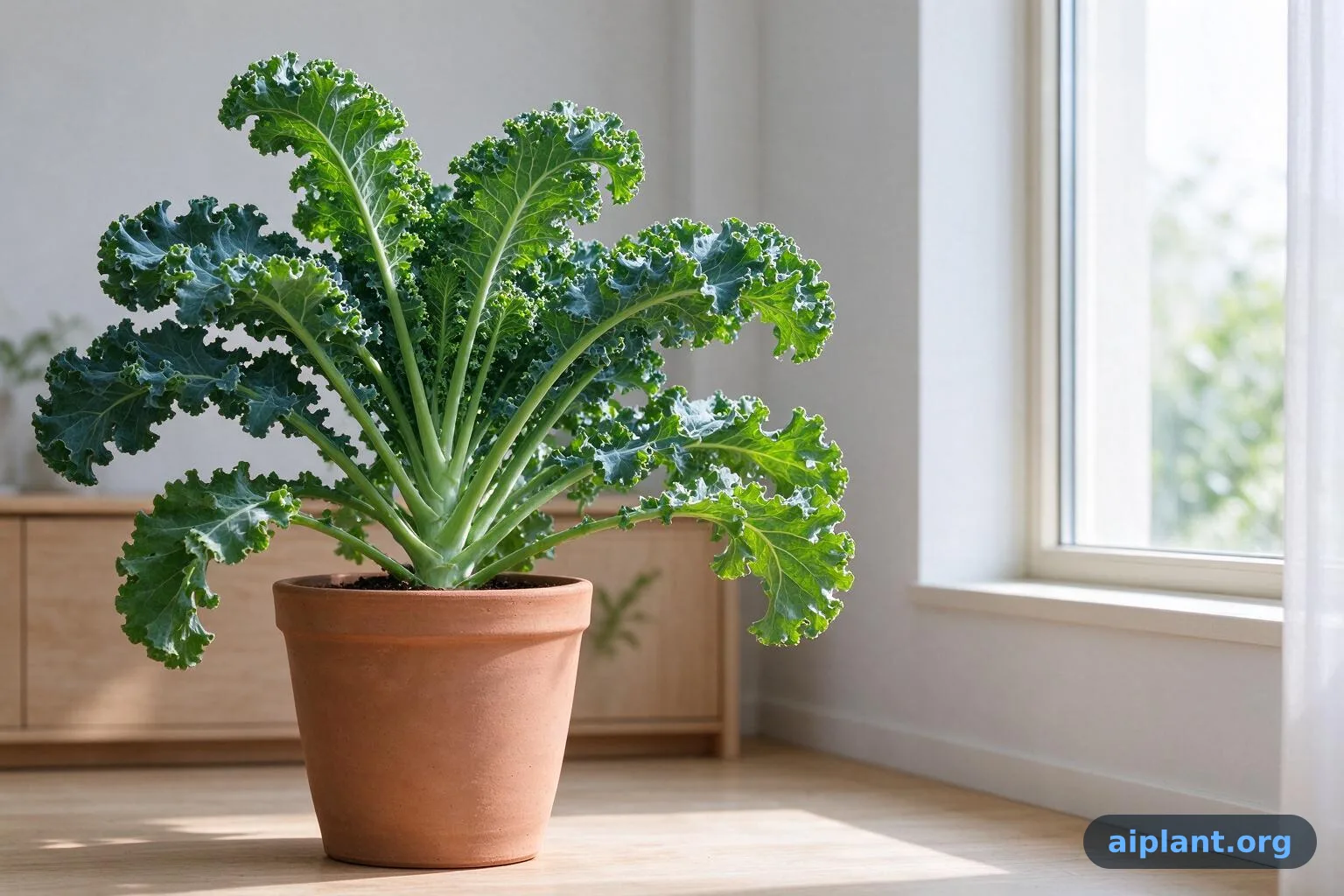
Kale Growing Basics at a Glance
- Grow kale in full sun (6+ hours) in cool weather of 10–21°C (50–70°F); it tolerates light frost but bolts in heat above 27°C (80°F).
- Plant seed 6–8 weeks before the last frost or in late summer for a fall crop, 1 cm (0.5 in) deep, 30–45 cm (12–18 in) apart.
- Water when the top 2.5 cm (1 in) of soil is dry, usually 2.5–4 cm (1–1.5 in) per week, and harvest outer leaves from the bottom up.
Kale Varieties and How the Plant Grows
Kale (Brassica oleracea sabellica) is a leafy biennial usually grown as an annual, reaching 30–90 cm (12–36 in) tall and wide depending on type. It grows quickly: seedlings appear in 5–10 days and leaves are ready to pick 50–75 days after sowing. In its first year it builds a rosette of edible leaves; if it survives winter it sends up a flower stalk in year two and then dies.
Curly kale (Scots kale): the most common supermarket type, with tightly ruffled blue-green leaves and a 60–90 cm (24–36 in) spread. It is hardy and productive but more attractive to caterpillars because of its dense leaf folds.
Lacinato or dinosaur kale: long, flat, deeply savoyed blue-green leaves on a tall 60–90 cm (24–36 in) plant. It is the best choice for small spaces and has the sweetest flavor after frost.
Red Russian kale: grey-green lobed leaves with purple stems and veins, growing 45–75 cm (18–30 in) tall. It is the most cold-tolerant of the common types and the quickest to mature.
Ornamental and red kales: purple, white or pink-fringed leaves bred for looks rather than flavor. They are edible but bitter and tough; grow them as border plants rather than kitchen crops.
Growth rate and lifespan: expect a steady 2–3 new leaves per week in cool weather. A single plant can be harvested for 8–12 weeks before it bolts or runs out of energy, and fall-planted kale often overwinters to give a second spring harvest.
Kale Types Compared by Size and Use
When and Where to Plant Kale Outdoors
Kale yields best when it grows through cool weather, so time planting to avoid midsummer heat. Sow outdoors 4–6 weeks before the last spring frost for an early summer crop, or 8–10 weeks before the first fall frost for the strongest, sweetest harvest.
Spring planting: start seed indoors 6–8 weeks before the last frost, or direct-sow once soil reaches 7°C (45°F). Expect harvest in 55–75 days. Spring crops often bolt in July heat, so plan a second sowing in June.
Fall planting: sow in late summer when days shorten. Fall kale tastes sweeter because frost converts starches to sugars, and plants can be harvested into winter in mild climates.
Sunlight needs: kale wants full sun, at least 6 hours daily. In hot climates, afternoon shade prevents wilting and bolting; in cool climates, full sun all day gives the fastest growth.
Temperature range: 10–21°C (50–70°F) is ideal. Growth slows below 5°C (41°F) and above 24°C (75°F); sustained heat above 27°C (80°F) makes leaves tough and triggers flowering.
Site and spacing: choose a spot with loose, well-drained soil and rotate it away from other brassicas for 3 years. Set plants 30–45 cm (12–18 in) apart in rows 45–60 cm (18–24 in) apart. Closer spacing gives smaller, tender leaves; wider spacing gives bigger plants.
Soil preparation: dig in 5–8 cm (2–3 in) of compost and keep pH at 6.0–7.5. Kale tolerates poor soil but produces thin, yellow leaves without organic matter.
Winter survival: established kale survives frost to about −10°C (14°F), and Red Russian to −15°C (5°F). In colder zones, cover plants with a row cover or cloche and mulch 10 cm (4 in) around the base.
Kale Growing Conditions at a Glance
- Light
- Full sun, 6+ hours daily
- Water
- 2.5–4 cm (1–1.5 in) weekly, keep moist
- Temperature
- 10–21°C (50–70°F); hardy to −10°C (14°F)
- Humidity
- Moderate; good airflow prevents rot
- Soil
- Loose, moist, well-drained, pH 6.0–7.5
- Fertilizer
- Balanced feed every 3–4 weeks
- Safe for Cats & Dogs?
- Check the ASPCA toxic plant list
Growing Kale in Pots and Indoors
Kale grows well in containers and indoors if it gets enough light and a deep enough root run. Use a pot at least 30 cm (12 in) wide and 30 cm (12 in) deep for one plant; a 45 cm (18 in) pot holds two or three.
Container setup: fill with a mix of 60% potting soil and 40% compost, add drainage holes and a 2 cm (0.8 in) gravel layer. Keep containers on casters or a trolley so you can move them out of summer heat.
Watering in pots: containers dry faster than beds. Check daily in summer and water when the top 2.5 cm (1 in) is dry, which may mean every 1–2 days in heat.
Indoor growing: kale needs 6+ hours of direct light, so a south-facing window or a 30–40 W LED grow light 30 cm (12 in) above the leaves for 14–16 hours daily is essential. Indoor plants rarely reach full size; harvest baby leaves at 15–20 cm (6–8 in).
Indoor temperature and airflow: keep rooms at 15–21°C (59–70°F) and away from radiators. Poor airflow invites aphids and mildew, so run a small fan or open a window briefly each day.
Repotting kale: move seedlings into their final pot once they have 4–6 true leaves, usually 3–4 weeks after sowing. If a plant outgrows its pot, repot in early spring before growth resumes, stepping up one pot size (about 5 cm/2 in wider).
Kale in Beds vs Pots vs Indoors
Watering, Feeding and Harvesting Kale
Kale needs steady moisture and light feeding, and it keeps producing only if you harvest the right leaves. Water when the top 2.5 cm (1 in) of soil feels dry, aiming for 2.5–4 cm (1–1.5 in) per week including rain.
Watering depth: water slowly at the base until the soil is moist 15 cm (6 in) down. Shallow daily sprinkles create weak roots and encourage surface disease.
Mulch: spread 5–8 cm (2–3 in) of straw or compost to hold moisture and keep leaves off wet soil, which reduces splashing and rot.
Fertilizer schedule: mix a slow-release balanced feed into the soil at planting, then apply a liquid 10-10-10 or compost tea every 3–4 weeks. Stop feeding 4 weeks before harvest to avoid soft, sappy growth.
Harvesting so it keeps growing: pick the lowest, outermost leaves first, cutting 2–3 cm (1 in) above the stem with clean scissors. Leave at least 6–8 central leaves on the plant. Harvest 2–3 leaves per plant per week and the crown keeps producing for weeks.
Pruning and trimming: remove yellow or damaged lower leaves any time to improve airflow. If the plant sends up a flower stalk, pinch it off at the base to delay bolting and extend leaf production.
Propagation: kale is grown from seed, not cuttings. Sow seed 1 cm (0.5 in) deep indoors 6–8 weeks before the last frost, keep at 15–20°C (59–68°F), and transplant when 4–6 leaves appear. Cuttings do not root reliably, so treat seed as the only practical method.
Kale Harvest Cuts and Regrowth
Kale Leaf Problems: Yellow, Brown, Curled and Spotted
Most kale leaf problems trace back to water, light, soil pH or pests, and each symptom points to a specific fix. Diagnose by where the damage starts and how the leaf feels.
Yellow leaves starting at the bottom: the usual cause is nitrogen shortage or waterlogged roots. Feed with a balanced liquid fertilizer and check drainage; if the soil smells sour, repot or improve drainage and water less often.
Yellow leaves between green veins: this is often magnesium or iron deficiency in soil above pH 7.0. Lower pH with compost and apply a foliar feed containing magnesium; new growth should green up in 2–3 weeks.
Brown or crispy leaf edges: dry soil, wind or too much sun causes this. Water deeply, mulch, and move pots out of hot afternoon sun. Crisp brown patches in the center of leaves are usually sunscald on wet leaves.
Drooping or wilting: check soil first. Dry soil means water immediately and deeply; wet soil with wilting means root rot, so stop watering, improve drainage and remove mushy roots. Wilting at midday that recovers by evening is normal heat stress.
Curling leaves: aphids clustered on the undersides cause puckered, curled new growth. Unroll a leaf and look for green or grey insects; spray with insecticidal soap every 5–7 days for three rounds. Curling with pale margins can also mean cold shock below 5°C (41°F).
Spots on leaves: small dark spots with yellow halos suggest fungal leaf spot, common in wet, crowded beds. Remove affected leaves, space plants 45 cm (18 in) apart and water at soil level. White powdery patches are mildew, treated by improving airflow and applying a sulfur spray.
No growth despite care: check temperature first. Kale stalls above 27°C (80°F) and below 5°C (41°F). If temperature is fine, test pH and feed; compacted soil also stops roots, so loosen the top 15 cm (6 in).
Bolting and flowering: heat, long days and drought trigger a flower stalk. Cut it off, water consistently and sow a fresh fall crop, because bolted plants turn bitter and stop leafing.
Kale Leaf Symptoms and What They Mean
Kale Pests and Diseases to Watch
Caterpillars and aphids are the two pests that most often ruin a kale crop, while clubroot and downy mildew are the diseases to prevent. Scout the undersides of leaves twice a week, because early action is what saves the harvest.
Caterpillars: cabbage white butterflies and cabbage loopers chew ragged holes from midsummer. Pick them off by hand, then cover plants with fine insect netting (mesh under 1 mm) before butterflies fly. For heavy infestations, apply Bacillus thuringiensis weekly for 2–3 weeks.
Aphids: grey-green colonies cluster on new growth and cause curling. Blast them off with water, then spray insecticidal soap every 5–7 days until clear; ladybirds and lacewings usually finish the job outdoors.
Flea beetles: tiny holes shot through young leaves in spring. Use row covers at sowing and keep plants well watered, since flea beetles favor dry, stressed seedlings.
Cabbage whitefly and slugs: whitefly rises in still, warm conditions; yellow sticky traps and airflow help. Slugs feed at night, so set beer traps or copper tape around pots.
Clubroot: roots swell and plants wilt and yellow despite water. There is no cure; remove and destroy affected plants, raise soil pH to 7.0 and rotate brassicas out of that bed for 6–7 years.
Downy mildew and leaf spot: yellow patches on top with grey fuzz beneath appear in damp, crowded beds. Water at soil level, space plants 45 cm (18 in) apart and remove infected leaves promptly.
Kale Pest and Disease Identification
Storing Kale and Keeping the Harvest Fresh
Fresh kale keeps 5–7 days in the refrigerator and up to 12 months frozen, and handling it right preserves both texture and flavor. Harvest in the cool of morning, when leaves are crisp and hydrated.
Short-term storage: wash, dry thoroughly and wrap leaves in a damp paper towel inside a perforated bag in the crisper drawer. Do not seal wet leaves in a tight bag, or they rot within days.
Long-term storage: blanch leaves in boiling water for 1–2 minutes, plunge into ice water, drain and freeze in portions. Frozen kale holds for 10–12 months and works in soups and stews.
Reviving wilted leaves: trim 1 cm (0.4 in) from the stem ends and stand them in 2–3 cm (1 in) of cold water for 30–60 minutes; crispness returns if the leaves are not yellowed.
Kale Storage Methods Compared
Kale Questions Growers Ask Most
What is kale?
Kale (Brassica oleracea sabellica) is a leafy biennial usually grown as an annual, reaching 30–90 cm (12–36 in) tall and wide. Seedlings appear in 5–10 days, and leaves are ready to pick 50–75 days after sowing. In year one it forms a rosette of edible leaves; if it survives winter it sends up a flower stalk in year two and then dies.
What are the different types of kale?
Common types include curly kale with tightly ruffled blue-green leaves and a 60–90 cm (24–36 in) spread, and Lacinato or dinosaur kale with long flat savoyed leaves on a 60–90 cm plant. Red Russian kale has purple stems, grows 45–75 cm (18–30 in) and is the most cold-tolerant. Ornamental and red kales are edible but bitter and tough.
How do you grow kale?
Sow outdoors 4–6 weeks before the last spring frost, or 8–10 weeks before the first fall frost for the sweetest harvest. Direct-sow once soil reaches 7°C (45°F). Set plants 30–45 cm (12–18 in) apart in rows 45–60 cm (18–24 in) apart, dig in 5–8 cm (2–3 in) of compost, and keep pH at 6.0–7.5.
Can you grow kale indoors?
Yes, kale can be grown indoors if it gets enough light and a deep root run. It needs 6+ hours of direct light, so use a south-facing window or a 30–40 W LED grow light 30 cm (12 in) above the leaves for 14–16 hours daily. Indoor plants rarely reach full size, so harvest baby leaves at 15–20 cm (6–8 in).
Can you grow kale in pots or containers?
Yes, kale grows well in containers given sufficient light and root depth. Use a pot at least 30 cm (12 in) wide and deep for one plant; a 45 cm (18 in) pot holds two or three. Fill with 60% potting soil and 40% compost, add drainage holes and a 2 cm (0.8 in) gravel layer, and check daily in summer.
How much sunlight does kale need?
Kale wants full sun, at least 6 hours daily. In hot climates, afternoon shade prevents wilting and bolting; in cool climates, full sun all day gives the fastest growth. Indoors, provide 6+ hours of direct light or 14–16 hours daily from a 30–40 W LED grow light placed 30 cm (12 in) above the leaves.
What is the best temperature for growing kale?
The ideal temperature range is 10–21°C (50–70°F). Growth slows below 5°C (41°F) and above 24°C (75°F), and sustained heat above 27°C (80°F) makes leaves tough and triggers flowering. Indoors, keep rooms at 15–21°C (59–70°F) and away from radiators for steady growth.
Can kale survive winter and frost?
Yes, established kale survives frost to about −10°C (14°F), and Red Russian to −15°C (5°F). In colder zones, cover plants with a row cover or cloche and mulch 10 cm (4 in) around the base. Fall-planted kale often overwinters to give a second spring harvest, and frost makes the leaves sweeter.
How often should you water kale?
Water kale to keep soil evenly moist, aiming for 2.5–4 cm (1–1.5 in) per week including rain. Water slowly at the base when the top 2.5 cm (1 in) of soil feels dry, soaking 15 cm (6 in) down; shallow daily sprinkles make weak roots and invite surface disease.
What kind of soil does kale need?
Kale needs loose, moist, well-drained soil with a pH of 6.0–7.5. Dig in 5–8 cm (2–3 in) of compost before planting, because kale tolerates poor soil but yields thin, yellow leaves without organic matter; rotate it away from other brassicas for 3 years.
How tall does kale grow?
Kale grows 30–90 cm (12–36 in) tall and wide depending on type. Curly and Lacinato reach 60–90 cm (24–36 in), Red Russian grows 45–75 cm (18–30 in), and ornamental kales sit in the same range; spacing of 30–45 cm (12–18 in) keeps plants compact and tender.
When should you plant kale?
Plant kale to grow through cool weather: sow outdoors 4–6 weeks before the last spring frost, or 8–10 weeks before the first fall frost for the sweetest harvest. Direct-sow once soil reaches 7°C (45°F), and start seed indoors 6–8 weeks before the last frost.
How long does kale take to grow from seed?
Kale takes 50–75 days from seed to harvestable leaves, with seedlings appearing in 5–10 days. Spring-sown crops are typically ready in 55–75 days, and each plant then keeps producing for 8–12 weeks before bolting or running out of energy.
How do you harvest kale so it keeps growing?
Harvest the lowest, outermost leaves first, cutting 2–3 cm (1 in) above the stem with clean scissors and leaving at least 6–8 central leaves on the plant. Pick 2–3 leaves per plant per week, and the crown keeps producing for weeks.
Should you prune or trim kale plants?
Yes, trim kale to keep it healthy and productive. Remove yellow or damaged lower leaves any time to improve airflow, and pinch off any flower stalk at the base to delay bolting and extend leaf production, since bolted plants turn bitter and stop leafing.
How do you propagate kale?
Kale is grown from seed, not cuttings, because cuttings do not root reliably. Sow seed 1 cm (0.5 in) deep indoors 6–8 weeks before the last frost, keep it at 15–20°C (59–68°F), and transplant seedlings once 4–6 true leaves appear.
Can you grow kale from cuttings?
No, kale is grown from seed, not cuttings, because cuttings do not root reliably. Sow seed 1 cm (0.5 in) deep indoors 6–8 weeks before the last frost, keep at 15–20°C (59–68°F), and transplant when 4–6 leaves appear. Treat seed as the only practical method for a reliable crop.
Does kale need fertilizer and how often?
Yes, kale benefits from feeding because steady nutrients keep leaves thick and productive. Mix a slow-release balanced feed into the soil at planting, then apply a liquid 10-10-10 or compost tea every 3–4 weeks. Stop feeding 4 weeks before harvest to avoid soft, sappy growth.
Why are my kale leaves turning yellow?
Yellow leaves starting at the bottom usually mean nitrogen shortage or waterlogged roots. Feed with a balanced liquid fertilizer and check drainage; if the soil smells sour, improve drainage and water less often. Yellowing between green veins points to magnesium or iron deficiency above pH 7.0, so add compost and a foliar feed, with new growth greening in 2–3 weeks.
Why are my kale leaves turning brown or crispy?
Brown or crispy leaf edges come from dry soil, wind or too much sun. Water deeply, mulch 5–8 cm (2–3 in), and move pots out of hot afternoon sun. Crisp brown patches in leaf centers are usually sunscald on wet leaves, so water at soil level in the morning.
Why is my kale drooping or wilting?
Wilting starts with the soil: dry soil means water immediately and deeply to 15 cm (6 in). Wet soil with wilting means root rot, so stop watering, improve drainage and remove mushy roots. Wilting at midday that recovers by evening is normal heat stress, not a disease.
Why are my kale leaves curling?
Curling new growth is usually caused by aphids clustered on leaf undersides. Unroll a leaf and look for green or grey insects, then spray insecticidal soap every 5–7 days for three rounds. Curling with pale margins can also mean cold shock below 5°C (41°F).
What causes spots on kale leaves?
Small dark spots with yellow halos suggest fungal leaf spot, common in wet, crowded beds. Remove affected leaves, space plants 45 cm (18 in) apart and water at soil level. White powdery patches are mildew, treated by improving airflow and applying a sulfur spray.
Why is my kale not growing?
Check temperature first, because kale stalls above 27°C (80°F) and below 5°C (41°F). If temperature is fine, test pH and feed with a balanced fertilizer. Compacted soil also stops roots, so loosen the top 15 cm (6 in) and keep moisture steady at 2.5–4 cm (1–1.5 in) weekly.
Why is my kale bolting and flowering?
Bolting is triggered by heat, long days and drought, so sustained temperatures above 27°C (80°F) push kale to send up a flower stalk. Cut the stalk off at the base to delay it, water consistently to keep the top 2.5 cm (1 in) of soil moist, and sow a fresh fall crop, because bolted plants turn bitter and stop leafing.
What pests attack kale and how do you get rid of them?
Caterpillars and aphids are the main pests, with flea beetles, cabbage whitefly and slugs also present. Pick caterpillars off by hand and cover plants with fine netting under 1 mm mesh before butterflies fly; blast aphids with water then spray insecticidal soap every 5 to 7 days. Use row covers at sowing for flea beetles, yellow sticky traps for whitefly and beer traps or copper tape for night-feeding slugs.
How do you deal with caterpillars on kale?
Caterpillars chew ragged holes from midsummer, so pick them off by hand and cover plants with fine insect netting of under 1 mm mesh before cabbage white butterflies fly. For heavy infestations, apply Bacillus thuringiensis weekly for 2 to 3 weeks. Scout the undersides of leaves twice a week, since early action is what saves the harvest.
What diseases affect kale?
Clubroot and downy mildew are the diseases to prevent, along with fungal leaf spot. Clubroot makes roots swell and plants wilt and yellow despite water; there is no cure, so remove and destroy affected plants, raise soil pH to 7.0 and rotate brassicas out of that bed for 6 to 7 years. For downy mildew and leaf spot, water at soil level, space plants 45 cm (18 in) apart and remove infected leaves promptly.
How do you treat aphids on kale?
Aphids form grey-green colonies on new growth and cause curling, so blast them off with water and then spray insecticidal soap every 5 to 7 days until clear. Ladybirds and lacewings usually finish the job outdoors. Good airflow also helps, since still, warm indoor conditions invite aphids and mildew, so run a small fan or open a window briefly each day.
When should you repot kale?
Repot seedlings into their final pot once they have 4 to 6 true leaves, usually 3 to 4 weeks after sowing. If a plant outgrows its pot, repot in early spring before growth resumes, stepping up one pot size of about 5 cm (2 in) wider. Use a pot at least 30 cm (12 in) wide and deep for one plant.
What is the best way to store harvested kale?
Fresh kale keeps 5 to 7 days in the refrigerator and up to 12 months frozen. For short-term storage, wash and dry the leaves thoroughly, wrap them in a damp paper towel inside a perforated bag and keep them in the crisper drawer; never seal wet leaves in a tight bag or they rot within days. For long-term storage, blanch for 1 to 2 minutes, plunge into ice water, drain and freeze in portions.
Related articles
How Do You Grow and Care for Chives?
Everything from seed to harvest, plus the fixes when chives yellow or stall.
Monstera Leaves Turning Yellow?
How to Restore Green?
How Do You Grow and Care for Peppermint?
Everything from planting to harvest, with fixes for yellow leaves, rust and leggy stems.
How Do You Grow, Harvest and Dry Thyme?
A complete thyme plan from planting to the drying rack.