
How Do You Grow, Harvest and Dry Thyme?
A complete thyme plan from planting to the drying rack.
Thyme (Thymus vulgaris) is easy until it turns woody, brown or leggy, and then it is hard to bring back. The answer is to grow it dry and bright, prune it young, and harvest it often. This article walks through every stage: choosing a variety, planting in a pot or bed, watering and feeding, pruning, propagation, harvesting, drying, storing, winter care and the problems that make thyme decline.
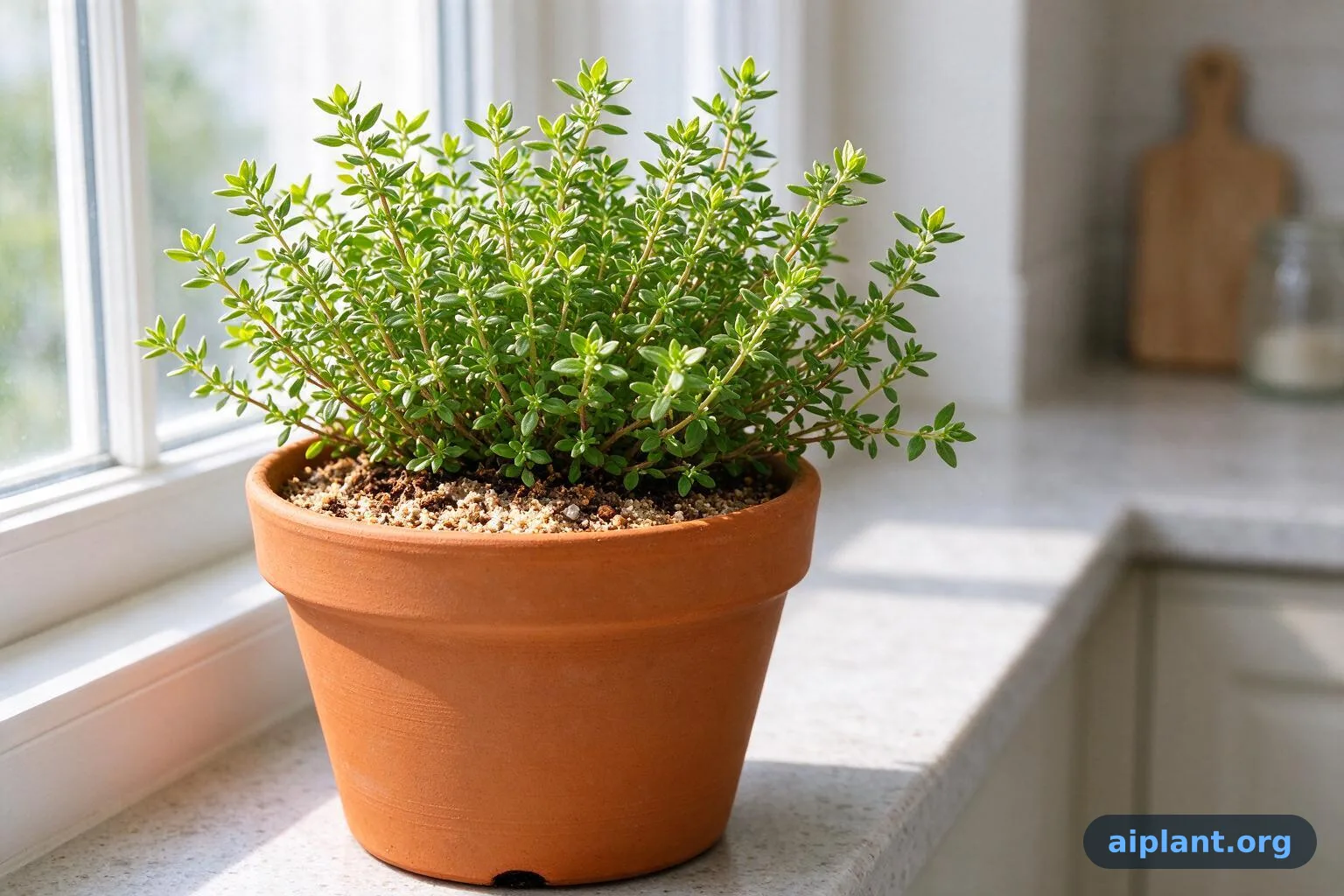
Thyme Care in Short
- Grow thyme in full sun for 6–8 hours a day, in gritty, sandy, well-drained soil with a pH of 6.0–8.0.
- Water only when the top 3–5 cm (1–2 in) of soil is dry; thyme prefers dry roots to wet ones.
- Prune lightly after flowering and never cut into old bare wood, which rarely regrows.
- Harvest sprigs before flowering for the strongest flavor, then dry them in a dark, airy place.
What Thyme Is and Which Thymus Varieties to Grow
Thyme (Thymus vulgaris) is a low, woody perennial herb in the mint family, grown for its small aromatic leaves and used fresh or dried in cooking. It is native to the rocky Mediterranean, which explains almost every care rule that follows: it wants sun, sharp drainage and air around its leaves.
Common thyme is the kitchen standard: Thymus vulgaris has small grey-green leaves and a strong, earthy flavor. It is the best all-round choice for roasting, stews and stuffing.
Lemon thyme brings a citrus note: Thymus × citriodorus has glossy green leaves and a lemon scent. Use it with fish, chicken and in tea, and grow it where you can brush against it.
Creeping thymes are for ground cover: Thymus serpyllum and its cultivars spread low and tolerate more foot traffic. They are ornamental and pollinator-friendly but less useful in the kitchen.
Variegated and silver thymes need more sun: cultivars with white or yellow edges are slower and weaker. Give them the brightest spot and prune them less aggressively.
French thyme is finer and milder: narrow leaves and a sweeter aroma suit delicate dishes, but it is slightly less winter-hardy than common thyme.
Thyme is a perennial subshrub, not a soft annual: it forms a woody base with soft new stems. That woody base is why hard pruning into old wood often fails and why replacing plants every 3–5 years is normal.
How to identify thyme: opposite, tiny oval leaves 3–8 mm (0.1–0.3 in) long on square stems, with a strong savory scent when rubbed. Flowers are tiny, pink to white, and appear in late spring and early summer.
Look-alikes to rule out: oregano has larger, rounder leaves and a different scent; marjoram is softer and sweeter; savory has longer, narrower leaves. Crush a leaf and smell it: thyme is unmistakably pungent and resinous. See the look-alike table below for a side-by-side comparison.
Thyme and Similar Herbs Compared
Thyme Light, Soil and Climate Needs Outdoors and Indoors
Thyme grows best in full sun and lean, gritty soil, and it struggles in rich, wet ground. Give it the driest, brightest spot you have and it will stay compact and aromatic.
Sunlight: 6–8 hours a day is the target: thyme in less than 6 hours of direct sun grows leggy, pale and weak-flavored. Indoors, a south-facing window plus a grow light for 12–14 hours a day keeps it dense.
Soil: drainage matters more than fertility: mix 2 parts potting soil with 1 part coarse sand or perlite, or plant in a raised bed with grit worked into the top 15 cm (6 in). A pH of 6.0–8.0 is fine; thyme tolerates slightly alkaline soil.
Best climate: warm, dry summers and mild winters: thyme is hardy in USDA zones 5–9, roughly −29 °C to −1 °C (−20 °F to 30 °F) depending on cultivar. It dislikes humid heat more than cold, and prolonged wet foliage invites rot.
Indoors, thyme needs dry air and strong light: put the pot near the brightest window, keep it out of steamy bathrooms, and run a small fan or open a window to keep air moving. A windowsill above a radiator dries the soil too fast; a cool, bright spot is better.
Balcony containers work well: a 20–30 cm (8–12 in) pot with drainage holes, a gritty mix and a sunny railing gives thyme the dry root run it wants. In hot climates, a light shade cloth in afternoon sun prevents scorch.
How big thyme grows: common thyme reaches 20–40 cm (8–16 in) tall and 30–45 cm (12–18 in) wide; creeping types stay 5–15 cm (2–6 in) tall but spread 30–60 cm (12–24 in). In pots, expect a slightly smaller plant, 20–30 cm (8–12 in) tall.
How long a thyme plant lives: a well-sited thyme lives 3–5 years before the center turns woody; with regular light pruning and replacement cuttings, a patch can continue indefinitely. Creeping thymes often live longer than common thyme.
Thyme Quick Care Facts
- Part Used
- Leaves and soft stems
- When to Harvest
- Before flowering, morning, cut soft stems
- How to Dry
- Dark, airy, warm room; 7–14 days
- Storage Life
- Airtight jar, dark cupboard, 6–12 months
- Light
- Full sun, 6–8 hours daily
- Water
- Only when top 3–5 cm (1–2 in) dry
- Safe for Cats & Dogs?
- Check the ASPCA toxic plant list
Watering Thyme Without Rotting the Roots
Thyme wants to dry out between waterings, and more thyme dies from wet roots than from drought. Water deeply, then wait until the top 3–5 cm (1–2 in) of soil is dry before watering again.
The finger test beats a schedule: push a finger into the soil; if it is damp at 3 cm (1 in), wait. In summer, a garden thyme may need water every 5–7 days; in spring and autumn every 10–14 days; in winter, once every 3–4 weeks or only during dry spells.
Pots dry faster than beds: a 25 cm (10 in) pot in full summer sun may need water every 2–3 days, but always check first. A pot that stays wet for more than 3 days has a drainage problem, not a watering problem.
Water at the base, not over the leaves: wet foliage in still air encourages fungal problems. A watering can at soil level, or a saucer emptied after 30 minutes, keeps the crown dry.
Yellow leaves and a damp crown mean overwatering: if the soil smells sour and the base of the plant is soft, stop watering, move the pot to air, and repot into a grittier mix. Trim soft black stems back to healthy growth.
Fertilizer is rarely needed: thyme is a lean-soil plant. Feed once in spring with a diluted balanced liquid feed (half strength) or a 2 cm (1 in) layer of compost; too much nitrogen gives soft, flavorless growth. Potted thyme benefits from one spring feed and no more.
Thyme Watering by Season
Pruning Thyme to Keep It Bushy and Stop It Going Woody
Thyme stays bushy when you tip-prune it regularly and never cut into old, bare wood. The best time is right after flowering, with light trims through the growing season.
Prune after flowering, not before: cut the flowered stems back by about one third, to just above a pair of leaves, in late spring or early summer. This keeps the plant compact and encourages fresh soft growth.
Never cut into old bare wood: thyme does not reliably resprout from leafless brown stems. Leave 5–8 cm (2–3 in) of green growth on every branch and remove only the soft tips.
Pinch young plants from the start: on a new plant, pinch the top 2–3 cm (1 in) of each stem every few weeks to force side shoots. A plant pinched in its first year stays dense for years.
Reviving a leggy or overgrown thyme: cut back no more than one third in spring, feed lightly and give full sun; if the center is bare and woody, take cuttings from the healthy outer stems and replace the plant. Hard renovation of an old thyme rarely succeeds.
Remove flowers on young plants: in the first year, pinch off flower buds to push energy into leaves and roots. From the second year, let it flower for bees, then prune.
Why thyme turns brown or woody: the center browns when the plant ages, when it is shaded by its own top growth, or when soil stays wet. Brown, soft stems at the base mean rot; brown, dry stems in the center mean age or drought. In both cases, take cuttings and replant in a grittier, sunnier spot.
Thyme Pruning Calendar
Propagating Thyme From Cuttings and Seed
Cuttings are the fastest and most reliable way to make more thyme, while seed works but is slow and variable. Take softwood cuttings in late spring or early summer for roots in 2–4 weeks.
How to take thyme cuttings: cut 8–10 cm (3–4 in) stems from healthy, non-flowering growth, strip the lower 3 cm (1 in) of leaves, dip the end in rooting hormone if you have it, and push into a gritty mix of 1 part compost to 1 part perlite. Keep humid but not wet; roots form in 14–28 days at 18–22 °C (65–72 °F).
Layer thyme for free plants: bend a low stem to the soil, pin it down and cover the middle with soil; it roots in 4–8 weeks and can be cut from the parent.
Growing thyme from seed takes patience: sow seed 3 mm (0.1 in) deep indoors 8–10 weeks before the last frost at 18–21 °C (65–70 °F). Germination takes 14–28 days and is uneven; seedlings are ready to transplant at 5–8 cm (2–3 in) tall, and the first real harvest comes 10–12 weeks after sowing. Seed-grown thyme is often more variable in flavor than cuttings.
Divide established clumps in spring: lift a 3–4 year old plant, split it into 2–3 pieces with roots and green stems, and replant in gritty soil. Discard the woody center.
Repotting a potted thyme: move it up one pot size (about 5 cm / 2 in wider) in spring when roots circle the surface. Use fresh gritty mix, keep the crown at the same level, water once and then leave it dry for a few days.
Thyme Propagation Methods Compared
Harvesting, Drying and Storing Thyme for Full Flavor
Harvest thyme just before it flowers, in the morning after dew has dried, when the essential oils are strongest. Cut no more than one third of the plant at a time and it will regrow.
Best time to harvest: late spring to early summer, before the flower buds open. Flavor drops once flowers fade. For year-round use, take small sprigs from spring onward and a larger cut after flowering.
How to cut thyme: snip soft stems 5–10 cm (2–4 in) from the tips with scissors or shears. Never strip a branch bare; leave green growth below the cut.
How to dry thyme without losing flavor: bundle 6–8 stems, tie with string, and hang upside down in a dark, dry, airy room at 18–24 °C (65–75 °F) for 7–14 days until leaves crumble. A dehydrator at 35–40 °C (95–104 °F) for 2–4 hours also works. Avoid direct sun, which bleaches color and aroma.
Strip and store dried leaves whole: rub the bundles over a bowl, remove woody stems, and keep the leaves whole until use; crushing releases aroma too early. Store in an airtight jar in a dark cupboard for 6–12 months.
Storing fresh thyme: wrap sprigs in a barely damp paper towel, place in a bag in the fridge for 1–2 weeks, or freeze whole sprigs in a bag for 3–6 months. Fresh thyme can also be chopped and frozen in ice-cube trays with water or oil.
Using thyme in cooking and tea: add whole sprigs early to roasts, stews, soups and beans, and remove the woody stems before serving. Fresh leaves suit eggs, mushrooms, fish and salads. For tea, steep 3–4 fresh sprigs or 1 teaspoon of dried leaves in 250 ml (1 cup) of hot water for 5 minutes; thyme is commonly brewed as a tea and is traditionally used in cough syrups and gargles.
Thyme Harvest and Drying by Season
Overwintering Thyme and Protecting It From Cold and Wet
Thyme survives winter outdoors in zones 5–9 if its roots stay dry, and wet cold is more dangerous than frost. Protect the crown from rain and standing water rather than wrapping the plant in warmth.
Improve drainage before winter: add grit to the soil surface and make sure pots have open drainage holes. In heavy clay, grow thyme in a raised bed or container.
Mulch with grit, not compost: a 2–3 cm (1 in) layer of horticultural grit around the crown keeps leaves dry and prevents rot. Avoid rich mulch, which softens growth.
In pots, move to a sheltered spot: against a south-facing wall, under eaves, or in a cold frame. Pots freeze from the sides, so insulate with bubble wrap or bury the pot to its rim in the garden.
Cut back only dead stems in autumn: leave healthy green growth for insulation and prune properly in spring. In very cold zones, a loose layer of straw or fleece over the top helps, removed on mild days.
Indoors in winter, give cool bright conditions: a frost-free porch or cool windowsill at 5–10 °C (40–50 °F) suits thyme better than a hot living room, where it stretches and dries out.
Who should be careful with thyme: thyme is a common culinary herb, but concentrated thyme tea or oil is best avoided in pregnancy and breastfeeding without medical advice, and kept away from young children. People taking medication, especially blood thinners or blood-pressure drugs, should ask a doctor or pharmacist before using thyme regularly as a tea or supplement. This is general information, not medical advice.
Thyme Winter Protection by Growing Situation
Thyme Pests, Diseases and Brown Patches
Thyme is a tough herb, but it suffers from root rot in wet soil, spider mites in dry indoor air, and aphids on soft new growth. Most problems trace back to water, air or light.
Root and crown rot: soft black stems, yellow leaves and a sour smell mean waterlogged roots. Lift the plant, cut away mushy roots, and repot in fresh gritty mix; water sparingly until new growth appears.
Spider mites indoors: fine webbing and speckled, dull leaves appear in hot, dry rooms. Raise humidity slightly, wash leaves with a gentle spray, and repeat every 5–7 days; a fan and cooler spot help.
Aphids on new tips: clusters of green or black insects distort soft growth. Spray with water or insecticidal soap, and pinch out the worst tips; outdoor thyme usually gets help from ladybirds.
Botrytis and powdery mildew: grey mould or white powder appears in still, damp air. Improve spacing, water at the base, and remove affected stems; do not compost diseased material.
Brown, dry patches in the center: this is usually age or drought, not disease. Take cuttings from healthy outer stems and replant in a sunnier, grittier spot.
Four-lined plant bug and whitefly: outdoor thyme may show pale spots from plant bugs; indoors, whitefly rises when the plant is disturbed. Yellow sticky traps and good airflow reduce both.
Thyme Problems and What They Mean
Thyme Questions Gardeners Ask Most
What is thyme and what are its common varieties?
Thyme (Thymus vulgaris) is a low, woody perennial herb in the mint family, native to the rocky Mediterranean and grown for its small aromatic leaves used fresh or dried in cooking. Common thyme is the kitchen standard, lemon thyme adds a citrus note, creeping thymes such as Thymus serpyllum serve as ground cover, and variegated, silver and French thymes are slower or less hardy cultivars.
Can thyme be grown indoors in a pot?
Yes, thyme can be grown indoors in a pot if it gets strong light and dry air. Place a 20–30 cm (8–12 in) pot with drainage holes near a south-facing window, add a grow light for 12–14 hours a day, keep it out of steamy rooms, and use a gritty mix so the roots dry between waterings.
How much sunlight does thyme need each day?
Thyme needs 6–8 hours of direct sun each day. Less than 6 hours gives leggy, pale, weak-flavored growth, while indoors a south-facing window plus a grow light for 12–14 hours a day keeps the plant dense and aromatic.
When and how often should I water thyme?
Water thyme only when the top 3–5 cm (1–2 in) of soil is dry, checking with a finger rather than a fixed schedule. In summer a garden plant may need water every 5–7 days, in spring and autumn every 10–14 days, and in winter once every 3–4 weeks; a 25 cm (10 in) pot in full sun may need water every 2–3 days.
What type of soil does thyme need to thrive?
Thyme needs lean, gritty, well-drained soil more than fertility. Mix 2 parts potting soil with 1 part coarse sand or perlite, or work grit into the top 15 cm (6 in) of a raised bed; a pH of 6.0–8.0 suits it, and slightly alkaline soil is tolerated.
Does thyme need fertilizer and when should I feed it?
No, thyme rarely needs fertilizer because it is a lean-soil plant. Feed once in spring with a diluted balanced liquid feed at half strength or a 2 cm (1 in) layer of compost; too much nitrogen gives soft, flavorless growth, and potted thyme needs one spring feed and no more.
How do I prune thyme to keep it bushy?
Prune thyme right after flowering by cutting flowered stems back about one third, to just above a pair of leaves, in late spring or early summer. Never cut into old bare wood, leave 5–8 cm (2–3 in) of green growth on each branch, and pinch the top 2–3 cm (1 in) of young stems every few weeks to force side shoots.
How do I propagate thyme from cuttings?
Take 8–10 cm (3–4 in) softwood cuttings in late spring or early summer from healthy, non-flowering growth, strip the lower 3 cm (1 in) of leaves, and push them into a gritty mix of 1 part compost to 1 part perlite. Keep them humid but not wet at 18–22 °C (65–72 °F), and roots form in 14–28 days.
Can thyme be grown from seed and how long does it take?
Yes, thyme can be grown from seed, though it is slow and uneven. Sow seed 3 mm (0.1 in) deep indoors 8–10 weeks before the last frost at 18–21 °C (65–70 °F). Germination takes 14–28 days and is uneven; seedlings are ready to transplant at 5–8 cm (2–3 in) tall, and the first real harvest comes 10–12 weeks after sowing. Seed-grown plants vary more in flavor than cuttings.
What is the best time to harvest thyme?
Harvest thyme just before the flower buds open, from late spring to early summer, in the morning after dew has dried when the essential oils are strongest. Flavor drops once flowers fade. Cut no more than one third of the plant at a time, snipping soft stems 5–10 cm (2–4 in) from the tips, and leave green growth below the cut so it regrows.
How do I dry thyme without losing its flavor?
Dry thyme by bundling 6–8 stems, tying them with string and hanging them upside down in a dark, dry, airy room at 18–24 °C (65–75 °F) for 7–14 days until the leaves crumble. A dehydrator at 35–40 °C (95–104 °F) for 2–4 hours also works. Avoid direct sun, which bleaches color and aroma.
How should I store fresh and dried thyme?
Store fresh thyme wrapped in a barely damp paper towel in a bag in the fridge for 1–2 weeks, or freeze whole sprigs in a bag for 3–6 months. Store dried leaves whole in an airtight jar in a dark cupboard for 6–12 months, crushing them only when needed because early crushing releases aroma too soon.
How big does a thyme plant grow?
Common thyme reaches 20–40 cm (8–16 in) tall and 30–45 cm (12–18 in) wide, while creeping types stay 5–15 cm (2–6 in) tall but spread 30–60 cm (12–24 in). In pots, expect a slightly smaller plant, about 20–30 cm (8–12 in) tall. A well-sited thyme lives 3–5 years before the center turns woody.
Can thyme survive winter outdoors and how do I protect it?
Yes, thyme survives winter outdoors in USDA zones 5–9, roughly −29 °C to −1 °C (−20 °F to 30 °F) depending on cultivar, if its roots stay dry. Wet cold is more dangerous than frost, so add grit for drainage, mulch with a 2–3 cm (1 in) layer of grit rather than compost, move pots to a sheltered spot, and cut back only dead stems in autumn.
What is the best climate for growing thyme?
The best climate for thyme is warm, dry summers and mild winters, matching its rocky Mediterranean origin. It is hardy in USDA zones 5–9 and dislikes humid heat more than cold, since prolonged wet foliage invites rot. Give it full sun, 6–8 hours a day, and lean, gritty, well-drained soil with a pH of 6.0–8.0.
How do I repot a potted thyme plant?
Repot a potted thyme in spring when roots circle the surface, moving it up one pot size about 5 cm (2 in) wider. Use fresh gritty mix, keep the crown at the same level, water once and then leave it dry for a few days. Water at the base and wait until the top 3–5 cm (1–2 in) of soil is dry before watering again.
Why is my thyme turning brown or woody?
Thyme turns brown or woody mainly from age, self-shading or wet soil. Brown, soft stems at the base mean rot from waterlogged roots; brown, dry stems in the center mean age or drought. Either way, take 8–10 cm (3–4 in) cuttings from healthy outer stems and replant in grittier, sunnier soil with 6–8 hours of sun daily.
What pests and diseases affect thyme?
Thyme suffers most from root and crown rot in wet soil, spider mites in dry indoor air, and aphids on soft new growth. Grey mould and powdery mildew appear in still, damp air, while four-lined plant bugs and whitefly cause pale spots. Improve drainage and airflow, water at the base, and spray mites every 5–7 days.
How do I tell thyme apart from similar-looking herbs?
Crush a leaf and smell it: thyme is pungent and resinous, with tiny opposite oval leaves 3–8 mm (0.1–0.3 in) on square stems. Oregano has larger, rounder leaves and a different scent; marjoram is softer and sweeter; savory has longer, narrower leaves. Flowers are tiny and pink to white in late spring.
Who should be careful when using thyme?
Pregnant or breastfeeding people, young children, and anyone taking medication, especially blood thinners or blood-pressure drugs, should ask a doctor or pharmacist before using thyme regularly as a tea or supplement. Concentrated thyme tea or oil is best avoided in pregnancy and breastfeeding without medical advice.
How do I use thyme in cooking and tea?
Add whole sprigs early to roasts, stews, soups and beans, then remove the woody stems before serving; fresh leaves suit eggs, mushrooms, fish and salads. For tea, steep 3–4 fresh sprigs or 1 teaspoon of dried leaves in 250 ml (1 cup) of hot water for 5 minutes.
How do I revive a leggy or overgrown thyme plant?
Cut back no more than one third in spring, feed lightly and give full sun, leaving 5–8 cm (2–3 in) of green growth on every branch. If the center is bare and woody, hard renovation rarely succeeds, so take cuttings from healthy outer stems and replace the plant.
Can I grow thyme in a container on a balcony?
Yes, balcony containers work well. Use a 20–30 cm (8–12 in) pot with drainage holes, a gritty mix and a sunny railing, watering when the top 3–5 cm (1–2 in) of soil is dry. In hot climates, light afternoon shade prevents scorch.
How long does a thyme plant live?
A well-sited thyme lives 3–5 years before the center turns woody, and replacing plants every 3–5 years is normal. With regular light pruning and fresh cuttings, a patch can continue indefinitely. Creeping thymes often live longer than common thyme.
For general information only. Not a substitute for professional medical advice.
Related articles
How Do You Grow and Care for Kale?
A complete, season-by-season guide to growing crisp kale leaves in beds, pots or indoors.
How Do You Grow and Care for Chives?
Everything from seed to harvest, plus the fixes when chives yellow or stall.
How to Grow Bushy Mint?
Secrets to Prevent Leggy Growth
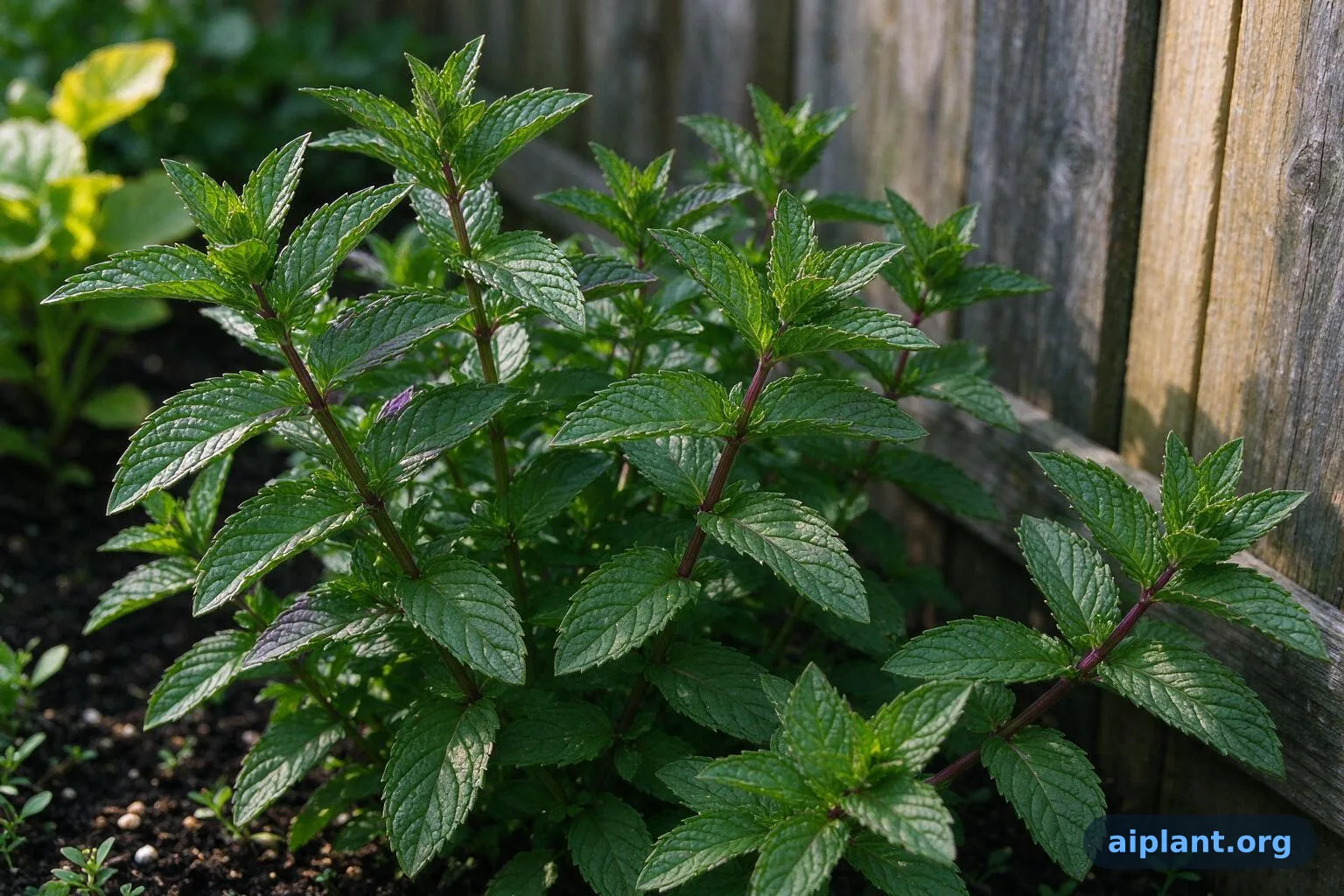
How Do You Grow and Care for Peppermint?
Everything from planting to harvest, with fixes for yellow leaves, rust and leggy stems.