
How Do You Grow and Care for Peppermint?
Everything from planting to harvest, with fixes for yellow leaves, rust and leggy stems.
Peppermint (Mentha piperita) is one of the easiest herbs to grow, but it is also one of the easiest to lose control of. It spreads by underground runners, needs more water than most kitchen herbs, and declines quickly if it is allowed to flower and become woody. This complete guide explains how to plant peppermint in pots or in the ground, how much sun and water it needs, how to prune and propagate it, when and how to harvest, dry and store the leaves, and what to do about yellow leaves, mint rust, leggy stems and pests. It also covers look-alikes and who should be cautious about using peppermint.
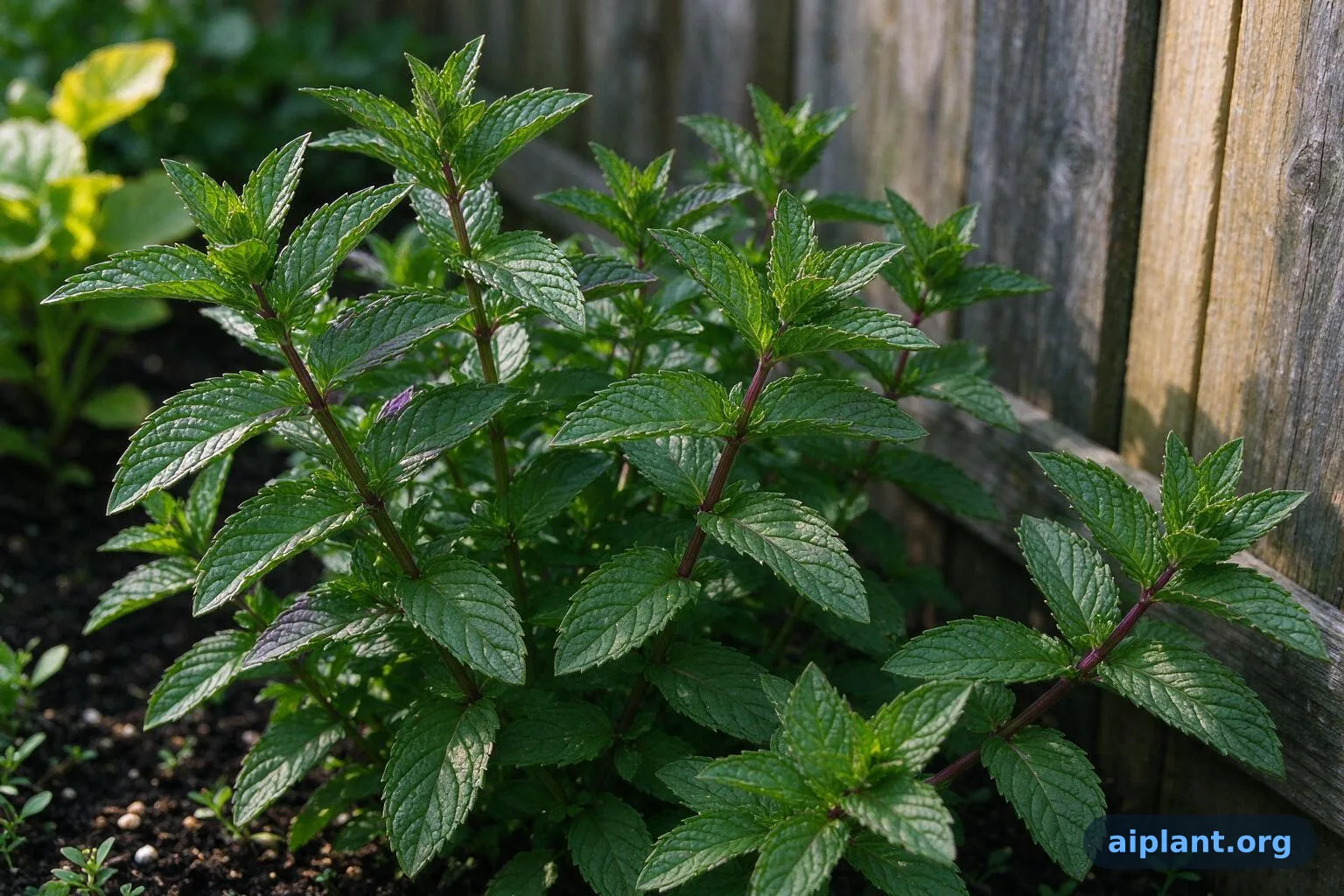
Peppermint Growing Essentials
- Grow peppermint in a pot at least 25 cm (10 in) wide, in moist, rich soil and partial sun (4–6 hours).
- Water when the top 2–3 cm (1 in) of soil feels dry; in summer that is usually every 2–3 days in a pot.
- Prune and harvest stems regularly to keep the plant bushy and prevent leggy growth and flowering.
- Peppermint spreads aggressively by runners; keep it in a container or a root barrier to stop it taking over.
- Harvest leaves before the plant flowers for the strongest flavour, and dry them in a dark, airy place.
What Peppermint Is and How to Tell It Apart
Peppermint (Mentha piperita) is a perennial herb in the mint family, grown for its strong, cooling flavour and scent. It is a natural hybrid of watermint (Mentha aquatica) and spearmint (Mentha spicata), which is why it combines a sharp menthol aroma with a sweet finish. The plant forms square stems, opposite pairs of serrated leaves and, in summer, small pinkish-purple flowers in spikes.
Leaves and stems: Peppermint leaves are dark green, lance-shaped to oval, with toothed edges and a slightly hairy or smooth surface. The stems are square in cross-section, a feature shared by all mints. Crushing a leaf releases a strong, sharp menthol scent that lingers on the fingers.
Flowers and roots: In mid to late summer, peppermint produces whorls of small purple-pink flowers at the top of the stems. Below ground it spreads by shallow runners (stolons) that travel fast through loose soil and can emerge several metres from the parent plant.
Peppermint versus spearmint: Spearmint (Mentha spicata) has brighter, softer green leaves and a sweeter, milder scent without the sharp menthol hit. Peppermint leaves are usually darker and more pointed, and the scent is stronger and cooling. Spearmint is the better choice for mild teas and salads; peppermint is stronger and better for drying and flavouring.
Other look-alikes: Lemon balm (Melissa officinalis) has a lemon scent and softer, rounder leaves. Catnip (Nepeta cataria) has grey-green, downy leaves and a musky scent. Both are in the mint family and have square stems, so always check the scent before using a leaf you are unsure about.
Peppermint and Common Look-Alikes
Peppermint Varieties and Which One to Grow
There are several named peppermint varieties, and the right choice depends on whether you want the strongest flavour, the best garden performance or a milder leaf for cooking. All are grown the same way.
Black peppermint (Mentha piperita var. vulgaris): The classic variety, with dark purple-tinged stems and leaves and the highest menthol content. It is the best choice for drying, tea and flavouring, and it is the most widely sold peppermint.
White peppermint (Mentha piperita var. officinalis): Paler green leaves and a slightly milder flavour. It is often chosen for fresh use and for gardeners in cooler, wetter climates because it is a little more tolerant of shade.
Chocolate peppermint (Mentha × piperita 'Chocolate'): A cultivar with dark, bronze-green leaves and a hint of chocolate in the scent. It is grown mainly for interest and for dessert use, and it is slightly less vigorous than black peppermint.
Citrata or bergamot mint (Mentha × piperita var. citrata): A peppermint group variety with a distinct citrus, bergamot-like scent. It is used in teas and potpourri rather than as a substitute for standard peppermint.
Choosing for your situation: For a single pot on a balcony, black peppermint gives the strongest harvest. For a damp, shaded corner of the garden, white peppermint is more forgiving. Avoid buying unnamed mint at a market if you specifically want peppermint; check the scent and the label, because spearmint is often sold simply as 'mint'.
Peppermint Varieties at a Glance
How to Grow Peppermint Outdoors and Indoors
Peppermint grows quickly and reliably both outdoors and indoors, as long as it has moist soil and enough light. The main difference is that outdoor plants spread and need containment, while indoor plants depend on you for water and airflow.
Growing peppermint outdoors: Plant in spring after the last frost, in a spot with morning sun and afternoon shade. Peppermint grows best in moist, rich soil with a pH of 6.0–7.0. Space plants 30–45 cm (12–18 in) apart if growing in the ground, and set them in a bottomless pot or a root barrier sunk 30 cm (12 in) into the soil to slow the runners. Outdoors, peppermint can reach 45–90 cm (18–36 in) in a season.
Growing peppermint indoors: Peppermint can grow indoors on a bright windowsill, but it needs 4–6 hours of direct light and consistent moisture. Use a pot at least 20–25 cm (8–10 in) wide with drainage holes, and place it in the brightest window you have, ideally south- or west-facing. Indoor plants are more prone to leggy growth and spider mites, so pinch the stems often and check the undersides of leaves weekly.
Where peppermint grows best: Peppermint performs best in a cool, moist position with partial sun, in soil that stays evenly damp but drains. It tolerates light shade and even damp soil, but it sulks in hot, dry, full-sun positions, where leaves scorch and the plant bolts to flower. In hot climates, afternoon shade is essential.
Temperature and winter: Peppermint is hardy in USDA zones 3–11 and survives winter outdoors in most temperate climates. Top growth dies back after the first hard frost, and new shoots emerge from the runners in spring. In containers, move the pot to a sheltered spot or wrap it to protect the roots from repeated freezing and thawing.
Peppermint Quick Care Facts
- Part Used
- Leaves and tender stem tips
- When to Harvest
- Before flowering, from spring to early autumn
- How to Dry
- Dark, airy place at room temperature, 5–10 days
- Storage Life
- Dried: airtight jar 12 months; fresh: damp paper in fridge
- Light
- Partial sun, 4–6 hours direct
- Water
- Keep soil evenly moist; water when top 2–3 cm dry
- Safe for Cats & Dogs?
- Check the ASPCA toxic plant list
Water, Soil and Potting Needs of Peppermint
Peppermint needs more water than most kitchen herbs and a rich, moisture-retentive soil that still drains. Getting water and soil right prevents most of the problems that follow.
How often to water peppermint: Water when the top 2–3 cm (about 1 in) of soil feels dry. In summer, a pot may need water every 2–3 days, and on hot days possibly daily; in winter, reduce to once a week or less. In the ground, water deeply once or twice a week during dry spells. Peppermint wilts dramatically when dry but usually recovers within hours of watering; repeated wilting causes yellowing and leaf drop.
What soil peppermint needs: Use a rich, well-draining mix with plenty of organic matter. A blend of two parts potting soil and one part compost or well-rotted manure works well in pots. Peppermint tolerates a wide pH range but grows best at 6.0–7.0. It dislikes heavy, waterlogged clay, which encourages root rot and mint rust.
The best pot for peppermint: Choose a pot at least 25 cm (10 in) wide and deep, with drainage holes. Peppermint's runners fill a pot quickly, so a wider container is better than a tall, narrow one. Terracotta dries out faster and suits cool, damp climates; plastic or glazed pots hold moisture better in hot, dry conditions. Always use a saucer under indoor pots but empty it after watering so roots do not sit in water.
When to repot peppermint: Repot in spring, every 1–2 years, or when roots appear at the drainage holes or the plant dries out within a day of watering. Move it into a pot one size (about 5 cm / 2 in) larger, tease the rootball apart and trim the runners, then refill with fresh potting mix. Dividing the plant at repotting keeps it vigorous and stops it becoming root-bound.
Should you fertilize peppermint: Feed lightly. Apply a balanced liquid fertilizer at half strength every 4–6 weeks from spring to midsummer, or top-dress with 2–3 cm (1 in) of compost in spring. Too much nitrogen produces soft, leggy growth with weak flavour, so stop feeding by late summer.
Peppermint Watering by Season
Pruning, Propagation and Keeping Peppermint Bushy
Peppermint stays productive only if it is pruned and divided regularly; left alone, it becomes leggy, woody and prone to rust. Pruning is also the easiest way to propagate it.
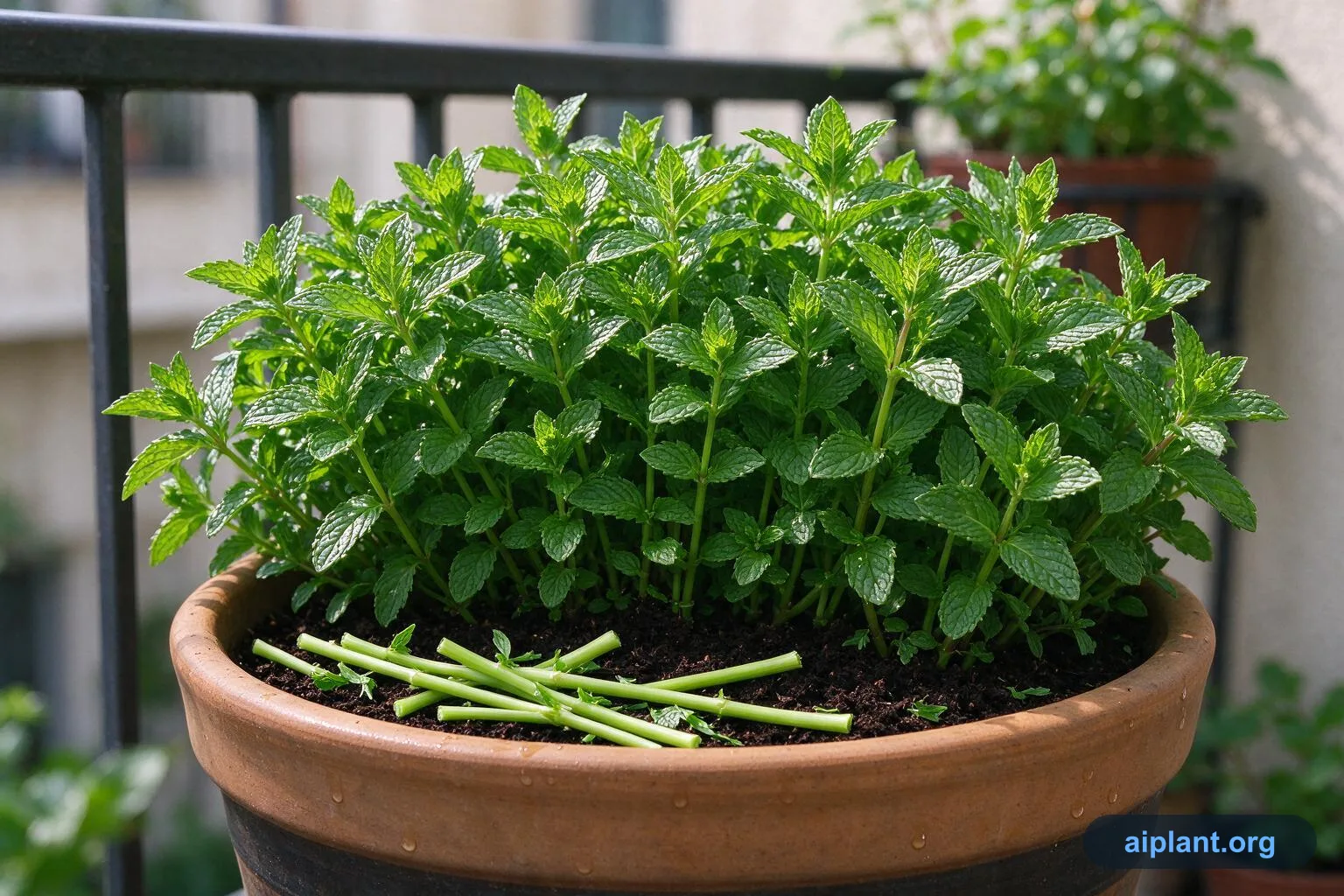
How to prune peppermint: Pinch out the top pair of leaves on each stem when the plant is 15–20 cm (6–8 in) tall, and repeat every 2–3 weeks. Cut back up to one-third of the stems at a time, always above a pair of leaves. Remove flower buds as soon as they appear to keep leaves tender and the flavour strong. After flowering, cut the whole plant back to 5–10 cm (2–4 in) to encourage fresh bushy growth.
How to propagate peppermint: The easiest method is division or runners. In spring, lift the plant and pull apart sections with roots and shoots, then replant them at the same depth. Alternatively, cut a runner with a few roots and pot it up. Keep divisions well watered and in partial shade for a week.
Can you grow peppermint from cuttings: Yes. Take 10–15 cm (4–6 in) cuttings from non-flowering stems, strip the lower leaves and place them in water or straight into moist potting mix. Roots appear in 7–14 days in water; change the water every 2–3 days and pot up when roots are 2–3 cm (about 1 in) long.
Can you grow peppermint from seed: Peppermint is a hybrid and does not come true from seed, so seed-grown plants are variable and often not true peppermint. If you sow seed anyway, surface-sow in spring, keep it moist at 18–21 °C (65–70 °F) and expect germination in 10–20 days. For reliable plants, buy a named variety or propagate from cuttings or division.
How tall and how fast peppermint spreads: Peppermint grows 45–90 cm (18–36 in) tall in a season and can spread 60 cm (24 in) or more per year by runners. In open ground it can colonise a bed within two to three seasons, so plan containment before planting.
Peppermint Propagation Methods Compared
Harvesting, Drying and Using Peppermint
Harvest peppermint before it flowers for the strongest flavour, and take only part of each plant so it regrows quickly. The leaves are the crop; the stems are woody and bitter.
When to harvest peppermint: Begin harvesting when the plant is 15–20 cm (6–8 in) tall, from late spring. The best flavour is just before flowering in midsummer; after flowering, leaves become tougher and less aromatic. Harvest in the morning after dew has dried, when the essential oils are highest.
How to harvest without killing the plant: Cut no more than one-third of the stems at a time, leaving at least 10 cm (4 in) of stem on each. Snip individual leaves from the top or take whole stems just above a leaf pair. Never strip a plant bare; leave the lower third of the plant untouched so it can regrow.
How to dry peppermint: Tie small bundles of stems and hang them upside down in a dark, dry, airy room at 20–25 °C (68–77 °F) for 5–10 days, or spread leaves on a screen. A dehydrator at 35–40 °C (95–104 °F) works in 2–4 hours. Dry until leaves crumble easily, then strip them from the stems.
How to store fresh peppermint: Wrap leaves in a slightly damp paper towel, place them in a loosely closed bag in the fridge and use within 5–7 days. For longer storage, freeze whole leaves in ice-cube trays or chop them into butter or oil and freeze.
How to make peppermint tea: Use 5–8 fresh leaves or 1–2 teaspoons of dried leaves per cup. Pour over water at about 95 °C (203 °F), cover and steep for 5–7 minutes, then strain. Covering the cup keeps the aromatic oils in.
What to cook with peppermint: Use fresh leaves in salads, tabbouleh, raita, sauces and desserts, and dried leaves in baking, chocolate, sweets and marinades. Add fresh leaves at the end of cooking to preserve the flavour. Peppermint is traditionally used in teas and digestive drinks, but this is general information, not medical advice.
Peppermint Harvest and Storage by Season
Peppermint Problems: Yellow Leaves, Rust, Pests and Legginess
Most peppermint problems come from water, light or airflow, and they are easy to correct once you recognise the cause. Yellow leaves, rust, leggy stems and pests are the four issues owners ask about most.
Why peppermint leaves turn yellow: The most common cause is overwatering or poor drainage, which suffocates roots and turns lower leaves yellow and soft. Let the top 2–3 cm (1 in) of soil dry between waterings and check that the pot drains. Yellowing between the veins can also mean nutrient-poor soil; top-dress with compost. Sudden yellowing after a hot, dry spell points to underwatering, which usually recovers after a deep watering.
Pests that attack peppermint: Aphids cluster on new shoots and cause distorted growth; wash them off with a strong jet of water or insecticidal soap. Spider mites cause fine webbing and speckled leaves, especially indoors in dry air; raise humidity and rinse the leaves. Caterpillars and flea beetles chew holes in leaves; pick them off by hand. Slugs damage young shoots in damp gardens; use barriers or evening checks.
Getting rid of mint rust on peppermint: Mint rust shows as bright orange or rust-brown spots on the undersides of leaves, with yellowing on top. It thrives in crowded, damp, poorly ventilated plants. Remove and bin affected leaves and stems (do not compost them), thin the plant to improve airflow, water at the base rather than over the leaves, and cut the plant back to 5 cm (2 in) if infection is severe. In bad cases, lift and divide the plant, discarding affected crowns, and replant healthy divisions in fresh soil.
Why peppermint becomes leggy: Peppermint grows leggy when it lacks light or is not pruned. Indoors, move it to a brighter window; outdoors, trim back surrounding plants. Pinch the tips every 2–3 weeks and cut back flowering stems. Leggy stems can be cut back by half in spring to force bushy new growth.
Stopping peppermint taking over the garden: Grow peppermint in a pot sunk into the ground, or use a root barrier at least 30 cm (12 in) deep around the bed. Remove runners that escape the barrier as soon as you see them, and divide clumps every 1–2 years. Never put peppermint runners on the compost heap unless they are thoroughly dried out.
Peppermint Pests and Their Signs
Who Should Be Careful With Peppermint
Peppermint is generally safe as a culinary herb, but some people should be cautious and ask a doctor or pharmacist before using it regularly or in concentrated forms.
Pregnancy and breastfeeding: Peppermint is commonly consumed in normal food amounts, but concentrated teas and supplements are best avoided during pregnancy and breastfeeding unless a healthcare professional advises otherwise. Ask a doctor or pharmacist first.
Children: Small amounts of peppermint in food are generally fine, but strong peppermint teas and oils should not be given to young children without professional advice. Keep peppermint essential oil away from the faces of infants and young children.
People taking medication: Peppermint can interact with some medicines, so anyone taking prescription medication should check with a doctor or pharmacist before using peppermint tea or supplements regularly. This article is general information, not medical advice.
People with reflux or digestive sensitivity: Strong peppermint tea can worsen heartburn or reflux in some people. If you notice discomfort, reduce the strength or frequency. Peppermint is traditionally used in teas and digestive drinks, but traditional use is not a medical claim.
Peppermint Growing and Care Questions Answered
What is peppermint?
Peppermint (Mentha piperita) is a perennial herb in the mint family, grown for its strong, cooling flavour and scent. It is a natural hybrid of watermint and spearmint, which is why it combines a sharp menthol aroma with a sweet finish. The plant has square stems, opposite pairs of serrated leaves, and small pinkish-purple flowers in spikes in summer.
What are the different varieties of peppermint?
Several named peppermint varieties exist and all are grown the same way. Black peppermint has the highest menthol content and is best for drying and tea. White peppermint is milder and more shade tolerant. Chocolate peppermint has bronze-green leaves with a hint of chocolate, and citrata or bergamot mint has a distinct citrus scent used in teas and potpourri.
How do you grow peppermint?
Plant peppermint in spring after the last frost, in moist, rich soil with a pH of 6.0 to 7.0. Space plants 30 to 45 cm apart and sink a root barrier or bottomless pot 30 cm into the soil to slow the runners. Give morning sun and afternoon shade, and keep the soil evenly moist.
Can peppermint grow indoors?
Yes, peppermint can grow indoors on a bright windowsill if it gets 4 to 6 hours of direct light and consistent moisture. Use a pot at least 20 to 25 cm wide with drainage holes, ideally in a south- or west-facing window. Pinch stems often and check leaf undersides weekly for spider mites.
Can peppermint grow outdoors?
Yes, peppermint grows reliably outdoors and can reach 45 to 90 cm in a season. Plant it after the last frost in moist, rich soil, and contain it with a bottomless pot or a root barrier sunk 30 cm into the ground, because runners can spread 60 cm or more per year.
Where does peppermint grow best?
Peppermint grows best in a cool, moist position with partial sun and soil that stays evenly damp but drains. It tolerates light shade but sulks in hot, dry, full-sun spots, where leaves scorch and the plant bolts to flower. In hot climates, afternoon shade is essential for healthy growth.
How much sunlight does peppermint need?
Peppermint needs partial sun, about 4 to 6 hours of direct light daily. Outdoors, morning sun with afternoon shade suits it best, and in hot climates afternoon shade is essential to prevent scorching and bolting. Indoors, place it in the brightest window available, ideally south- or west-facing.
How often should you water peppermint?
Water peppermint when the top 2 to 3 cm of soil feels dry. In summer a pot may need water every 2 to 3 days, and on hot days possibly daily; in winter reduce to once a week or less. In the ground, water deeply once or twice a week during dry spells.
What kind of soil does peppermint need?
Peppermint needs a rich, moisture-retentive soil that still drains well, not heavy waterlogged clay. Use a mix of two parts potting soil to one part compost or well-rotted manure in pots. It tolerates a wide pH range but grows best at pH 6.0–7.0. Heavy, soggy clay encourages root rot and mint rust, so improve drainage before planting in the ground.
What is the best pot for peppermint?
Choose a pot at least 25 cm (10 in) wide and deep with drainage holes, because peppermint runners fill a pot quickly and a wider container suits them better than a tall, narrow one. Terracotta dries faster and suits cool, damp climates, while plastic or glazed pots hold moisture better in hot, dry conditions. Always empty the saucer after watering.
When should you repot peppermint?
Repot peppermint in spring every 1–2 years, or sooner when roots appear at the drainage holes or the plant dries out within a day of watering. Move it into a pot about 5 cm (2 in) larger, tease the rootball apart, trim the runners and refill with fresh potting mix. Dividing at repotting keeps the plant vigorous and prevents it becoming root-bound.
Should you fertilize peppermint?
Yes, but feed lightly. Apply a balanced liquid fertilizer at half strength every 4–6 weeks from spring to midsummer, or top-dress with 2–3 cm (1 in) of compost in spring. Too much nitrogen gives soft, leggy growth with weak flavour, so stop feeding by late summer.
How do you prune peppermint?
Pinch out the top pair of leaves on each stem when the plant is 15–20 cm (6–8 in) tall, then repeat every 2–3 weeks. Cut back up to one-third of the stems at a time, always above a pair of leaves, and remove flower buds as they appear. After flowering, cut the whole plant back to 5–10 cm (2–4 in).
How do you propagate peppermint?
The easiest method is division or runners. In spring, lift the plant, pull apart sections with roots and shoots and replant them at the same depth, or cut a runner with a few roots and pot it up. Keep divisions well watered and in partial shade for a week.
Can you grow peppermint from cuttings?
Yes. Take 10–15 cm (4–6 in) cuttings from non-flowering stems, strip the lower leaves and place them in water or straight into moist potting mix. Roots appear in 7–14 days in water; change the water every 2–3 days and pot up when roots are 2–3 cm (about 1 in) long.
Can you grow peppermint from seed?
No, not reliably. Peppermint is a hybrid and does not come true from seed, so seed-grown plants are variable and often not true peppermint. If sowing anyway, surface-sow in spring, keep moist at 18–21 °C (65–70 °F) and expect germination in 10–20 days. For reliable plants, buy a named variety or propagate from cuttings or division.
How tall does peppermint grow?
Peppermint grows 45–90 cm (18–36 in) tall in a single season, reaching the upper end in moist, rich soil with partial sun. Plants in hot, dry, full-sun positions stay shorter and often bolt to flower early. Space plants 30–45 cm (12–18 in) apart in the ground so air moves between them and stems stay strong.
How fast does peppermint spread?
Peppermint spreads fast by shallow runners, covering 60 cm (24 in) or more per year and colonising an open bed within two to three seasons. Runners travel through loose soil and can emerge several metres from the parent plant. Sink a bottomless pot or a root barrier at least 30 cm (12 in) deep before planting, and pull escaping runners as soon as they appear.
Does peppermint survive winter?
Yes, peppermint survives winter outdoors in most temperate climates; it is hardy in USDA zones 3–11. Top growth dies back after the first hard frost, and new shoots emerge from the runners in spring. Pots are more exposed, so move them to a sheltered spot or wrap them to protect roots from repeated freezing and thawing.
When should you harvest peppermint?
Harvest peppermint before flowering for the strongest flavour, starting when plants are 15–20 cm (6–8 in) tall in late spring. The best quality comes just before midsummer flowering, when leaves are tender and aromatic. Pick in the morning after dew has dried, since essential oils are highest then; after flowering, leaves turn tougher and less aromatic.
How do you harvest peppermint without killing the plant?
Cut no more than one-third of the stems at a time and leave at least 10 cm (4 in) of stem on each plant. Snip whole stems just above a leaf pair, or pick leaves from the top. Never strip a plant bare; leave the lower third untouched so it regrows quickly.
How do you dry peppermint?
Tie small bundles of stems and hang them upside down in a dark, dry, airy room at 20–25 °C (68–77 °F) for 5–10 days, or spread leaves on a screen. A dehydrator at 35–40 °C (95–104 °F) takes 2–4 hours. Dry until leaves crumble easily, then strip them from the stems.
How do you store fresh peppermint?
Wrap fresh leaves in a slightly damp paper towel, place them in a loosely closed bag in the fridge and use within 5–7 days. For longer storage, freeze whole leaves in ice-cube trays or chop them into butter or oil and freeze. Do not wash leaves until you are ready to use them.
How do you make peppermint tea?
Use 5–8 fresh leaves or 1–2 teaspoons of dried leaves per cup. Pour over water at about 95 °C (203 °F), cover and steep for 5–7 minutes, then strain. Covering the cup keeps the aromatic oils in. Peppermint is traditionally used in teas; anyone pregnant, breastfeeding, giving it to children or taking medication should ask a doctor or pharmacist first.
What can you cook with peppermint?
Use fresh peppermint leaves in salads, tabbouleh, raita, sauces and desserts, and dried leaves in baking, chocolate, sweets and marinades. Add fresh leaves at the end of cooking to keep the cooling flavour. Peppermint is traditionally used in teas and digestive drinks; use 5–8 fresh leaves or 1–2 teaspoons dried per cup, steeped 5–7 minutes in water at about 95 °C (203 °F).
What plants look like peppermint?
Lemon balm has a lemon scent and softer, rounder leaves, while catnip has grey-green, downy leaves and a musky scent. Spearmint has brighter, softer green leaves and a sweeter, milder scent without the sharp menthol hit, and peppermint leaves are darker and more pointed. All are mint family plants with square stems, so check the scent before using an unsure leaf.
Who should avoid peppermint?
People who are pregnant, breastfeeding, giving peppermint to children or taking prescription medication should ask a doctor or pharmacist first, because peppermint can interact with some medicines. Strong peppermint tea can also worsen heartburn or reflux in sensitive people, so reduce strength or frequency if discomfort occurs. Keep peppermint essential oil away from the faces of infants and young children.
Why are my peppermint leaves turning yellow?
The most common cause is overwatering or poor drainage, which suffocates roots and turns lower leaves yellow and soft. Let the top 2–3 cm (1 in) of soil dry between waterings and check that the pot drains. Yellowing between veins suggests nutrient-poor soil, so top-dress with compost; sudden yellowing after a hot, dry spell points to underwatering, which usually recovers after deep watering.
What pests attack peppermint?
Aphids cluster on new shoots and distort growth, and can be washed off with a strong jet of water or insecticidal soap. Spider mites cause fine webbing and speckled leaves, especially indoors in dry air, so raise humidity and rinse leaves. Caterpillars and flea beetles chew holes and can be picked off by hand, while slugs damage young shoots in damp gardens and need barriers or evening checks.
How do you get rid of mint rust on peppermint?
Remove and bin affected leaves and stems rather than composting them, thin the plant to improve airflow, and water at the base instead of over the leaves. If infection is severe, cut the plant back to 5 cm (2 in). In bad cases, lift and divide the plant, discard affected crowns and replant healthy divisions in fresh soil.
Why is my peppermint plant leggy?
Peppermint grows leggy when it lacks light or is not pruned. Indoors, move it to a brighter window; outdoors, trim back surrounding plants. Pinch the tips every 2–3 weeks and cut back flowering stems, and cut leggy stems back by half in spring to force bushy new growth. Indoor plants need 4–6 hours of direct light.
How do you stop peppermint from taking over the garden?
Grow peppermint in a pot sunk into the ground, or use a root barrier at least 30 cm (12 in) deep around the bed, since runners can spread 60 cm (24 in) or more per year. Remove escaping runners as soon as they appear and divide clumps every 1–2 years. Never compost runners unless they are thoroughly dried out.
For general information only. Not a substitute for professional medical advice.
Related articles
How Do You Grow and Care for Kale?
A complete, season-by-season guide to growing crisp kale leaves in beds, pots or indoors.
Spider Plant Brown Tips & No Babies?
How to Grow Cascading Plantlets
How Do You Grow and Care for Chives?
Everything from seed to harvest, plus the fixes when chives yellow or stall.
How to Grow Bushy Mint?
Secrets to Prevent Leggy Growth