
Dahlia Stems Going Mushy and Soil Never Dries Out?
Dry the root zone, cut the rot and keep the tuber growing
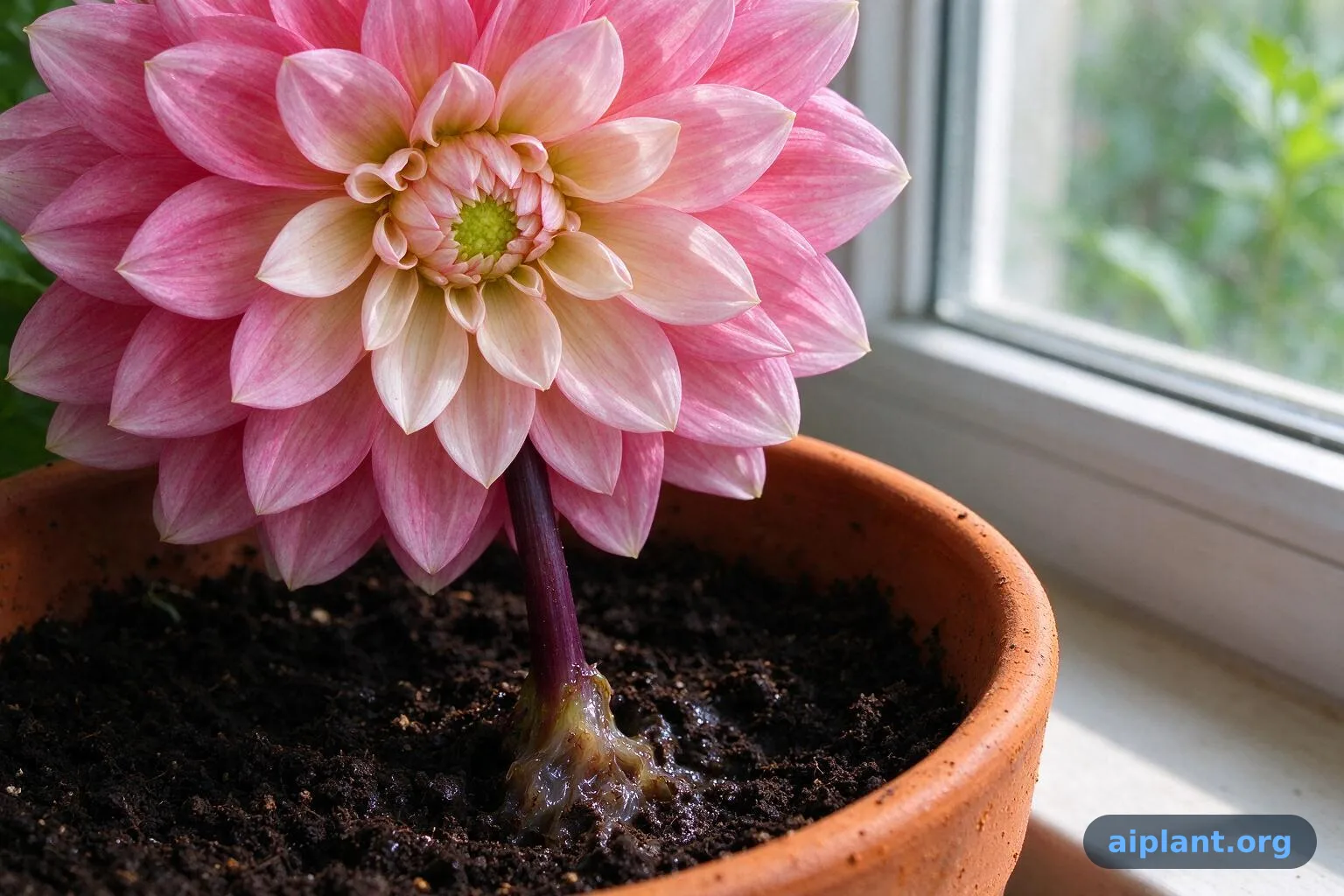
Dahlia (Dahlia pinnata) stems that turn mushy at the base while the soil stays wet for days are showing classic waterlogging and stem rot, not a mysterious disease. The fix is to dry the root zone fast, cut the rot back to firm tissue and correct the drainage that caused it. This article helps you identify exactly what is wrong with your dahlia, decide whether the tuber is still worth saving, and then grow it so the problem does not return.
Dahlia Stem Rot and Wet Soil: The Short Answer
- Mushy stems with soil that never dries usually mean waterlogged tubers; stop watering, lift the plant and cut back to firm white tissue.
- Dahlias need well-drained soil and about 2.5 cm (1 in) of water weekly; let the top 3 cm (1 in) dry before watering again.
- If the tuber is still firm and white when cut, it can be saved; if it is brown and soft throughout, replace it.
- Plant in raised beds or pots with drainage holes, and never let water sit around the crown.
Dahlia Symptom Check: What Mushy Stems and Wet Soil Mean
Use this table to match what you see on your dahlia to the most likely cause and the first action to take. Start with the most common problems first, then read the detailed fixes below.
Mushy Stems at the Soil Line
Mushy stems at the base are the signature of waterlogged tubers and stem rot, usually caused by overwatering, heavy clay soil or a pot without drainage. The tissue feels soft and brown, often with a sour smell. Stop watering immediately, lift the plant and cut the stem back to firm white tissue with clean secateurs; if the tuber is still firm, replant it in fresh, free-draining mix and water only when the top 3 cm (1 in) feels dry.
Soil That Stays Wet for Days
Soil that never dries out usually means poor drainage, a pot with no holes, or a planting hole that holds water like a bucket. Check by digging a 30 cm (12 in) hole and filling it with water; if it is still full after an hour, drainage is the problem. Fix it by planting in a raised bed or pot with drainage holes, adding coarse grit or compost to clay soil, and never watering on a schedule.
Tiny White Bugs and Sticky Leaves
Small white insects and sticky leaves point to aphids or whiteflies, which feed on sap and excrete honeydew. Look under the leaves and along new shoots for clusters of insects or a shiny film. Spray with insecticidal soap every 5-7 days until no new insects appear, and wipe the leaves with a damp cloth to remove the sticky honeydew.
Tall, Thin Stems With No Side Shoots
A dahlia that grows tall and thin with no side shoots is usually short of light or was never pinched out. Move it to a spot with at least 6 hours of direct sun and pinch the growing tip when the plant is about 30 cm (12 in) tall to encourage branching. Leggy dahlia growth also stretches when the roots cannot carry all that top weight, so check whether a pot-bound plant has run out of room and tip it into a wider container before the next flush instead of pushing fertiliser into soft stems.
Buds That Drop Before They Open
Bud drop is often caused by drought stress, heat above 30°C (86°F), or bud mites. Check the soil moisture and water deeply if it is dry; provide afternoon shade in hot climates. If tiny mites are visible inside the buds, remove and destroy affected buds and treat with a miticide.
Tubers That Are Brown and Soft When Cut
If you lift the plant and the tuber is brown and soft throughout, it has rotted beyond saving. Discard it and start with a fresh tuber in well-drained soil. If only part of the tuber is brown, cut away the rotten section until you reach firm white tissue and dust the cut with sulphur before replanting.
Dahlia Symptom, Likely Cause and First Fix
Why Dahlia Stems Turn Mushy at the Base
Mushy stems at the base of a dahlia are almost always the result of too much water around the crown and tuber, which suffocates the tissue and lets rot organisms move in. The fix is to dry the root zone and remove the rotting tissue before it spreads.
Overwatering and Poor Drainage
Dahlias store water in their tubers, so they tolerate short dry spells far better than soggy soil. When the soil stays wet for more than a day or two, the tuber and stem base cannot take up oxygen, and the tissue collapses into a soft, brown mush. Water only when the top 3 cm (1 in) of soil feels dry to the touch, and never water on a fixed schedule.
Heavy Clay Soil or a Pot Without Holes
Clay soil holds water like a sponge, and a pot without drainage holes turns into a swamp after every watering. If you are planting in the ground, dig in coarse grit or compost to improve structure, or plant in a raised bed. In pots, use a mix with added perlite and always choose containers with drainage holes.
Planting Too Deep or Mulching Over the Crown
Dahlias should be planted with the crown just below the soil surface, about 10-15 cm (4-6 in) deep. If the crown is buried too deep or covered with thick mulch, moisture collects around the stem and rot starts. Keep mulch a few centimetres away from the stem and plant so the top of the tuber sits about 5 cm (2 in) below the surface.
Cutting Back the Rot
- Lift the plant carefully: Use a fork to lift the tuber without damaging it, shake off wet soil and inspect the stem base and tuber for brown, soft tissue.
- Cut back to firm white tissue: With clean secateurs, cut the stem and tuber back until you reach firm, white, healthy tissue; if the cut surface is brown and soft, keep cutting.
- Dust and dry: Dust the cut surfaces with sulphur powder and leave the tuber in a dry, airy spot for 24-48 hours to form a callus before replanting in fresh, free-draining mix.
- Replant at the right depth: Set the tuber so the crown is about 5 cm (2 in) below the soil surface and water lightly once, then wait until new growth appears before watering again.
Dahlia Watering and Drainage Fixes
How Often to Water Dahlia to Avoid Root Rot
Water dahlias deeply about once a week, providing roughly 2.5 cm (1 in) of water per week including rainfall, and let the top 3 cm (1 in) of soil dry between waterings. In hot, dry weather you may need to water every 4-5 days, but always check the soil first.
The Finger Test Beats a Schedule
Push a finger into the soil up to the second knuckle; if it feels dry at that depth, water thoroughly until it runs out of the drainage holes. If it still feels damp, wait another day. This simple test prevents the constant moisture that causes stem rot.
Water at the Base, Not the Leaves
Aim the watering can at the soil around the stem, not over the foliage. Wet leaves and a wet crown encourage fungal problems, and water sitting in the leaf axils can rot the stem. Water in the morning so any splashes dry before evening.
Reduce Watering After Rain
After a heavy rainfall, check the soil before watering again. Dahlias in the ground may not need extra water for a week or more, and pots can stay wet for days if the weather is cool and cloudy. Empty saucers and ensure drainage holes are clear.
Watering in Pots vs the Ground
Pots dry out faster than garden soil, so check them every 2-3 days in summer. In the ground, water deeply once a week rather than lightly every day, because deep watering encourages roots to grow downward and improves drought tolerance.
Dahlia Watering by Season and Setting
Why Dahlia Soil Stays Wet and Never Dries Out
Soil that stays wet around a dahlia is nearly always a drainage problem, not a watering problem, and fixing the drainage is the only permanent solution. The most common causes are heavy clay, a pot without holes, or a planting hole that collects water.
Test Drainage With a Hole Full of Water
Dig a 30 cm (12 in) deep hole where the dahlia grows, fill it with water and see how long it takes to drain. If water is still standing after an hour, the soil is poorly drained and needs improvement. This test tells you whether to amend the soil or move the plant.
Improve Heavy Soil With Grit and Organic Matter
For clay soil, spread a 5 cm (2 in) layer of coarse grit and a 5 cm (2 in) layer of compost over the bed and dig it in to a depth of 20-30 cm (8-12 in). This opens up the soil and lets water drain away. Avoid working wet clay, which makes it worse.
Plant in Raised Beds or Pots
If the ground is consistently wet, plant dahlias in a raised bed at least 30 cm (12 in) high or in pots with drainage holes. Use a free-draining mix of two parts compost, one part grit and one part perlite. Empty saucers after watering and raise pots on feet so water can escape.
Check for a Hidden Hardpan or Buried Debris
Sometimes a layer of compacted subsoil or buried building rubble stops water draining. If the hole test shows standing water even after amending, dig a deeper test hole to check for a hard layer, and if found, break it up or move the planting spot.
Dahlia Drainage Test Results and Actions
Can a Dahlia With Rotten Tubers Be Saved?
A dahlia with rotten tubers can be saved if the rot has not reached the whole tuber; cut away the brown, soft parts until you reach firm white tissue, and the remaining tuber can regrow. If the entire tuber is brown and mushy, discard it and start with a fresh one.
How to Tell If the Tuber Is Still Alive
Cut into the tuber with a clean knife. Healthy dahlia tuber tissue is white or cream and firm, like a raw potato. Rotten tissue is brown, grey or black and soft, and may smell sour. If at least one-third of the tuber is firm and white, it is worth saving.
Step-by-Step Tuber Rescue
- Lift and wash the tuber: Dig up the plant with a fork, shake off the soil and rinse the tuber under running water so you can see the healthy and rotten areas clearly.
- Cut away all rot: Using sterilised secateurs, cut back to firm white tissue, removing every brown or soft section; if the cut surface is still discoloured, cut further until it is clean.
- Treat the cuts: Dust every wound with sulphur powder or ground cinnamon, then divide the clump so each remaining section keeps at least one eye and a piece of the stem neck; wounds seal faster when the pieces are stored apart instead of pressed together.
- Replant in fresh mix: Plant the rescued tuber in a pot of fresh, free-draining compost, water lightly once and keep it warm at 18-21°C (65-70°F) until new shoots appear.
When to Cut Losses
If the tuber is soft throughout, smells foul, or has no firm white tissue left, it will not recover. Discard it with the household waste rather than the compost heap, and replant with a fresh tuber in improved soil to avoid repeating the problem.
What Drainage Dahlia Needs to Stop Stem Rot
Dahlias need soil that drains within 30 minutes of watering, and they grow best in a raised bed or pot with drainage holes if the ground is heavy. Good drainage is the single most important prevention against stem rot.
Best Soil Mix for Dahlias
Use a mix of two parts garden compost, one part coarse grit and one part perlite for pots and raised beds. This gives a light, airy structure that holds some moisture but never stays soggy. In the ground, dig in grit and compost to improve heavy clay.
Planting Depth and Spacing
Plant dahlia tubers 10-15 cm (4-6 in) deep with the crown 5 cm (2 in) below the surface, and space plants 45-60 cm (18-24 in) apart so air can move around them. Good airflow dries the soil surface and reduces rot.
Raised Beds and Pots
A container under 30 cm (12 in) across dries unevenly and topples by late summer, so pick the deepest pot the spot allows and sink it into the ground with the rim just proud of the surface. The surrounding soil then wicks away whatever falls through the holes, and the stem base never stands in the shallow film that collects on a patio slab.
Mulch Correctly
Mulch helps retain moisture but should be kept 5 cm (2 in) away from the stem. A thick layer of mulch pressed against the crown keeps the stem base wet and invites rot. Use a light mulch such as straw or compost and replenish it in summer.
Dahlia Pests and Diseases That Follow Wet Soil
Wet, humid conditions around a dahlia encourage aphids, whiteflies and fungal diseases such as powdery mildew and botrytis, so fixing drainage also reduces pest pressure. Scout the plant weekly and act early.
Aphids and Whiteflies
Look for clusters of small green, black or white insects on new shoots and under leaves, with sticky honeydew and sooty mould. Warm, still, damp air lets both colonies multiply faster than the plant can outgrow them, so spray the whole plant with insecticidal soap twice, five days apart, and knock the sticky film off older foliage with a firm stream of water before the sooty mould sets in.
Powdery Mildew
A white, powdery coating on leaves and stems appears when air circulation is poor and humidity is high. Improve spacing, water at the base and remove affected leaves; in severe cases, spray with a sulphur-based fungicide according to the label.
Botrytis and Stem Rot
Grey mould or soft brown rot at the stem base follows wet foliage and poor airflow. Cut out affected stems, reduce watering and improve ventilation; do not compost diseased material.
Slugs and Snails
Slugs and snails chew holes in leaves and can damage new shoots in damp conditions. Hand-pick them after rain or set beer traps, and keep mulch away from the stem to remove hiding places.
Dahlia Pests and Diseases After Wet Weather
Dahlia Care That Keeps Tubers Firm and Flowering
Once the rot is fixed, keep the tuber firm and the plant flowering with the right light, feeding and pruning. Dahlias are heavy feeders and need full sun to bloom well.
Light and Temperature
Give dahlias at least 6 hours of direct sun a day. They grow best at 18-24°C (65-75°F) and stop flowering above 30°C (86°F); in hot climates, provide afternoon shade. They are not frost-hardy and are damaged below 0°C (32°F).
Feeding
Feed every 2-4 weeks with a balanced liquid fertiliser during the growing season, and switch to a high-potassium feed once buds form. Avoid overfeeding nitrogen, which produces tall, soft stems with few flowers.
Pinching and Staking
Pinch out the growing tip when the plant is 30 cm (12 in) tall to encourage side shoots and more flowers. Stake tall varieties to keep stems upright and prevent them snapping in wind.
Deadheading
Remove faded flowers regularly to keep the plant producing new buds. Cut stems back to a pair of leaves, and the plant will send up new flowering shoots within a few weeks.
Overwintering
In cold climates, lift the clump in late autumn once the first light frost has blackened the foliage but while the ground is still workable, cut the stems down to 10 cm (4 in) and store the tubers just covered, not packed tight, in dry compost or vermiculite at 5-10°C (41-50°F). Waiting for a hard freeze is the usual mistake, because the tubers take that damage through the pot and then rot in store. In mild climates leave them where they are under a thick mulch.
Dahlia Quick Care Facts
- Light
- Full sun, at least 6 hours daily
- Water
- Weekly, 2.5 cm (1 in); let top 3 cm dry
- Temperature
- 18-24°C (65-75°F); damaged below 0°C (32°F)
- Humidity
- Average; avoid wet foliage and crown
- Soil
- Well-drained, pH 6.0-7.5
- Fertilizer
- Balanced feed every 2-4 weeks; high potassium at bud
Dahlia Stem Rot, Watering and Drainage: Supplemental FAQ
How do I treat Dahlia stem rot with hydrogen peroxide or fungicide?
Hydrogen peroxide is not a reliable cure for Dahlia stem rot; cutting out the ruined tissue and fixing the drainage is. Drenching a waterlogged crown adds the very moisture the rot needs, so work on the wound instead: paint or dust it with sulphur once you have opened the soft area, and let it dry for 24 hours before the tuber goes back into the ground. If you reach for a fungicide, match the product to the rot named on its label and spray tissue you have already trimmed and dried, not the mush itself.
Can I take Dahlia cuttings from a plant whose stems have started to rot?
No, Dahlia cuttings from rotting stems usually fail because the tissue is already collapsing. Only take cuttings from firm, healthy shoots; soft brown stem bases carry rot into the new plant. If the tuber is still firm and white when cut, salvage it first, let it callus, and take cuttings only from clean new growth.
What potting mix recipe keeps Dahlia pots from staying soggy after rain?
Fill the pot by volume, not by weight: about two-thirds well-rotted compost to one-third sharp grit, plus a handful of perlite per 10 litres of mix. A rainy night then runs straight through instead of sitting against the crown. Tip the pot on its side after a storm to check the holes have not clogged with moss, and empty any saucer the same day.
How do I overwinter Dahlia tubers in a cold garage without them rotting?
Dig Dahlia tubers after the first frost blackens foliage, cut stems to 10 cm, and cure them dry for a few days. Store in boxes of dry compost or vermiculite at 5-10°C in the garage, keeping them dry and frost-free. Check periodically and discard any soft, brown tubers before rot spreads.
Why are my Dahlia leaves turning yellow while the soil stays wet?
Yellow Dahlia leaves over wet soil point to waterlogged roots that cannot take up oxygen, not hunger. Confirm by digging a 30 cm hole and filling it with water; if it still stands after an hour, drainage is the cause. Stop watering, lift the plant, cut back to firm white tissue and replant in free-draining mix.
How do I stop Dahlia stems snapping in wind once they grow tall?
Stake tall Dahlia stems early, before they lean, tying loosely to canes or a grid so stems flex rather than snap. Pinch the growing tip at 30 cm to encourage side shoots and a bushier, sturdier frame. Site in full sun and avoid excess nitrogen, which makes soft, tall growth prone to wind damage.
Related articles
How to Save Soft Drooping Aloe Leaves?
Fix Yellow Leaves and Root Rot
Why Are Basil Leaves Turning Yellow and Drooping?
Find the cause in minutes and get your plant back to steady harvest.
How to Make Succulents Colorful and Vibrant?
Solve Etiolation and Black Rot
How to Grow Pothos Lush and Trailing?
Complete Care Guide for Bushy Growth