
Blueberry Bush Cuttings Not Rooting and Leaves Pale? Diagnose and Fix
Match the symptom to the cause and get your blueberry back to green growth and fruit.
Blueberry Bush (Vaccinium corymbosum) cuttings that never root and leaves that fade to pale yellow usually share one cause: conditions that suit neither the cutting nor the mother plant. This article helps you diagnose which problem you have, then gives the precise fixes for rooting, soil pH, watering, and the care that keeps a blueberry productive for years.
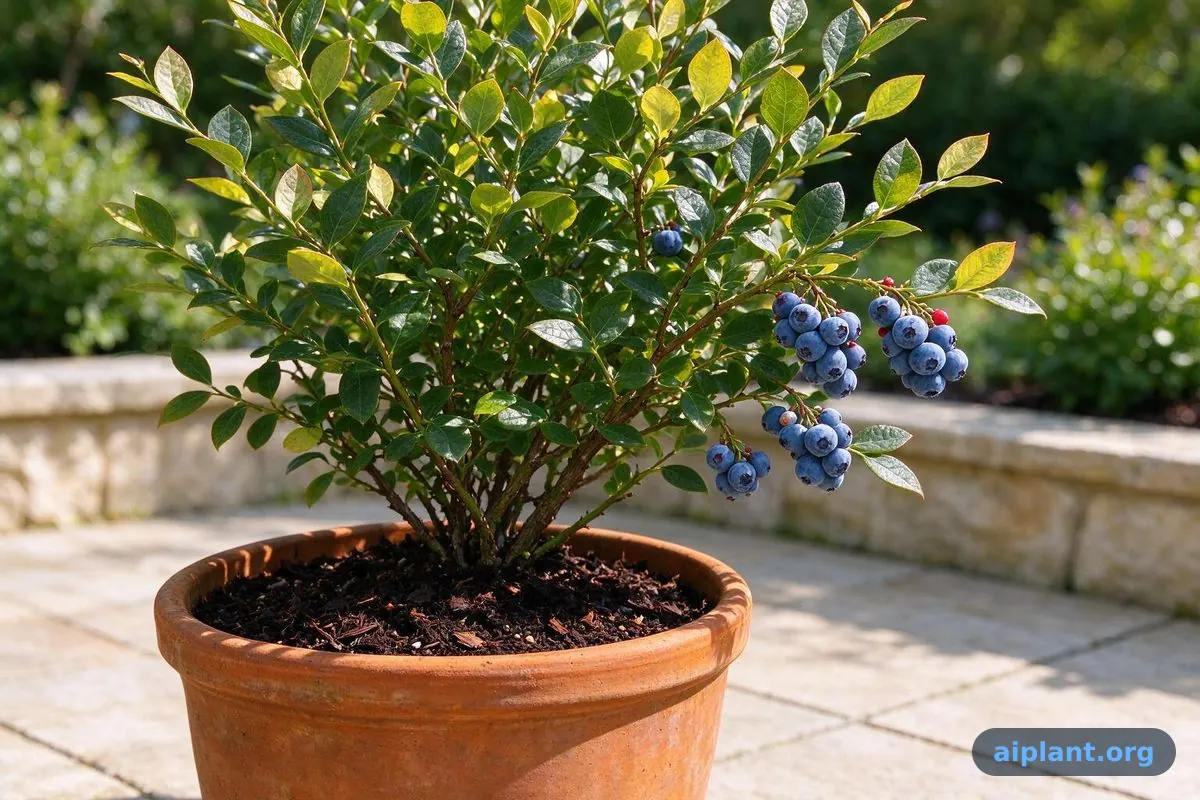
Blueberry Bush Cutting and Pale Leaf Fixes at a Glance
- Blueberry cuttings rarely root in water; use softwood or semi-hardwood cuttings in moist, acidic propagation mix instead.
- Pale leaves almost always mean soil pH above 5.5, which locks up iron; lower it with elemental sulfur or acidic fertilizer.
- Yellowing from the bottom up is usually nitrogen deficiency or waterlogged roots, not disease.
- Take cuttings in late spring to early summer from new growth, 10–15 cm long, and keep humidity high.
- Cuttings that turn black and rot sat in cold, wet media too long; use fresh mix and bottom heat at 21–24°C (70–75°F).
Blueberry Bush Symptom Check: What Pale Leaves and Failed Cuttings Mean
The table below matches the most common blueberry symptoms to their likely cause and first action. Read it before treating anything, because the same pale leaf can come from three different problems.
Pale Leaves With Green Veins on New Growth
Iron chlorosis shows as new leaves that emerge pale yellow while their veins stay green, and it starts at the shoot tips. The cause is soil pH above 5.5, which makes iron unavailable even when it is present in the soil. Test the pH with a home kit or send a sample to a lab; if it reads 6.0 or higher, apply elemental sulfur at the rate on the label for your soil type and water it in. Do not use lime or wood ash anywhere near the bush.
Yellow Leaves Starting at the Bottom of the Bush
Older leaves turning uniformly yellow from the lowest branches upward usually mean nitrogen deficiency or roots sitting in water. Check drainage first: dig a 30 cm (12 in) hole near the drip line, fill it with water, and see whether it drains within an hour. If it does not, the plant is waterlogged and needs a raised bed or a drainage channel. If drainage is fine, apply an acidic nitrogen fertilizer such as ammonium sulfate at the label rate in spring and again after harvest.
Cuttings That Turn Black and Mushy
Black, soft cuttings mean the stem rotted before roots formed, almost always from too much water and too little air in the propagation mix. Discard affected cuttings, sterilize the tray, and restart with fresh perlite-peat mix that drains freely. Keep the medium damp, not soaked, and do not cover the tray so tightly that condensation drips onto the stems.
No New Shoots After Propagation
A cutting that stays green but never pushes shoots is usually alive but rootless, or rooted and starved of light. Tug gently: if it resists, roots have formed and the cutting needs brighter light and a weak acidic feed. If it lifts easily, roots have not formed and the cutting needs more time, bottom heat, or replacement with a semi-hardwood cutting taken at the right stage.
Leaves Drooping and Curling Despite Wet Soil
Drooping with wet soil points to root rot, often Phytophthora, which thrives in poorly drained sites. Lift one plant and inspect the roots: healthy blueberry roots are fine and pale, while rotting roots are brown and slough off. Replant in a raised bed with coarse peat and pine bark, and never let the crown sit below the soil line. Water only when the top 5 cm (2 in) of soil feels dry, and drench the root zone with a phosphonate fungicide labeled for Phytophthora on blueberries if the disease is confirmed, following the label interval.
Blueberry Bush Symptom, Cause, and First Fix
Why Blueberry Bush Cuttings Fail in Water and Rot Before Rooting
Blueberry cuttings can be started in water, but they root poorly and often rot because the stems need oxygen at the cut end and clean, acidic conditions that standing water does not provide.
Water Roots Are Weak and Slow
A blueberry cutting in a glass of water may callus but rarely produces the fine, healthy roots that soil-grown cuttings develop. The cut end sits in stagnant water with low oxygen, so the cambium suffocates and soft rot fungi enter. Change the water every two days and keep the glass in bright indirect light, but expect most cuttings to fail; water is a last resort, not the standard method.
Black, Mushy Stems Signal Rot
Cuttings that turn black from the base upward are rotting, usually because the medium stayed saturated or the cutting was taken from soft, lush growth. Cut back to clean green tissue, recut just below a node, and insert into a mix of 50 percent peat and 50 percent perlite. Water once, then let the surface dry slightly before watering again; a cutting that feels firm at the base after two weeks is still viable.
The Fix: Root Cuttings in Acidic Mix, Not Water
- Take the cutting at the right stage: in late spring to early summer, cut 10–15 cm (4–6 in) from the tip of a healthy new shoot, making the cut just below a leaf node, because softwood roots faster than old wood.
- Prepare the base: strip the lower 5 cm (2 in) of leaves, dip the cut end in rooting hormone powder, and tap off the excess so the powder does not clump and rot the stem.
- Insert into fresh mix: push the cutting one-third of its length into damp peat-perlite mix in a clean tray, spacing cuttings 5 cm (2 in) apart so air moves between them.
- Hold humidity without soaking: cover the tray with a clear dome or plastic bag, vent it daily, and keep the mix damp like a wrung-out sponge, never dripping, for the 4–8 weeks rooting takes.
- Check for roots before potting: after four weeks, slide a cutting out of the mix to look for white root tips; if none are visible, reinsert it and wait another two weeks before testing again.
Why Cuttings Stay Green but Do Not Grow
A cutting that holds its leaves but never pushes new shoots is alive but has not rooted, or has rooted and is starving for light. Move the tray to bright, indirect light or under a fluorescent strip for 14 hours a day, and feed with a quarter-strength acidic fertilizer only after roots resist a gentle tug. Do not fertilize an unrooted cutting; it burns the cut end.
Blueberry Bush Propagation Method Comparison
When and How to Take Blueberry Bush Cuttings for Reliable Rooting
The best time to take blueberry cuttings is late spring to early summer, when new shoots have hardened slightly but still bend without snapping.
Timing by Wood Type
Softwood cuttings taken in June root fastest in most climates, while semi-hardwood cuttings taken in late July and August suit warm regions where early summer heat stresses the tray. Avoid taking cuttings after mid-August in cold climates, because roots will not have time to harden before winter.
Choosing the Right Shoot
Select a healthy shoot from the current season, 10–15 cm (4–6 in) long, with at least three leaf nodes. Avoid flower buds and any shoot showing pale or mottled leaves, since those cuttings carry the same pH problem into the tray. Cut in the cool of morning when stems are full of water.
Step-by-Step Cutting Preparation
- Make a clean cut: use sterilized pruners to cut just below a node, because cells at the node divide most readily and form roots faster than internode tissue.
- Trim the leaves: remove the bottom two sets of leaves and cut the remaining leaves in half to reduce water loss while the cutting has no roots to replace it.
- Wound the base: scrape 1 cm (0.4 in) of bark from one side of the base, which exposes more cambium and improves rooting hormone uptake.
- Apply hormone and plant: dip in rooting hormone, tap off excess, and insert into damp peat-perlite so the lowest node sits just below the surface.
- Keep humidity high: cover with a dome, mist the leaves twice daily, and keep the tray at 21–24°C (70–75°F) until roots resist a gentle tug.
How Long Blueberry Cuttings Take to Root
Softwood cuttings usually root in 4–6 weeks, semi-hardwood cuttings in 6–10 weeks, and cuttings that have not rooted by ten weeks are unlikely to succeed. Check by tugging gently rather than pulling the cutting out, and move rooted cuttings to individual pots once new shoots appear.
Why Blueberry Bush Leaves Go Pale and How to Bring the Green Back
Pale blueberry leaves almost always trace back to soil pH outside the narrow 4.5–5.5 range the plant needs, or to roots that cannot take up nutrients because they are waterlogged or damaged.
Iron Chlorosis From High pH
When pH climbs above 5.5, iron becomes insoluble and new leaves emerge pale yellow with green veins. Test the soil, then lower pH with elemental sulfur at the label rate for your soil texture, watering it in and retesting after eight weeks. Do not use aluminum sulfate on blueberries, and never add lime, wood ash, or mushroom compost, all of which raise pH.
Nitrogen Deficiency Starting Low
Yellowing that begins on the oldest, lowest leaves and moves upward is classic nitrogen shortage, common in sandy soils or after heavy rain. Apply ammonium sulfate in spring at the label rate and again immediately after harvest, then water it in so the nitrogen reaches the shallow root zone.
Waterlogged Roots Causing Pale Leaves
Blueberries have fine, shallow roots that suffocate in saturated soil, and the first sign is pale, limp foliage on a plant that has been overwatered. Check with the hole test: if water stands in a 30 cm (12 in) hole for more than an hour, install drainage or replant in a raised bed with pine bark and peat. Water only when the top 5 cm (2 in) of soil feels dry, and never let the pot or bed sit in a saucer of standing water.
Fixing Pale Leaves Step by Step
- Test pH and drainage first: use a home pH kit and the hole test before adding anything, because feeding a plant with the wrong pH wastes money and can worsen the imbalance.
- Correct pH slowly: apply elemental sulfur at the label rate and water it in, then retest after eight weeks rather than expecting an instant change.
- Feed with an acidic nitrogen source: apply ammonium sulfate in spring and after harvest at the label rate, avoiding nitrate fertilizers that raise pH over time.
- Mulch with pine bark or sawdust: spread 8–10 cm (3–4 in) of acidic mulch around the bush to hold moisture and keep pH low as it breaks down.
- Water with rainwater where possible: tap water high in bicarbonate raises pH over months, so collect rainwater for containers and acid-loving beds. Refill containers from a butt rather than the hose, and retest soil pH if leaves pale again.
When a Pale Blueberry Bush Is Worth Saving
A bush with pale leaves but firm green stems and some healthy new growth will recover once pH and water are corrected. If most branches are brittle, the crown is mushy, or no new shoots appear for a full season, replace the plant rather than spending another year on it.
Blueberry Bush Leaf Colour and What It Means
Blueberry Bush Care That Keeps Leaves Green and Fruit Coming
Blueberry Bush grows best in full sun and acidic, well-drained soil, and the care below prevents the pale leaves and failed cuttings described above.
Light and Site
Give blueberries at least six hours of direct sun; in hot climates, afternoon shade protects fruit from sunscald. Space bushes 1.2–1.5 m (4–5 ft) apart, because good airflow reduces fungal disease and allows each bush to reach its mature 1.2–1.8 m (4–6 ft) height.
Watering and Roots
Blueberries need 2.5–4 cm (1–1.5 in) of water per week, including rain, delivered to the shallow root zone. Irrigate with drip lines or a soaker hose so the foliage stays dry, which lowers fruit rot pressure and keeps the shallow roots evenly moist without splashing spores onto ripening berries.
Soil and pH
Plant in soil with pH 4.5–5.5, amended with peat moss and pine bark. In containers, use a 1:1 blend of peat and pine bark fines, and refresh the top 5 cm (2 in) each spring to maintain acidity.
Feeding
Feed with an acidic fertilizer such as ammonium sulfate in early spring as buds swell and again after harvest. Avoid nitrate-based fertilizers, which raise pH over time and contribute to pale leaves.
Pruning for Fruit
Blueberries fruit on canes that are one year old and older, with the heaviest crop on two- to four-year-old wood. Prune in late winter while dormant, removing canes older than six years at ground level and thinning crowded growth, because unpruned bushes produce leaves and little fruit.
Pollination and Varieties
Most highbush blueberries are only partially self-fertile, so plant two different varieties within 1.2 m (4 ft) for full crops. Good pairs include 'Bluecrop' with 'Blueray' or 'Duke' with 'Elliott', and bees do the pollinating when both bloom together.
Chill Hours and Winter Hardiness
Highbush blueberries need 800–1,000 chill hours below 7°C (45°F); in mild winters with fewer chill hours, bushes leaf out but flower poorly. Choose low-chill varieties such as 'Misty' or 'Sharpblue' for warm zones, and in cold zones mulch heavily after the ground freezes to protect shallow roots.
Container Growing
Use a pot at least 45 cm (18 in) wide and deep for a fruiting blueberry, repotting every two to three years before roots circle the pot. A root-bound bush stops fruiting because roots cannot absorb enough water and nutrients to size up the berries.
Blueberry Bush Care by Season
Blueberry Bush Quick Care Facts
- Variety
- Highbush; choose low-chill types in warm zones
- Pollination
- Partially self-fertile; plant two varieties within 1.2 m
- Years to Fruit
- 2–3 years from a named variety; 5+ from seed
- When to Harvest
- Berries ready when deep blue and easily parted
- Light
- Full sun, at least 6 hours daily
- Water
- 2.5–4 cm (1–1.5 in) weekly; keep roots moist
- Soil
- Acidic pH 4.5–5.5, peat and pine bark
Harvesting Blueberry Bush Fruit and Stopping Birds and Rot
Blueberries are ready when they are deep blue, dull rather than shiny, and part from the stem with a gentle roll, and they do not ripen further after picking.
The Ripeness Test
Taste one berry before picking a batch: fully ripe blueberries are sweet with a slight tang, while shiny, firm berries are underripe and will stay tart. Pick every two to three days during harvest, because berries left on the bush overripen and drop.
What Spoils the Crop First
Birds take ripe berries before the grower does, so net bushes as soon as fruit begins to colour, using netting with 2 cm (0.75 in) mesh pegged to the ground. Botrytis fruit rot follows wet, humid conditions and shows as grey fuzzy mould on ripening berries; prune for airflow and pick promptly after rain. Spotted-wing drosophila lays eggs in ripening fruit, causing soft, sunken berries, so harvest every two days and refrigerate immediately.
Storing the Harvest
Fresh blueberries keep 10–14 days in the fridge in a covered container, unwashed until use. Freeze washed, dried berries on a tray before bagging for up to a year, or make jam within two days of picking, because berries spoil fastest at room temperature.
Protecting the Crop From Cold and Heat
Late frost below -2°C (28°F) kills open blueberry flowers and removes that year's fruit; cover bushes with frost cloth when a frost is forecast during bloom. In heat above 32°C (90°F), fruit softens and sunscalds, so maintain mulch and water to keep the canopy cool.
Blueberry propagation and leaf-colour troubleshooting
How do I harden off and pot up rooted blueberry cuttings?
Harden rooted cuttings gradually before potting. Once roots resist a gentle tug and new shoots appear, move trays to brighter light and open the dome vents wider each day over about a week. Pot into acidic mix of peat and pine bark fines, keep pH 4.5–5.5, water when the top 5 cm feels dry, and avoid direct sun until the plant stands without wilting.
Can I take blueberry cuttings in winter from dormant hardwood?
No, dormant hardwood cuttings are not the recommended method for highbush blueberry. The reliable windows are softwood in late spring to early summer and semi-hardwood in late July and August; avoid cutting after mid-August in cold climates so roots harden before winter. Winter hardwood is slower and less dependable, so use it only as a backup.
Why are my rooted blueberry cuttings' new leaves turning pale after potting up?
Pale new leaves with green veins after potting usually mean pH above 5.5 locking up iron, or the mix is not acidic enough. Test the pH and repot into peat and pine bark fines if needed; avoid lime, wood ash and mushroom compost. Also check drainage, since saturated roots show pale, limp foliage.
How do I overwinter young blueberry cuttings their first year?
Protect first-year cuttings through winter by keeping them in a sheltered, frost-free spot and mulching heavily after the ground freezes, because blueberry roots are shallow and heave in cold. Do not let pots sit in standing water. In mild zones, keep them outdoors but sheltered; in cold zones, an unheated garage or cold frame works.
Why are my blueberry cuttings' leaves wilting under the humidity dome?
Wilting under a dome usually means the mix is too wet or the dome traps condensation that drips onto stems, suffocating the cut end. Vent the dome daily, keep the medium damp like a wrung-out sponge rather than soaked, and use fresh peat-perlite that drains freely. If stems feel soft or blacken, discard and restart.
Can I propagate blueberry by layering instead of cuttings?
Yes, layering is a reliable alternative and often easier than cuttings. Bend a low flexible branch to the ground, bury a section a few centimetres deep, and hold it down; it roots over one season while still attached to the parent. Sever and lift it once roots form, then pot into acidic mix. It suits gardeners with space and needs no humidity dome.
Related articles
What Does a Fiddle Leaf Fig Really Need to Thrive?
Everything Ficus lyrata needs, from light and water to leaf fixes.
Why Is My Philodendron Losing Colour and Going Pale?
Find the cause in minutes and bring back deep, healthy green.
Gardenia Bud Drop & Yellow Leaves?
How to Grow Fragrant Blooms
How to Grow Bushy Mint?
Secrets to Prevent Leggy Growth