
Why Is My Chamomile Growing Tall and Leggy? Fix Sparse Stems
Find the cause and pinch, cut back and water your way to a full, flower-covered plant.
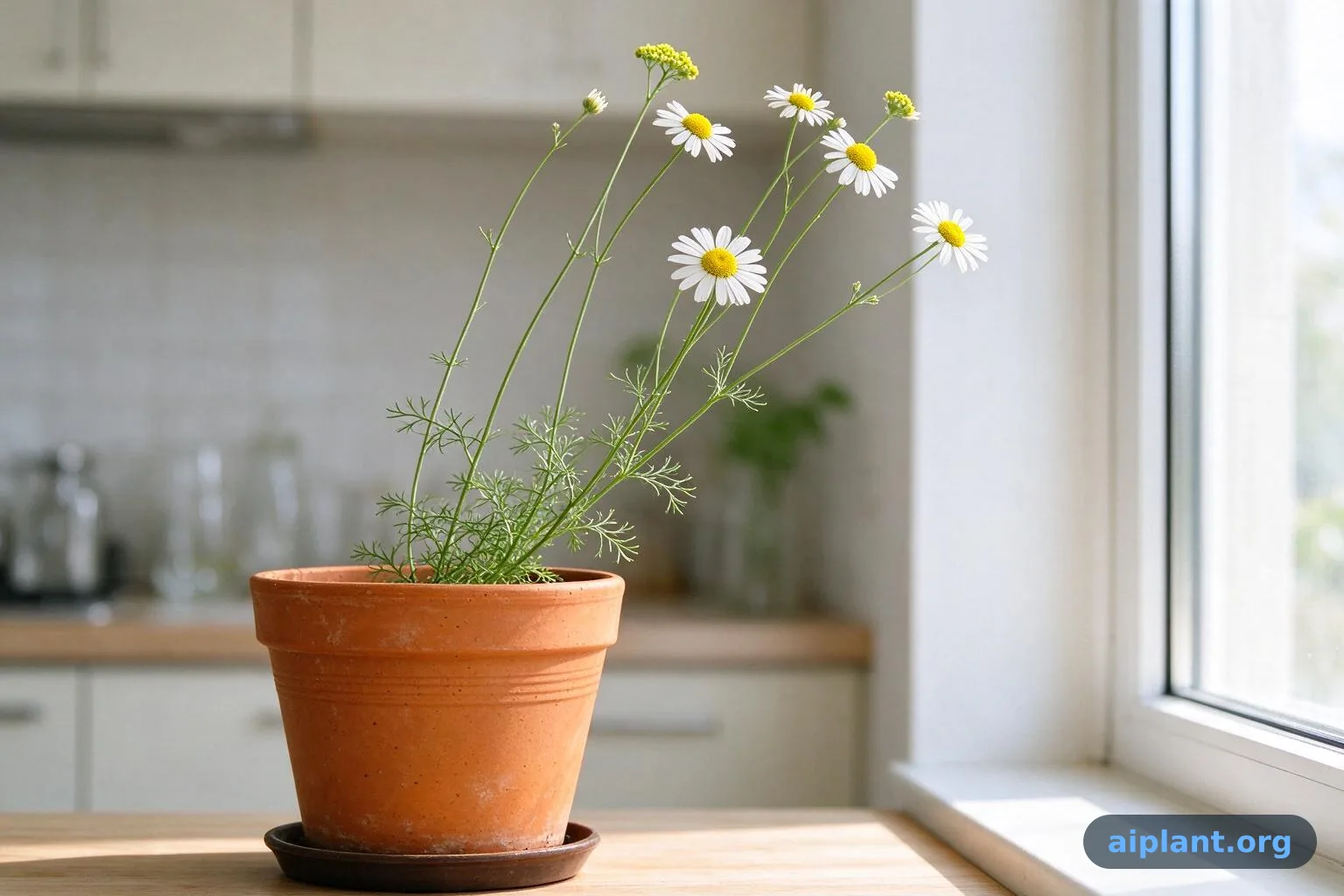
Chamomile (Matricaria chamomilla) that shoots upward with long, bare stems and few side shoots is almost always chasing light or running unpruned. The fix is not more fertilizer: it is finding out whether light, watering, crowding or cold is behind the stretch, then cutting the plant back at the right height and giving it the conditions that push new shoots from the base. This diagnosis-first article shows how to read each symptom, when the plant is still worth saving, and how to harvest and dry the flowers once the bush fills out again.
Chamomile Legginess: The Short Answer
- Chamomile stretches tall and thin when it gets less than 6 hours of direct sun a day or is left unpruned; pinch or shear the tips to force side shoots.
- Cut leggy stems back by about half their height, to roughly 8–10 cm (3–4 in), and keep the plant in full sun to trigger bushy regrowth.
- Soggy, never-drying soil rots chamomile roots and thins the top; water only when the top 2 cm (1 in) of soil feels dry.
- A cold night below about -5 °C (23 °F) can blacken leaves; damaged leaves are still usable after washing and trimming.
Chamomile Symptom Check: What Tall, Sparse or Mushy Stems Mean
Chamomile tells you what is wrong through its shape, its stems and its soil, and the table below matches the most common complaints to their likely cause and first action. Read the row that fits, then go to the matching sub-heading for the full fix.
Leaves from a struggling chamomile are still safe to eat or use: rinse them under cool running water, trim away brown, mushy or blackened parts with clean scissors, and use only the firm, green tissue. Do not eat leaves from a plant that smells musty or has mould on the soil surface.
Tall, Thin and Bare With No Side Shoots
A chamomile that grows straight up with long internodes and almost no branching is stretching for light or has never been pinched, and both are correctable within a few weeks during the growing season.
Too little light is the most common cause: chamomile needs at least 6 hours of direct sun a day, and indoors a bright windowsill often delivers only 2–3. When light is weak, the plant spends its energy lengthening the stem to reach it, so leaves stay far apart and side buds never break. Move the pot to a south-facing spot or add a full-spectrum grow light 15–20 cm (6–8 in) above the tips for 14 hours a day.
No pinching lets the main stem dominate: an unpinched chamomile puts its energy into one central shoot. Once the plant is 10–12 cm (4–5 in) tall, pinch out the top 2–3 cm (about 1 in) with your thumb and forefinger, just above a leaf pair, and repeat on every new tip every two weeks until the plant fills its pot.
Cut back a plant that is already leggy: if stems are long and bare, shear the whole plant back by about half, to roughly 8–10 cm (3–4 in) above the soil, using clean scissors. Chamomile regrows from lower leaf nodes, and within 10–14 days you should see new shoots at the cut points; if no shoots appear after three weeks in good light, the plant is exhausted and worth replacing.
Crowding steals the light each stem needs: seedlings sown thickly or plants set closer than 20 cm (8 in) apart shade each other and all stretch upward. Thin seedlings to 20–25 cm (8–10 in) spacing when they have two true leaves, and give each potted plant its own 15 cm (6 in) pot.
Sparse Chamomile Reaching Toward the Window
Indoor chamomile that leans and loses leaves on one side is responding to uneven light, and rotating the pot is the cheapest fix before you reach for a grow light.
One-sided light makes one-sided growth: a window delivers strong light from a single direction, so shoots on the bright side grow and shoots on the dark side stall. Turn the pot a quarter turn every three or four days so every side takes its turn facing the glass, and the plant will even out over a month.
Glass filters much of the useful light: even a sunny window cuts light intensity, and in winter a north-facing sill may give less than 2 hours of direct sun. Place indoor chamomile in an unshaded south- or west-facing window, and from October to March add a grow light for 12–14 hours a day to stop the winter stretch.
Leggy lower stems can be buried at repotting: when you move a stretched plant into a larger pot, set it 2–3 cm (about 1 in) deeper than it grew before, covering the bare lower stem with fresh mix. Chamomile roots readily along buried stem nodes, and the buried section sends up new shoots and steadies the plant.
Mushy Chamomile Stems and Soil That Never Dries Out
Mushy stems at the soil line mean the roots are drowning, and chamomile is more sensitive to wet soil than to almost anything else. Act as soon as the stem feels soft, because rot spreads upward fast.
Overwatering in dense soil is the usual cause: chamomile grows best in light, free-draining soil at pH 6.0–7.5, and a peat-heavy potting mix holds water for days. Water only when the top 2 cm (1 in) of soil feels dry to the touch, and in a 15 cm (6 in) pot that is often once every three or four days in summer and once a week in winter.
No drainage hole turns a pot into a swamp: excess water has nowhere to go, so the bottom half of the root ball stays saturated. Use a pot with at least one drainage hole, tip away any water in the saucer 30 minutes after watering, and repot a soggy plant into a mix of two parts potting soil to one part perlite or coarse grit.
Rescue a plant with soft stems now: lift it from the pot, rinse the roots and cut away brown or mushy roots with sterilised scissors, then replant in fresh gritty mix in a clean pot. Keep it in bright indirect light for a week and water sparingly until new growth appears; if the main stem is mushy above the soil line, take 8–10 cm (3–4 in) tip cuttings from healthy stems instead, because the base will not recover.
Blackened Leaves After a Single Cold Night
Chamomile tolerates light frost but not a hard freeze, and leaves blackened after one cold night are frost-injured tissue that will not recover.
Know the cold limit: chamomile grows best between 15 °C and 25 °C (59–77 °F) and usually survives down to about -5 °C (23 °F); below that, unprotected leaves and stems blacken and turn limp overnight. Watch the forecast and move pots under cover or drape fleece over garden plants when a hard freeze is due.
Trim the damage and wait for regrowth: cut blackened stems back to green tissue with clean scissors, but leave firm green leaves alone because they still feed the plant. New shoots usually appear from the base within two to three weeks once temperatures rise, and if the crown stays firm and green the plant is worth keeping.
Give cold-damaged plants warmth and light, not fertilizer: move pots to a sheltered, sunny spot and water only when the soil begins to dry, since roots are slow to take up water in cold soil. Feed nothing until new growth is clearly underway, as salts around inactive roots do more harm than good.
Sticky Leaves With Fine Webbing Underneath
Spider mites are the pest most likely to thin a leggy indoor chamomile, and they thrive in the dry, warm air that also encourages stretching.
Recognise the damage early: look for fine, dusty webbing between leaves and along stems, plus tiny pale speckles on the upper leaf surface where mites have sucked out cell contents. Tap a leaf over a white sheet of paper and watch for specks that move; a heavy infestation turns leaves yellow and causes them to drop.
Raise humidity and wash the plant: mites dislike damp air, so mist the foliage in the morning and group pots together to lift local humidity. Wipe both leaf surfaces with a damp cloth every few days, which physically removes mites and their eggs, and repeat for two weeks to catch newly hatched ones.
Treat stubborn infestations with insecticidal soap: spray the undersides of leaves and stems until dripping, using a ready-to-use insecticidal soap, and repeat every five to seven days for three applications. Keep the plant out of direct sun while the spray dries to avoid leaf burn, and isolate it from other plants until no new webbing appears for a week.
Powdery Mildew on Crowded, Leggy Stems
Powdery mildew is the disease that most often follows a dense, airless chamomile, coating leaves in white powder and weakening the plant further.
Spot the white coating: the first sign is a dusting of white or grey powder on upper leaf surfaces and young stems, often starting where plants touch and air cannot move. Leaves then yellow, curl and drop, and the plant stops producing new side shoots.
Open up the canopy: thin crowded stems and shear back the densest growth so air moves through the plant, and water at the base in the morning rather than overhead in the evening. Space plants at least 20 cm (8 in) apart and remove infected leaves as soon as you see them, bagging them rather than composting.
Apply a potassium bicarbonate spray: mix a potassium bicarbonate fungicide according to the label and spray all leaf surfaces weekly until new growth stays clean for two weeks. Alternate with a sulfur-based product if mildew returns, and avoid spraying in temperatures above 30 °C (86 °F) to prevent leaf damage.
Chamomile Symptom, Cause and First Action
Chamomile Quick Care Facts
- Part Used
- Flowers and young leaves
- When to Harvest
- Pick flowers as petals open flat
- How to Dry
- Air-dry in shade at 20–25 °C
- Storage Life
- Airtight jar in a dark cupboard
- Light
- Full sun, 6+ hours direct
- Water
- When top 2 cm (1 in) is dry
How Often to Water Chamomile So Roots Stay Firm
The right watering rhythm for chamomile is set by the soil, not the calendar, and a finger test beats any fixed schedule.
Water when the surface is dry, not when the plant droops: push a finger 2 cm (1 in) into the mix; if it feels dry, water until it runs from the drainage hole, and if it feels damp, wait another day. Drooping leaves in wet soil signal root damage, not thirst, so never water a wilted plant without checking first.
Water deeply and less often: a thorough soak that wets the whole root ball encourages roots to grow down, while daily light sprinkles keep only the surface wet and weaken the plant. In summer, one deep watering every three or four days in a 15 cm (6 in) pot is usually enough; in winter, cut back to once a week or less.
Outdoor chamomile in the ground needs help only in dry spells: established plants tolerate short dry periods, but a stretch of two weeks without rain calls for one deep soak at the base. Water in the morning so foliage dries before evening, which lowers the risk of fungal problems on the leaves.
Chamomile Watering by Season and Setting
Why Chamomile Cuttings Rot Instead of Rooting in Water
Chamomile cuttings often turn to mush in a glass of water because the stems are soft, the water goes stale and the cut end sits without oxygen.
Soft stem tips rot before roots form: take cuttings from firm, semi-woody stems rather than the softest green tips, cutting 8–10 cm (3–4 in) just below a leaf node with a clean blade. Strip the lower leaves so none sit in water, and change the water every two days to keep it oxygenated.
Rooting in free-draining mix is more reliable: dip the cut end in water, then in rooting hormone if you have it, and push it 3 cm (about 1 in) into a mix of equal parts potting soil and perlite. Keep the mix damp but not wet at 18–22 °C (64–72 °F) in bright indirect light, and tug gently after two to three weeks: resistance means roots have formed.
A clear cover keeps humidity without soaking the stem: a plastic bag or propagator lid over the pot holds moisture in the air rather than the soil. Open it for a few minutes each day to let fresh air in, and remove it entirely once new leaves appear.
Dividing an Overgrown Chamomile Clump
An overgrown chamomile that has spread into a dense mat can be divided in spring or early autumn, which restores airflow and gives you several smaller, bushier plants.
- Lift the clump when the soil is moist: water the plant the day before, then slide a fork under the root ball and lever it out, keeping as much soil around the roots as possible so the divisions recover quickly.
- Pull the clump into sections by hand: chamomile roots separate easily, so tease the mass into pieces each with three or four healthy shoots and a share of roots; cut through stubborn joins with a clean knife rather than tearing.
- Replant at the original depth and water in: set each division 20–25 cm (8–10 in) apart in full sun, firm the soil around the roots and water well, then keep the ground damp for the first week while new roots establish.
Divide in cool weather, not in a heatwave: spring or early autumn gives the divisions time to root before flowering or frost, while midsummer heat stresses them. Discard the woody, hollow centre of an old clump and replant only the vigorous outer sections.
Harvesting and Drying Chamomile Flowers That Keep Colour and Scent
Chamomile flowers hold their colour and scent when they are picked at the right moment and dried quickly in shade, and the harvest also keeps the plant bushy.
Pick flowers as the petals open flat: harvest in mid-morning after dew has dried, when the white petals are fully open and the yellow centre is firm; flowers picked before opening dry poorly, and flowers left too long shatter. Snip each flower with a short stem and pick every two or three days through the flowering season, which also encourages more buds.
Dry in shade, never in direct sun: spread flowers in a single layer on a mesh rack or paper in a dark, airy room at 20–25 °C (68–77 °F) for 7–14 days, turning them gently after three days. Direct sun bleaches the petals and drives off the aromatic oils, so a shaded spot with good airflow gives the best colour and scent.
Test for dryness before storing: a fully dried flower feels papery and crumbles between the fingers, while a cool or soft centre means moisture is still inside. Store only completely dry flowers, because a single damp flower can spoil the whole jar.
Chamomile Harvest and Drying by Stage
Why Stored Chamomile Goes Mouldy or Musty
Dried chamomile turns mouldy when it was stored before it was fully dry or when it sits in a warm, humid cupboard, and the fix starts at the drying stage.
Seal it only when bone dry: pack flowers into an airtight glass jar once they crumble easily, and leave the jar open for the first day in a dry room to let any last moisture escape. A musty smell or grey fuzz on the flowers means moisture was trapped, and that batch should be discarded rather than used.
Store in the dark and away from heat: keep jars in a cupboard below 25 °C (77 °F), away from the stove and sunlight, where the flowers hold colour for about a year. Label the jar with the drying date and check it every few weeks, removing any flower that shows clumping or a changed smell.
Use a moisture absorber in humid climates: a small food-safe silica packet taped to the inside of the lid keeps the air in the jar dry. Replace it when the flowers begin to lose their scent, which usually happens after 10–12 months.
What Chamomile Is and How to Tell It From Look-Alikes
Chamomile (Matricaria chamomilla) is an annual herb with finely divided, thread-like leaves and daisy flowers whose yellow centre is hollow and cone-shaped, growing 30–60 cm (12–24 in) tall.
Use the hollow cone to confirm the plant: cut a flower in half and look at the yellow centre; German chamomile has a hollow, cone-shaped receptacle, while the similar-looking mayweed has a solid centre. Crush a leaf between your fingers and smell it: true chamomile is sweet and apple-like.
Do not confuse it with Roman chamomile: Roman chamomile (Chamaemelum nobile) is a low, creeping perennial with a solid centre and a stronger, more bitter scent, grown as a ground cover rather than a tall annual. Both are used as teas, but only German chamomile grows tall and leggy in the way described here.
Check the leaves before brewing anything foraged: chamomile's fine, feathery leaves are distinctive, but several related weeds share the flower shape. If the plant's identity is uncertain, grow chamomile from seed in a labelled pot instead of harvesting a look-alike.
Chamomile Tea, Safety and Who Should Ask a Doctor First
Chamomile flowers are commonly brewed as a caffeine-free tea and used in the kitchen, and a few groups should check with a professional before drinking it regularly.
Brew fresh or dried flowers for a light, apple-scented tea: steep 1–2 teaspoons of dried flowers in a cup of water just off the boil for 5 minutes, then strain; fresh flowers need about twice as much. The young leaves can be chopped into salads, and the flowers are traditionally used in herbal infusions.
Pregnant and breastfeeding women, children and people taking medication should ask a doctor or pharmacist first: chamomile is a common allergen in the daisy family, and professional advice is the right step before regular use, especially alongside prescribed medicines. Anyone with a known allergy to ragweed, chrysanthemum or other daisy-family plants should be cautious.
Keep the tea away from pets and small children: store dried flowers in a closed jar out of reach, and never leave a hot cup where a child or animal can knock it over. If a reaction such as a rash or stomach upset occurs after drinking chamomile tea, stop and seek advice.
Chamomile troubleshooting and care FAQs
Can I still use chamomile leaves that were damaged by spider mites, or should I throw them away?
Damaged leaves can still be used if the tissue is sound: rinse under cool running water, trim brown, mushy or blackened parts with clean scissors, and keep only firm green tissue. Discard leaves from a plant that smells musty or has mould on the soil surface. Treat the mites too, since dry indoor air suits them, and check new growth before picking again.
How do I tell German chamomile apart from mayweed or Roman chamomile before harvesting it?
Cut a flower in half: German chamomile has a hollow, cone-shaped yellow centre, while mayweed's centre is solid. For Roman chamomile, check growth habit, since it creeps low as a perennial and carries a harsher, bitter aroma, whereas German chamomile stands 30–60 cm tall as an annual with feathery, thread-like leaves. If identity is still uncertain, do not harvest; sow labelled seed instead.
How much dried chamomile should I use per cup of tea, and can I use the fresh flowers instead?
Use 1–2 teaspoons of dried flowers per cup, and yes, fresh flowers work but need roughly twice the amount. Steep in water just off the boil for about 5 minutes, then strain. Pick flowers when petals open flat and the yellow centre is firm. Anyone pregnant, breastfeeding, giving it to children or taking medication should ask a doctor or pharmacist first.
Is chamomile safe to drink regularly if I have a ragweed or daisy-family allergy?
Not without professional advice first. Chamomile is a common allergen in the daisy family, so anyone with a known ragweed, chrysanthemum or other daisy-family allergy should be cautious and ask a doctor or pharmacist before regular use, especially alongside prescribed medicines. Stop and seek advice if a rash or stomach upset follows a cup.
Related articles
How to Grow Bushy Mint?
Secrets to Prevent Leggy Growth
Pothos Growing Leggy with Few Leaves?
Make It Bushy!
How Do You Grow and Care for Chives?
Everything from seed to harvest, plus the fixes when chives yellow or stall.
What Does a Fiddle Leaf Fig Really Need to Thrive?
Everything Ficus lyrata needs, from light and water to leaf fixes.