
Why Is My Echinacea Not Flowering or Dropping Buds?
Find the cause in minutes and get your echinacea blooming again.
Echinacea (Echinacea purpurea) that refuses to flower or drops buds before they open is almost always reacting to one of a few fixable conditions, not failing permanently. The answer runs from light and root space to pests and winter damage, and each cause leaves a different signature you can check in minutes. This diagnosis-first article shows you how to read those signs, correct the problem, and then keep the plant healthy enough to bloom and be harvested for years.
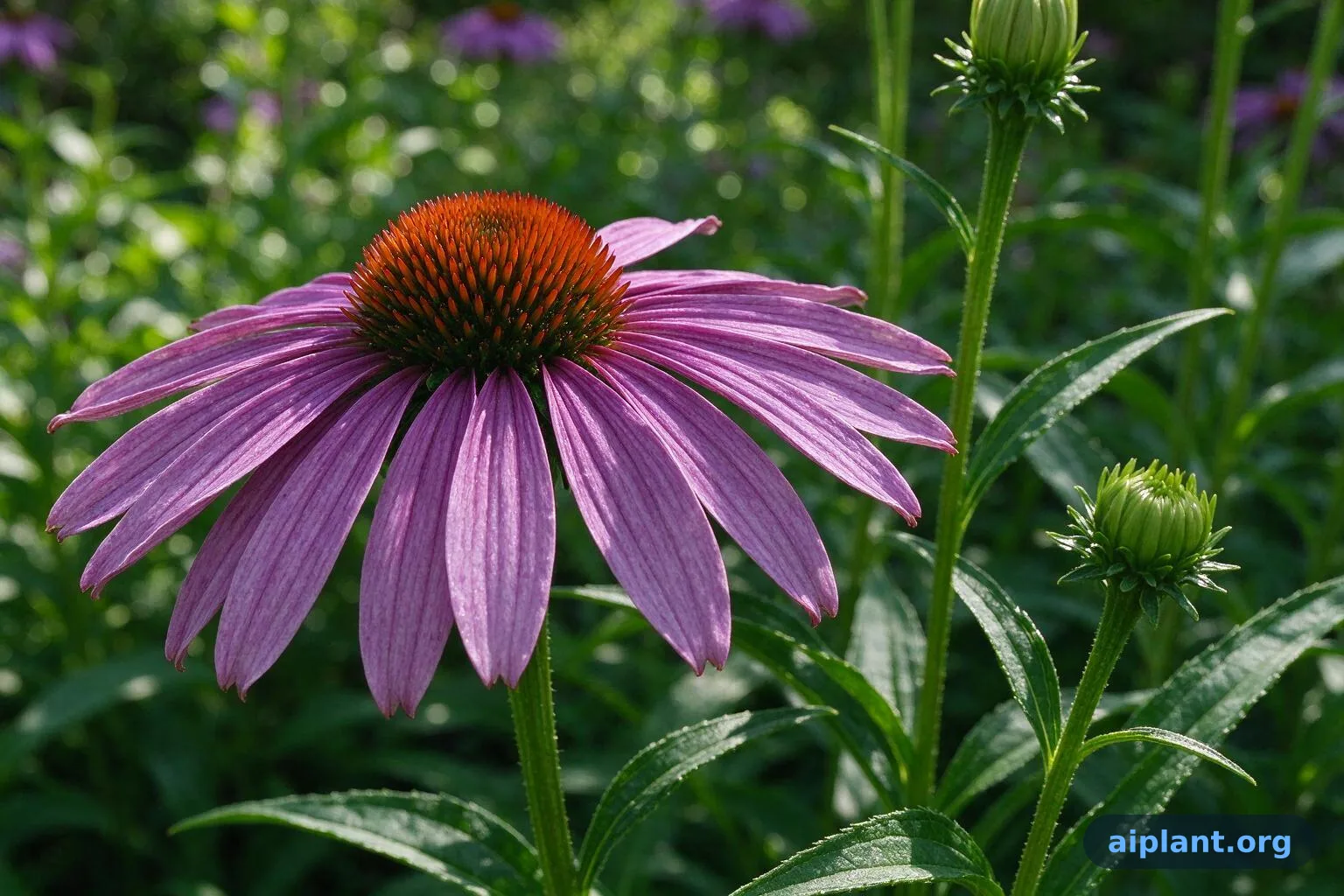
Echinacea Bud Drop and No-Bloom: The Fast Answer
- The most common cause of Echinacea not flowering is too little sun: echinacea needs at least 6 hours of direct light to initiate buds.
- Buds that brown and drop before opening usually signal drought stress, thrips or budworm feeding, or a plant that is root-bound in a crowded clump.
- Tall floppy stems come from shade, too much nitrogen, or an old crowded crown; stake, divide, and stop high-nitrogen feeding.
- A plant that vanished after winter sat in wet soil or was lifted by frost heave; check drainage and crown depth before replanting.
Echinacea Symptom Check: Match What You See to the Fix
Use this table as an index: find the symptom closest to what your Echinacea shows, then read the matching sub-heading below for the full cause and fix. The rows are ordered from the most common complaint to the least.
If affected leaves are still green and firm, they remain safe to use: wash them under running water, trim away brown or chewed edges, and dry them before brewing. Discard any leaf that is mushy, mouldy, or black at the base. Leaves that have been sprayed with insecticidal soap should be rinsed again before use, and any leaf showing grey mould or black stem rot should be composted rather than brewed.
Echinacea Symptom, Likely Cause, and First Action
Echinacea Buds That Brown and Drop Before They Open
Buds that turn brown, shrivel, and fall without opening are the single most common Echinacea complaint, and the cause is usually water stress or an insect feeding inside the bud. Recognise it by watching the bud tip: healthy buds stay green and firm until the ray petals unfurl, while failing buds darken from the tip down and detach with a slight pull.
Drought stress is the most common cause: Echinacea is drought-tolerant once established, but a first-year plant or one in a container has shallow roots and aborts buds when the top 5 cm (2 in) of soil dries for several days. Water deeply at the base, giving about 2.5 cm (1 in) per week including rain, and check with a finger before watering again.
Thrips and budworm are the second cause: thrips are slender, 1–2 mm insects that rasp the bud surface, leaving it silvery and distorted, while budworm caterpillars bore in and leave frass. Open a few failing buds over white paper; if insects or droppings fall out, remove and bin the affected buds and treat the clump with an insecticidal soap every 7 days until no new damage appears.
Root competition starves the bud: a clump crowded by nearby perennials or grass loses moisture and nutrients before they reach the flower stems. Clear a 30 cm (12 in) ring around the crown and mulch with 5 cm (2 in) of compost, keeping it off the stems, so water soaks straight to the roots.
Cold or wet spells at bud set abort the crop: a late frost below −2 °C (28 °F) or a week of waterlogged soil makes the plant drop buds as a stress response. Improve drainage with grit if the soil stays soggy, and accept that frosted buds will not recover this season; the plant will re-bud in 3–4 weeks once conditions settle.
Echinacea Bud Problems: Signs and Causes
Echinacea That Stays Leafy With No Flower Buds
A healthy-looking Echinacea that never forms buds is almost always getting too little direct sun or too much nitrogen. Recognise it by the growth habit: the plant makes a dense leafy mound and long soft stems, but no flower stems rise above the foliage.
Too much shade suppresses bud initiation: Echinacea needs at least 6 hours of direct sun a day, and in less than 4 hours it stays vegetative. Track the sun across the spot for a day; if the clump sits in shade for most of the afternoon, move it in early spring or thin the branches above it so light reaches the crown.
High nitrogen feeds leaves, not flowers: a lawn fertiliser or rich manure applied near the clump pushes soft leaf growth and delays flowering. Stop nitrogen feeds from spring onward and use a low-nitrogen, high-phosphorus feed once at bud set, following the label rate, to redirect energy into flowers.
An immature or recently moved plant needs a season: first-year seedlings and divisions often flower lightly or not at all while they build roots. Give them a full growing season in place, keep them watered, and expect a normal flower crop in the second year.
A pot-bound container plant runs out of resources: roots circling a small pot dry out fast and cannot support buds. Move the plant into a container one size larger, about 5 cm (2 in) wider, in spring, using a free-draining mix, and water when the top 3 cm (1 in) feels dry.
Echinacea Quick Care Facts
- Part Used
- Flowers and roots
- When to Harvest
- Flowers in full bloom; roots in autumn
- How to Dry
- Warm, airy, dark spot; roots sliced thin
- Storage Life
- Airtight jar, dark cupboard, 12 months
- Light
- Full sun, 6+ hours direct
- Water
- 2.5 cm weekly; drier once established
Tall Floppy Echinacea Stems That Fall Over
Echinacea that grows tall, thin, and floppy is stretching for light or being pushed by excess nitrogen, and the fix is staking now plus correcting the cause for next year. Recognise it by long internodes, pale green stems, and flower heads that lean to the ground after rain.
Shade etiolation is the usual cause: stems grown in less than 6 hours of sun elongate and weaken as they reach for light. Move the clump to a sunnier spot in early spring, or prune back the shrubs casting shade, so the plant receives direct light for most of the day.
Excess nitrogen and rich soil make soft growth: soft stems cannot hold the flower heads upright. Stop high-nitrogen feeding, avoid fresh manure, and support the current stems with a grid or three canes and twine, tying at 30 cm (12 in) intervals until the flowers finish.
An old, crowded crown produces weak shoots: after 4–5 years the clump is dense and the outer stems flop outward. Divide the crown in early spring, replanting the vigorous outer pieces at 45–60 cm (18–24 in) spacing so each has room to stand.
Wind and rain exposure add the final push: a site open to prevailing wind topples even strong stems. Plant a low hedge or use a peony ring set early in the season, before stems lengthen, so the growth grows up through the support rather than being forced into it later.
Echinacea Stem Support by Situation
Echinacea Missing After Winter: Why It Did Not Return
An Echinacea that fails to come back after winter usually died from wet soil, frost heave, or a crown buried too deep, not from cold alone; the species survives to about −30 °C (−22 °F) in well-drained ground. Recognise the failure in spring by digging gently around the expected crown: a live plant shows firm white roots and green buds at soil level, while a dead one has brown mushy roots or a hollow crown.
Winter wet is the top killer: Echinacea rots in soil that stays saturated through winter. If the spot puddles, lift the plant, work in grit and compost to raise the bed by 5–8 cm (2–3 in), and reset the crown so its top sits at soil level, never below it.
Frost heave lifts the crown and dries the roots: repeated freeze-thaw cycles push the crown out of the ground. After the last hard frost, press any lifted crown back to soil level and top-dress with a 5 cm (2 in) layer of leaf mould or compost, keeping it clear of the stems.
A crown buried too deep smothers the growth buds: planting deeper than the nursery level, or piling mulch over the crown, keeps buds cold and wet. Reset the crown at the same depth it grew before, and pull mulch back 5 cm (2 in) from the stems.
Cutting back too early weakens the plant: leaving hollow stems standing over winter shelters beneficial insects and marks the crown; cut back to 10 cm (4 in) in early spring instead of autumn, then clear the debris.
Dividing an Overgrown Echinacea That Flowers Poorly
An Echinacea clump that produces fewer and smaller flowers each year is overgrown and root-bound, and dividing it in early spring restores flowering within the same season. Recognise the problem by a dead centre in the clump, crowded shoots, and flower heads half the size they were three years ago.
- Lift the crown in early spring: dig 20 cm (8 in) out from the stems and lever the clump up with a fork, keeping as much root as possible, just as new green shoots appear.
- Cut away the dead centre: slice off the woody, hollow middle with a knife and keep the firm outer pieces, each with at least two shoots and a healthy root section.
- Replant at the original depth: set each division 45–60 cm (18–24 in) apart in full sun, firm the soil, and water well; a division replanted too deep will sulk and rot.
- Water for the first month: keep the soil evenly moist until new growth is 10 cm (4 in) tall, then return to the normal weekly soak; most divisions flower by late summer.
Echinacea Division: What to Keep and Discard
Harvesting and Drying Echinacea Flowers and Roots
Harvest Echinacea flowers when the ray petals are fully open and the cone is firm, and lift roots in autumn after the foliage dies back, so both dry without mould. Cut flower stems in mid-morning on a dry day, once dew has lifted, and choose stems with no insect damage.
Flower harvest timing: pick flowers at full bloom, not in bud, because the cone continues to open after cutting. Leave at least half the stems on each clump so the plant can photosynthesise and return next year; a plant cut hard in its first season may not flower again until the following summer.
Root harvest timing: dig roots in late autumn, after the leaves yellow and die back, when the plant is 2–3 years old and the roots are thick enough to slice. Wash them thoroughly, cut off the fine rootlets, and slice the main roots into 5 mm (¼ in) pieces before drying, since whole roots mould inside.
Drying flowers without mould: bundle 5–8 stems and hang them upside down in a warm, dark, airy room at 20–25 °C (68–77 °F) for 10–14 days, until the stems snap rather than bend. A food dehydrator on its lowest setting also works; spread the heads in a single layer so air moves between them.
Drying roots without mould: spread the slices on a mesh tray in the same warm, airy room, turning them daily for 7–10 days, or dry at 35–40 °C (95–104 °F) in a dehydrator until they are brittle and snap cleanly. Store fully dry material in airtight jars in a dark cupboard for up to 12 months, and discard anything soft or musty.
Echinacea Harvest and Drying by Plant Part
Echinacea Seedlings and Cuttings That Fail to Root
Echinacea seedlings and cuttings fail most often because the medium is too cold, too wet, or the cutting was taken at the wrong stage. Recognise the problem by seedlings that stall at 2–3 cm (about 1 in) or cuttings that blacken at the base within a week.
Cold soil stalls germination and rooting: Echinacea seed germinates best at 20–22 °C (68–72 °F) and needs 10–20 days; below 15 °C (59 °F) it sits dormant and rots. Use a heat mat or a warm windowsill, and keep the medium damp but not soaked.
Cuttings taken from hollow or flowering stems rot: take 8–10 cm (3–4 in) tip cuttings from firm, non-flowering shoots in early summer, strip the lower leaves, and insert them in a free-draining mix; keep humidity high with a clear cover and vent it daily.
Overwatering drowns new roots: seedlings and cuttings need air at the root zone. Water from below when the surface feels dry, and use a mix with at least 30% perlite or grit so excess water drains freely. If the medium already smells sour or shows green algae, repot into fresh mix at once and cut back watering to once every three days until new growth appears.
Seed needs light and cold to break dormancy: sow on the surface and press the seed in, because light aids germination, and give a 4-week cold period in a fridge for species that are slow. Transplant seedlings once they have two true leaves, spacing them 45 cm (18 in) apart.
Echinacea Propagation: Seed vs Cutting
Echinacea Look-Alikes and Who Should Be Careful
Echinacea purpurea is recognised by its rough, hairy leaves, drooping purple-pink ray petals around a spiny orange-brown cone, and a height of 60–120 cm (24–47 in). Several look-alikes share the daisy shape, so check the cone and leaf texture before harvesting anything.
Rudbeckia and Heliopsis differ in the cone: black-eyed Susan has a flat dark cone and smooth leaves, while Heliopsis has yellow petals and a yellow cone; neither has the spiny, raised Echinacea cone. Dahlias and Gaillardia have softer leaves and different flower centres, so a rough leaf and a spiny cone confirm Echinacea.
Who should be careful: people who are pregnant or breastfeeding, children, and anyone taking medication should ask a doctor or pharmacist before using Echinacea preparations, because the plant can interact with some medicines. Traditional use is as a brewed tea from the flowers or roots; keep portions modest and stop if any reaction appears.
Growing conditions that prevent problems returning: Echinacea prefers full sun, a soil pH of 6.0–7.0, and spacing of 45–60 cm (18–24 in) for air movement. Water deeply once a week rather than lightly, mulch to keep the crown cool, and divide every 3–4 years so the clump stays vigorous and flowering.
Echinacea troubleshooting: additional questions
How do I overwinter Echinacea in a container without the roots freezing or rotting?
Yes, with drainage and insulation. Choose a frost-proof pot wider than deep, use free-draining mix with grit, and set the crown at soil level, never buried. Water sparingly through winter, as saturated mix rots the crown. Move the pot against a sheltered wall, wrap it in bubble wrap or fleece, and press the crown back down after any frost heave. Echinacea survives to about −30 °C in well-drained ground, so drainage matters more than cold protection.
Can I grow Echinacea in a pot on a balcony, and what size container does it need?
Yes, Echinacea grows well in a pot on a sunny balcony, provided it gets at least 6 hours of direct sun. Choose a container roughly 45 cm wide and deep for a mature plant, with drainage holes and a free-draining mix. Repot one size larger, about 5 cm wider, when roots circle the base, and water when the top 3 cm feels dry, since pots dry faster than garden soil.
How do I deadhead Echinacea to encourage more flowers, and does leaving the cones help birds?
Yes, deadheading keeps Echinacea blooming. Cut the stem back to a healthy leaf or side shoot once the ray petals fade, before the cone sets seed, so energy goes into new buds rather than seed. Leaving some cones standing into autumn and winter does help birds, which feed on the seed, and the hollow stems shelter insects. Cut the rest back to about 10 cm in early spring.
What companion plants grow well with Echinacea without crowding or shading it?
Low, sun-loving neighbours suit Echinacea. Good companions are ornamental grasses, sedum, lavender, salvia and low asters, all fine with the same full sun and weekly deep soak. Keep a clear 30 cm ring around the crown and space plants 45–60 cm apart so air moves and nothing shades the clump. Avoid tall, spreading perennials or lawn grasses that steal water and nutrients.
How do I stop slugs and snails eating new Echinacea shoots in spring?
Yes, several methods work together. Clear debris and mulch from the crown in early spring so slugs have nowhere to hide, and set beer traps or copper barriers around new shoots. Hand-pick slugs at dusk or after rain, and apply an iron-phosphate slug bait following the label rate. Protect tender new growth with a cloche or cut bottle until shoots are 10 cm tall.
Can I grow Echinacea from seed collected from my own plants, and when should I sow it?
Yes, seed from your own plants usually comes true, though named cultivars may vary. Collect cones once fully dry and brown, then sow indoors in late winter at 20–22 °C, pressing seed onto the surface because light aids germination, and expect germination in 10–20 days. A 4-week cold period in the fridge helps slower species. Seedlings usually flower in their second year.
Related articles
Gardenia Bud Drop & Yellow Leaves?
How to Grow Fragrant Blooms
Why Are Hibiscus Leaves Turning Yellow and Dropping?
Find the cause and fix it before the whole plant defoliates.
Kalanchoe Only Growing Leggy with No Buds?
Three Key Steps to Rebloom
Why Is My Rosemary Not Flowering and How Do I Fix It?
Find the cause, fix it, and bring the blue blooms back.