
Tiny White Bugs and Sticky Leaves on African Violet?
Find the pest or disease behind the mess and fix it before rot spreads.
Tiny white bugs and sticky leaves on African Violet (Saintpaulia ionantha) point to sap-sucking pests, most often aphids, mealybugs, or whiteflies, and the sticky film is honeydew they excrete. Left alone, sooty mold grows on the honeydew and the plant weakens until it stops flowering or rots at the crown. This diagnosis-first article helps you match what you see to the cause, fix the pest or disease with steps you can start today, then keep the plant healthy so the problem does not return.
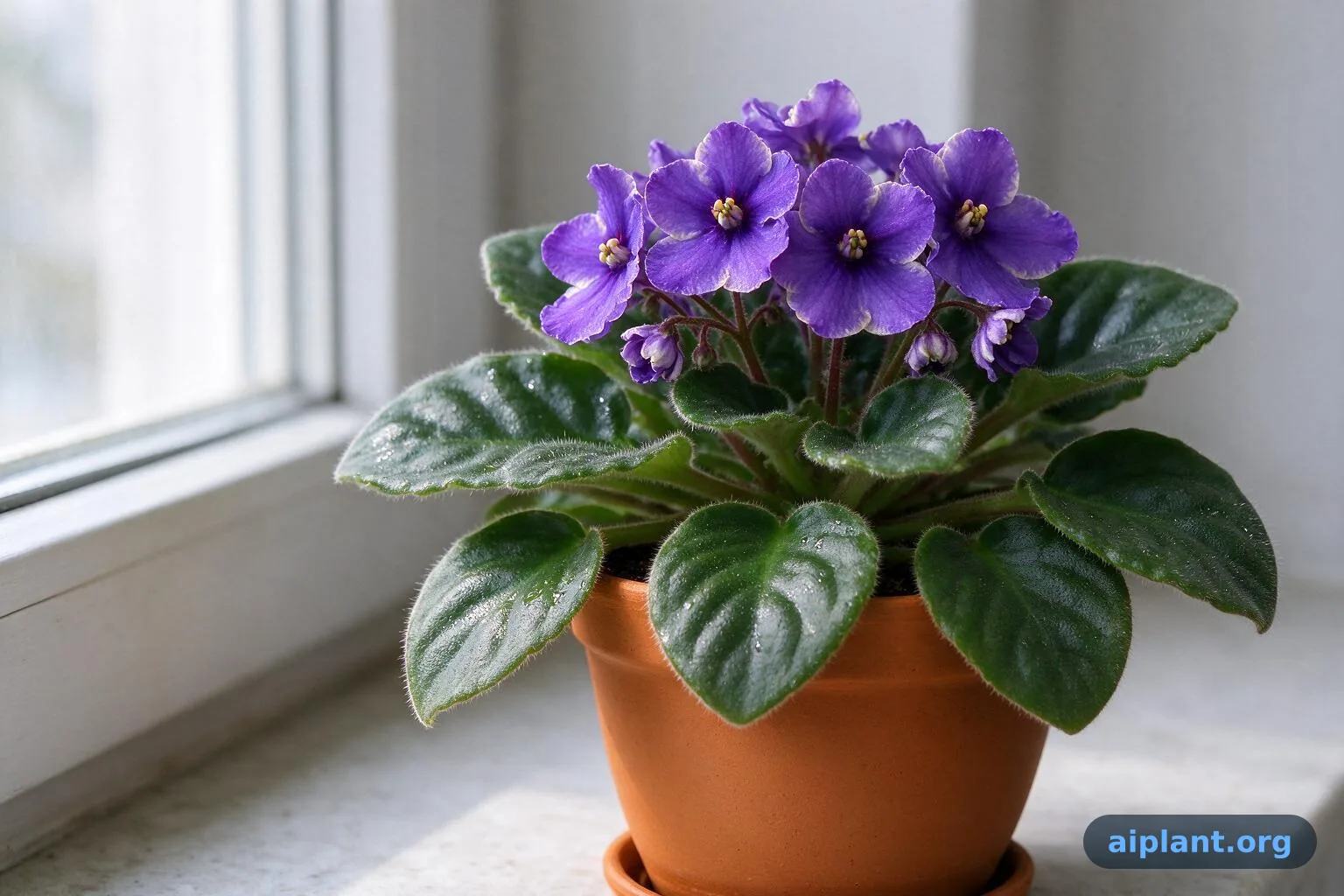
African Violet Sticky Leaves and White Bugs: The Short Answer
- Tiny white bugs and sticky leaves on African Violet are sap-sucking pests, usually aphids, mealybugs, or whiteflies, and the stickiness is honeydew they leave behind.
- Isolate the plant, then treat with insecticidal soap or a 70% isopropyl alcohol swab every 5–7 days for three rounds, checking leaf undersides and the crown each time.
- Sticky leaves can also follow root rot or cold stress, so check the soil and stem base before assuming pests alone are the cause.
African Violet Symptom Check: What the White Bugs and Sticky Leaves Mean
Use this table as an index: find the row that matches what you see, then read the full fix under the matching sub-heading below. The most common cause of tiny white bugs with sticky leaves is aphids, followed by mealybugs and whiteflies, but sticky leaves without insects often mean root rot or cold damage.
Check the leaf undersides and crown first: turn each leaf over and look along the veins and where the leaf meets the stem. Sap-sucking pests cluster there, and honeydew feels tacky on your fingertip before you see the insects themselves.
African Violet Symptom, Likely Cause, and First Action
Tiny White Bugs on African Violet: Aphids, Mealybugs, and Whiteflies
Tiny white bugs on African Violet are almost always one of three sap-sucking pests, and each has a different tell. Aphids are pear-shaped and cluster on new buds and leaf undersides; mealybugs look like cottony tufts in leaf joints; whiteflies are tiny moth-like insects that fly up when you disturb the plant. All three excrete honeydew, which is the sticky film on the leaves.
Aphids cluster on buds and new growth
Aphids are 1–2 mm, pale green to white, and gather along the newest leaves and flower stems. They pierce tissue and excrete honeydew, so the upper leaves feel tacky and may show sooty mold. Knock them off with a firm stream of room-temperature water, then spray insecticidal soap every 5–7 days for three rounds, covering leaf undersides.
Mealybugs hide as cottony tufts in leaf joints
Mealybugs look like small balls of white cotton where the leaf stalk meets the crown, and they also hide under the rim of the pot. Touch a tuft with a 70% isopropyl alcohol swab and it turns brown, which confirms the pest. Swab every visible tuft, then recheck the same joints weekly for a month because eggs hatch in about 7–10 days.
Whiteflies rise in a cloud when you move the pot
Whiteflies are 1–2 mm, white, and fly up when the plant is disturbed. The nymphs sit flat on leaf undersides and produce honeydew. Hang a yellow sticky trap near the plant to catch adults, and spray insecticidal soap every 5–7 days for three rounds so newly hatched nymphs are killed before they reproduce.
Sticky leaves without insects point to root rot or cold stress
If no insects are visible but leaves feel sticky, check the soil and stem base. Waterlogged soil at 15°C (59°F) or below causes roots to leak sugars that saprophytic fungi and bacteria feed on, and the crown may feel soft. Let the soil dry to 2 cm (0.8 in) deep before watering again, and move the plant to 18–24°C (65–75°F).
African Violet Pest Look-Alikes Compared
Why African Violet Leaves Turn Brown and Mushy at the Base
Brown, mushy leaf bases on African Violet mean the crown or root system is rotting, usually from overwatering in dense soil or from water sitting in the leaf joints. The rot starts where leaves meet the stem and spreads inward; by the time the outer leaves collapse, the crown may already be soft. Act within 24 hours of seeing mush, because rot moves fast in warm, wet conditions.
Overwatering in dense soil is the most common cause
African Violet roots need air, and a mix that stays wet for more than a few days suffocates them. Use a light mix of 50% peat or coir, 30% perlite, and 20% vermiculite, and water only when the surface feels dry to 2 cm (0.8 in). A pot with drainage holes and a saucer emptied 10 minutes after watering prevents the base from sitting in water.
Water in the crown invites rot
Water sitting in the leaf joints at 18–24°C (65–75°F) is a perfect rot starter. Water from below by setting the pot in 2–3 cm (1 in) of water for 20 minutes, or water the soil surface with a narrow spout and blot any drops from the leaves with a tissue. Never mist the crown.
Cold, wet soil in winter weakens the crown
African Violet suffers below 15°C (59°F), and cold wet soil slows root function until tissue dies. Keep the plant at 18–24°C (65–75°F), move it away from cold windows at night, and reduce watering in winter so the mix dries between drinks.
How to treat root rot in African Violet
- Lift and inspect the root ball: slide the plant out and look at the roots; healthy roots are firm and pale, while rotten ones are brown and pull apart easily. Cut away all brown roots with sterilised scissors.
- Trim the crown to firm tissue: slice off mushy leaf bases and stem until you reach pale, firm tissue, because rot left behind will spread into the healthy crown within days.
- Repot in fresh, light mix: use a clean pot only 1–2 cm (0.4–0.8 in) wider than the root ball, water once, then wait until the surface feels dry before watering again.
- Hold fertiliser for four weeks: damaged roots cannot absorb salts, so feeding too soon burns them; resume half-strength African Violet fertiliser only after new leaves appear.
African Violet Quick Care Facts
- Light
- Bright indirect; 12–14 hours daily
- Water
- When surface dry to 2 cm (0.8 in)
- Temperature
- 18–24°C (65–75°F); minimum 15°C (59°F)
- Humidity
- 50–60%; avoid misting the crown
- Soil
- Light peat/perlite mix, pH 6.0–6.5
- Fertilizer
- Half-strength African Violet feed every 2 weeks in growth
Powdery White Film on African Violet Leaves and Other Disease Signs
A powdery white film on African Violet leaves is powdery mildew, a fungal disease that thrives when air is still and humidity stays above 60% at 18–24°C (65–75°F). It starts as faint white dusting on older leaves and spreads upward; unlike mealybugs, it wipes off as a powder and leaves no cottony tuft. Improve airflow with a small fan on low, remove affected leaves, and avoid wetting the foliage in the evening.
Powdery mildew spreads in still, humid air
Mildew spores land on dry leaf surfaces and germinate when humidity is high and air is still. Space plants 20–30 cm (8–12 in) apart, run a fan on low for a few hours a day, and remove affected leaves into a sealed bag rather than dropping them on the soil.
Sooty mold follows honeydew from pests
Black or dark brown coating on leaves is sooty mold growing on honeydew. It is not a primary disease; treat the aphids, mealybugs, or whiteflies underneath, then wipe the leaves with a damp cloth so light reaches the tissue again.
Botrytis blight appears as grey fuzz on fading flowers
Botrytis starts on dead flowers and damaged leaves, producing a grey fuzzy growth in cool, damp air. Remove spent flowers and yellowing leaves weekly, water from below, and keep night temperature above 15°C (59°F) so leaves dry before dark.
African Violet White Film: Mildew or Mealybug?
Why African Violet Stops Flowering and How to Bring Buds Back
African Violet stops flowering when light, temperature, or feeding falls outside its narrow range, and it rarely blooms again until the cause is corrected. The plant needs 12–14 hours of bright indirect light daily, 18–24°C (65–75°F), and steady feeding during growth. A plant that has not flowered for six weeks is usually too dark, too cool, or too hungry.
Low light is the most common reason for no flowers
African Violet needs bright indirect light for 12–14 hours a day; a north-facing windowsill in winter is often too dark. Move it within 30–60 cm (12–24 in) of an east or west window, or use a LED grow light for 12–14 hours. Leaves that reach upward and pale green colour signal too little light.
Too much nitrogen grows leaves, not buds
A high-nitrogen feed pushes leaf growth at the expense of flowers. Use a fertiliser labelled for African Violets with a higher phosphorus ratio, diluted to half strength every two weeks during growth, and stop feeding for six weeks in the darkest part of winter.
Cool nights and drafts delay bud formation
Night temperatures below 15°C (59°F) slow bud development and can cause buds to drop before opening. Keep the plant away from cold window glass after dark and maintain 18–24°C (65–75°F) day and night; a minimum–maximum thermometer on the shelf shows whether nights dip too low.
Pot-bound roots and old soil reduce flowering
African Violet flowers best when slightly pot-bound, but after 12–18 months the soil compacts and salts build up. Repot every 12 months into a pot 1–2 cm (0.4–0.8 in) wider than the root ball, using fresh light mix, and remove the oldest outer leaves so the crown stays open.
African Violet Flowering by Season
Drooping African Violet Leaves After Watering and Saving a Dying Plant
Drooping African Violet leaves after watering usually mean the roots are too wet to take up water, not that the plant needs more. Soggy soil at 15°C (59°F) or below, or a pot with no drainage, suffocates roots until they cannot move water to the leaves. Check the soil 24 hours after watering: if it still feels wet at 2 cm (0.8 in) deep, the mix is holding too much water.
Soggy soil after watering signals root suffocation
Roots need air, and waterlogged soil displaces it. If leaves droop within a day of watering while the soil stays wet, stop watering until the surface feels dry to 2 cm (0.8 in), and repot into a mix with 30% perlite if the soil compacts. Empty the saucer 10 minutes after watering.
Cold water or cold soil shocks the roots
Watering with water below 15°C (59°F) shocks African Violet roots and causes temporary wilting. Let tap water stand in the watering can until it reaches room temperature, and avoid watering a plant sitting in a cold window in winter.
How to save a dying African Violet
- Check the crown for firmness: press the stem base gently; if it is firm and green, the plant is worth saving, but a brown mushy crown means rot has gone too far and you should start over from a healthy leaf cutting.
- Remove dead and dying leaves: cut yellow, brown, or mushy leaves at the stem with sterilised scissors so the plant stops spending energy on tissue that cannot recover.
- Repot into fresh, light mix: use a clean pot 1–2 cm (0.4–0.8 in) wider than the root ball, water once, and place the plant in bright indirect light at 18–24°C (65–75°F).
- Wait for new growth before feeding: resume half-strength African Violet fertiliser only when a new leaf opens, because roots damaged by rot cannot absorb salts until they regrow.
African Violet Drooping: Overwatered or Underwatered?
Protecting African Violet From Cold Drafts and Winter Damage
African Violet is tropical and suffers below 15°C (59°F), so cold drafts in winter cause leaf drop, brown patches, and stalled flowering before any pest appears. Cold air from window glass, doorways, and air-conditioning vents chills the leaves and soil, and wet soil at low temperature invites root rot. Protect the plant before the first cold night rather than treating damage afterward.
Window glass gets far colder than room air
A leaf touching window glass at 5°C (41°F) on a winter night can develop brown patches within hours. Move plants 30–60 cm (12–24 in) back from the glass, or fit a shelf away from the window, and close curtains between the plant and the glass after dark.
Cold drafts from doors and vents cause leaf drop
A draft that feels mild to you can sit below 15°C (59°F) at leaf level. Check with a minimum–maximum thermometer on the shelf for a week; if the minimum drops below 15°C (59°F), move the plant to an interior room or add a small heat mat under the pot.
Reduce water in cold weather to prevent rot
Roots take up water slowly below 18°C (65°F), so the mix stays wet longer. Water only when the surface feels dry to 2 cm (0.8 in), use room-temperature water, and never leave the pot standing in a saucer of water on a cold windowsill.
Keep humidity up without chilling the leaves
Winter heating dries air below 40% humidity, which browns leaf edges. Set the pot on a tray of pebbles with water below the pot base, or group plants together, aiming for 50–60% humidity, and keep the humidifier’s mist off the foliage so leaves stay dry.
African Violet Winter Care by Temperature
African Violet Care That Keeps Pests and Rot Away
Healthy African Violet care is the prevention plan for every problem above: the right light, water, soil, and temperature keep sap-sucking pests and rot from getting a foothold. African Violet is a compact plant, 15–20 cm (6–8 in) tall and wide at maturity, and it grows best when its narrow range of conditions is met consistently rather than corrected in emergencies.
Light and position decide flowering and leaf health
Give 12–14 hours of bright indirect light daily, within 30–60 cm (12–24 in) of an east or west window or under a grow light. Harsh midday sun scorches leaves, so shade the plant from 11 am to 3 pm in summer, and rotate the pot a quarter turn weekly so the crown grows evenly.
Water by test, not by calendar
Water when the surface feels dry to 2 cm (0.8 in), using room-temperature water and either bottom watering for 20 minutes or a narrow-spout can at the soil surface. Empty the saucer 10 minutes after watering so the base never sits in water, and never mist the crown.
Soil, pot, and repotting keep roots breathing
Use a light mix of 50% peat or coir, 30% perlite, and 20% vermiculite at pH 6.0–6.5, in a pot with drainage holes only 1–2 cm (0.4–0.8 in) wider than the root ball. Repot every 12 months in spring, removing the oldest outer leaves so the crown stays open and air reaches the leaf joints.
Feeding and grooming support steady bloom
Feed half-strength African Violet fertiliser every two weeks during growth, and stop for six weeks in the darkest part of winter. Remove spent flowers and yellow leaves weekly, because fading tissue attracts botrytis and provides hiding places for mealybugs.
Propagation gives you a backup plant
If the crown rots, a healthy leaf can replace the plant. Cut a firm leaf with 2–3 cm (1 in) of stalk, insert it at a 45° angle into damp light mix, cover with a clear bag, and keep it at 18–24°C (65–75°F) in bright indirect light; new plantlets appear in 6–10 weeks.
African Violet Care by Season
Related articles
Why Are Hibiscus Leaves Turning Yellow and Dropping?
Find the cause and fix it before the whole plant defoliates.
Amaryllis Leaves Turning Yellow and Drooping: What to Fix First
Find the cause fast and keep the bulb alive for next year's blooms.
Why Are Basil Leaves Turning Yellow and Drooping?
Find the cause in minutes and get your plant back to steady harvest.
How to Save Soft Drooping Aloe Leaves?
Fix Yellow Leaves and Root Rot