
Amaryllis Leaves Turning Yellow and Drooping: What to Fix First
Find the cause fast and keep the bulb alive for next year's blooms.
Amaryllis (Hippeastrum hybridum) leaves that turn yellow and droop are almost always reacting to water, light or a stressed bulb, and the fix depends on which one is wrong. This article helps you diagnose the exact cause from the symptoms, treat rot and pests before they spread, and then care for the plant so the bulb stays healthy and blooms again next season.
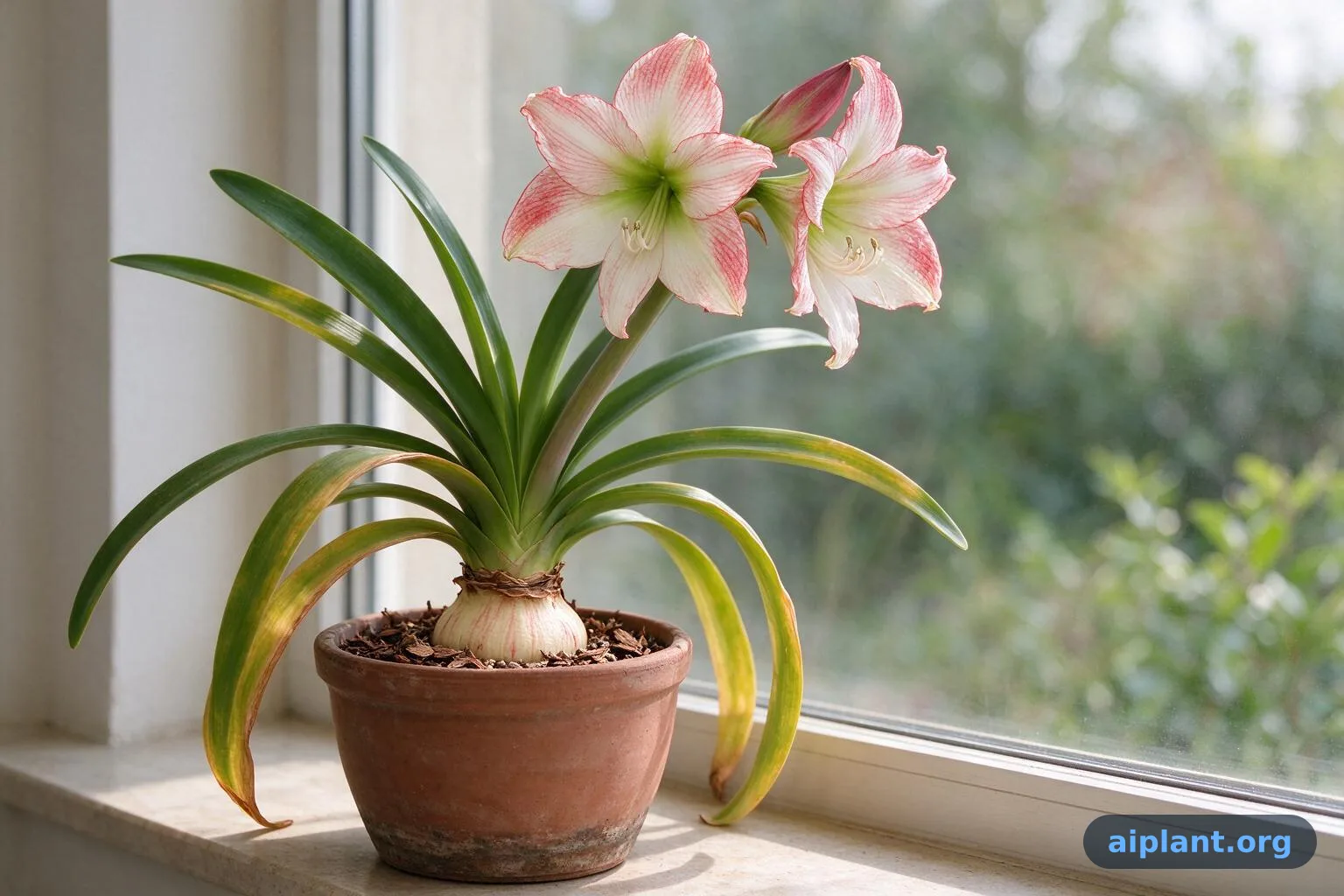
Amaryllis Yellow Leaves and Drooping: The Short Answer
- The most common cause is overwatering or poor drainage, which suffocates roots and softens the bulb; let the top 2–3 cm (1 in) of soil dry before watering again.
- Natural leaf die-back after flowering also yellows and drops leaves, so check whether the bulb is firm and the yellowing starts at the oldest leaves first.
- If the bulb feels mushy or smells sour, rot has started; unpot it, cut away soft tissue and repot in fresh, free-draining mix.
Amaryllis Symptom Check: Match What You See to the Bulb Problem
Amaryllis problems are easiest to solve by reading the leaves and bulb together, because the same yellow colour can come from opposite causes. Use the table below as an index, then go to the symptom section that matches what you see.
What the Bulb Tells You Before the Leaves Do
A firm, heavy bulb with yellowing only on the oldest outer leaves is usually just normal aging. A bulb that feels soft, light or hollow when you squeeze it is already losing tissue to rot or pests, and the leaves are showing the result. Lift the pot and smell the drainage holes: a sour or earthy-fermentation smell means water has been sitting around the roots.
Check the Soil Line and the Pot Before Cutting Anything
Look at where the bulb meets the compost. Healthy Amaryllis bulbs sit with their neck just above the surface and stay dry to the touch between waterings. If the neck is dark, sunken or covered by wet soil, water is pooling there and rot is likely. A pot without a drainage hole, or one standing in a saucer of water, is the single most common setup mistake with this plant.
Amaryllis Symptom, Likely Cause and First Action
Why Amaryllis Leaves Turn Yellow Before the Bulb Gives Out
Natural Die-Back After Flowering
Amaryllis leaves yellow and fall in late summer or autumn as the plant moves into its resting phase, and this is healthy. The yellowing starts on the oldest outer leaves and works inward over two to four weeks while the bulb stays firm and plump. Let the leaves fade completely and dry out on their own, because the bulb is pulling nutrients back from them; cutting them off early weakens next year's flower.
Overwatering and Soggy Compost
Yellow leaves that feel soft rather than papery, combined with damp compost that stays wet for days, point to overwatering. Amaryllis bulbs store water and rot quickly when the roots sit in wet soil, so water only when the top 2–3 cm (1 in) of compost is dry to the touch. Check that the pot has drainage holes and empty the saucer within an hour of watering.
Underwatering in Hot Weather
When the compost pulls away from the pot sides and the leaves yellow from the tips inward, the plant has been kept too dry. During active growth in spring and summer, water thoroughly until it runs from the drainage holes, then wait until the surface dries before repeating. A plant that has dried out completely may need a 20-minute soak to rehydrate the compost evenly.
Nutrient Shortage, Especially Nitrogen and Magnesium
Pale yellow leaves with green veins that appear on older leaves first usually mean a magnesium shortage, while overall pale yellow new growth suggests nitrogen is low. Feed a balanced liquid fertiliser at half strength every two weeks during active growth, and switch to a tomato-type feed higher in potassium once flower buds appear. Do not feed during the resting period, when the roots cannot take it up.
Cold Damage and Draughts
Amaryllis is tender and suffers below 10°C (50°F); leaves exposed to cold draughts or a windowsill below that limit yellow and collapse quickly. Keep the plant between 18°C and 24°C (65–75°F) during growth and move it away from open windows in winter. Cold-damaged leaves usually recover if the bulb is still firm, but blackened soft tissue should be removed.
When to Start Over
If the bulb is soft, hollow or smells sour even after repotting and the leaves keep yellowing, the rot has reached the growing point and the plant is unlikely to recover. Discard the bulb and compost rather than risking spread to other plants, and start with a fresh, firm bulb in clean pots and new mix.
Why Amaryllis Droops, Flops and Loses Its Leaves
Drooping From Water Stress
Leaves that droop without yellowing first, especially in warm weather, are usually thirsty rather than sick. Feel the compost: if it is dry 2–3 cm (1 in) down, water thoroughly and the leaves should stiffen within a day. If the compost is wet and the leaves still droop, the roots are damaged and the plant is overwatered, not underwatered.
Leggy Growth That Flops Over
Amaryllis grown in dim indoor light stretches toward the window, producing long, weak stems and leaves that flop under their own weight. Move the pot to a spot with bright, indirect light, ideally within 1 m (3 ft) of an east or south-facing window, and rotate it a quarter turn each week so growth stays upright. A stake can support a heavy flower stem, but it will not fix the light problem.
Heavy Flower Stems and Top-Heavy Pots
A thick flower stem with several blooms can tip a light plastic pot, so use a pot heavy enough to counterbalance the stem or set it inside a larger cachepot. Insert a slim cane beside the stem and tie it loosely with soft twine below the first flower, which supports the stem without damaging it. Never shorten the stem to fix the balance, because the leaves need it to feed the bulb.
Leaf Drop From Sudden Temperature Change
Moving an Amaryllis from a warm room to a cold porch, or a blast of air conditioning, can make leaves drop within days. The plant sheds leaves it cannot support when the temperature swings more than about 10°C (18°F). Acclimatise it by moving it gradually over a week, and keep it away from radiators, fans and draughts.
Transplant Shock After Repotting
Amaryllis repotted while in full leaf often droops for a week or two because the roots are disturbed and cannot keep up with water loss. Water lightly after repotting, keep the plant out of direct sun for a few days, and do not feed until new growth starts. Repotting is best done just after flowering, when the plant is entering active root growth rather than peak leaf.
Normal Leaf Fall at Rest
As the bulb enters dormancy, leaves yellow, droop and fall one by one, and this is the plant's natural cycle rather than a problem. Stop watering as the leaves die back, keep the pot cool and dry at around 10–13°C (50–55°F), and leave the bulb in its pot until new growth starts. Cutting green leaves off early removes the food store the bulb needs to flower again.
Brown Spots, Crispy Tips and Red Blotch on Amaryllis Leaves
Brown Spots From Fungal Leaf Spot
Small brown or reddish-brown spots that enlarge and develop pale centres are usually fungal leaf spot, which spreads when leaves stay wet and air is still. Remove affected leaves with clean scissors, space plants so air moves between them, and water the compost rather than the foliage. A copper-based fungicide applied according to the label can stop spread if new spots keep appearing.
Red Blotch Disease on Leaves and Stems
Reddish-brown streaks on leaves, stems and the bulb itself are the signature of red blotch, a fungal problem that thrives in humid, poorly ventilated conditions. Isolate the plant, cut away badly marked leaves, and treat the remaining foliage with a fungicide labelled for the problem. Improve airflow and avoid overhead watering, because the spores need a wet film to infect tissue.
Crispy Brown Tips From Dry Air and Irregular Watering
Leaf tips that turn brown and crisp while the rest of the leaf stays green usually mean humidity is too low or watering is inconsistent. Amaryllis prefers moderate humidity; group pots together or set the pot on a tray of damp pebbles to raise the air around it. Water when the top 2–3 cm (1 in) of compost dries rather than on a fixed day, so the roots get an even supply.
- Raise humidity around the pot: Set the pot on a tray of damp pebbles or group it with other plants, which lifts the moisture in the air without wetting the leaves. Aim for around 40–60% humidity and keep the tray water below the pot base so the compost never sits in water.
- Water on a moisture test, not a calendar: Push a finger 2–3 cm (1 in) into the compost and water only when it feels dry at that depth, giving enough to run from the drainage holes. Empty the saucer within an hour, because roots that stay wet between drinks cannot move water to the leaf tips.
Brown Tips From Fertiliser Burn
Tips that brown after feeding, especially when fertiliser was applied to dry compost, are a sign of salt burn. Flush the pot with plenty of water until it runs freely from the drainage holes, then wait two weeks before feeding again at half strength. Never feed a dry plant, because concentrated salts draw water out of the roots.
Sunburn on Leaves Moved Outdoors
Sudden direct summer sun on leaves grown indoors causes bleached, then brown, patches on the sun-facing side. Move the plant outdoors gradually over a week, starting in full shade, and keep it in bright indirect light or morning sun only. Sunburnt leaves do not heal, but new growth will come through normally if the bulb is healthy.
How to Save a Rotting Amaryllis Before the Bulb Is Lost
Recognising Rot Early
Rot starts at the base of the bulb or the roots, where tissue turns brown and mushy and develops a sour smell. The first sign above ground is often yellowing leaves that stay limp even after watering, followed by the bulb feeling soft when squeezed. Act as soon as the bulb loses firmness, because rot spreads through the bulb from the base upward.
- Unpot and inspect the bulb: Lift the plant from its pot, shake off the compost and rinse the bulb under running water so you can see the full surface. Cut away every soft, brown or sour-smelling part with a sterilised knife until only firm, white tissue remains.
- Treat the cut surfaces: Dust the wounds with sulphur powder or a fungicide recommended for bulbs, which helps seal the tissue and slow re-infection. Leave the bulb in a warm, airy place for 24–48 hours until the cut surfaces form a dry skin.
- Repot into fresh, free-draining mix: Use a new pot with drainage holes and a mix of equal parts potting compost, coarse perlite and orchid bark. Set the bulb so its neck sits just above the soil line, water once lightly and keep the plant warm and bright without direct sun.
- Hold back water until roots form: Do not water again until new roots or a green shoot appear, which usually takes two to four weeks in warmth. Water sparingly at first, letting the top 2–3 cm (1 in) dry between drinks, because the damaged bulb cannot tolerate wet compost.
When to Cut Losses
If the rot has reached the neck of the bulb or the centre is soft and hollow, no treatment will save it, and the plant should be discarded with its compost. A bulb that still has firm basal tissue and a few healthy roots is worth saving, and it may flower again in a year or two once it rebuilds its size.
What Pests Attack Amaryllis and How to Get Rid of Them
Aphids on New Leaves and Flower Buds
Aphids cluster on the softest growth and buds, appearing as small green, black or pale insects that leave sticky honeydew and distorted leaves. Wash them off with a firm jet of water, then spray with insecticidal soap every five to seven days until none remain. Check the undersides of leaves and the flower buds, where colonies hide first.
Mealybugs as White Cottony Patches
Mealybugs look like small tufts of white cotton tucked in leaf axils and along the bulb neck, and they slow growth while leaving sticky residue. Dab each one with a cotton swab dipped in rubbing alcohol, or spray with insecticidal soap, repeating weekly for three to four weeks to catch newly hatched young. Isolate the plant while treating it so the pests do not spread.
Scale Insects on Stems and Leaf Undersides
Scale appears as small brown or tan bumps that scrape off with a fingernail, and heavy infestations yellow and drop leaves. Remove them by wiping with a soft cloth soaked in horticultural oil or soapy water, and treat the whole plant every two weeks until no new bumps appear. Check nearby plants too, because scale spreads slowly but steadily between pots.
Fungus Gnats From Wet Compost
Small black flies hovering around the pot mean fungus gnats breeding in constantly wet compost, which is also a warning sign of overwatering. Let the top 2–3 cm (1 in) of compost dry between waterings and set yellow sticky traps to catch adults. For a heavy infestation, water with a biological control such as Bacillus thuringiensis israelensis according to its label.
Thrips and Mites on Distorted Growth
Thrips leave silvery streaks and tiny black droppings, while spider mites cause fine webbing and speckled yellow leaves in dry warmth. Increase humidity, wash the foliage, and treat with insecticidal soap or a mite-specific product, repeating every five days for three rounds. Isolate the plant until two consecutive checks show no pests.
Why an Amaryllis Refuses to Flower and How to Bring It Back
The Bulb Is Too Small to Bloom
Amaryllis only flowers when the bulb has reached roughly 6–8 cm (2.5–3 in) across, so a young offset or a bulb that shrank after a hard season will grow leaves but no flower. Let the plant grow uninterrupted through spring and summer, feeding every two weeks, until the bulb reaches flowering size. Do not cut green leaves during this time, because they are building the bulb.
No Cool Resting Period
Amaryllis needs a cool, dry rest of about eight to ten weeks at 10–13°C (50–55°F) to set flower buds. Without it, the bulb stays in leaf and skips flowering. Stop watering as leaves die back in autumn, keep the pot cool and dry, and bring it back into warmth and water only when a new green shoot appears.
Too Much Shade During Growth
A plant kept in dim light through summer makes soft leaves and stores too little energy to flower. Give it at least four to six hours of bright light a day, with morning sun or bright indirect light, and rotate the pot so all sides grow evenly. Move it outdoors into light shade for summer if you can, which is how many bulbs reach flowering size.
Overfeeding With Nitrogen
Lots of nitrogen produces lush leaves at the expense of flowers, so a plant that has been fed a high-nitrogen fertiliser may refuse to bloom. Switch to a feed higher in potassium and phosphorus from midsummer, and stop feeding entirely during the resting period. A balanced feed at half strength every two weeks during growth is enough for healthy bulbs.
Crowded or Disturbed Roots
Amaryllis flowers best when slightly pot-bound, but a pot crammed with offsets or roots circling the surface can divert energy into vegetative growth. Repot only when the bulb has filled the pot, and separate offsets into their own pots to grow on. Avoid repotting in the same season you expect flowers, because disturbance can delay blooming by a year.
Amaryllis Watering, Light and Repotting That Keep Leaves Green
Water by Checking the Top Layer
Water an Amaryllis when the top 2–3 cm (1 in) of compost feels dry, which in a warm room is usually every seven to ten days during growth. Water until it runs from the drainage holes, then empty the saucer so the bulb never stands in water. In the resting period, give only enough to stop the compost shrinking to dust, roughly every three to four weeks.
Bright Light Without Harsh Midday Sun
Amaryllis grows best in bright, indirect light with a few hours of gentle morning sun, and leggy floppy growth is the first sign of too little light. Keep it within 1 m (3 ft) of an east or south-facing window, or in light shade outdoors in summer. Protect it from harsh midday sun, which scorches leaves that grew indoors.
Repot Only When the Bulb Fills the Pot
Repot an Amaryllis every two to three years, or when roots crowd the surface, just after flowering when the plant starts new root growth. Choose a pot only 2–3 cm (about 1 in) wider than the bulb, because a large pot holds excess wet compost. Set the bulb with its neck above the soil line and firm the mix gently without burying the neck.
Soil That Drains Fast
Amaryllis bulbs rot in dense compost, so use a free-draining mix of equal parts potting compost, coarse perlite and orchid bark. A terracotta pot helps wick away moisture and adds weight to balance a heavy flower stem. Always use a pot with drainage holes and never let it stand in a full saucer.
Feeding Through the Growing Season
Feed with a balanced liquid fertiliser at half strength every two weeks from new growth until flowering, then switch to a potassium-rich feed for six weeks after flowering. Stop feeding once leaves begin to yellow at the end of the season, because the roots are shutting down for rest. Overfeeding causes salt build-up and brown tips, so flush the pot with plain water monthly.
Amaryllis Quick Care Facts
- Light
- Bright indirect light, a few hours of morning sun
- Water
- When top 2–3 cm (1 in) of compost is dry
- Temperature
- 18–24°C (65–75°F); never below 10°C (50°F)
- Humidity
- Moderate, around 40–60%; avoid wet foliage
- Soil
- Free-draining mix with perlite and orchid bark
- Fertilizer
- Balanced feed every two weeks during growth
Amaryllis Yellow Leaves, Drooping and Care Questions Answered
Why are my Amaryllis leaves turning yellow?
Yellow amaryllis leaves usually reflect water or seasonal timing, not disease. Check the bulb first: firm and heavy with yellowing only on oldest outer leaves means normal late-summer die-back, so let them fade and dry naturally. Soft leaves with compost staying wet for days means overwatering; water only when the top 2-3 cm (1 in) of compost is dry and empty the saucer within an hour. Pale leaves with green veins suggest magnesium shortage; overall pale new growth suggests low nitrogen.
Why is my Amaryllis drooping?
Drooping amaryllis usually signals water stress or weak growth from low light. Feel the compost 2-3 cm (1 in) down: dry means thirsty, so water thoroughly and leaves should stiffen within a day; wet with drooping means damaged roots from overwatering. Dim indoor light makes long, weak stems that flop, so move the pot within 1 m (3 ft) of an east or south window and rotate it a quarter turn weekly. Heavy flower stems may need a slim cane and loose tie below the first bloom.
Why does my Amaryllis have brown spots on its leaves?
Brown spots on amaryllis leaves are usually fungal leaf spot, which spreads when foliage stays wet in still air. Small brown or reddish-brown spots enlarging with pale centres confirm it. Remove affected leaves with clean scissors, space plants for airflow, and water the compost rather than the foliage. Reddish-brown streaks on leaves, stems and bulb indicate red blotch; isolate the plant, cut badly marked leaves and treat with a fungicide labelled for it.
Why are my Amaryllis leaves turning brown at the tips?
Brown crispy tips with otherwise green leaves mean low humidity or uneven watering. Amaryllis prefers moderate humidity around 40-60%, so set the pot on a tray of damp pebbles or group pots together, keeping tray water below the pot base. Water when the top 2-3 cm (1 in) of compost feels dry rather than on a fixed day. Tips browning after feeding suggest fertiliser salt burn; flush the pot with plain water and never feed dry compost.
Why is my Amaryllis not flowering?
An amaryllis that grows leaves but no flowers usually has a bulb below flowering size, roughly 6-8 cm (2.5-3 in) across, or lacked a cool dry rest. Give at least four to six hours of bright light daily, feed every two weeks during growth, and stop watering as leaves die back in autumn, keeping the pot at 10-13°C (50-55°F) for eight to ten weeks. Avoid high-nitrogen feed and repotting in a season you expect blooms.
How do I save an Amaryllis that is rotting?
Act as soon as the bulb feels soft: unpot it, rinse it, and cut away all soft, brown or sour-smelling tissue with a sterilised knife until only firm white tissue remains. Dust cuts with sulphur powder or a bulb fungicide, then leave the bulb warm and airy for 24-48 hours until a dry skin forms. Repot in fresh free-draining mix with the neck above the soil line, water lightly once, and hold water until new roots or a shoot appear. If the neck or centre is soft and hollow, discard it.
What pests attack Amaryllis and how do I get rid of them?
Aphids cluster on new leaves and buds, leaving sticky honeydew; wash them off with a firm water jet, then spray insecticidal soap every five to seven days until none remain. Mealybugs appear as white cottony tufts in leaf axils and along the bulb neck; dab with rubbing alcohol or spray soap weekly for three to four weeks. Scale looks like brown bumps that scrape off; wipe with horticultural oil every two weeks. Fungus gnats mean wet compost: let the top 2-3 cm (1 in) dry and use yellow sticky traps.
Why are my Amaryllis leaves falling off?
Leaf fall is often normal dormancy: as the bulb rests, leaves yellow, droop and drop one by one, so stop watering, keep the pot cool and dry at 10-13°C (50-55°F), and leave the bulb until new growth starts. Sudden leaf drop within days of a move points to temperature swing; acclimatise gradually and keep away from draughts, radiators and fans. Drooping after repotting is transplant shock; water lightly, shade for a few days and do not feed until new growth.
Why is my Amaryllis growing leggy and flopping over?
Leggy, flopping growth means the plant is stretching for light. Move the pot to bright, indirect light, ideally within 1 m (3 ft) of an east or south-facing window, and rotate it a quarter turn each week so growth stays upright. A stake can support a heavy flower stem but will not fix the light shortage, so improve the position rather than only propping the plant up.
How often should I water an Amaryllis?
Water when the top 2–3 cm (1 in) of compost feels dry, which in a warm room is usually every seven to ten days during growth. Water until it runs from the drainage holes, then empty the saucer within an hour so the bulb never stands in water. During the resting period, water only enough to stop the compost shrinking, roughly every three to four weeks.
What kind of light does an Amaryllis need?
Amaryllis needs bright, indirect light with a few hours of gentle morning sun, and leggy floppy growth is the first sign of too little light. Keep it within 1 m (3 ft) of an east or south-facing window, or in light shade outdoors in summer. Protect it from harsh midday sun, which scorches leaves that grew indoors.
When should I repot an Amaryllis?
Repot every two to three years, or when roots crowd the surface, just after flowering when new root growth starts. Choose a pot only 2–3 cm (about 1 in) wider than the bulb, because a large pot holds excess wet compost. Set the bulb with its neck above the soil line and firm the mix gently without burying the neck.
Related articles
Why Are Basil Leaves Turning Yellow and Drooping?
Find the cause in minutes and get your plant back to steady harvest.
Why Are My Apple Tree Leaves Turning Yellow?
Find the cause in minutes and keep the fruit coming.
Why Is My Dill Plant Turning Yellow and Drooping?
Match the symptom, find the cause, and save the plant before it bolts.
What Does a Fiddle Leaf Fig Really Need to Thrive?
Everything Ficus lyrata needs, from light and water to leaf fixes.