
Why Is My Dill Plant Turning Yellow and Drooping?
Match the symptom, find the cause, and save the plant before it bolts.
Dill (Anethum graveolens) turning yellow and drooping is usually a root or water problem, not a disease: the plant hates sitting in wet soil and reacts within days. Heat and bolting produce the same look, and pests can add to it. This article starts with a symptom table so you can match what you see to the likely cause, then gives numbered fixes for each problem, followed by the watering, light, harvesting and drying routine that keeps dill green and productive.
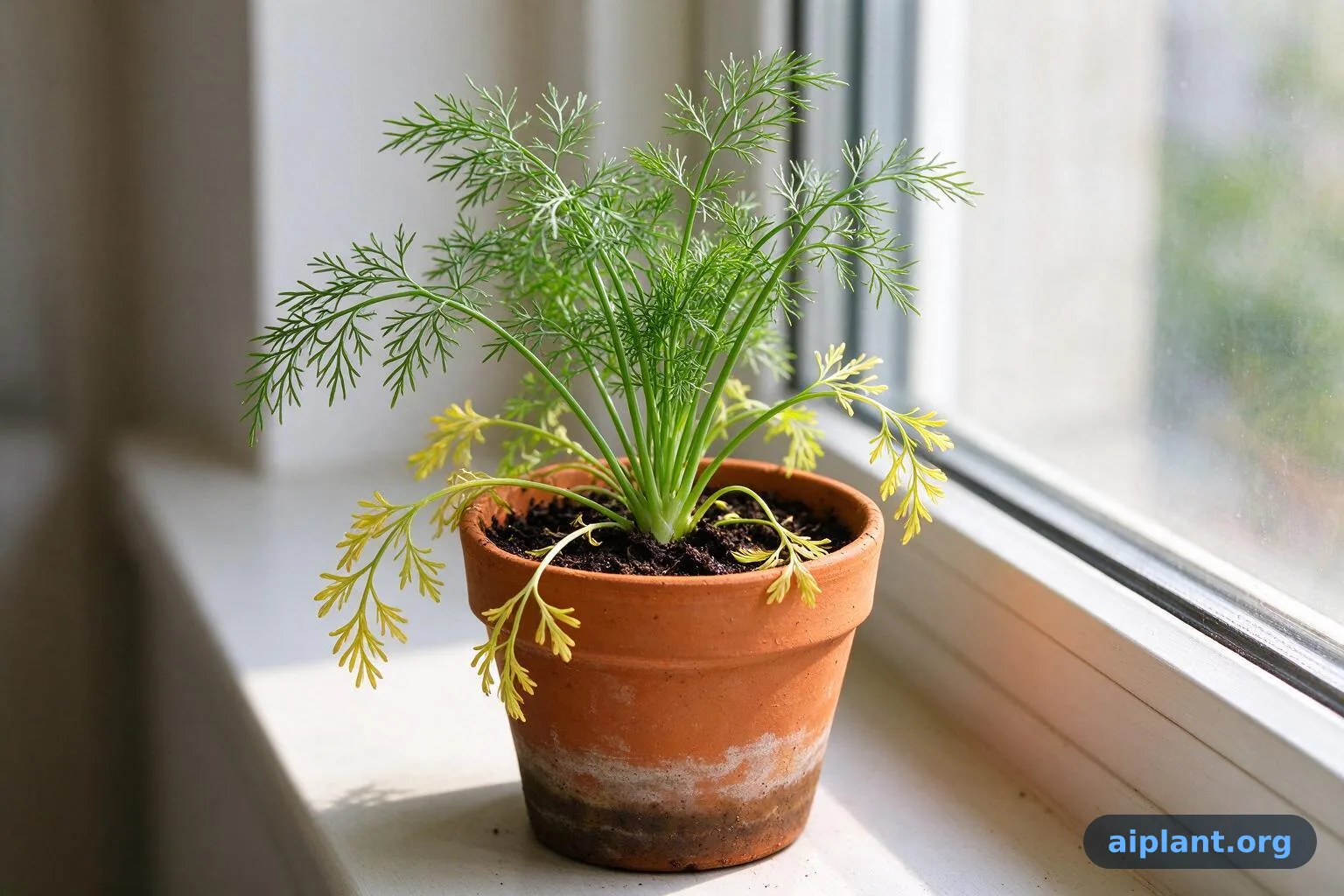
What Makes Dill Turn Yellow and Droop
- The most common cause is waterlogged soil: dill roots rot in constantly wet compost, so leaves yellow from the bottom and the whole plant droops.
- Heat above 27°C (80°F) and long days push dill to bolt, which turns older leaves yellow and woody before the plant sets seed.
- Check the soil 3 cm (1 in) down before watering; if it is still damp, wait, and make sure the pot or bed drains freely.
- Aphids and spider mites cluster on new growth and undersides of leaves, causing yellow speckling and sticky residue.
- If the stem is still firm and green, the plant can recover; if the base is brown and mushy, discard it and resow.
Diagnosing a Sick Dill Plant: Match the Symptom to the Cause
Dill problems are easy to confuse because several causes produce yellow, limp foliage. Work through the table first, then read the sub-heading that matches what you see. Each entry explains how to recognise the problem, why it happens and the numbered steps that fix it.
Yellow Lower Leaves After Watering
Yellowing that starts on the oldest, lowest leaves and moves upward, with soil that stays damp for days, points to waterlogged roots. Dill (Anethum graveolens) has a taproot and fine feeder roots that need air; in heavy or overwatered soil they suffocate and rot, so the plant cannot move water to the top.
- Stop watering immediately and lift the pot to check the drainage holes; if water sits in a saucer, empty it.
- Push a finger 3 cm (1 in) into the soil; if it is wet and cold, repot into fresh, free-draining mix (two parts potting compost to one part perlite or coarse sand).
- Trim the yellowed lower leaves with clean scissors so the plant puts energy into new growth.
- Water only when the top 3 cm (1 in) of soil is dry, roughly every 3–5 days in warm weather and every 7–10 days in cool weather.
- In garden beds, fork the top 10 cm (4 in) of soil around the plant to improve airflow and add grit if the ground holds water.
Drooping and Wilting Despite Wet Soil
A plant that wilts while the compost is still wet has root rot, not thirst. The roots are dead or dying, so the stem loses pressure and the whole plant collapses. Lift it gently: healthy roots are pale and firm, rotting roots are brown, mushy and smell sour.
- Remove the plant from its pot and rinse the roots under a gentle tap.
- Cut away every brown, soft root with sterilised scissors; keep only firm, pale roots.
- Repot into a clean pot one size smaller with fresh, gritty mix, and water once lightly.
- Keep the plant in bright, indirect light and do not water again until new growth appears, usually in 7–14 days.
- If more than half the root mass is gone, discard the plant and sow fresh seed; dill grows from seed to harvest in 40–60 days, so replacing is faster than rescuing.
Brown Crispy Tips and Yellow Patches in Heat
Dill is a cool-season herb that sulks above 27°C (80°F). In hot, dry weather the leaf tips turn brown and crisp, the foliage yellows and the plant droops at midday even when watered. This is heat and transpiration stress, not disease.
- Move potted dill to a spot with morning sun and afternoon shade, or drape 30–40% shade cloth over the bed.
- Water deeply in the early morning so the plant has moisture before the heat peaks.
- Mulch with 5 cm (2 in) of straw or compost to keep roots cool and soil moist.
- Mist the foliage in the evening during heatwaves, or group pots together to raise humidity.
- Accept that dill sown in midsummer often bolts quickly; sow again in late summer for an autumn crop.
Tiny Insects Clustering on New Shoots
Small green, black or pale insects packed along stems and leaf undersides are aphids; fine webbing and yellow speckling suggest spider mites. Both suck sap, which yellows and curls the leaves and stunts the plant.
- Blast aphids off with a firm jet of water every 2–3 days for a week.
- For spider mites, raise humidity and spray the undersides of leaves with water in the morning.
- Apply insecticidal soap or neem oil in the evening, covering leaf undersides, and repeat every 5–7 days up to three times.
- Remove badly infested shoots and discard them in the bin, not the compost.
- Encourage ladybirds and lacewings by planting nearby flowers; avoid broad-spectrum sprays that kill them.
Black Spots and Brown Lesions on Dill Leaves
Dark spots, especially in cool, damp weather, are usually fungal leaf blight or damping-off in seedlings. The spots start small and brown-black, then merge and kill the leaf. Overcrowded seedlings and wet foliage are the main triggers.
- Remove and bin affected leaves and thin seedlings to 20–25 cm (8–10 in) apart so air moves.
- Water the soil, not the leaves, and water in the morning so foliage dries before night.
- Improve airflow by weeding and, in pots, spacing them at least 30 cm (12 in) apart.
- Apply a copper-based fungicide labelled for herbs if spots keep spreading, following the label rate.
- If the main stem is black at soil level, the plant has damping-off and cannot be saved; remove it and sow in fresh, sterile compost.
Leggy, Thin Stems With Pale Leaves
Dill grown in shade or sown too thickly stretches upward with weak, pale stems and few leaves. The plant is competing for light and space, so it invests in height rather than leaf mass.
- Move pots to a spot with at least 6 hours of direct sun.
- Thin seedlings to 20–25 cm (8–10 in) apart; snip extras at soil level rather than pulling them.
- Pinch out the growing tip of young plants once they reach 15 cm (6 in) to encourage side shoots.
- Rotate pots a quarter turn every few days so stems grow evenly.
- Feed lightly every 3–4 weeks with a balanced liquid fertiliser at half strength; too much nitrogen makes soft, floppy growth.
Bolting: Tall Stems, Flat Flower Heads and Yellowing Leaves
When dill sends up a fast, thick stem topped with flat umbels of tiny yellow flowers, it is bolting. The leaves turn yellow and sparse as the plant redirects energy into seed. Heat, long summer days, drought and root disturbance all trigger it. Bolting is natural and not reversible, but you can manage it.
- Harvest leaves and seed heads promptly; once flowering starts, leaf quality drops within 1–2 weeks.
- To slow bolting, sow in early spring and again in late summer, and choose a slow-bolting variety such as 'Bouquet'.
- Keep plants consistently watered and mulched; drought stress accelerates bolting.
- Pinch out flower buds as they appear if you want a few more weeks of leaves.
- Let some plants flower: dill flowers attract beneficial insects and the seeds are a harvest in themselves.
Dill Symptom Checker: What You See and What to Do
How to Save a Dying Dill Plant Before It Bolts
A dying dill can often be saved if the stem base is still firm and green; if it is brown and mushy, the plant is past rescue and resowing is the faster route. Dill (Anethum graveolens) is an annual, so it has a fixed lifespan of one season, and a plant that has bolted will decline no matter what you do.
Check the Stem Base First
Squeeze the stem just above soil level. A firm, green stem means the root system is still working and the plant can recover. A brown, soft or hollow stem means rot has reached the crown, and no amount of care will reverse it. In that case, remove the plant, bin it, and sow fresh seed in clean compost.
Rescue Steps for a Wilting Dill
- Move the plant out of direct midday sun into bright, filtered light.
- Check soil moisture 3 cm (1 in) down; water only if dry, and never leave the pot standing in water.
- If the soil is soaked, repot into fresh mix with added perlite and trim any soft roots.
- Cut back yellowed and dead foliage by half to reduce the load on damaged roots.
- Hold off fertiliser until new green growth appears, then feed at half strength.
- Expect recovery in 10–14 days; if no new growth appears by then, resow.
When to Start Over
Dill sown from seed in spring is ready to cut in 40–60 days, so a new sowing often overtakes a struggling plant. If the plant has flowered, is more than 60% yellow, or has stem rot, pull it and sow again in a different spot or fresh compost. Sow every 3–4 weeks from spring to late summer for a continuous supply.
Dill Quick Care Facts
- Part Used
- Leaves, flower heads and seeds
- When to Harvest
- Leaves from 40–60 days; seeds when brown
- How to Dry
- Air-dry in bunches or dehydrate at 35–40°C (95–104°F)
- Storage Life
- Airtight jar, dark cupboard, up to 6 months
- Light
- Full sun, at least 6 hours direct
- Water
- When top 3 cm (1 in) of soil is dry
- Safe for Cats & Dogs?
- Check the ASPCA toxic plant list
What Dill Needs to Stay Green: Water, Light and Soil
Dill stays green and productive when it gets steady moisture, full sun and loose, free-draining soil; the problems above are mostly what happens when one of those slips. Treat this section as prevention.
Watering Dill Without Drowning It
Water dill when the top 3 cm (1 in) of soil feels dry, which is roughly every 3–5 days in warm weather and every 7–10 days in cool weather. In pots, water until it runs from the drainage holes, then empty the saucer. In beds, water deeply once a week rather than lightly every day, which encourages deeper roots. Dill tolerates short dry spells better than wet feet, so when in doubt, wait a day.
Light: Full Sun for Compact, Leafy Plants
Dill needs at least 6 hours of direct sun a day, and 8 hours is better for dense leaf growth. On a windowsill, a south- or west-facing spot works; indoors under glass, rotate the pot weekly. Too little light produces the leggy, pale growth described above. In hot climates, morning sun with afternoon shade keeps plants productive for longer.
Soil and Containers
Use a free-draining mix: two parts potting compost to one part perlite or coarse sand. Dill has a taproot, so choose a pot at least 25 cm (10 in) deep and wide, with drainage holes. In garden beds, fork in grit if the soil is clay-heavy and raise beds by 10 cm (4 in) where water pools. Dill grows well beside cabbage and onions but dislikes being crowded by tall plants.
Feeding and Temperature
Feed every 3–4 weeks with a balanced liquid fertiliser at half strength; rich nitrogen feed makes soft, floppy stems. Dill grows best between 15°C and 24°C (59–75°F) and declines above 27°C (80°F). It tolerates light frost but is killed by hard freezes, so in cold climates sow in spring after the last frost and again in late summer.
Dill Watering by Season and Setting
Harvesting, Drying and Using Dill Without Losing Flavour
Harvest dill leaves regularly from the time the plant is 20 cm (8 in) tall, and cut whole stems rather than single leaves; this keeps the plant bushy and delays bolting. Flavour is strongest in fresh leaves before the plant flowers, and in seeds once the flower heads turn brown.
When and How to Harvest Leaves
Begin cutting 40–60 days after sowing, taking the outer stems first and leaving the central growing tip. Cut stems 5 cm (2 in) above the soil with scissors, never pulling, and harvest in the morning after dew has dried when oils are highest. Take no more than one-third of the foliage at a time. Once flower buds form, harvest all remaining leaves within a week, because leaf quality falls sharply as the plant sets seed.
Harvesting Dill Seed
Let flower heads turn brown on the plant, then cut the stems and hang them upside down over a paper bag. Seeds drop as they dry; shake the bag every few days. Store seed whole in an airtight jar and crush just before use for the strongest aroma.
Drying Dill Without Losing Flavour
Air-drying suits dill best: tie stems in small bunches, hang them in a dark, dry room at 20–25°C (68–77°F) with good airflow, and they are ready in 7–14 days when leaves crumble easily. A dehydrator at 35–40°C (95–104°F) works faster and preserves colour. Avoid direct sunlight and oven drying above 50°C (122°F), which drives off the volatile oils. Store dried leaves whole, not crushed, in an airtight jar away from light and heat, and use within 6 months.
Freezing and Kitchen Uses
Freeze chopped fresh dill in ice-cube trays with a little water or oil for soups and stews. Fresh dill suits potatoes, cucumber, salmon, yoghurt sauces, pickles and egg dishes; add it at the end of cooking because heat destroys the aroma. Dried dill is milder and works in longer-cooked dishes, while seeds flavour pickles, bread and potato salad. Dill is also commonly brewed as a mild tea.
Who Should Be Careful
Pregnant and breastfeeding women, children, and anyone taking medication should ask a doctor or pharmacist before using dill in concentrated forms such as extracts or strong teas; culinary amounts in food are the usual context. Traditional uses include dill water for digestion and dill tea as a gentle after-dinner drink, but these are folk traditions, not medical claims.
Dill Harvest and Drying at a Glance
Telling Dill Apart From Fennel and Other Look-Alikes
Dill (Anethum graveolens) is a feathery annual with hollow stems, thread-like blue-green leaves and flat umbels of tiny yellow flowers; its closest look-alike is fennel (Foeniculum vulgare), which is a perennial with a licorice scent and plumper, anise-flavoured seeds.
Fennel vs Dill
Crush a leaf: dill smells grassy and slightly sharp, fennel smells strongly of anise or licorice. Fennel has a swollen base and overwinters as a perennial, while dill has a slender taproot and dies after one season. Fennel grows taller, often 1.5–2 m (5–6.5 ft), against dill's usual 60–90 cm (2–3 ft).
Other Confusions
Carrot tops and yarrow have similar feathery leaves, but carrot foliage smells of carrot and yarrow leaves are more fern-like and clustered. None of these look-alikes are dangerous in culinary amounts, but misidentifying wild plants is risky, so only harvest dill you have sown or bought.
Recognising Healthy Dill
Healthy dill has upright, hollow blue-green stems, fresh feathery leaves along the whole stem, and no yellowing at the base. Plants ready to bolt show a thickened central stem and a cluster of buds at the top; at that point, harvest and plan a new sowing.
Dill vs Fennel: How to Tell Them Apart
Dill Problems Answered: Yellow Leaves, Drooping, Bolting and More
Why are my dill leaves turning yellow?
Yellow lower leaves that move upward while soil stays damp for days point to waterlogged roots suffocating in wet soil. Stop watering, empty any saucer, and push a finger 3 cm (1 in) into the mix; if it is wet and cold, repot into two parts compost to one part perlite. Trim yellowed leaves and water only when the top 3 cm (1 in) is dry, about every 3–5 days in warm weather and 7–10 days in cool weather.
Why is my dill plant drooping and wilting?
Wilting while the compost is still wet means root rot, not thirst, because dead roots cannot hold stem pressure. Lift the plant and check roots: healthy ones are pale and firm, rotting ones brown, mushy and sour-smelling. Cut away soft roots, repot into a smaller clean pot with gritty mix, and wait 7–14 days for new growth. If more than half the root mass is gone, resow, since dill reaches harvest in 40–60 days.
Why is my dill turning brown and dying?
Brown crispy tips with yellow patches in hot weather are heat and transpiration stress, not disease, because dill sulks above 27°C (80°F). Move pots to morning sun with afternoon shade or drape 30–40% shade cloth, water deeply in early morning, and mulch with 5 cm (2 in) of straw. Midsummer sowings bolt fast, so sow again in late summer for an autumn crop.
Why is my dill plant bolting and going to seed?
Bolting is natural and not reversible; a fast thick stem topped with flat umbels of tiny yellow flowers means the plant is redirecting energy into seed, and leaf quality drops within 1–2 weeks. Heat, long days, drought and root disturbance trigger it. Harvest leaves and seed heads promptly, keep plants watered and mulched, pinch out buds for a few more weeks, and sow early spring plus late summer using a slow-bolting variety such as 'Bouquet'.
What are the tiny bugs on my dill plant?
Small green, black or pale insects packed along stems and leaf undersides are aphids, while fine webbing and yellow speckling suggest spider mites. Both suck sap and yellow and curl the leaves. Blast aphids off with water every 2–3 days for a week, raise humidity against mites, and apply insecticidal soap or neem oil in the evening, repeating every 5–7 days up to three times.
Why does my dill have black spots on the leaves?
Dark spots in cool, damp weather are usually fungal leaf blight, or damping-off in seedlings, and overcrowding plus wet foliage are the main triggers. Remove and bin affected leaves and thin seedlings to 20–25 cm (8–10 in) apart. Water the soil, not the leaves, in the morning, space pots at least 30 cm (12 in) apart, and use a copper-based fungicide labelled for herbs if spots keep spreading.
Why is my dill plant leggy and thin?
Leggy, pale, thin stems mean too little light or sowing too thickly, so the plant stretches for light instead of making leaves. Move pots to at least 6 hours of direct sun, thin seedlings to 20–25 cm (8–10 in) apart by snipping at soil level, and pinch the growing tip once plants reach 15 cm (6 in). Rotate pots a quarter turn every few days and feed half-strength balanced fertiliser every 3–4 weeks.
How do I save a dying dill plant?
A dying dill can often be saved if the stem base is still firm and green; squeeze it just above soil level, and a brown, soft or hollow stem means rot has reached the crown and resowing is faster. Move it out of midday sun, check moisture 3 cm (1 in) down, repot soaked soil with added perlite, and cut yellowed foliage by half. Expect recovery in 10–14 days, otherwise resow.
How often should I water dill?
Water dill when the top 3 cm (1 in) of soil feels dry, which is roughly every 3–5 days in warm weather and every 7–10 days in cool weather. In pots, water until it runs from the drainage holes and empty the saucer; in beds, water deeply once a week. Dill tolerates short dry spells better than wet feet, so when in doubt, wait a day.
How much sun does dill need?
Dill needs full sun, at least 6 hours of direct sun a day, and 8 hours is better for dense leaf growth. Too little light produces leggy, pale growth with weak stems. In hot climates, morning sun with afternoon shade keeps plants productive for longer, since dill declines above 27°C (80°F).
When and how do I harvest dill?
Begin cutting 40–60 days after sowing, once plants are 20 cm (8 in) tall, taking outer stems first and leaving the central growing tip. Cut stems 5 cm (2 in) above the soil with scissors in the morning after dew has dried, taking no more than one-third of the foliage at a time. Harvest seed when flower heads turn brown.
How do I dry dill without losing flavor?
Air-drying suits dill best: tie stems in small bunches, hang them in a dark, dry room at 20–25°C (68–77°F) with good airflow, and they are ready in 7–14 days when leaves crumble easily. A dehydrator at 35–40°C (95–104°F) works faster and preserves colour. Avoid direct sunlight and oven drying above 50°C (122°F).
What can I use dill for in cooking?
Fresh dill suits potatoes, cucumber, salmon, yoghurt sauces, pickles and egg dishes, added at the end of cooking because heat destroys the aroma. Dried dill is milder and works in longer-cooked dishes, while seeds flavour pickles, bread and potato salad. Dill is also commonly brewed as a mild tea, traditionally used as a gentle after-dinner drink.
For general information only. Not a substitute for professional medical advice.
Related articles
How Do You Grow and Care for Kale?
A complete, season-by-season guide to growing crisp kale leaves in beds, pots or indoors.
How Do You Grow and Care for Chives?
Everything from seed to harvest, plus the fixes when chives yellow or stall.
Monstera Leaves Turning Yellow?
How to Restore Green?
How Do You Grow and Care for Peppermint?
Everything from planting to harvest, with fixes for yellow leaves, rust and leggy stems.