
Why Are My Apple Tree Leaves Turning Yellow?
Find the cause in minutes and keep the fruit coming.
Yellow apple tree leaves are a symptom, not a disease, and the fix depends on where the yellowing starts and what else you see. Most cases come down to water stress, aphids, a nitrogen or magnesium shortfall, or a fungal infection that also threatens the fruit. This article helps you match what you see to the likely cause, gives numbered fixes with real numbers, and then covers the watering, light, soil, pruning and harvest care that keeps Apple Tree (Malus domestica) healthy and producing.
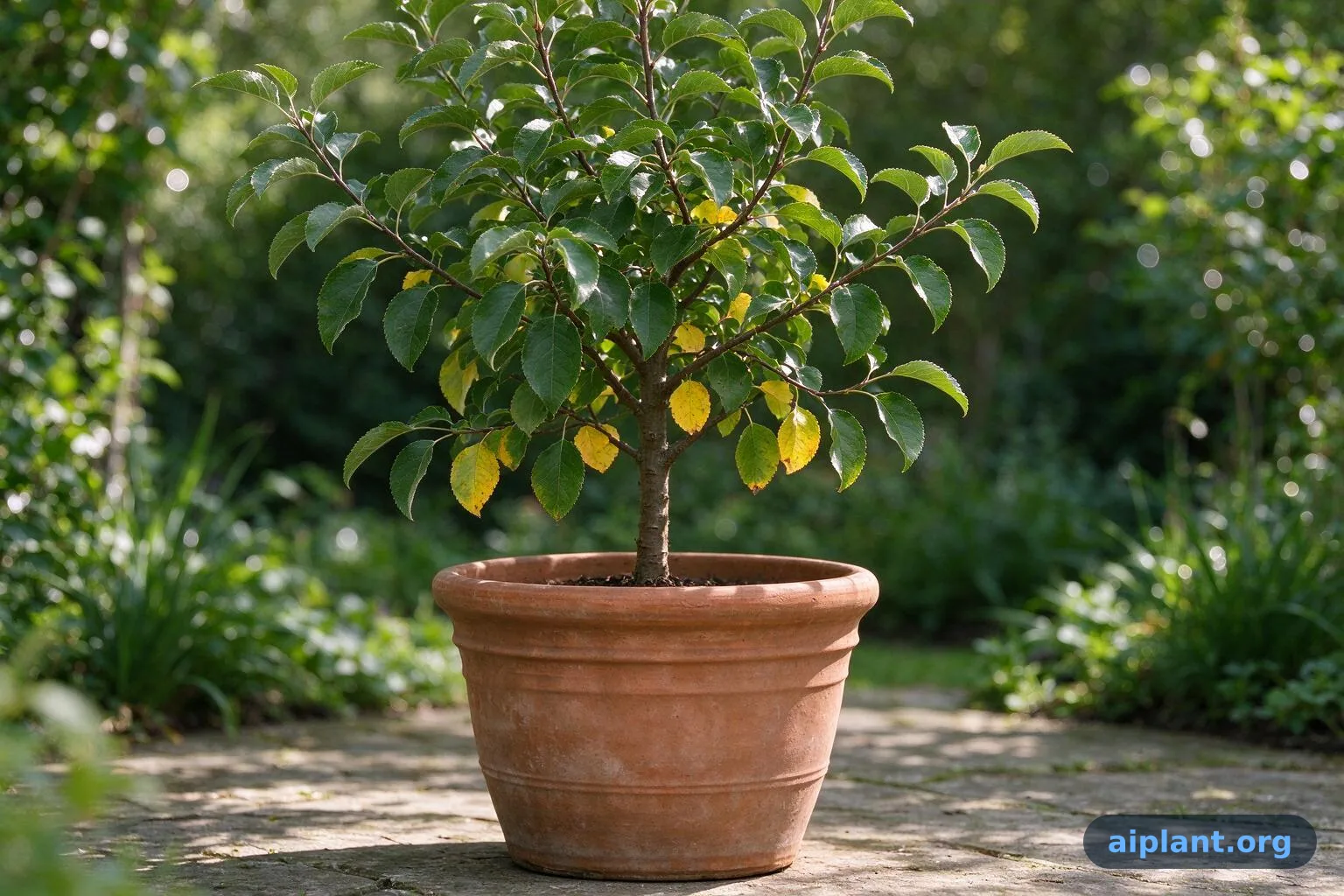
Apple Tree Yellow Leaves: The Short Answer
- Most yellow apple tree leaves come from water stress, aphids, or a nitrogen or magnesium shortage; check soil moisture first.
- Yellowing that starts on older leaves and moves up usually means nitrogen; yellow between green veins means magnesium or iron.
- Aphids cluster on new shoots and leave sticky honeydew; spray them off with water and repeat every 3 days.
- Fix the cause within 2 weeks; a tree that drops more than 30% of its leaves may still fruit but the crop will be smaller.
Match the Apple Tree Symptom to the Cause Before You Spray
The fastest way to fix a sick apple tree is to name the symptom precisely, because each one has a different cause and a different fix. Use the table as an index, then read the sub-heading for your symptom to get the numbered fix steps.
Yellow Leaves Starting on the Oldest Wood
Yellowing that begins on the lower, older leaves and moves upward means the tree is moving nitrogen out of old leaves to feed new growth. This is the most common nutrient pattern in apple trees.
Causes, most to least common: nitrogen shortage in sandy or heavily mulched soil; waterlogging that drowns roots; a heavy crop pulling nutrients; root damage from voles or digging.
- Check soil moisture first: dig 15 cm (6 in) down; if it is soggy, stop watering for 7 days and improve drainage with 5 cm (2 in) of compost.
- Feed nitrogen if dry: apply 30 g/m² (about 1 oz per 10 sq ft) of balanced 10-10-10 fertilizer in a ring 30 cm (12 in) from the trunk in early spring.
- Thin the crop: remove one fruit per cluster so the tree is not feeding more apples than it can support.
Yellow Between Green Veins on New Leaves
Interveinal chlorosis means the leaf cannot make chlorophyll because magnesium or iron is locked up. Magnesium shortage shows on older leaves first; iron shortage shows on the youngest leaves at the shoot tips.
Causes: high soil pH above 7.0 locking up iron; heavy potassium feeding blocking magnesium; cold wet soil in spring slowing uptake.
- Test pH: use a home soil test; apple trees want pH 6.0–7.0.
- Spray Epsom salts for magnesium: mix 2 tablespoons (30 g) Epsom salts in 4 L (1 gal) water and spray leaves at dusk; repeat after 14 days.
- Lower pH if above 7.0: apply elemental sulfur at 100 g/m² (3 oz per 10 sq ft) in spring and retest after 90 days.
Sticky Leaves and Curled New Shoots
Aphids cluster on the soft new growth at shoot tips and on the underside of leaves. They suck sap, excrete sticky honeydew, and cause leaves to curl and yellow.
Causes: rosy apple aphid (pink to purple, curls leaves), green apple aphid (pale green, clusters on shoots), and black aphids on older wood. Ants farm them and protect them.
- Blast with water: use a hose at full pressure on the undersides of leaves every 3 days for 2 weeks.
- Spray insecticidal soap: mix 5 ml (1 tsp) soap per 1 L (1 qt) water; spray at 20°C (68°F) or cooler, never in full sun.
- Band the trunk: wrap a 10 cm (4 in) band of sticky tree tape around the trunk in April to stop ants.
Olive-Black Spots on Leaves and Fruit
Apple scab starts as olive-green velvety spots on leaves, then turns black and causes leaves to yellow and drop. It also marks the fruit with corky scabs.
Causes: Venturia inaequalis fungus, which overwinters in fallen leaves and spreads in wet spring weather.
- Rake and bin fallen leaves: remove every leaf by December; do not compost them.
- Prune for airflow: open the centre so 30% of the canopy is open to light and wind.
- Spray at the right stage: apply captan or myclobutanil at bud break, again at pink bud, and again at petal fall; stop 7 days before harvest.
Leaves That Curl, Pucker and Turn Reddish
Rosy apple aphid causes tight leaf curls that turn reddish and protect the aphids inside. Curled leaves cannot be fixed, so the goal is to stop the spread to new shoots.
- Snip off curled clusters: cut the worst shoots 5 cm (2 in) below the curl and bin them.
- Spray the rest: use insecticidal soap every 5 days for 3 sprays.
- Encourage predators: leave a 1 m (3 ft) strip of unmown grass at the base for ladybirds and hoverflies.
White Powdery Coating on Leaves and Shoots
Powdery mildew looks like white flour dusted on leaves and shoot tips. It slows growth and weakens the tree but rarely kills it.
Causes: Podosphaera leucotricha fungus, worse in humid air with poor airflow and in shaded parts of the canopy.
- Prune infected tips: cut 10 cm (4 in) below the white coating in dry weather and bin the cuttings.
- Spray sulfur: apply a sulfur spray at 20°C (68°F) when the shoots are 5 cm (2 in) long; repeat after 14 days.
- Thin the canopy: remove crossing branches so morning sun dries the leaves by 9 am.
Brown Mushy Spots on the Fruit
Brown rot starts as a soft brown spot on the fruit, then spreads in concentric rings of grey-brown spores. It spreads fast in warm wet weather and can ruin a whole crop in 10 days.
- Remove every infected fruit: pick and bin them, including mummies on the tree, before the spores spread.
- Prune out cankers: cut 15 cm (6 in) below any branch canker in dry weather and clean the saw with alcohol.
- Spray at bloom: apply a copper or captan spray at pink bud and again at petal fall.
Brown Crispy Leaves in Summer
Brown crispy leaves that feel dry and papery mean the tree cannot move enough water to the canopy. The cause is almost always drought, root damage, or a tree that was planted too recently to have deep roots.
- Water deeply: give 20 L (5 gal) per tree per week in dry weather, applied slowly at the drip line.
- Mulch: spread 7 cm (3 in) of bark mulch in a 1 m (3 ft) ring, keeping it 10 cm (4 in) from the trunk.
- Check for root damage: look for vole holes or digging within 1 m (3 ft) of the trunk and set traps if found.
Sudden Leaf Drop in Summer
A healthy apple tree can drop leaves in summer from drought stress, scab infection, or a sudden heat spike above 35°C (95°F). Some leaf drop in September is normal as the tree prepares for winter.
- Water 20 L (5 gal) per week during any dry spell and never let the soil crack.
- Check for scab lesions on fallen leaves; if present, treat as for apple scab.
- Do not panic in September: if the tree drops leaves after the fruit is picked, that is normal autumn behaviour.
Why the Whole Tree Looks Sick or Dying
A dying apple tree usually shows several symptoms at once: yellowing, cankers, oozing sap and dieback from the tips. Fire blight is the most serious cause and can kill a tree in one season.
- Look for shepherd's-crook tips: bent black shoot tips and oozing cankers mean fire blight.
- Cut 30 cm (12 in) below the canker in dry weather and clean the tool with alcohol between cuts; burn the prunings.
- Remove the tree if more than 50% is affected: a tree with cankers in the main trunk will not recover and should be replaced with a resistant variety.
Apple Tree Symptom Checker
How Much Water and Sun an Apple Tree Needs to Stay Green
Water and light are the two inputs that decide whether an apple tree keeps its leaves green and sets fruit. Get them right and most yellowing never starts.
How Often to Water an Apple Tree
Water an apple tree deeply once a week in dry weather, giving 20 L (5 gal) per tree per week for a young tree and 40 L (10 gal) for a mature tree. The test is the soil at 15 cm (6 in): if it is dry to the touch, water; if it is soggy, stop. In sandy soil, split the water into two 10 L (2.5 gal) doses 3 days apart. In heavy clay, water every 10 days but add 5 cm (2 in) of compost to improve drainage. Never water the trunk directly; apply water at the drip line, 30–60 cm (12–24 in) from the trunk, so the roots spread outward.
How Much Sun an Apple Tree Needs
An apple tree needs at least 6 hours of direct sun a day, and 8 hours gives the best fruit colour and sugar. Morning sun is the most valuable because it dries dew and reduces scab and mildew. A tree in less than 4 hours of sun will grow pale leaves, produce few flowers and drop fruit. In hot climates above 35°C (95°F), afternoon shade reduces sunburn on fruit but do not sacrifice morning sun.
The Soil That Keeps Apple Tree Leaves Green
Apple trees want a deep, well-drained loam with pH 6.0–7.0. Test pH before planting; if it is below 5.5, add 100 g/m² (3 oz per 10 sq ft) of agricultural lime in autumn. If it is above 7.5, add elemental sulfur at 100 g/m² in spring. Plant at the same depth the tree grew in the nursery, with the graft union 5 cm (2 in) above soil level. Spread 7 cm (3 in) of mulch in a 1 m (3 ft) ring, keeping it 10 cm (4 in) away from the trunk.
Apple Tree Quick Care Facts
| Variety | Pollination | Years to Fruit | Harvest | Light | Water | Soil | | --- | --- | --- | --- | --- | --- | --- | | 'Gala', 'Fuji', 'Braeburn' | Needs a second variety within 15 m (50 ft); crabapple works | 3–5 years from a grafted tree | Brown pips and fruit parts easily | 6–8 hours direct sun | 20–40 L per week in dry weather | pH 6.0–7.0, well-drained loam |
Apple Tree Quick Care Facts
- Variety
- Gala, Fuji, Braeburn; choose a disease-resistant cultivar
- Pollination
- Needs a second variety within 15 m (50 ft); crabapple works
- Years to Fruit
- 3–5 years from a grafted tree; 6–10 from seed
- When to Harvest
- Brown pips and fruit parts easily from the spur
- Light
- 6–8 hours direct sun, morning sun best
- Water
- 20–40 L (5–10 gal) per week in dry weather
- Soil
- pH 6.0–7.0, well-drained loam
Pruning Apple Tree Wood That Carries the Fruit
Apple trees fruit on short spurs on wood that is 2 years old and older, so pruning that removes old wood removes the crop. The rule is simple: prune in winter to shape and thin, and prune lightly in summer to remove water shoots.
When to Prune an Apple Tree
Prune in late winter, from January to early March, while the tree is dormant and before buds swell. In cold climates wait until the worst frost has passed but before growth starts. Summer pruning in August removes vigorous water shoots and lets light into the fruit; do not remove more than 20% of the canopy in one summer.
Which Wood Carries the Fruit
Fruit forms on short spurs that grow on 2-year-old and older wood, and on the tips of one-year shoots in tip-bearing varieties. Spur-bearing varieties such as 'Gala' and 'Fuji' crop on spurs along the branches; tip-bearers such as 'Bramley' crop at the ends of last year's shoots. If you prune all the one-year shoots off a tip-bearer, you remove the whole crop.
The Pruning Cut That Prevents Yellow Leaves
Open the centre of the tree so 30% of the canopy is open to light and air. Remove dead, diseased and crossing branches first, then thin the remaining branches so they are 20 cm (8 in) apart. Cut back to a outward-facing bud, leaving a 5 mm (0.2 in) stub. A dense canopy stays wet, and wet leaves yellow and drop from scab and mildew.
- Remove the three Ds: cut out dead, diseased and damaged branches flush with the collar.
- Thin the centre: remove 1 in 3 of the older branches to let light reach the spurs.
- Shorten the leaders: cut the main shoots back by 20% to encourage spur formation.
- Clean the tools: wipe the blades with alcohol between trees to stop fire blight spreading.
Thinning the Crop So Next Year's Flowers Form
Apple trees alternate: a heavy crop this year means few flowers next year. Thin the fruit in June when apples are the size of a marble, leaving one fruit per cluster and 15–20 cm (6–8 in) between fruits. This gives larger apples, reduces bitter pit, and guarantees flowers for the following spring.
Bitter Pit and Corky Spot: A Calcium Problem Made Worse by Watering
Bitter pit shows as sunken brown spots on the fruit and corky tissue under the skin; it is a calcium shortage made worse by uneven watering and heavy crops. Do not just add calcium: water evenly, 20–40 L (5–10 gal) per week, mulch to hold moisture, and thin the crop so the tree is not feeding too many apples. A foliar calcium spray at 2 g/L at 14-day intervals from June to August helps only if watering is already even.
Fire Blight: The Apple Tree Disease That Kills in One Season
Fire blight bends shoot tips into a shepherd's crook, blackens the leaves and oozes orange-brown sap from cankers. It spreads in warm wet weather above 18°C (64°F) during bloom. Cut 30 cm (12 in) below the canker in dry weather, clean the saw with alcohol between every cut, and burn the prunings. If cankers reach the main trunk, remove the tree and replant with a resistant variety such as 'Liberty' or 'Enterprise'.
Apple Tree Pruning by Season
Pollination, Harvest and Storing the Apple Crop
An apple tree flowers for 10–14 days in spring, and whether you get fruit depends on a second variety flowering at the same time. Get pollination right and the crop follows; get harvest timing right and the apples keep for months.
Apple Tree Pollination: Why One Tree Is Not Enough
Most apple varieties are self-unfruitful and need pollen from a different variety that flowers at the same time. Plant a compatible polliniser within 15 m (50 ft); a crabapple such as 'Golden Hornet' works well and flowers over a long period. Bees and bumblebees do the pollinating, so avoid spraying insecticides during bloom and leave a strip of flowers at the base for pollinators. 'Gala' pairs with 'Fuji' or 'Braeburn'; 'Bramley' needs a polliniser such as 'Golden Delicious'.
How Long Until an Apple Tree Fruits
A grafted apple tree gives its first real crop 3–5 years after planting, and a seed-grown tree takes 6–10 years and may never match the parent. Dwarf rootstocks such as M9 fruit in 2–3 years but need staking; vigorous rootstocks take longer and grow larger. A mature standard tree reaches 6–8 m (20–26 ft) tall and 6 m wide; a dwarf tree stays at 2–3 m (6–10 ft).
The Apple Ripeness Test
Do not pick by the calendar: test the fruit. A ripe apple has brown pips, a skin that parts easily when you lift and twist the fruit, and a sweet taste. The flesh should be firm, not hard, and the fruit should come away with the stalk attached. Apples ripen further after picking, so pick slightly early if you need to store them. Pears need the lift-and-twist test too, but they ripen off the tree; apples are best picked ripe.
What Happens After Picking
Store apples in a cool room at 2–4°C (35–39°F) with 90% humidity; they keep 3–6 months depending on variety. Wrap each apple in newspaper to stop one rotten fruit spoiling the box, and check every 2 weeks. Eat or process bruised fruit first because it spoils within days. For longer storage, dry slices at 60°C (140°F) for 8 hours, freeze stewed apple for 12 months, or make jam. 'Gala' keeps 3 months, 'Fuji' up to 6 months, and 'Bramley' 4 months.
Pests That Cost the Crop, Not Just the Leaves
Codling moth larvae bore into the fruit and leave frass at the eye; hang pheromone traps in May and wrap corrugated cardboard bands around the trunk in August to catch larvae. Birds peck ripe fruit; net the tree in July with 20 mm mesh. Brown rot spreads in wet weather and ruins stored fruit; remove infected fruit immediately and store only clean, unbruised apples. Squirrels strip whole branches in a day; wrap the trunk with a 60 cm (24 in) metal collar.
Growing an Apple Tree in a Container
A dwarf apple on M9 or M27 rootstock can fruit in a container of at least 40 L (10 gal), 50 cm (20 in) across. Repot every 3 years in late winter, root-pruning 20% of the roots and replacing the compost. A root-bound tree stops fruiting because the roots circle and the tree spends its energy on roots, not fruit; repotting and root pruning restores the balance. Water container trees every 2–3 days in summer because the compost dries fast.
Apple Tree Harvest and Storage by Variety
Apple Tree Yellow Leaves and Crop Questions Answered
Why are my Apple Tree leaves turning yellow?
Yellowing that starts on the oldest, lowest leaves and moves upward usually means nitrogen is being moved out of old leaves to feed new growth. Check soil moisture first by digging 15 cm (6 in) down; if soggy, stop watering for 7 days and add 5 cm (2 in) of compost. If dry, apply 30 g/m² of balanced 10-10-10 fertilizer in a ring 30 cm (12 in) from the trunk in early spring.
Why are my Apple Tree leaves turning brown and crispy?
Brown crispy leaves that feel dry and papery mean the tree cannot move enough water to the canopy, almost always from drought, root damage, or shallow roots on a recently planted tree. Water deeply with 20 L (5 gal) per tree per week at the drip line, spread 7 cm (3 in) of bark mulch in a 1 m (3 ft) ring kept 10 cm (4 in) from the trunk, and check within 1 m (3 ft) of the trunk for vole holes or digging.
Why is my Apple Tree dropping its leaves?
A healthy apple tree drops leaves in summer from drought stress, apple scab infection, or a heat spike above 35°C (95°F). Water 20 L (5 gal) per week during dry spells and never let the soil crack, then check fallen leaves for scab lesions and treat as for apple scab if present. Leaf drop in September after harvest is normal autumn behaviour, so no action is needed then.
What are the black spots on my Apple Tree leaves?
Olive-green to black velvety spots on leaves and fruit point to apple scab, a fungus that overwinters in fallen leaves and spreads in wet spring weather. Rake and bin every fallen leaf by December without composting, prune so 30% of the canopy is open to light and wind, and spray captan or myclobutanil at bud break, pink bud and petal fall, stopping 7 days before harvest.
Why are my Apple Tree leaves curling and deformed?
Tight leaf curls that pucker and turn reddish are caused by rosy apple aphid, which shelters inside the curled leaves. Curled leaves cannot be fixed, so snip off the worst clusters 5 cm (2 in) below the curl and bin them, spray the rest with insecticidal soap every 5 days for 3 sprays, and leave a 1 m (3 ft) strip of unmown grass at the base for ladybirds and hoverflies.
How do I get rid of aphids on my Apple Tree?
Aphids are removed by blasting the undersides of leaves with a hose at full pressure every 3 days for 2 weeks. For heavier clusters, spray insecticidal soap mixed at 5 ml (1 tsp) per 1 L (1 qt) of water at 20°C (68°F) or cooler, never in full sun, and wrap a 10 cm (4 in) band of sticky tree tape around the trunk in April to stop the ants that farm and protect them.
What is causing the white powdery coating on my Apple Tree leaves?
A white powdery coating on leaves and shoots is powdery mildew, a fungus that is worse in humid air with poor airflow and in shaded parts of the canopy. Prune infected tips 10 cm (4 in) below the white coating in dry weather and bin them, spray sulfur at 20°C (68°F) when shoots are 5 cm (2 in) long and repeat after 14 days, and thin crossing branches so morning sun dries leaves by 9 am.
Why is my Apple Tree dying and how can I save it?
A dying apple tree usually shows several symptoms at once, and fire blight is the most serious cause, killing a tree in one season. Look for bent black shepherd's-crook tips and oozing cankers, then cut 30 cm (12 in) below the canker in dry weather, clean the tool with alcohol between cuts and burn the prunings. Remove the tree if more than 50% is affected, especially with cankers in the main trunk, and replant a resistant variety.
Why are there brown mushy spots on my Apple Tree fruit?
Brown mushy spots with concentric rings of grey-brown spores point to brown rot, a fungus that spreads fast in warm wet weather and can ruin a crop in 10 days. Pick and bin every infected fruit, including mummies still on the tree. Prune out cankers 15 cm (6 in) below the damage in dry weather, and spray copper or captan at pink bud and again at petal fall.
How often should I water my Apple Tree?
Water deeply once a week in dry weather, giving 20 L (5 gal) per tree per week for a young tree and 40 L (10 gal) for a mature tree. Check soil 15 cm (6 in) down: water if dry, stop if soggy. In sandy soil split the dose into two 10 L (2.5 gal) applications 3 days apart; in heavy clay water every 10 days and add 5 cm (2 in) of compost.
How much sunlight does an Apple Tree need?
An apple tree needs at least 6 hours of direct sun a day, and 8 hours gives the best fruit colour and sugar. Morning sun matters most because it dries dew and reduces scab and mildew. A tree receiving less than 4 hours of sun grows pale leaves, flowers poorly and drops fruit. Above 35°C (95°F), afternoon shade helps prevent sunburn but morning sun should not be sacrificed.
What is the best soil for an Apple Tree?
Apple trees want a deep, well-drained loam with pH 6.0–7.0. Test pH before planting; if below 5.5, add 100 g/m² (3 oz per 10 sq ft) of agricultural lime in autumn, and if above 7.5, add elemental sulfur at 100 g/m² in spring. Plant with the graft union 5 cm (2 in) above soil level and mulch 7 cm (3 in) deep in a 1 m (3 ft) ring, kept 10 cm (4 in) from the trunk.
Related articles
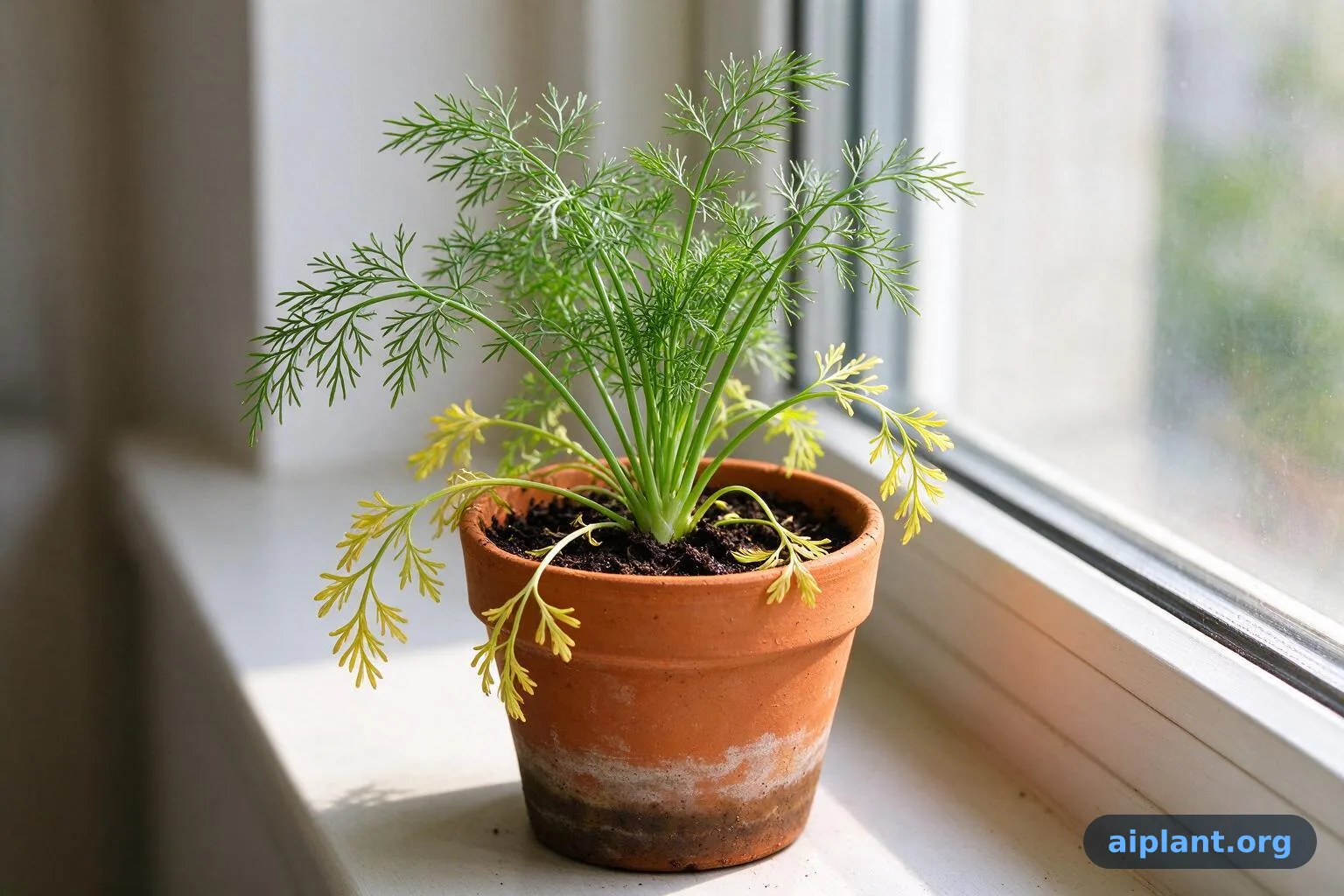
Why Is My Dill Plant Turning Yellow and Drooping?
Match the symptom, find the cause, and save the plant before it bolts.
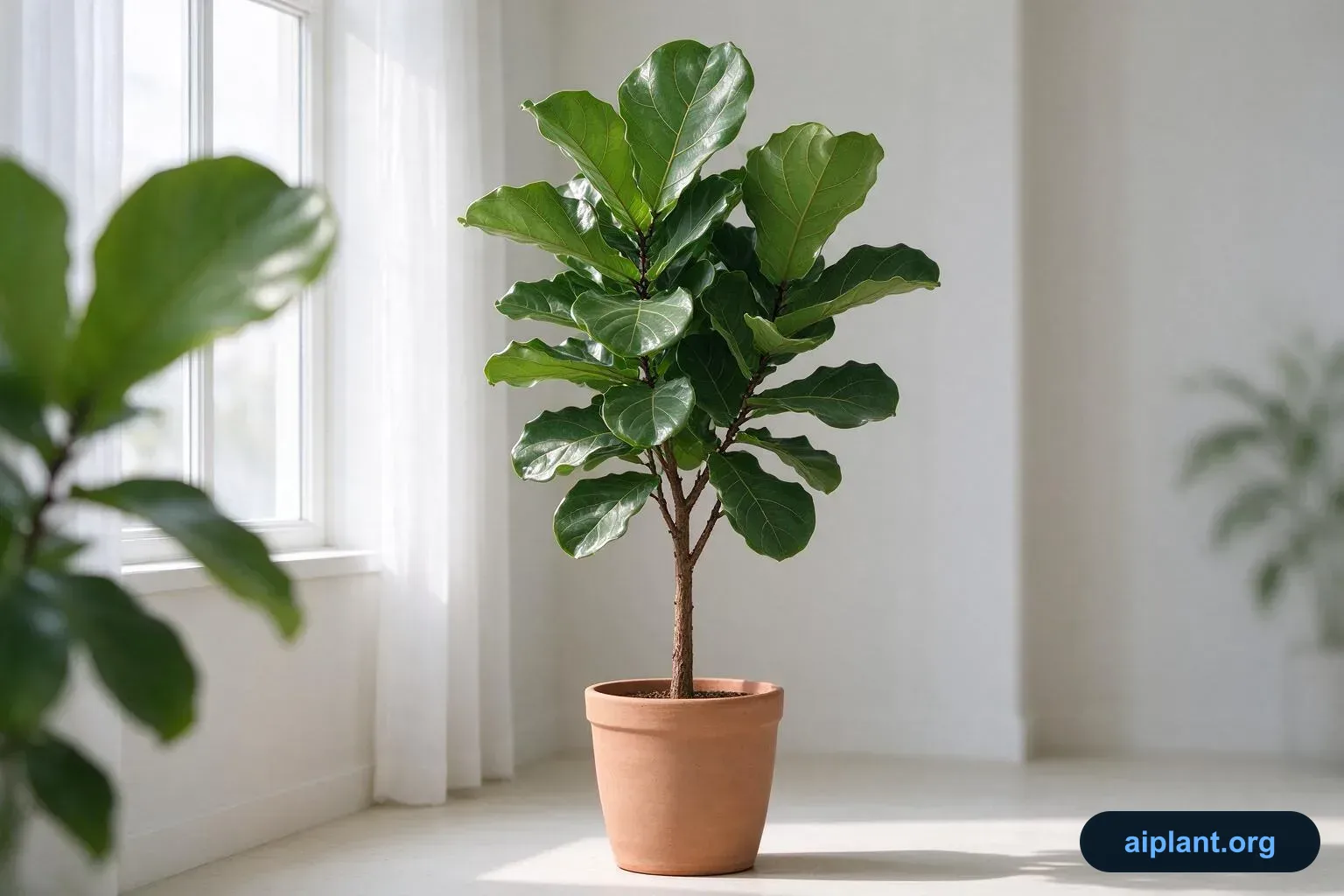
What Does a Fiddle Leaf Fig Really Need to Thrive?
Everything Ficus lyrata needs, from light and water to leaf fixes.
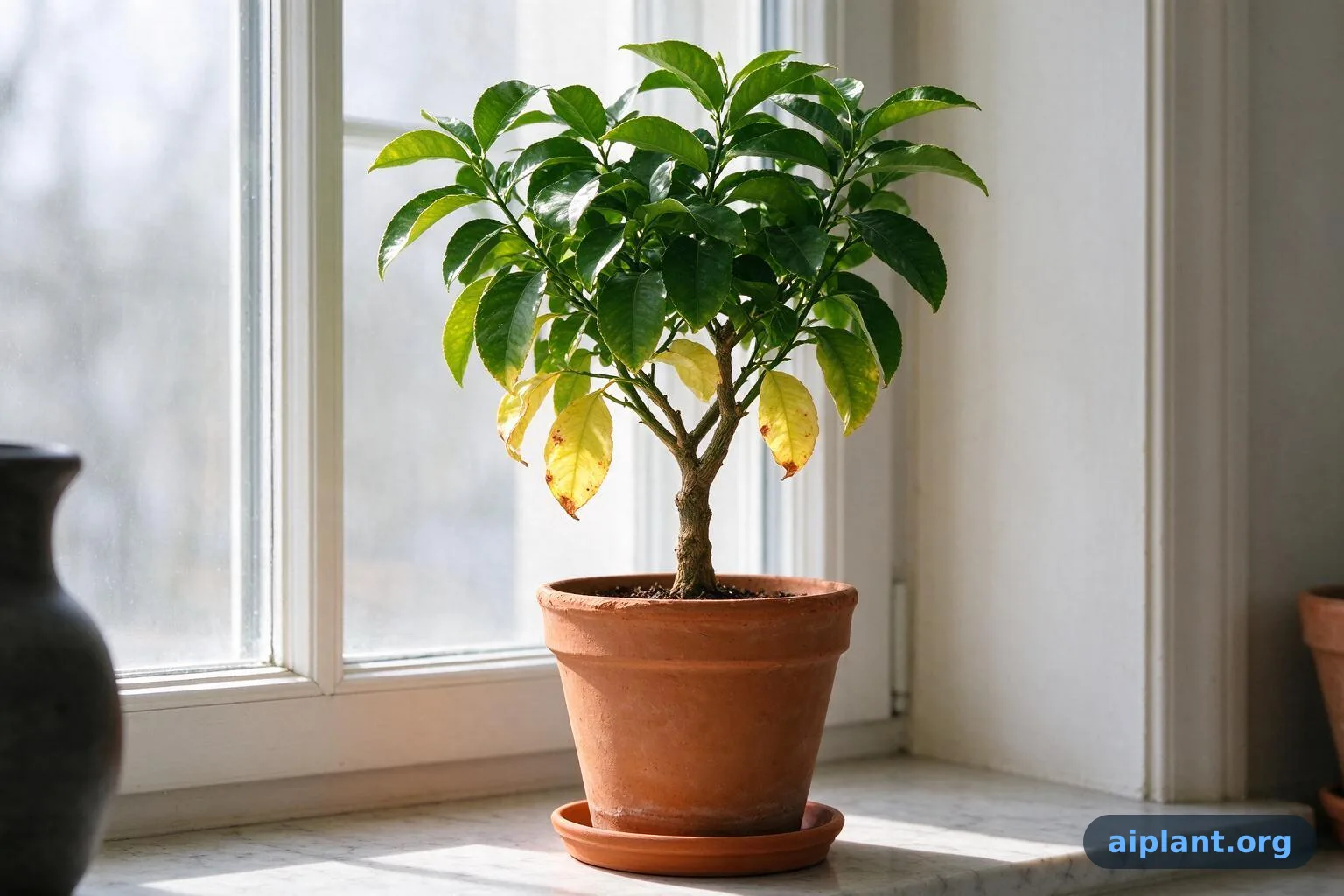
Why Are Lemon Tree Leaves Turning Yellow and How Do You Save It?
Match the symptom to its cause, fix it with numbers, then keep the tree producing.
Why Are Garlic Leaves Turning Yellow? Find the Cause
Match the symptom to the cause and fix it before the bulbs suffer.