
Why Are Lemon Tree Leaves Turning Yellow and How Do You Save It?
Match the symptom to its cause, fix it with numbers, then keep the tree producing.
Yellow lemon tree leaves are usually a root or drainage problem before they are a disease, and the fix depends on which leaves yellow first. Lemon Tree (Citrus limon) is an evergreen that holds its leaves for two to three years, so any leaf that yellows and drops before that is telling you something about water, light, cold, nutrients or pests. This article starts with a symptom table and then works through each problem — yellowing, leaf drop, browning, curling, spots, pests and stalled growth — with numbered fixes, followed by the care that stops the problem returning.
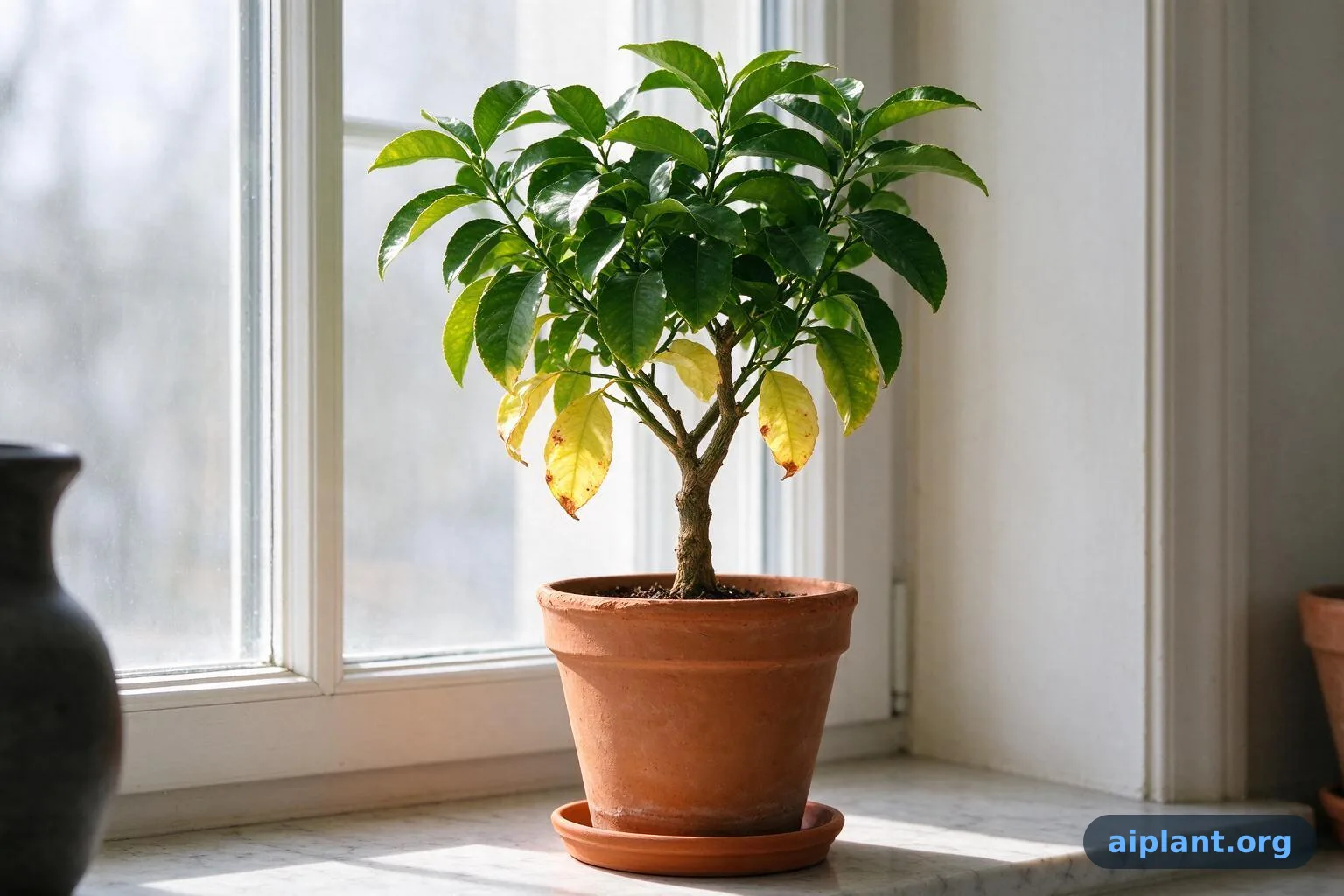
Lemon Tree Yellow Leaves: The Short Answer
- Most yellow lemon tree leaves come from overwatering or poor drainage: soggy soil at the base suffocates roots, so leaves yellow from the bottom up and drop.
- Check the soil 3 cm (1 in) down before watering; water only when it is dry, and make sure the pot drains freely within 24 hours.
- Cold below 0 °C (32 °F), sudden temperature swings and dry indoor air cause browning tips and leaf drop in winter.
- Pests such as spider mites, scale and aphids also yellow and curl leaves; inspect the undersides every 2 weeks.
- Fix the cause, remove dead leaves, and give 6–8 hours of direct sun; most lemon trees recover within 4–8 weeks.
Lemon Tree Symptom Table: Match What You See to the Cause
Lemon Tree (Citrus limon) problems are easiest to identify by where the symptom starts and what the leaf looks like. Use this table as an index, then read the detailed sub-headings below for the fix steps.
Start with the newest or oldest leaves: yellowing on old lower leaves points to water and nitrogen, while yellowing between the veins of new leaves points to iron or magnesium.
Check the soil before anything else: push a finger 3 cm (1 in) into the pot; wet soil that stays wet for more than 3 days is the most common cause of yellowing and leaf drop.
Look under the leaves: pests hide on the undersides and along the midrib, so tilt each leaf and check for fine webbing, sticky honeydew or small bumps.
Lemon Tree Symptom, Cause and Fix
Why Lemon Tree Leaves Turn Yellow From the Bottom Up
Yellowing that starts on the oldest, lowest leaves and moves upward is almost always a water or nitrogen problem, not a disease. Citrus limon drops its oldest leaves first when roots are stressed, because the tree sacrifices them to keep new growth alive.
Overwatering and soggy roots
The most common cause is soil that stays wet. Lemon trees need air around their roots; when the pot sits in water or the mix holds moisture for more than 3–4 days, roots suffocate and lower leaves turn pale yellow before dropping. Check by lifting the pot: if it feels heavy and water drips from the holes hours after watering, the mix is too dense.
- Stop watering immediately: wait 7–10 days and do not water again until the top 3 cm (1 in) of soil is dry.
- Check drainage: confirm the pot has holes and empty the saucer within 30 minutes of watering.
- Repot if the mix stays wet: move into a mix of 60% potting soil, 20% perlite and 20% coarse bark, in a pot 2–4 cm (1–1.5 in) wider than the root ball.
- Trim dead roots: cut brown, mushy roots with clean scissors, keep white firm roots, and dust cuts with cinnamon.
Underwatering and drought stress
Too little water also yellows lower leaves, but the leaves feel dry and crispy and the soil pulls away from the pot sides. In summer a potted lemon tree may need water every 2–3 days; a plant left 10 days without water will yellow and drop leaves within a week.
- Water slowly until it runs from the holes: give 2–3 litres (0.5–0.8 gal) for a 20 cm (8 in) pot, then let it drain.
- Set a schedule by weight: water when the pot feels light, roughly every 2–3 days in summer and 7–10 days in winter.
- Mulch the surface: add 2 cm (0.8 in) of bark to slow evaporation without touching the trunk.
Nitrogen deficiency
If the soil is correctly watered but lower leaves are uniformly pale yellow and growth is slow, nitrogen is low. Citrus needs regular feeding in the growing season; a tree that has not been fed for 3 months will show pale old leaves first.
- Feed with a citrus fertilizer: apply a balanced citrus feed at the label rate every 4 weeks from March to September.
- Flush the pot first: run 3–4 litres (0.8–1 gal) of water through the pot to remove salt build-up before feeding.
- Repeat for 6–8 weeks: new growth should be green within 4–6 weeks; do not feed in winter when growth stops.
Why Lemon Tree Leaves Drop Off Suddenly
Sudden leaf drop on a lemon tree is a shock response, and the tree usually recovers if the cause is corrected within 2–3 weeks. Citrus limon drops leaves when the change is bigger than it can adapt to: a move indoors, a cold night, a repot, or a week of soggy soil.
Cold shock and draughts
Lemon trees suffer below 0 °C (32 °F) and drop leaves within days of a cold snap or a draughty windowsill. Leaves may look healthy one day and carpet the floor the next. Keep the tree at 18–24 °C (65–75 °F) in active growth and never below 5 °C (41 °F).
- Move the tree to a stable spot: keep it 1 m (3 ft) from windows and doors and away from radiators.
- Check night temperature: if the room drops below 10 °C (50 °F) at night, move the tree or add a heat mat.
- Do not feed or repot for 3 weeks: let the tree stabilize before any further change.
Transplant shock after repotting
Repotting into a much larger pot or disturbing wet roots causes leaf drop within 3–7 days. The fix is patience and careful watering.
- Water only when the top 3 cm (1 in) is dry: overwatering after repot makes shock worse.
- Keep light bright but indirect for 7 days: then return to full sun.
- Wait 4 weeks before feeding: roots need time to heal before fertilizer.
Natural leaf aging
Older leaves near the trunk yellow and drop after 2–3 years; this is normal if it happens a few leaves at a time and new growth is green. No treatment is needed beyond removing the fallen leaves.
When leaf drop means the tree is dying
If leaf drop continues for more than 3 weeks, the branches lose leaves from the tips inward, and the trunk feels soft or smells sour at the soil line, the tree may be beyond saving. Scratch the bark on a lower branch: green underneath means it is still alive and worth saving; brown and dry means that branch is dead. If more than half the branches are brown and the roots are mushy, replace the tree.
Why Lemon Tree Leaves Turn Brown and Fall Off
Brown lemon tree leaves are usually a moisture or salt problem at the leaf edge, not an infection. The pattern of the browning tells you which: crispy brown tips mean dry air or underwatering, brown margins with a yellow halo mean salt burn, and brown patches in the middle of the leaf mean sunburn or fungal spot.
Crispy brown tips from dry air
Indoor lemon trees in winter often brown at the tips because indoor humidity drops below 30%. Citrus limon prefers 40–60% humidity. Raise it with a pebble tray or a humidifier, and keep the tree away from heating vents.
- Group plants or use a humidifier: aim for 40–60% relative humidity around the tree.
- Mist only in the morning: misting at night can encourage fungal spots; 2–3 times a week is enough.
- Water consistently: never let the root ball dry out completely between waterings.
Salt build-up from tap water and fertilizer
Brown leaf margins that feel dry and brittle, with a thin yellow line between brown and green, come from salts accumulating in the pot. This happens when the tree is fed heavily and never flushed.
- Flush the pot every 2–3 months: pour 3–4 litres (0.8–1 gal) of water through the pot and let it drain fully.
- Reduce fertilizer to every 6 weeks: if the label says every 2 weeks, use half strength.
- Use rainwater or filtered water: tap water with high minerals adds to the problem.
Sunburn on leaves and fruit
Sudden exposure to strong midday sun after a cloudy week can scorch leaves, turning them brown in the centre. Move the tree into sun gradually over 7–10 days.
Fungal leaf spot
Brown spots with yellow halos that spread and merge are usually fungal. Remove affected leaves, improve airflow, and water the soil only, not the foliage. If spots continue to spread after 2 weeks, use a copper-based fungicide at the label rate every 10–14 days for 3 applications.
Why Lemon Tree Leaves Curl and What Stops It
Curling lemon tree leaves is a protective response: the leaf rolls to reduce water loss or to escape pests. The direction of the curl helps: leaves curling upward usually mean heat or water stress, while leaves curling downward or cupping often mean pests or root damage.
Heat and water stress
On hot days above 32 °C (90 °F), lemon leaves curl upward to reduce surface area. Water the tree deeply in the morning and provide afternoon shade if the pot is against a hot wall.
- Water before 10 a.m.: give 2–3 litres (0.5–0.8 gal) for a 20 cm (8 in) pot and check again at midday.
- Move the pot out of reflected heat: keep it 30 cm (12 in) away from walls and paving.
- Mulch the surface: 2 cm (0.8 in) of bark keeps roots cooler.
Aphids and mites
Aphids cluster on new growth and cause leaves to curl and distort; spider mites cause fine stippling and webbing. Check the undersides of curled leaves with a magnifier.
- Wash the tree with a strong water spray: do this every 3 days for 2 weeks to knock off aphids.
- Apply insecticidal soap: spray undersides every 5–7 days for 3 rounds, in the evening to avoid leaf burn.
- Repeat after 10 days: eggs hatch in about a week, so a second round is needed.
Root damage from soggy soil
If curling comes with yellowing lower leaves and wet soil, roots are damaged. Follow the overwatering steps above: stop watering for 7–10 days and repot into a draining mix if the soil stays wet.
Pests and Diseases That Attack Lemon Tree Leaves
Lemon trees indoors and in pots attract a small set of pests that yellow, curl and drop leaves. Inspect the undersides of leaves and new shoots every 2 weeks, because early detection is the difference between a wash and a lost crop.
Spider mites
Fine pale stippling on leaves, then yellowing and a thin webbing between leaf and stem, especially in dry indoor air. Mites thrive below 40% humidity.
- Raise humidity to 50–60%: mites reproduce fastest in dry air.
- Spray with insecticidal soap or neem oil: coat undersides every 5 days for 3 rounds.
- Wipe the leaves: use a damp cloth to remove mites and webbing on small trees.
Scale insects
Small brown or white bumps along stems and leaf veins, with sticky honeydew and sooty mould. Scale attaches firmly and does not move.
- Scrape off scale with a fingernail or cotton swab dipped in rubbing alcohol: do this weekly for 4 weeks.
- Apply horticultural oil: spray in the evening, at the label rate, every 10–14 days for 3 rounds.
- Check new growth after 4 weeks: if bumps return, repeat the oil spray.
Aphids
Green or black insects clustered on new shoots, causing curled leaves and sticky honeydew. Wash them off with water every 3 days for 2 weeks, or use insecticidal soap every 5–7 days for 3 rounds.
Fungal diseases
Brown spots with yellow halos, or grey powdery growth, point to fungal leaf spot or powdery mildew. Improve airflow, water the soil not the leaves, and remove affected leaves. If it spreads, apply a copper fungicide every 10–14 days for 3 applications.
Why a Lemon Tree Stops Growing New Leaves
A lemon tree that produces no new leaves for more than 8 weeks in the growing season is usually limited by light, pot size, nutrients or temperature. Citrus limon flushes new growth in waves, so short pauses are normal; a long stall is not.
Too little light
Lemon trees need 6–8 hours of direct sun daily. A tree kept in a north-facing room or more than 1 m (3 ft) from a bright window slows down and holds pale leaves.
- Move the tree to the brightest window: south or southwest is best in the northern hemisphere.
- Add a grow light: 10–12 hours per day in winter, 30 cm (12 in) above the canopy.
- Rotate the pot a quarter turn every 2 weeks: this keeps growth even.
Pot-bound roots
Roots circling the pot and water running straight through mean the tree is pot-bound and cannot take up nutrients. Repot in early spring into a pot 2–4 cm (1–1.5 in) wider.
- Slide the root ball out and check: if roots circle the sides, it is pot-bound.
- Loosen the outer roots gently: tease them apart with your fingers.
- Repot into fresh citrus mix: water well and keep out of direct sun for 5 days.
Nutrient shortage
Pale new leaves with green veins mean iron or magnesium deficiency; uniform pale leaves mean nitrogen. Feed with a citrus fertilizer containing micronutrients every 4 weeks from March to September.
Cold or low temperature
Below 12 °C (54 °F) growth stops almost completely. Keep the tree at 18–24 °C (65–75 °F) for active growth.
Lemon Tree Watering, Light and Soil That Prevent Yellowing
The care that keeps a lemon tree green is mostly about water, light and drainage, because those three prevent most yellowing and leaf drop. Citrus limon is a heavy feeder and a sun lover, but it hates wet roots more than anything else.
How often to water a lemon tree
Water when the top 3 cm (1 in) of soil is dry — roughly every 2–3 days in summer for a potted tree and every 7–10 days in winter. In the ground, water deeply every 7–10 days in the first year and every 2 weeks after that in dry weather.
- Test with a finger or moisture meter: water only when the top 3 cm (1 in) is dry.
- Water until it drains: give 2–3 litres (0.5–0.8 gal) for a 20 cm (8 in) pot, then empty the saucer within 30 minutes.
- Reduce in winter: cut watering to every 7–10 days and never let the pot sit in water.
How much sunlight a lemon tree needs
Lemon trees need 6–8 hours of direct sun per day. Indoors, place the tree within 1 m (3 ft) of a south-facing window; if the light is weaker, add a grow light for 10–12 hours daily.
The best soil for a lemon tree
Use a free-draining mix: 60% potting soil, 20% perlite and 20% coarse bark, with a pH of 5.5–6.5. In the ground, plant in sandy loam with organic matter and make sure water drains within 24 hours.
Feeding and temperature
Feed every 4 weeks from March to September with a citrus fertilizer; stop in winter. Keep the tree at 18–24 °C (65–75 °F) in growth, with a cold limit of 5 °C (41 °F) and protection below 0 °C (32 °F).
Lemon Tree Quick Care Facts
- Light
- 6–8 hours direct sun daily
- Water
- When top 3 cm (1 in) is dry
- Temperature
- 18–24 °C (65–75 °F); protect below 5 °C (41 °F)
- Humidity
- 40–60% relative humidity
- Soil
- Free-draining mix, pH 5.5–6.5
- Fertilizer
- Citrus feed every 4 weeks, March–September
Repotting a Lemon Tree Without Triggering Leaf Drop
Repot a lemon tree in early spring, every 2–3 years, when roots circle the pot or water runs straight through. The right timing and pot size prevent the transplant shock that causes leaf drop.
- Choose the pot: pick a pot 2–4 cm (1–1.5 in) wider than the current one, with drainage holes.
- Water the tree 1 day before: this keeps the root ball intact.
- Slide the tree out and loosen the outer roots: tease circling roots apart with your fingers.
- Plant at the same depth: the root flare should sit level with the soil surface, never buried.
- Water well and keep out of direct sun for 5 days: then return to normal light.
- Wait 4 weeks before feeding: fresh mix already contains nutrients.
Repot in spring when the tree is starting new growth, not in winter, and never repot a tree that is already dropping leaves from cold or overwatering until it has stabilized for 2–3 weeks.
Lemon Tree Problems by Season and When to Replace It
Most lemon tree problems follow the seasons: winter brings cold damage and dry-air browning, summer brings heat stress and spider mites, and spring is the time for repotting and feeding. Plan care around these windows.
Winter: move the tree indoors before the first frost, keep it at 10–15 °C (50–59 °F) if you want it to rest, and reduce watering to every 7–10 days. Check for scale and mites every 2 weeks because indoor air is dry.
Spring: repot if needed, resume feeding every 4 weeks, and prune dead or crossing branches in early spring before new growth starts.
Summer: water every 2–3 days, provide afternoon shade above 32 °C (90 °F), and watch for aphids on new shoots.
Autumn: reduce feeding as growth slows, and move the tree indoors before night temperatures drop below 5 °C (41 °F).
When to start over: if the trunk is soft and sour-smelling at the soil line, more than half the branches are brown and dry under the bark, and the roots are mushy, the tree is unlikely to recover. A lemon tree that still has green under the bark on lower branches and firm white roots is worth saving — correct the water, light and drainage and give it 4–8 weeks to push new growth.
Lemon Tree Care by Season
Lemon Tree Yellow Leaves and Care Questions Answered
Why are my Lemon Tree leaves turning yellow?
Yellowing that starts on the oldest lower leaves is almost always a water or nitrogen problem, not disease. Push a finger 3 cm (1 in) into the pot; soil that stays wet more than 3 days suffocates roots and turns lower leaves pale. Stop watering 7 to 10 days, empty the saucer within 30 minutes, and repot into a 60% potting soil, 20% perlite, 20% bark mix if it stays soggy.
Why is my Lemon Tree dropping leaves?
Sudden drop is a shock response to cold, draughts, repotting or a week of soggy soil, and the tree usually recovers if the cause is fixed within 2 to 3 weeks. Lemons suffer below 0 °C (32 °F) and drop leaves within days; keep the tree at 18 to 24 °C (65 to 75 °F) and never below 5 °C (41 °F). Do not feed or repot for 3 weeks.
Why are my Lemon Tree leaves turning brown and falling off?
Brown leaves are usually a moisture or salt problem at the leaf edge. Crispy brown tips mean dry air below 30% humidity, so raise it to 40 to 60%; brown margins with a yellow halo mean salt build-up, so flush 3 to 4 litres (0.8 to 1 gal) through the pot every 2 to 3 months and feed every 6 weeks.
Why is my Lemon Tree dying?
A lemon tree is likely dying if leaf drop continues more than 3 weeks, branches lose leaves from the tips inward, and the trunk feels soft or smells sour at the soil line. Scratch bark on a lower branch: green underneath means it is alive and worth saving, brown and dry means that branch is dead. If more than half the branches are brown and roots mushy, replace it.
Why are my Lemon Tree leaves curling?
Curling is a protective response. Leaves curling upward usually mean heat or water stress, especially above 32 °C (90 °F); water deeply before 10 a.m. with 2 to 3 litres (0.5 to 0.8 gal) for a 20 cm (8 in) pot and move the pot 30 cm (12 in) from hot walls. Downward cupping points to aphids, mites or soggy roots.
What causes yellow spots on Lemon Tree leaves?
Yellow spots with brown centres and yellow halos that spread and merge are usually fungal leaf spot. Remove affected leaves, improve airflow, and water the soil only, not the foliage. If spots keep spreading after 2 weeks, apply a copper-based fungicide at the label rate every 10 to 14 days for 3 applications.
How do I get rid of pests on my Lemon Tree?
Check leaf undersides and new shoots every 2 weeks. Wash aphids off with a strong spray every 3 days for 2 weeks, or use insecticidal soap every 5 to 7 days for 3 rounds. For scale, scrape bumps off weekly for 4 weeks and apply horticultural oil every 10 to 14 days for 3 rounds. Raise humidity to 50 to 60% against mites.
Why is my Lemon Tree not growing new leaves?
No new leaves for more than 8 weeks in the growing season usually means too little light, pot-bound roots, nutrient shortage or cold. Lemons need 6 to 8 hours of direct sun daily and 18 to 24 °C (65 to 75 °F); growth stops below 12 °C (54 °F). Check for circling roots and repot into a pot 2 to 4 cm (1 to 1.5 in) wider, and feed citrus fertilizer every 4 weeks from March to September.
How often should I water my Lemon Tree?
Water your lemon tree when the top 3 cm (1 in) of soil feels dry, which is roughly every 2 to 3 days in summer for a potted tree and every 7 to 10 days in winter. Give 2 to 3 litres (0.5 to 0.8 gal) for a 20 cm (8 in) pot until water drains from the holes, then empty the saucer within 30 minutes. Never let the pot sit in water, since soggy soil that stays wet more than 3 to 4 days suffocates roots and yellows lower leaves.
How much sunlight does a Lemon Tree need?
A lemon tree needs 6 to 8 hours of direct sun per day. Indoors, place it within 1 m (3 ft) of a south-facing window; if that light is weaker, add a grow light for 10 to 12 hours daily, kept 30 cm (12 in) above the canopy. Too little light slows growth and holds pale leaves, so rotate the pot a quarter turn every 2 weeks to keep growth even.
What is the best soil for a Lemon Tree?
Use a free-draining mix of 60% potting soil, 20% perlite and 20% coarse bark, with a pH of 5.5 to 6.5. In the ground, plant in sandy loam with organic matter and make sure water drains within 24 hours. This airy mix matters because lemon roots suffocate in soil that stays wet for more than 3 to 4 days, which is the most common cause of yellowing and leaf drop.
When should I repot my Lemon Tree?
Repot your lemon tree in early spring, every 2 to 3 years, when roots circle the pot or water runs straight through. Choose a pot only 2 to 4 cm (1 to 1.5 in) wider with drainage holes, water the tree one day before, and keep it out of direct sun for 5 days afterward. Wait 4 weeks before feeding, and never repot a tree already dropping leaves until it has stabilized for 2 to 3 weeks.
Related articles
What Does a Fiddle Leaf Fig Really Need to Thrive?
Everything Ficus lyrata needs, from light and water to leaf fixes.
Gardenia Bud Drop & Yellow Leaves?
How to Grow Fragrant Blooms
Why Is My Dill Plant Turning Yellow and Drooping?
Match the symptom, find the cause, and save the plant before it bolts.
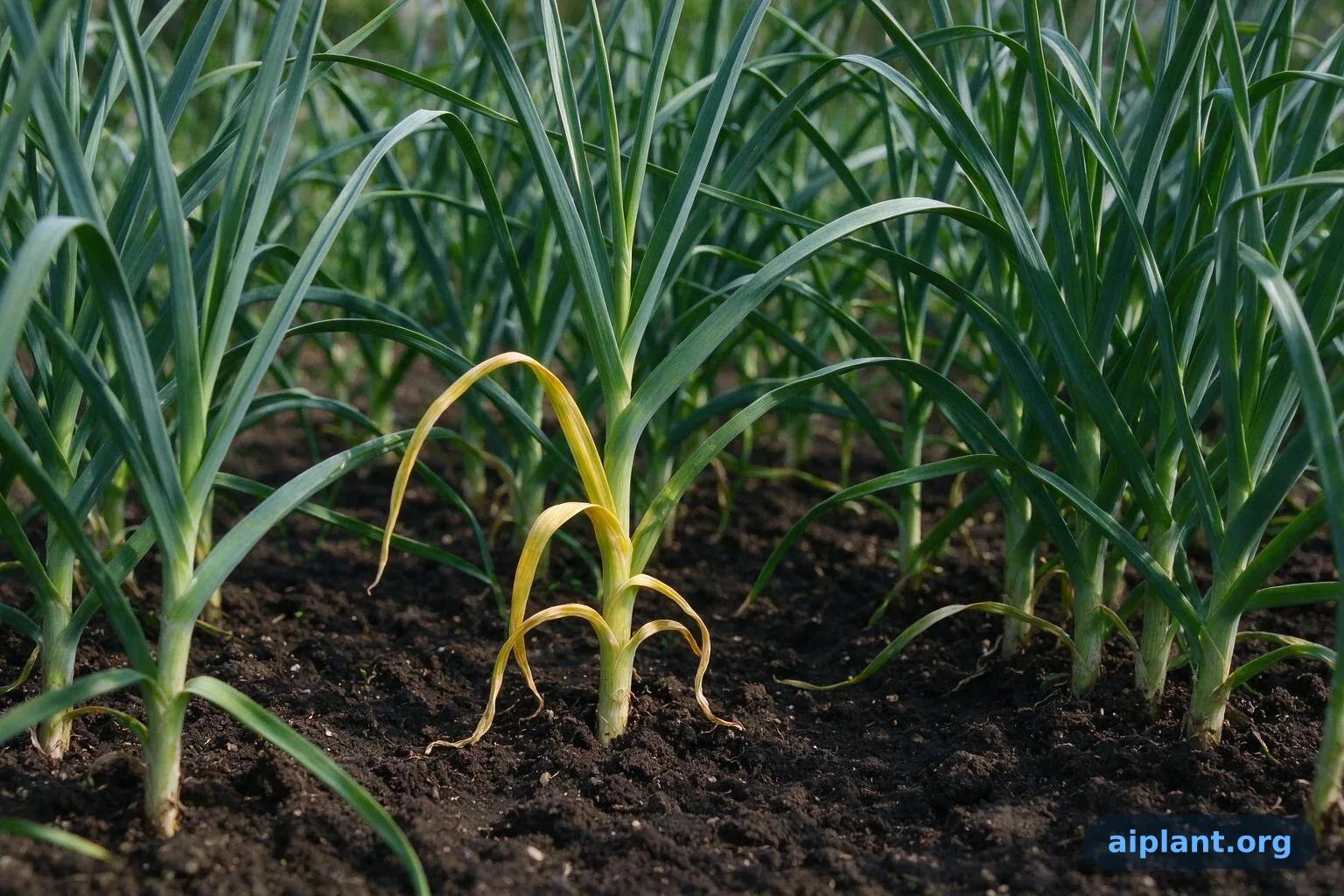
Why Are Garlic Leaves Turning Yellow? Find the Cause
Match the symptom to the cause and fix it before the bulbs suffer.