
Why Are Garlic Leaves Turning Yellow? Find the Cause
Match the symptom to the cause and fix it before the bulbs suffer.
Yellow garlic leaves almost always point to one of four things: soggy soil, a nitrogen shortage, a fungal disease such as rust, or the natural die-back that starts 2–3 weeks before harvest. Because garlic is grown for its bulb, the leaves are the engine that fills it, so every week of yellowed foliage costs bulb size. This article helps you read the symptom first — where the yellowing starts, how fast it spreads, whether the base is firm or mushy — then gives the exact fix, followed by the watering, light, feeding, harvest and curing routine that keeps Garlic (Allium sativum) healthy from planting to storage.
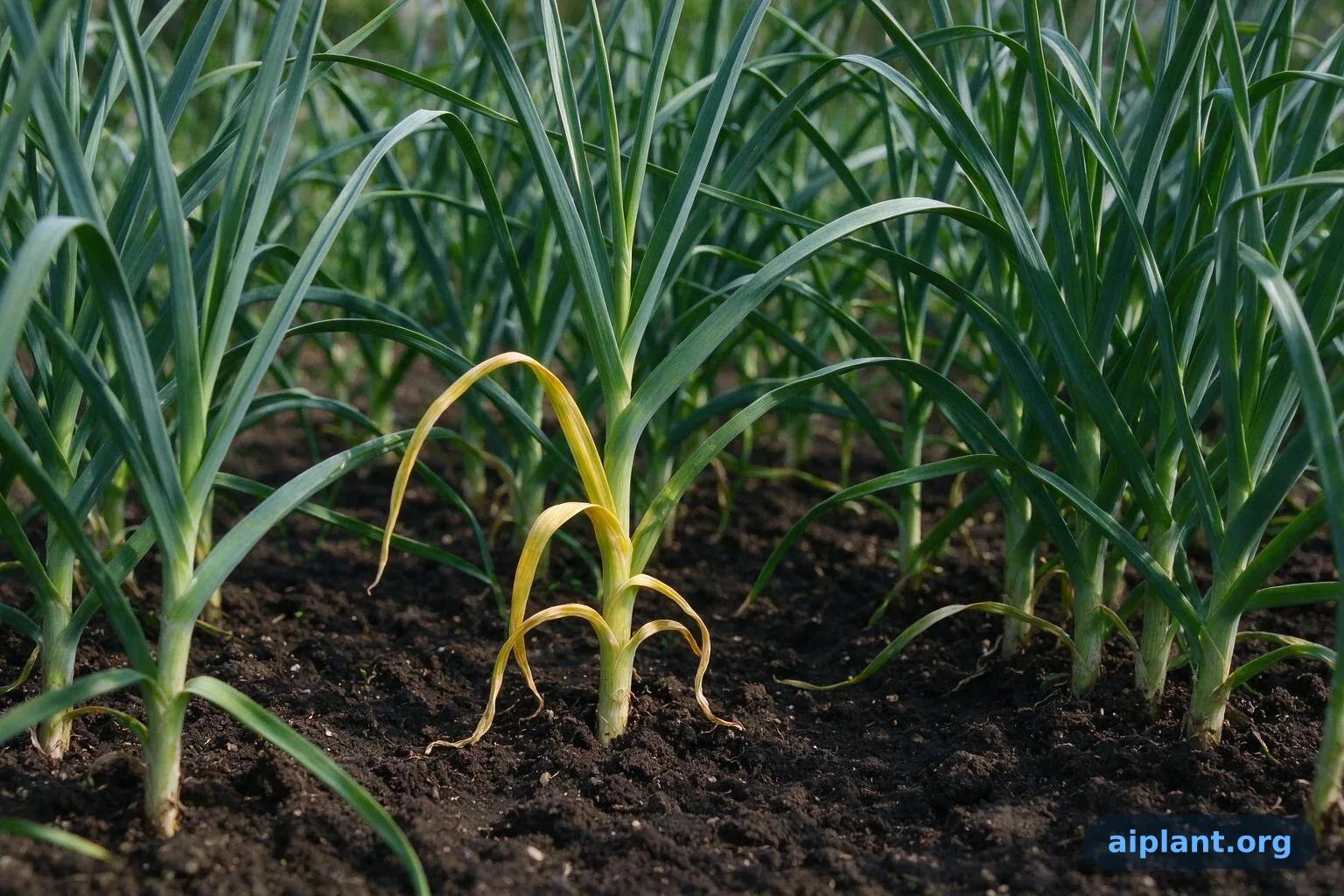
Garlic Yellow Leaves: The Short Answer
- Yellowing that starts on the oldest, lowest leaves and moves upward is usually nitrogen hunger or waterlogging; check the soil 5 cm (2 in) down before watering again.
- Uniform yellowing of the whole plant in the last 2–3 weeks before harvest is normal senescence — stop watering and prepare to lift the bulbs.
- Orange-brown powdery spots that spread into yellow streaks mean rust; remove affected leaves and improve airflow rather than spraying at random.
- A yellow plant with a soft, brown base is rotting; lift it, cut away the rot and do not replant garlic in that spot for 3 years.
Garlic Problem Finder: Start With the Leaves
Garlic tells you what is wrong through its leaves, and the pattern matters more than the colour. Before you change anything, look at three things: which leaves yellow first (oldest or newest), how fast it spreads (days or weeks), and what the base of the stem feels like (firm or soft). The table below maps the most common symptoms to their likely cause and the first action to take.
Are Yellow Garlic Leaves Still Safe to Eat?
Yes, in most cases. Leaves that are yellow from nitrogen shortage, drought or natural die-back are safe to use. Wash them under cool running water, trim away brown or slimy sections with scissors, and use only the firm green or pale-yellow parts — garlic leaves make a mild substitute for chives in soups and stir-fries. Do not eat leaves that are yellow with soft, foul-smelling tissue at the base, or leaves covered in rust pustules; discard those and wash your hands after handling.
When to Keep Going and When to Start Over
A garlic plant is worth saving if the base is firm, at least 3 green leaves remain, and the yellowing has not reached the newest leaf. It is time to cut losses if the base is mushy, the plant pulls out of the soil with no roots, or white fluffy mould appears on the bulb — lift and bin those plants, because rot spreads through the bed.
Yellow Lower Leaves After Watering
This is the most common garlic complaint, and it usually means the roots are sitting in water. Yellowing starts on the two or three oldest leaves and creeps upward over 1–2 weeks; the soil feels wet or sticky 5 cm (2 in) below the surface even 2 days after rain.
Causes, most to least common: heavy clay soil that drains slowly, watering on a schedule instead of by test, a container without drainage holes, and, less often, nitrogen shortage that looks similar but comes with pale, thin leaves rather than soft ones.
- Push a finger or trowel 5 cm (2 in) into the soil; if it is wet, stop watering for 7–10 days and let the surface dry.
- If the bed is clay, lift the plants, work in 5 cm (2 in) of compost and coarse grit, and replant at the same depth.
- For containers, check that holes are open; tilt the pot and empty the saucer within 30 minutes of watering.
- Feed with fish emulsion diluted at 1 tbsp per 4 L (1 gal) once, then wait 2 weeks before feeding again.
Brown and Dying Leaves From the Tips Down
Brown tips that dry and crisp usually mean drought, salt build-up or heat. The browning starts at the leaf tip and moves down the leaf; the rest of the plant may still be green.
Causes, most to least common: watering too shallowly so only the top 5 cm (2 in) wets, temperatures above 30 °C (86 °F) with no mulch, fertilizer applied dry at the base, and, in containers, salt crust on the soil surface.
- Water slowly until the top 15 cm (6 in) is moist — roughly 2–3 L (0.5–0.8 gal) per plant — once a week in dry weather.
- Spread 5 cm (2 in) of straw or compost mulch to hold moisture and keep roots cool.
- Flush container garlic with 3× the pot volume of water once, then resume normal watering.
- Stop all nitrogen fertilizer 6 weeks before harvest; brown tips late in the season are harmless.
Drooping Garlic That Falls Over
Garlic that flops while still green is different from the natural fall-over at maturity. If the leaves are limp and green in mid-season, the plant is stressed; if it collapses in the last 2 weeks with dry tips, it is finishing normally.
Causes, most to least common: drought, heat above 30 °C (86 °F), root damage from waterlogging, and bolting (a flower stalk takes the plant's energy).
- Water deeply once and check the next day — if the leaves lift, drought was the cause.
- Snap off any flower stalk at the base as soon as it appears; do not pull it, which can loosen the bulb.
- If the base smells sour, lift the plant and discard it rather than trying to revive it.
- In hot spells, shade with 30% shade cloth from noon to 4 pm until temperatures drop below 28 °C (82 °F).
White Spots and Rust on Garlic Leaves
Small white or orange-brown spots that turn powdery are the signature of rust and, less often, white rot. Rust pustules are raised, orange-brown and rub off on your finger; white rot shows white fluffy mould at the base and yellowing from the bottom up.
Causes: rust spreads in humid weather with poor airflow; white rot lives in soil for up to 20 years and enters through damaged roots.
- Remove and bin affected leaves at the first orange pustule — do not compost them.
- Space plants 15 cm (6 in) apart and thin any crowded rows so air moves between leaves.
- Water at the base in the morning so leaves are dry by evening; never overhead-water after 4 pm.
- For white rot, lift and destroy the whole plant, mark the spot, and do not grow garlic, onions or leeks there for 3 years.
Rotting at the Base of the Garlic Plant
A brown, soft, foul-smelling base is rot, and it rarely reverses. The plant may look yellow and wilted while the bulb turns to mush below soil level.
Causes, most to least common: waterlogged soil, planting cloves too deep (more than 5 cm / 2 in), damaged cloves at planting, and white rot or fusarium in the soil.
- Lift one affected plant and cut the base with a clean knife; if the centre is brown, remove and bin the plant.
- Improve drainage before replanting: raise beds 15 cm (6 in) and add grit.
- Plant cloves with the pointed end up, 3–5 cm (1–2 in) deep, never deeper.
- Rotate crops so garlic does not return to the same bed for 3 years.
Garlic Symptom, Cause and First Action
Why Garlic Bulbs Stay Small or Fail to Form
Small garlic bulbs are almost always a growing-condition problem, not a disease. Bulb size is set by how much green leaf area the plant holds for how long, so anything that shrinks the leaves — shade, crowding, late nitrogen, drought — shrinks the bulb.
Crowding and Planting Depth
Cloves planted closer than 10 cm (4 in) compete for water and nutrients, and bulbs end up 3–4 cm (1–1.5 in) across instead of 5–6 cm (2–2.5 in). Plant cloves 15 cm (6 in) apart in rows 30 cm (12 in) apart, pointed end up, 3–5 cm (1–2 in) deep. Deeper planting produces smaller, sometimes misshapen bulbs.
Too Little Sun
Garlic needs at least 6 hours of direct sun and performs best with 8–10 hours. In shade below 6 hours, leaves stay thin and bulbs stay small even if watering and feeding are perfect. Move containers into full sun and keep tall crops from shading the row.
Nitrogen Timing
Nitrogen feeds leaves, not bulbs. Too much nitrogen after mid-season gives lush tops and loose, small bulbs that store badly. Stop nitrogen fertilizer 6 weeks before the expected harvest date and let the plant move its energy into the bulb.
Wrong Variety and Warm Winters
Hardneck garlic needs 6–8 weeks of cold below 10 °C (50 °F) to form cloves; in mild winters it may produce a round, undivided bulb. Softneck types suit warmer climates. If bulbs consistently fail to divide, choose a variety matched to your winter and plant in autumn, 4–6 weeks before the ground freezes.
Water Stress in the Bulbing Weeks
The 3–4 weeks when the bulb swells decide final size. Keep the soil evenly moist during that period, then stop watering 1–2 weeks before harvest. Alternating drought and flood at this stage splits bulb skins and invites rot.
Garlic Harvest and Curing by Stage
Garlic Bolting: What the Flower Stalk Means
A flower stalk rising from the centre of a garlic plant is bolting, and it costs bulb size if left on. Hardneck garlics bolt naturally in late spring; softnecks rarely do unless stressed.
How to Recognise It
A stiff, rounded stalk emerges from the middle of the leaves and curls once, ending in a pointed bud. It appears 4–6 weeks before harvest, usually in May or June in the northern hemisphere.
Why It Happens
Bolting is triggered by the cold period the clove received followed by lengthening days. Stress — drought or a sudden heat wave — can push softneck types to bolt too. It is not a disease and the plant is not dying.
The Fix
- Snap the scape off at the base with your fingers as soon as the stalk is 15–20 cm (6–8 in) tall; do not pull, which can loosen the bulb.
- Do it in the morning when the stalk is turgid and snaps cleanly.
- Leave the leaves on — they are still feeding the bulb.
- Eat the scapes: they are tender and garlicky, chopped into stir-fries within 3 days of picking.
Garlic Quick Care Facts
- Part Used
- Bulb, cloves and green leaves
- When to Harvest
- When 3–4 green leaves remain, 180–240 days after planting
- How to Dry
- Cure 2–3 weeks at 15–20 °C in airy shade
- Storage Life
- Mesh bags at 10–15 °C, 6–8 months
- Light
- Full sun, 6–10 hours direct
- Water
- 2–3 L per plant weekly; stop 1–2 weeks before harvest
Watering, Sun and Soil That Keep Garlic Leaves Green
Garlic is a light feeder with a shallow root system, and steady, moderate conditions prevent most of the problems above. Water when the top 5 cm (2 in) of soil is dry — roughly once a week, 2–3 L (0.5–0.8 gal) per plant — and never let water sit at the base.
How Often to Water Garlic
In spring and early summer, water once a week if rain has not delivered 2.5 cm (1 in). In containers, check every 2–3 days in warm weather because pots dry faster. Stop watering 1–2 weeks before harvest so bulbs cure without rot. A rain gauge or a finger test beats a calendar.
How Much Sun Garlic Needs
Garlic wants full sun: 6 hours minimum, 8–10 hours ideal. In hot climates above 30 °C (86 °F), a little afternoon shade protects bulbs from sunscald, but morning sun should reach the row.
Soil, pH and Spacing
Garlic grows best in loose, well-drained soil with a pH of 6.0–7.5. Work in 5 cm (2 in) of compost before planting, and raise beds 15 cm (6 in) where drainage is poor. Space cloves 15 cm (6 in) apart with 30 cm (12 in) between rows. Garlic is hardy to about −10 °C (14 °F) with mulch; in colder zones, plant in early autumn and cover with 10 cm (4 in) of straw.
Feeding Without Overdoing It
Give garlic one nitrogen feed in early spring, when new growth is 10 cm (4 in) tall, using fish emulsion at 1 tbsp per 4 L (1 gal). A second light feed 3 weeks later is enough. Stop all nitrogen 6 weeks before harvest.
Pests on Garlic and How to Remove Them
- Allium leaf miner: white trails and small holes in leaves; cover the row with fine mesh (0.8 mm) from late winter to spring, and remove affected leaves.
- Onion thrips: silvery streaks and tiny insects; wash them off with a strong water spray every 3 days for a week and mulch with straw.
- Nematodes: stunted, yellowing plants with knotted roots; rotate crops and plant marigolds as a companion.
Who Should Be Careful With Garlic
Garlic is a food herb, but concentrated garlic or garlic oil can irritate the stomach and skin. Pregnant and breastfeeding women, children, and anyone taking medication should ask a doctor or pharmacist before using garlic as a home remedy, because it can interact with some medicines. Traditional uses such as garlic tea or raw garlic in honey are folk practices, not medical treatments.
Garlic Watering by Season and Stage
Lifting, Curing and Storing Garlic Without Rot
Harvest garlic when 3–4 green leaves remain and the tops begin to fall over, usually 180–240 days after autumn planting. Lift with a fork rather than pulling, shake off loose soil, and cure the bulbs before storing.
When and How to Harvest
Stop watering 1–2 weeks before lifting. Choose a dry morning, insert a fork 15 cm (6 in) from the stem and lever the bulb up. Do not wash bulbs; brush off dry soil and trim roots to 1 cm (0.5 in).
Curing for 2–3 Weeks
Hang bulbs or lay them in a single layer in a dry, airy, shaded spot at 15–20 °C (59–68 °F) with good airflow. Leave the leaves on during curing — they draw moisture out of the bulb. When the neck is papery and the skin rustles, cut the tops 2–3 cm (1 in) above the bulb or braid softnecks.
Storing So It Does Not Rot
Store cured bulbs in mesh bags or a basket at 10–15 °C (50–59 °F) with low humidity and air movement. Keep them out of the fridge, which is humid and encourages mould. Check monthly and remove any soft bulbs. Properly cured garlic keeps 6–8 months.
What Garlic Is Used For in Cooking and Home Remedies
Garlic cloves are used raw, roasted, sautéed and pickled, and the green leaves and scapes are eaten like chives. In traditional home practice, garlic is commonly brewed as a tea or steeped in honey and used in folk cold-season remedies; these are traditional uses, not proven medical treatments. Use damaged or split bulbs first, and never use bulbs with mould or a sour smell.
Garlic Storage Conditions Compared
Garlic Problems and Care Questions Answered
Why are my garlic leaves turning yellow?
Yellowing usually starts on the two or three oldest leaves when roots sit in water or nitrogen runs short. Push a finger 5 cm (2 in) into the soil; if it is wet 2 days after rain, stop watering for 7–10 days. If leaves are pale and thin instead, feed fish emulsion at 1 tbsp per 4 L (1 gal) once, then wait 2 weeks.
Why are my garlic leaves turning brown and dying?
Brown tips that crisp and move down the leaf mean drought, salt build-up or heat above 30 °C (86 °F). Water slowly until the top 15 cm (6 in) is moist, about 2–3 L (0.5–0.8 gal) per plant weekly, and spread 5 cm (2 in) of straw mulch. Flush containers with 3× the pot volume of water and stop nitrogen 6 weeks before harvest.
Why is my garlic drooping and falling over?
Drooping while leaves stay green points to drought, heat above 30 °C (86 °F) or root damage from waterlogging. Water deeply once and check the next day: if leaves lift, drought was the cause. Shade with 30% cloth from noon to 4 pm until temperatures drop below 28 °C (82 °F). If the base smells sour, lift and discard the plant.
What causes white spots or rust on garlic leaves?
Small white or orange-brown powdery spots are usually rust, which spreads in humid weather with poor airflow. Remove and bin affected leaves at the first orange pustule, space plants 15 cm (6 in) apart, and water at the base in the morning so leaves dry by evening. White fluffy mould at the base instead means white rot; lift and destroy that plant.
Why is my garlic plant rotting at the base?
A brown, soft, foul-smelling base is rot and rarely reverses, usually from waterlogged soil, cloves planted deeper than 5 cm (2 in), or soil-borne white rot. Lift one plant and cut the base; if the centre is brown, bin it. Raise beds 15 cm (6 in), add grit, plant 3–5 cm (1–2 in) deep, and keep alliums off that bed for 3 years.
Why are my garlic bulbs small or not forming?
Small bulbs are a growing-condition problem: crowding, shade, late nitrogen or drought during the 3–4 bulbing weeks. Space cloves 15 cm (6 in) apart in rows 30 cm (12 in) apart, 3–5 cm (1–2 in) deep, and give 6–10 hours of direct sun. Stop nitrogen 6 weeks before harvest and keep soil evenly moist while bulbs swell.
Why is my garlic bolting and sending up a flower stalk?
A stiff stalk rising from the centre is bolting, triggered by the cold period the clove received followed by lengthening days, or by drought and heat stress. It is not a disease. Snap the scape off at the base when it is 15–20 cm (6–8 in) tall, in the morning, and leave the leaves on to feed the bulb.
How do I save a dying garlic plant?
A garlic plant is worth saving if the base is firm, at least 3 green leaves remain, and yellowing has not reached the newest leaf. Water deeply once, mulch 5 cm (2 in), and remove any scape at the base. If the base is mushy, the plant pulls out with no roots, or white mould shows, lift and bin it. Pregnant or breastfeeding people and anyone on medication should ask a doctor or pharmacist before using garlic remedies.
How often should I water garlic?
Water garlic about once a week when the top 5 cm (2 in) of soil is dry, giving 2–3 L (0.5–0.8 gal) per plant. In spring and early summer, water if rain has not delivered 2.5 cm (1 in). Containers dry faster, so check every 2–3 days in warm weather. Stop watering 1–2 weeks before harvest so bulbs cure without rot.
How much sun does garlic need?
Garlic needs full sun, with 6 hours direct minimum and 8–10 hours ideal. In shade below 6 hours, leaves stay thin and bulbs stay small even when watering and feeding are perfect. Above 30 °C (86 °F), light afternoon shade protects bulbs from sunscald, but morning sun should still reach the row.
When and how do I harvest garlic?
Harvest when 3–4 green leaves remain and tops begin to fall over, usually 180–240 days after autumn planting. Stop watering 1–2 weeks before lifting. On a dry morning, insert a fork 15 cm (6 in) from the stem and lever the bulb up. Do not wash bulbs; brush off dry soil and trim roots to 1 cm (0.5 in).
How do I cure and store garlic so it doesn't rot?
Cure bulbs 2–3 weeks at 15–20 °C (59–68 °F) in a dry, airy, shaded spot, leaving leaves on so they draw moisture out. When the neck is papery, cut tops 2–3 cm (1 in) above the bulb. Store in mesh bags at 10–15 °C (50–59 °F) with low humidity, never in the fridge, and check monthly.
What are common pests on garlic and how do I get rid of them?
Watch for allium leaf miner, onion thrips and nematodes. For leaf miner, cover the row with fine mesh (0.8 mm) from late winter to spring and remove affected leaves. For thrips, wash them off with a strong water spray every 3 days for a week and mulch with straw. For nematodes, rotate crops and plant marigolds as a companion.
What can I use garlic for in cooking and home remedies?
Garlic cloves are used raw, roasted, sautéed and pickled, and the green leaves and scapes are eaten like chives. In traditional home practice, garlic is brewed as a tea or steeped in honey for folk cold-season remedies; these are traditional uses, not proven medical treatments. Pregnant or breastfeeding people, children, and anyone taking medication should ask a doctor or pharmacist first.
For general information only. Not a substitute for professional medical advice.
Related articles
Why Is My Dill Plant Turning Yellow and Drooping?
Match the symptom, find the cause, and save the plant before it bolts.
How Do You Grow and Care for Kale?
A complete, season-by-season guide to growing crisp kale leaves in beds, pots or indoors.
Rose Leaves Turning Yellow?
How to Restore Health
How Do You Grow and Care for Chives?
Everything from seed to harvest, plus the fixes when chives yellow or stall.