
Why Is My Parsley Wilting Even After Watering?
Find the cause and fix it before the roots give out.
Parsley (Petroselinum crispum) that wilts even after watering is almost never thirsty — the roots are failing to take up water, most often because the soil stays wet and airless. This article helps you find the cause from the symptoms, fix what can be fixed, and then grow parsley so it keeps producing leaves instead of collapsing, bolting or rotting.
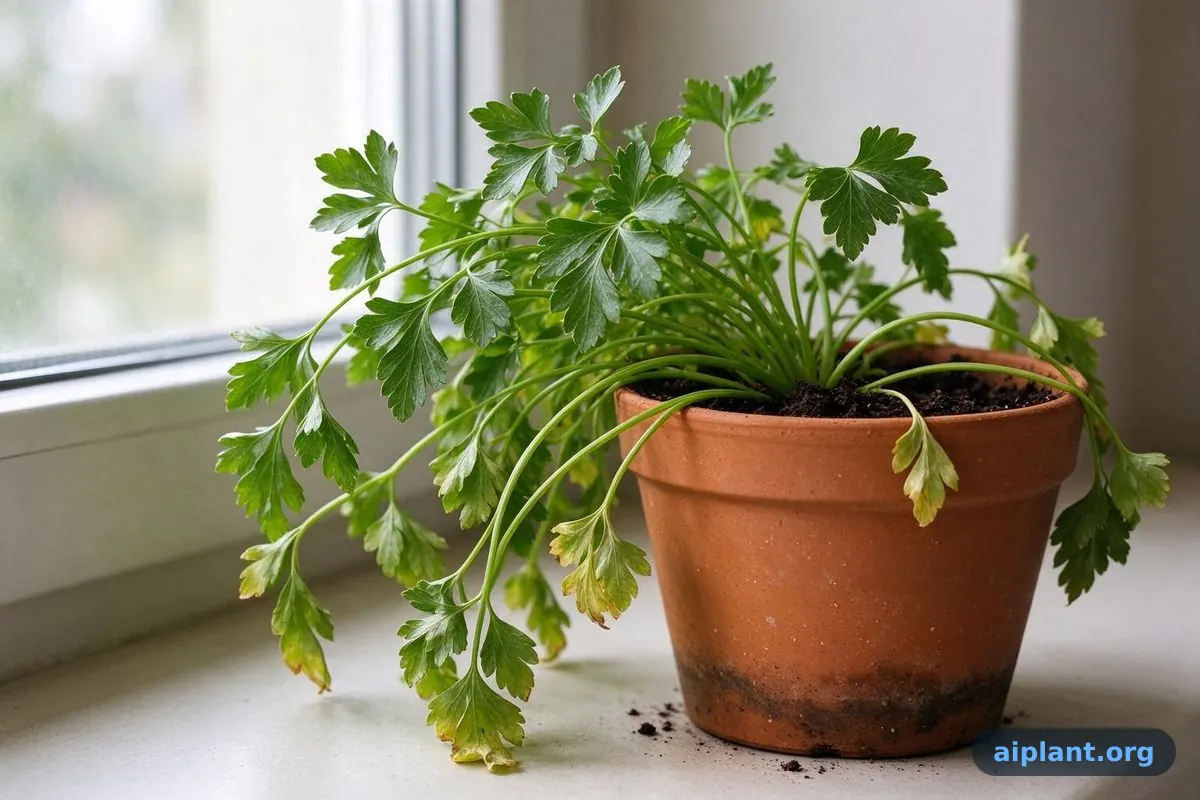
Parsley Wilting After Watering: The Short Answer
- Wilting after watering usually means waterlogged roots or root rot, not dryness. Check the soil 3 cm (1 in) down before adding more water.
- Parsley needs fast-draining soil and a pot with drainage holes. Soggy soil suffocates roots and lets rot fungi take hold.
- If the crown is mushy or roots are brown and soft, the plant is unlikely to recover — start fresh with new seed or a healthy transplant.
- Cool, bright conditions and steady harvesting keep parsley growing; heat and drought trigger bolting and tough, bitter leaves.
Parsley Wilting and Collapsing: Match the Symptom to Its Cause
Parsley that wilts after watering is showing that its roots cannot supply water, and the table below narrows down why. Read the symptom that matches what you see, then use the detailed fixes under each sub-heading below.
The table is only an index — each cause has its own full fix further down, with the recognition signs, the likely causes in order and the exact steps to take. Work through the symptom that matches your plant rather than guessing at the cause, because overwatering, pests and heat stress can all produce a limp, drooping parsley and each needs a different response.
Parsley Symptom, Likely Cause and First Action
Why Parsley Wilts Even After Watering: Waterlogged Roots and Root Rot
The most common reason parsley wilts after watering is that the roots are sitting in wet, airless soil and have begun to rot. Parsley tolerates moderate moisture but not standing water, and a pot without drainage or a heavy garden soil holds water around the roots until they suffocate.
Recognise it by the soil and the roots: lift the plant from its pot or dig beside it. Healthy parsley roots are pale and firm; rotted roots are brown, soft and smell sour. The soil around them stays damp for days after watering, and the plant wilts anyway because the damaged roots cannot absorb water.
The fix — step by step
- Stop watering and check drainage: tip the pot and confirm water runs freely from the holes within a minute of watering. If it does not, the drainage holes are blocked or the soil is compacted, so repot into fresh, free-draining mix.
- Inspect and trim the roots: shake off wet soil and cut away brown, mushy roots with clean scissors, keeping only firm pale roots. Trim about one third of the foliage so the reduced root system can support the plant.
- Repot into fast-draining soil: use a mix of two parts potting soil to one part perlite or coarse sand, in a clean pot with drainage holes. Water once, then wait until the top 3 cm (1 in) of soil feels dry before watering again.
Crown rot is different from root rot: if the stems collapse at soil level and the crown is brown and soft, the rot has reached the growing point. Such plants rarely recover and are best discarded, because the rot spreads to neighbouring plants through splashing water.
Are affected leaves safe to eat? Leaves from a plant with mild root rot are safe once washed and any yellow or slimy parts trimmed away. Do not eat leaves from a plant with a mushy, foul-smelling crown, because rot bacteria may have spread through the stems.
Parsley Quick Care Facts
- Part Used
- Leaves and stems; flat-leaf for cooking
- When to Harvest
- Outer stems from 60-75 days after sowing
- How to Dry
- Hang in bunches in a warm, dark, airy room
- Storage Life
- Damp paper towel in a sealed bag in the fridge
- Light
- Full sun to partial shade; 4-6 hours direct
- Water
- When the top 3 cm (1 in) of soil is dry
Parsley Stems Soft and Roots Brown: When to Save and When to Start Over
Soft stems and brown roots mean the rot is advanced, and the decision to save or replace depends on how far it has spread. Parsley is a biennial grown as an annual in most gardens, so replacing a badly rotted plant costs little.
Check the crown before deciding: press the base of the stems gently. Firm, green stems with brown roots lower down can still be saved by repotting; stems that squash and smell sour cannot.
When it is worth saving: a plant with some firm white roots and a healthy crown can recover after trimming the rotten roots, repotting in fresh free-draining mix and moving to a spot with good airflow. Expect new growth within two to three weeks if the roots were not badly damaged.
When to start over: if more than half the root mass is brown and soft, or the crown is mushy, discard the plant and the soil. Reusing the soil risks carrying rot fungi to the next plant, so use fresh mix and clean the pot with hot soapy water.
Prevent the next collapse: water parsley at soil level in the morning rather than over the leaves, and never let the pot stand in a saucer of water. Space plants 20-30 cm (8-12 in) apart so air moves between them and foliage dries quickly.
Parsley Root and Crown Condition: Save or Replace
Parsley That Keeps Bolting Before Harvest: Heat, Drought and Age
Parsley bolts — sends up a flower stalk — when it is stressed by heat, drought or simply reaches the end of its biennial cycle. Once the stalk appears, leaf production stops and the remaining leaves turn tough and bitter.
Recognise bolting early: the centre of the plant stretches upward and the new leaves become smaller and more divided, followed by a thick stalk with umbels of tiny greenish flowers. Bolting usually happens in the second year or during a hot, dry spell above 30 °C (86 °F).
The fix — keep it cool and cut the stalk
- Cut the flower stalk as soon as it appears: snip it at the base with clean scissors to redirect energy into leaves. This buys a few weeks of harvest but does not reverse the biennial clock.
- Water and mulch to reduce heat stress: keep the soil evenly moist and spread 5 cm (2 in) of straw or compost around the base to cool the roots. Shade cloth over midday sun helps in hot climates.
- Sow fresh seed for a new crop: parsley grown for leaves is best treated as an annual. Sow a new batch in late summer for autumn and winter harvest, and another in early spring.
Choose slow-bolting types: flat-leaf parsley (Petroselinum crispum var. neapolitanum) and curled parsley both bolt in their second year, but sowing at the right time and harvesting regularly delays the stalk. Plants left unharvested bolt sooner because the leaves age without being replaced.
Parsley Types and Their Bolting and Flavour Traits
Parsley Not Growing Back After Cutting: Harvest and Regrowth
Parsley that stops growing after cutting was usually cut too hard, too late in the season, or from a plant already stressed by heat or poor soil. Parsley regrows from its crown, so leaving the growing point intact is what keeps the harvest coming.
Harvest outer stems, never the crown: cut individual outer stems at the base, leaving the inner young leaves to continue growing. Shearing the whole plant down to the soil removes the growing point and can kill it.
Time the harvest to the plant's cycle: begin cutting when the plant has at least eight to ten stems, around 60-75 days from sowing. In the second year, regrowth slows as the plant prepares to flower, so plan to sow fresh seed each year for a continuous supply.
Feed and water after cutting: a light feed with a balanced liquid fertiliser two weeks after a heavy harvest supports new leaves. Keep the soil moist but not soggy, and remove any yellowing stems so they do not harbour pests.
When regrowth fails: if no new leaves appear within three weeks of cutting and the crown is firm, the plant may be pot-bound or short of nutrients. Repot into fresh mix or feed, and if the crown is soft, replace the plant.
Parsley Harvest Timing and Regrowth
Parsley Pests and Diseases That Cause Wilting and Collapse
Pests and diseases can mimic watering problems, so check the leaves and stems before assuming the roots are at fault. Parsley is attacked by a few specific problems that are easy to spot once you know what to look for.
Spider mites cause fine webbing and pale, wilting leaves: these tiny pests thrive in hot, dry air, especially indoors. Look for yellow speckling on the upper leaf surface and fine silk under the leaves. Wash the plant with a strong jet of water, raise humidity and repeat every few days until no webbing appears.
Aphids cluster on new growth and cause distorted, sticky leaves: green or black aphids gather on the youngest stems and excrete honeydew, which can lead to sooty mould. Knock them off with water or wipe with a damp cloth, and encourage ladybirds outdoors.
Powdery mildew coats leaves in white powder: it appears in still, humid air and causes leaves to yellow and drop. Improve airflow by spacing plants and watering at soil level, and remove affected leaves promptly.
Septoria leaf spot causes brown spots with pale centres: this fungal disease spreads in wet foliage. Remove spotted leaves, avoid overhead watering and clear fallen debris from around the plant.
Are pest-affected leaves safe to eat? Leaves with aphids or mites are safe after thorough washing and trimming damaged areas. Discard leaves with mould or widespread fungal spots rather than trying to salvage them.
Parsley Pest and Disease Signs Compared
Watering and Light That Keep Parsley From Wilting Again
Parsley grows best in full sun to partial shade with evenly moist, well-drained soil, and most wilting problems come from watering too often rather than too little. The ideal temperature range is 15-25 °C (59-77 °F); parsley tolerates light frost but suffers above 30 °C (86 °F).
Water by checking the soil, not the calendar: push a finger 3 cm (1 in) into the soil and water only when it feels dry at that depth. In a pot, this may mean every two to three days in summer and every week in cool weather; in the ground, deep weekly watering is usually enough.
Use a pot with drainage and never leave it standing in water: choose a container at least 20 cm (8 in) wide with drainage holes, and empty the saucer an hour after watering. Parsley has a long taproot, so a deeper pot suits it better than a shallow one.
Give enough light without baking the plant: four to six hours of direct sun keeps parsley compact and productive. Indoors, place it at a bright south- or west-facing window; in hot climates, afternoon shade prevents heat wilt.
Soil pH and feeding: parsley prefers a pH of 6.0-7.0. Feed with a balanced liquid fertiliser every four weeks during active growth, and side-dress garden plants with compost in spring. Pale older leaves that yellow from the bottom up suggest nitrogen shortage, while yellowing between green veins on new leaves points to iron deficiency in alkaline soil.
Parsley Watering by Situation
Harvesting, Drying and Storing Parsley So It Keeps Its Flavour
Harvest parsley from the outside of the plant so the centre keeps growing, and preserve it quickly because fresh leaves lose flavour within days. The best time to cut is in the morning after dew has dried, when the leaves are firm and aromatic.
Harvest outer stems first: cut stems at the base, leaving the inner rosette untouched. A healthy plant can lose up to a third of its stems at once and regrow within two to three weeks in warm weather.
Dry parsley in bunches for the best flavour: tie stems in small bunches and hang them in a warm, dark, airy room for one to two weeks until the leaves crumble easily. Avoid direct sun, which bleaches colour and aroma. Alternatively, dry leaves in a dehydrator at 35-40 °C (95-104 °F).
Store dried parsley in airtight jars away from light: keep whole leaves and crush them just before use, because crushed leaves lose aroma faster. Label the jar with the date and use within a year.
Stop parsley rotting in the fridge after harvest: wash and dry the stems, trim the cut ends, and stand them in a glass with 2 cm (1 in) of water, covered loosely with a bag, or wrap them in a damp paper towel inside a sealed bag. Change the water every two days, and the leaves keep for one to two weeks.
Parsley Look-Alikes and Who Should Be Careful
Parsley has several look-alikes, some of them toxic, so confirm identity before eating any plant gathered outside a garden. Flat-leaf parsley looks similar to celery leaf, coriander and, more dangerously, poison hemlock.
Tell parsley from poison hemlock by the stems and smell: parsley stems are green and finely ribbed, and crushed leaves smell fresh and herbal. Poison hemlock has smooth stems with purple blotches, a mousy smell, and finely divided leaves — never harvest from wild plants unless identification is certain.
Coriander and celery leaf differ in aroma: coriander leaves smell citrusy and pungent, while celery leaf smells of celery. Parsley has its own clean, slightly peppery scent that is distinct once compared side by side.
Who should be careful: parsley is a common culinary herb, but pregnant and breastfeeding women, children, and people taking medication should ask a doctor or pharmacist before using large amounts or concentrated parsley preparations. Parsley has traditionally been used in cooking and brewed as a tea, and the seeds contain compounds that are best avoided in medicinal doses during pregnancy. Keep strong parsley teas to normal culinary amounts, and never use parsley as a substitute for prescribed treatment.
Parsley storage, drying and harvest questions
Can I grow parsley indoors on a windowsill year-round, and what does it need?
Yes, parsley can grow indoors year-round if you give it a bright south- or west-facing window with four to six hours of direct sun, a pot at least 20 cm wide with drainage holes, and a deep profile for its taproot. Water only when the top 3 cm of soil feels dry, and expect slower, leggier growth in low winter light.
How do I grow parsley from seed, and why is germination often so slow?
Sow fresh seed shallowly in moist, free-draining mix and keep it warm and evenly damp. Slow germination is normal because parsley seed has a hard coat and natural germination inhibitors, so sprouting can take several weeks. Soaking seed overnight before sowing and keeping the surface from drying out helps, but do not expect quick results.
Can I freeze parsley, and does it keep its flavour better than drying?
Yes, freezing preserves parsley flavour better than drying, which loses much of the aroma. Wash and dry the stems, chop or leave whole, and freeze in sealed bags or trays. Whole leaves crushed just before use keep more aroma than pre-crushed ones, and frozen parsley suits cooked dishes rather than raw garnish.
What is Hamburg (root) parsley and how do I grow and harvest it for the root?
Hamburg, or root, parsley is a flat-leaved type grown for its thick edible root rather than leaves. Sow it like leaf parsley in deep, stone-free, well-drained soil so the root can swell, then lift roots in late autumn. Roast or boil the roots, and the coarse leaves can still be used in cooking.
Can I propagate parsley from cuttings or divide an existing plant instead of sowing seed?
Parsley is normally grown from seed; cuttings root poorly and division is unreliable because the plant has a single taproot. Splitting an established clump usually damages that root and sets the plant back. For a steady supply, sow fresh seed each year rather than trying to propagate from cuttings or divisions.
Why are my parsley leaves turning yellow, and how is that different from wilting?
Yellowing and wilting are different signals. Yellowing of older leaves from the bottom up points to nitrogen shortage or exhausted soil, while yellowing between veins on new leaves suggests iron deficiency in alkaline soil. Wilting is a loss of water pressure, often from waterlogged, rotting roots or heat stress, not a nutrient problem.
What companion plants grow well with parsley, and which should I avoid?
Parsley grows well beside tomatoes, carrots, chives and other alliums, and its flowers attract beneficial insects. Avoid planting it next to tall, sprawling crops that shade and crowd it, and keep it away from fennel, which competes aggressively. Good airflow and spacing of 20-30 cm between plants matter more than any specific pairing.
How do I overwinter parsley outdoors in a cold climate?
In cold climates, parsley usually survives light frost but not hard freezes. Before severe cold, mulch around the crown with straw or compost, move pots to a sheltered spot against a wall, and cover plants with fleece or a cloche. Growth slows in winter, so harvest lightly and expect the plant to decline as its biennial cycle ends.
Related articles
Why Are Basil Leaves Turning Yellow and Drooping?
Find the cause in minutes and get your plant back to steady harvest.
How to Save Soft Drooping Aloe Leaves?
Fix Yellow Leaves and Root Rot
Why Is My Cilantro Bolting and Dying So Fast?
Find the exact cause in minutes and keep the leaves coming.
Dahlia Stems Going Mushy and Soil Never Dries Out?
Dry the root zone, cut the rot and keep the tuber growing