
Why Is My Cilantro Bolting and Dying So Fast?
Find the exact cause in minutes and keep the leaves coming.
Cilantro (Coriandrum sativum) bolting and dying quickly is almost always a race between heat, cold and water, not a mystery disease. This annual herb is programmed to flower within weeks once temperatures climb, and cold nights or permanently wet soil can kill it even sooner. The diagnosis below matches what you see to the most likely cause, gives the fix, and then shows the care that keeps a cilantro patch productive for as long as possible.
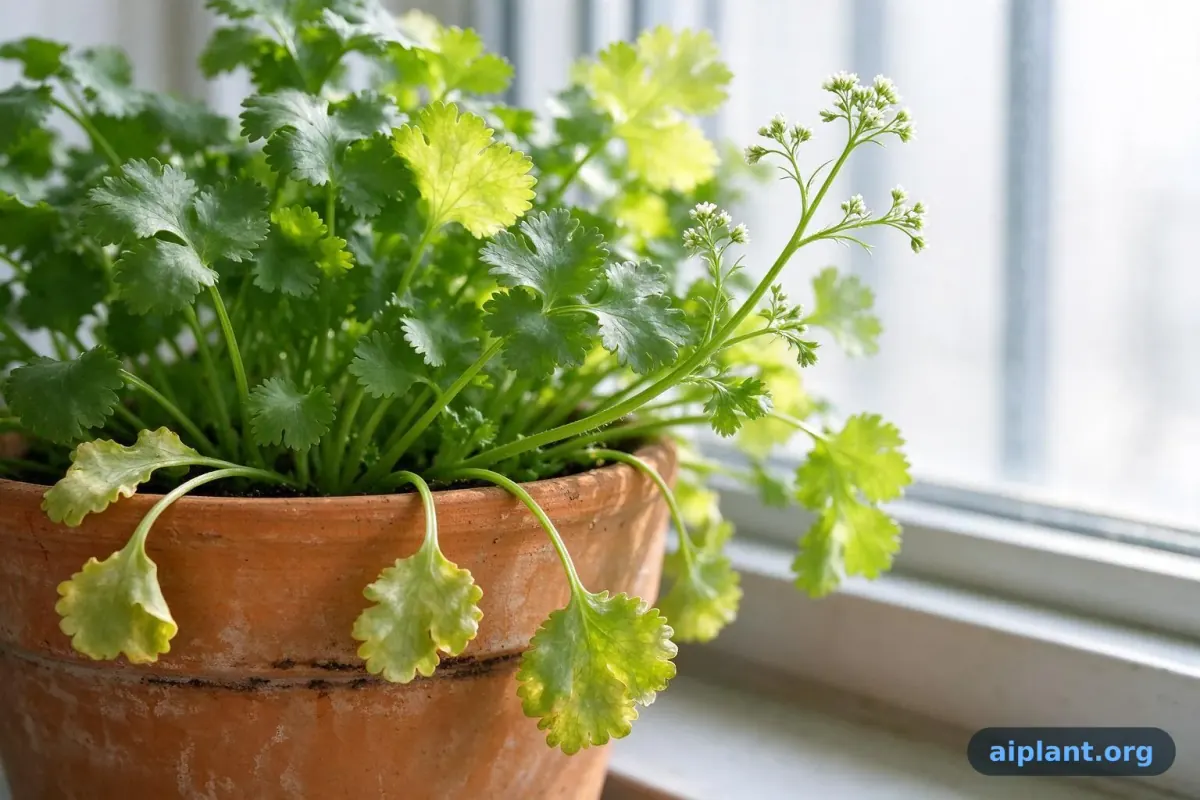
Cilantro Bolting and Dying: The Fast Answer
- Bolting is triggered by heat above 24°C (75°F) and long days; cilantro is an annual that flowers and dies once it seeds.
- One cold night below about -2°C (28°F) turns leaves translucent and limp; indoor winter cilantro needs 6 hours of direct light.
- Mushy stems and wet soil mean root rot from poor drainage; stop watering, lift the plant and cut away brown roots.
- Harvest outer stems at the base and leave the crown intact to delay bolting and keep leaves growing.
Cilantro Symptom Check: What Bolting, Cold or Wet Soil Looks Like
Cilantro problems usually show up in the leaves and stems within days, so the fastest way to save the plant is to match what you see to the cause before changing anything. The table below lists the most common symptoms in the order growers report them, from heat-driven bolting to cold damage and root rot. Read the row that fits, then go to the matching sub-heading for the full fix.
If leaves are damaged but not rotten, they are still safe to eat: wash them under cool running water, trim away brown, slimy or translucent parts, and use the firm green tissue fresh. Discard any leaf that smells sour or feels mushy, because that is spoilage rather than simple damage.
A Tall Stem With Feathery Flowers and Few Leaves
The plant has stretched upward, the gaps between leaves have lengthened, and small feathery leaves sit at the top before white or pink flowers open. This is bolting, and heat above 24°C (75°F) combined with more than 12 hours of daylight is the most common trigger, followed by dry soil and transplant shock. Cut the outer stems at the base immediately and sow a fresh batch, because the leaf harvest on this plant is nearly finished.
Leaves Translucent, Limp or Black After a Cold Night
Frozen tissue looks water-soaked and glassy at first, then turns black within a day, starting on the outermost and highest leaves. Frost below -2°C (28°F) ruptures the cell walls, and a hard freeze below -4°C (25°F) kills the top growth outright. Scrape the stem base with a fingernail: green, firm tissue means the crown survived and can regrow, while brown and soft tissue means the plant is dead.
Stems Mushy at the Soil Line With Soil That Stays Wet
The base of the stem feels soft and dark, the plant collapses from the bottom up, and the soil surface stays damp for days. Root rot from overwatering or a pot without drainage holes is the usual cause, and cool weather makes it worse because the plant drinks far less. Stop watering, lift the plant, rinse the root ball and cut away every brown, sour-smelling root before repotting into free-draining mix.
Seedlings Falling Over at the Base
A seedling topples while still green, and the stem just above the soil looks pinched and water-soaked, sometimes with fine white mould on the surface. This is damping-off, a fungal disease that thrives in cool, wet, still air, and it spreads quickly through a crowded tray. Remove the humidity dome at the first seedling, run a small fan on low, and water from below so the surface dries between waterings.
No Flowers on a Healthy, Leafy Plant
A plant that keeps making leaves but never sends up a flower stalk is usually young, overfed with nitrogen, or growing in cool short days. Cilantro flowers only after it has built enough size and the weather warms, so a spring sowing may wait 6 to 8 weeks before flowering. Stop nitrogen feeding, keep the plant in full sun, and wait for a warm spell rather than forcing it.
Pale Yellow Leaves Between Green Veins
Older leaves turning yellow between veins that stay green point to nitrogen shortage, while new growth yellowing with green veins suggests iron shortage from alkaline soil. Both slow the plant and push it toward early flowering. Feed a balanced liquid fertilizer at half strength every 3 weeks, and for iron use a chelated iron product according to its label.
Sticky Leaves With Fine Webbing Underneath
A sticky sheen on the upper leaf surface with fine silk threads and pale speckling on the undersides means spider mites, which multiply fast in dry indoor air. Rinse the undersides with a strong jet of water every 3 days, or wipe the leaves with a damp cloth, and repeat until no new webbing appears. Aphids, which cluster on new shoots and leave honeydew, come off the same way.
Cilantro Symptom, Likely Cause and First Fix
Why Cilantro Bolts and Goes to Seed So Quickly
Cilantro bolts because it is a cool-season annual with a built-in deadline: once temperatures pass about 24°C (75°F) and days lengthen, the plant stops making leaves and sends up a flower stalk. This is not a mistake in your care, it is the plant completing its life cycle, and no fertilizer or pruning stops it permanently. The practical goal is to slow it down and to keep a succession of fresh plants coming.
Recognise bolting by the stem, not the leaves: Once that stalk is visible, the leaf harvest is nearly over, because the plant redirects sugars into seed. Check the growing point weekly; a firm upright stem means switch to sowing the next batch.
Heat and long days are the main trigger: a cilantro plant started in spring often bolts within 4 to 6 weeks as soon as a warm spell arrives. Temperatures above 24°C (75°F) for several days, combined with more than 12 hours of light, push flowering fastest, which is why indoor plants under lights can bolt too.
Slow bolting with shade and timing: grow cilantro in a spot that gets morning sun and afternoon shade, or use a shade cloth that cuts 30 to 50 percent of light during hot weeks. Sow seed in early spring and again in late summer so the crop matures in cool weather rather than mid-summer heat.
Choose slow-bolting types for warm climates: varieties sold as slow-bolting or heat-tolerant, such as 'Santo' or 'Calypso', hold leaves longer in warm weather than standard strains. They still bolt eventually, so plan to resow every 3 to 4 weeks rather than expecting one plant to last the season.
Cut the flower stalk early if you want leaves a little longer: pinching the stalk as soon as it appears delays flowering by roughly a week on some plants, but it does not reverse the process. Use the pinched stalk in cooking, since it is still tender and flavourful.
Cilantro Bolting Triggers and What Slows Them
Cilantro Leaves Killed by One Cold Night: Frost Damage and Winter Decline
Cilantro leaves die after a cold night because the tissue freezes and the cell walls rupture, leaving translucent, water-soaked patches that turn black within a day. The roots often survive, so regrowth from the crown is possible if the soil did not freeze solid.
Check the crown before giving up: scrape the base of the stem with a fingernail. If the tissue just below the soil line is green and firm, the plant can push new leaves; if it is brown and soft, the plant is dead and should be replaced.
Protect outdoor cilantro before a cold night: cover plants with a floating row cover or an old sheet, and water the soil the morning before a forecast frost, because moist soil holds more heat than dry soil. Remove the cover in the morning so the leaves dry and do not rot.
Move potted cilantro indoors before the first frost: bring containers inside when night temperatures are forecast below 2°C (36°F). Place them at a bright window with at least 6 hours of direct sun, or under a grow light for 12 to 14 hours a day, because indoor winter light is too weak for strong leaf growth without help.
Expect slower growth indoors in winter: even with good light, short days and dry indoor air slow cilantro to a near standstill. Water only when the top 2 cm (1 in) of soil feels dry, and do not feed until new growth appears in late winter.
Trim cold-damaged leaves rather than pulling them: cut black or translucent leaves at the stem with clean scissors, leaving healthy green tissue. Damaged leaves are safe to eat after washing and trimming away the spoiled parts, but discard any that smell sour.
Cilantro Quick Care Facts
- Part Used
- Leaves and stems; seeds as coriander
- When to Harvest
- Outer stems at base, from 40-50 days
- How to Dry
- Hang bundles or freeze chopped leaves
- Storage Life
- Fridge in damp cloth up to 1 week
- Light
- Full sun; afternoon shade in heat
- Water
- When top 2 cm (1 in) feels dry
Cilantro Stems Going Mushy and Soil Staying Wet: Root Rot and Watering
Mushy stems and permanently wet soil point to root rot, usually caused by overwatering or a pot without drainage. Cilantro roots need air, and when they sit in saturated soil for more than a few days, they turn brown and soft and the plant collapses from the base upward. The fix is to dry the root zone and remove the damaged tissue before the rot spreads to the crown.
Test the soil before watering again: push a finger 3 cm (1.2 in) into the soil. If it feels wet and cool, wait; water only when the top 2 cm (1 in) feels dry to the touch. In containers, empty the saucer 30 minutes after watering so the pot never stands in water.
Lift and inspect the roots if stems are already soft: slide the plant out of its pot and rinse the root ball. Healthy cilantro roots are pale and firm; rotten ones are brown, mushy and smell sour. Cut away all brown roots with clean scissors, keeping the white roots intact.
Repot into free-draining mix: use a potting mix with perlite or coarse sand, in a container with drainage holes at least 15 cm (6 in) across. Water once after repotting, then leave the plant until new growth appears, which usually takes 1 to 2 weeks in warm weather.
Water less in cool weather: cilantro uses far less water below 15°C (59°F), so reduce watering to every 4 to 7 days in autumn and winter. Check the soil rather than following a fixed schedule, because wet cool soil is the most common cause of rot.
Improve airflow around outdoor plants: thin seedlings so neighbouring stems stand roughly a hand-span apart, and avoid watering late in the evening when leaves stay wet overnight. Wet foliage and crowded stems favour both rot and fungal leaf spots.
Know when to start over: if the crown at soil level is brown and soft, the plant will not recover and should be discarded. Healthy side shoots or fresh seed are a faster route to a harvest than nursing a collapsed stem.
Cilantro Watering by Season and Container
Cilantro Seedlings Falling Over and Dying at the Base
Seedlings that topple at soil level are almost always suffering from damping-off, a fungal disease that attacks the stem just below the surface. The stem looks pinched and water-soaked, the seedling falls over, and the soil surface often carries a fine white mould. Damping-off thrives in cool, wet, still air, which is exactly the conditions of an overwatered indoor tray.
Sow thinly and improve airflow: space seeds about 2 cm (0.8 in) apart and remove the humidity dome as soon as the first seedlings appear. Run a small fan on low near the tray, or open a window, so air moves across the soil surface and dries the top layer.
Water from below and let the surface dry: set the tray in a saucer of water for 10 minutes, then remove it, so the top of the soil stays drier. Water again only when the surface feels dry, which is usually every 2 to 3 days in a warm room.
Use clean mix and clean containers: fresh seed-raising mix and washed trays reduce the fungal load. Never reuse mix from a tray where seedlings damped off, because the pathogen survives in the soil.
Thin to the strongest seedlings: once seedlings have two true leaves, snip the weakest at soil level with scissors, leaving the sturdiest plants standing about a hand-width apart in trays and roughly twice that in the garden. Crowded seedlings compete for light and stay weak at the base.
Sow direct where possible: cilantro resents root disturbance, and transplants often bolt early or sulk. Sow seed directly into the final pot or bed about 1 cm (0.4 in) deep, keep the soil moist until germination in 7 to 14 days, then thin.
Cilantro Seedling Problems Compared
Harvesting Cilantro So It Keeps Growing Instead of Bolting
Harvesting cilantro correctly is the single best way to delay bolting and keep leaves coming. The plant grows from a central crown, and cutting outer stems at the base removes leaves without destroying the growing point. Start harvesting when the plant is about 15 cm (6 in) tall, roughly 40 to 50 days from sowing, and take no more than one third of the stems at a time.
- Choose outer stems first: select the longest stems on the outside of the plant and cut them about 2 cm (0.8 in) above the crown with clean scissors, leaving the central growing point untouched so new leaves keep forming.
- Harvest in the cool of the morning: cut stems early in the day when leaves are crisp and hydrated, then place them in a glass of water until you use them, which keeps them fresh for several hours.
- Remove flower stalks as soon as they appear: pinch the central stalk at its base when it is still short, and use the tender stalk in cooking. This buys roughly a week of leaf growth before the next stalk forms.
- Stop cutting once the plant is mostly stalk: when leaves become feathery and thin, the plant has committed to flowering and further cutting weakens it. Let it flower for seed, or pull it and sow a fresh batch.
Leave seed heads to ripen for coriander: if you want coriander seed, stop harvesting leaves when flowers open and let the plant flower and set seed. The seeds turn from green to tan in about 3 to 4 weeks, and you can cut the whole plant and hang it upside down over a paper bag to collect them.
Cilantro Harvest Stage and What to Take
Drying and Storing Cilantro Without Rot or Lost Flavour
Cilantro loses its fresh aroma quickly when dried, so drying works best for leaves you plan to cook into dishes rather than use raw. The key is fast, warm, dark drying and airtight storage, because slow drying in humid air lets the leaves mould before they crisp. For the strongest flavour, freezing chopped leaves in oil or water preserves far more aroma than air drying.
Dry small bundles in a dark, warm place: tie stems into bundles no thicker than 2 cm (0.8 in) and hang them upside down in a room at 20 to 25°C (68 to 77°F) with good airflow. Leaves are ready in 5 to 10 days when they crumble easily between your fingers; a dehydrator at 35 to 40°C (95 to 104°F) speeds this to 3 to 5 hours.
Strip and store only fully dry leaves: remove the leaves from the stems and discard any that are still leathery or damp. Pack them into an airtight jar, keep it in a dark cupboard, and use within 6 months, because flavour fades after that.
Freeze chopped cilantro for fresh flavour: chop dry leaves, pack them into ice-cube trays, and cover with water or olive oil. Freeze until solid, then transfer the cubes to a bag and use them within 3 months in cooked dishes.
Keep fresh cilantro in the fridge for a week: trim the stem ends, stand the bunch in a glass with 2 cm (0.8 in) of water, and cover the leaves loosely with a bag. Change the water every 2 days and remove yellow leaves as they appear.
Never store wet or warm leaves: moisture on the leaves, or packing them warm from the garden, creates condensation and rot within days. Pat leaves dry with a cloth and cool them before storing.
What Cilantro Needs to Stay Productive: Light, Soil and Feeding
Cilantro stays productive when it grows fast in cool weather, in soil that drains but holds moisture, with steady light and moderate feeding. The ideal temperature range is 10 to 24°C (50 to 75°F); growth slows above 24°C (75°F) and stops below 7°C (45°F). Cilantro tolerates a soil pH of 6.2 to 6.8, and a single plant fills a 15 cm (6 in) pot or sits a hand-width from its neighbour in a bed, which gives the fullest crowns.
Give full sun with afternoon shade in hot climates: cilantro needs 6 hours of direct sun for strong growth, but in warm regions shade from midday onward keeps leaves tender and delays bolting. Indoors, a south-facing window or a grow light for 12 to 14 hours a day is the minimum for a usable harvest.
Use loose, moisture-retentive soil: a mix of garden soil, compost and perlite in containers, or a bed improved with 5 cm (2 in) of compost, drains well while holding enough water for shallow roots. Cilantro roots reach only about 15 cm (6 in) deep, so the top layer matters most.
Feed lightly and stop nitrogen near flowering: Too much nitrogen produces soft, leafy plants that bolt early and attract aphids, so stop feeding once a flower stalk appears.
Control the two main pests early: aphids cluster on new shoots and leave sticky honeydew, while spider mites cause fine webbing and pale speckling on leaf undersides.
Rotate cilantro beds each year: do not grow cilantro in the same spot two seasons running, because soil-borne fungi and pests build up. A 2-year gap with a different crop in between keeps the bed cleaner.
Tell cilantro apart from its look-alikes before eating: cilantro has lobed lower leaves and feathery upper leaves with a distinct citrus-savoury smell, while flat-leaf parsley has flat, deeply divided leaves and dill has thread-like leaves with an anise scent. Fool's parsley carries fine ferny leaves but no cilantro smell and is toxic, so crush a leaf and trust your nose before using any volunteer herb.
Who Should Be Careful With Cilantro and Coriander Seed
Cilantro leaves and coriander seed are ordinary foods for most people, but a few groups should take care. People who are pregnant or breastfeeding, young children trying it for the first time, and anyone taking regular medication should ask a doctor or pharmacist before using large amounts of coriander seed or concentrated cilantro preparations, because traditional uses and possible interactions are best checked individually.
Watch for a soapy taste reaction: some people perceive cilantro leaves as soapy due to a natural genetic sensitivity, and no growing method changes that. If the taste is unpleasant, use the seeds, which have a warm citrus flavour instead.
Introduce cilantro to children in small amounts: offer a few leaves in a familiar dish first, and watch for any reaction, because new herbs are best introduced gradually. Cilantro is traditionally used in cooking and commonly brewed as a tea in some regions, but it is not a medicine.
Store seed away from children: coriander seed looks like a spice and is safe in food amounts, but keep bulk seed and essential oil out of reach, as concentrated products are not for casual use. Ask a doctor or pharmacist if you are unsure about using it alongside medication.
Cilantro: extra growing questions
How do I grow cilantro in a hydroponic or water-culture setup?
Cilantro can grow in water culture, but it resents root disturbance, so start seed in the final net pot filled with perlite or coarse mix rather than transplanting. Keep the nutrient solution shallow and aerated, and change it regularly so roots never sit stagnant. Give 6 hours of direct light or 12 to 14 hours under a grow light, and keep the solution cool, since warm reservoirs speed bolting.
Can I propagate cilantro from cuttings instead of seed?
Propagation from cuttings is unreliable and not recommended. Cilantro is an annual grown from seed, and stem cuttings rarely root well before the plant commits to flowering. Sow seed directly about 1 cm deep in the final pot, keep it moist until germination in 7 to 14 days, and thin seedlings, because direct sowing avoids the transplant shock that pushes cilantro to bolt early.
What companion plants grow well with cilantro, and which should I avoid?
Cilantro grows well beside leafy greens and other shallow-rooted cool-season crops that share its moisture needs without crowding. Avoid tall, dense plants that shade it, and do not follow cilantro with cilantro in the same spot, because soil-borne fungi and pests build up; leave a two-year gap with a different crop between cilantro plantings.
How do I save cilantro seed (coriander) from my own plants for next year's sowing?
Yes, save seed from plants left to flower, but wait until the seed heads turn tan and dry on the plant. Cut the stems and place the heads in a paper bag, then hang it in a dry, airy spot so seeds drop as they finish ripening. Shell out the round seeds, discard chaff, and store them in a labelled airtight jar in a cool, dark place; coriander seed keeps its viability for a few years.
Why are my cilantro leaves turning purple or reddish?
Purple or reddish leaves on cilantro usually signal cold stress or a phosphorus shortage, not a disease. Cold nights below about 2°C can tint foliage, and cool, wet soil slows phosphorus uptake even when the nutrient is present. Check the stem base: firm and green means the plant can recover. Improve drainage, keep plants above freezing, and avoid overwatering before adding any fertilizer.
How much cilantro should I plant per person for a steady household supply?
Plant a small succession rather than one large sowing. A single plant fills a 15 cm pot, so sowing a few seeds every 3 to 4 weeks gives a steady supply as older plants bolt, since each plant's leaf harvest lasts only weeks once heat arrives. Adjust the number upward if the household cooks with cilantro often.
Can cilantro be grown in a small balcony container in a hot climate?
Yes, with shade and careful watering. In a hot climate, use a container with drainage holes, give morning sun and afternoon shade or 30 to 50 percent shade cloth, and choose a heat-tolerant variety such as 'Santo' or 'Calypso'. Water when the top 2 cm feels dry, and resow every 3 to 4 weeks because heat above 24°C triggers bolting.
Why is my cilantro flowering but producing no seed?
Flowering without seed usually means the flowers were not pollinated or the seed heads were cut before maturing. Cilantro flowers need insects or wind to set seed, so indoor or screened plants may fail. Let tan seed heads develop fully on the plant, and avoid disturbing flowers; seed ripens about 3 to 4 weeks after opening.
Related articles
Why Is My Ginger Plant Dying and Rotting?
Match the symptom, fix the rot, and still get a harvest.
Why Are Basil Leaves Turning Yellow and Drooping?
Find the cause in minutes and get your plant back to steady harvest.
Oregano Leggy and Sparse? Restore Bushy Stems
Find the cause, cut it back the right way, and get a full, bushy plant again.
Why Is My Rosemary Not Flowering and How Do I Fix It?
Find the cause, fix it, and bring the blue blooms back.