
Why Are String of Hearts Stems Mushy and Soil Staying Wet?
Find the cause in one pass, then cut away the rot before it climbs the vine.
Mushy stems and soil that stays wet for days point to one problem in String of Hearts (Ceropegia woodii): water is sitting around the roots and the tissue is rotting. The fix is not a smaller watering can but a diagnosis — separating true rot from cold damage, pest damage or simple underwatering — followed by cutting the soft growth away and changing how the plant dries between drinks. This first half walks through the symptoms, what each one means and the exact rescue steps; the care that keeps the vine healthy afterwards follows in the second half.
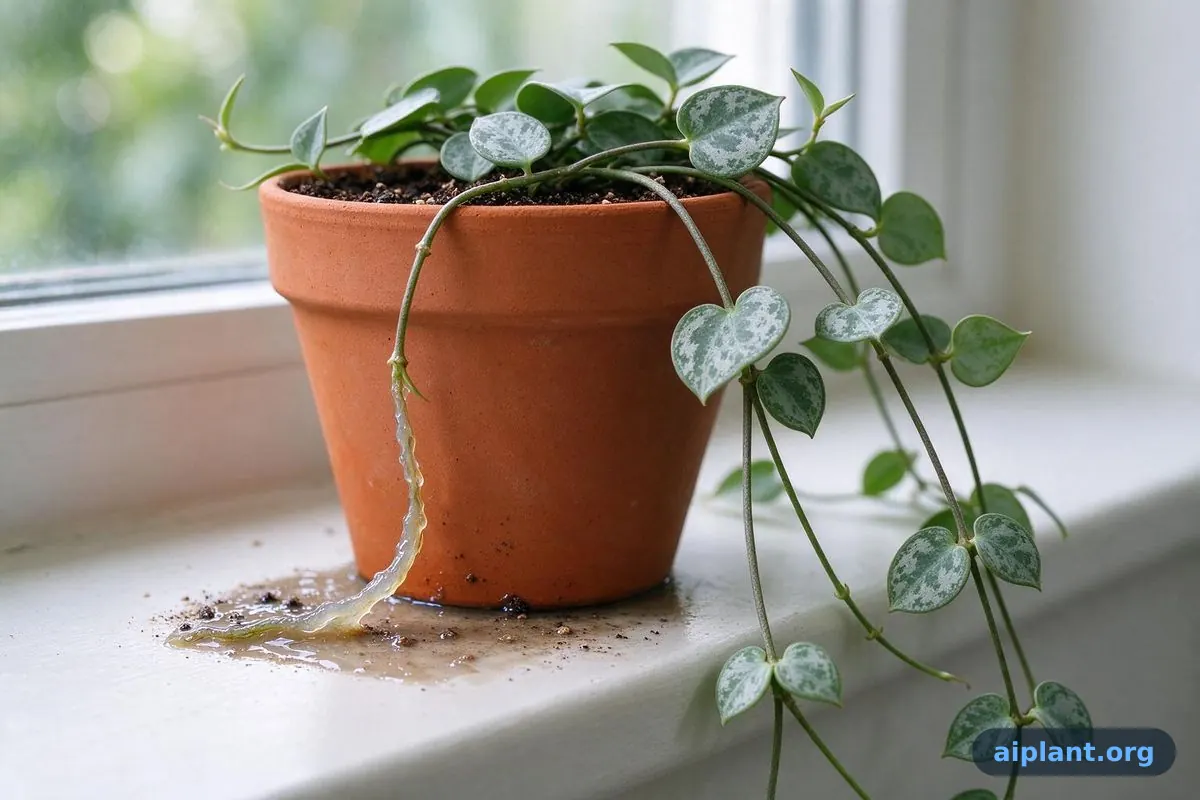
String of Hearts Mushy Stems: The Short Answer
- Mushy, translucent stems that collapse at the soil line mean overwatering or root rot, not thirst; stop watering and check the roots today.
- Soil that stays damp more than about a week after watering points to dense mix, a pot without drainage or a pot far too large for the root ball.
- Cut every soft stem back to firm green tissue with clean scissors, then let the cut ends callus for a day before setting them on dry mix.
- A plant with firm stems above the rot and healthy white roots below can be saved; one with brown, hollow roots throughout is usually a start-over.
String of Hearts Symptom Check: What Mushy Stems and Wet Soil Are Telling You
String of Hearts problems are read from the stems and the soil together, because the same soft, collapsing tissue can come from rot, cold or pests. Use the table as an index, then work through the symptom that matches what you see.
Soft, Translucent Stems at the Soil Line
This is the classic overwatering signature: the stem loses its firmness, looks glassy and darkens from the base upward. It happens because the tuber and fine roots sit in saturated mix, and oxygen cannot reach them, so tissue breaks down. Stop watering immediately, unpot the plant and inspect the roots — firm white roots mean the rot is still above ground, while brown, mushy roots mean it has reached the tuber. Cut away every soft section with clean scissors, dust the cuts with cinnamon, and repot into fresh, gritty mix in a pot with drainage holes.
Soil Still Damp a Week After Watering
When the surface feels cool and damp five to seven days after a watering, the mix is holding more water than the roots can use. The most common cause is a dense peat-based potting soil, followed by a pot with no drainage hole and then a pot that is much wider than the root ball. Test by pushing a finger or a wooden skewer 5 cm (2 in) into the mix: if it comes out cool and stained, the root zone is still wet. Repot into a mix of two parts potting soil, one part orchid bark and one part perlite, and only water again when that skewer comes out dry.
Pale, Stretched Vines With Wide Gaps Between Leaves
Sparse, leggy growth with long bare stretches between leaf pairs means the vine is reaching for light. String of Hearts wants bright, filtered light and tolerates a little direct morning sun, but a spot more than about 1 m (3 ft) from a bright window produces exactly this stretched look. Move it closer to the window over a week rather than all at once, then pinch the growing tips back to a leaf node to encourage side shoots. The trimmed vines are not waste — each section with two nodes can be laid on damp mix to root.
Tiny White Insects and Sticky Film on the Leaves
A sticky, shiny residue on the leaves with small white specks or fine webbing underneath points to mealybugs or spider mites, not to watering. Mealybugs look like tiny cotton tufts tucked at leaf nodes, while spider mites leave a speckled, dusty surface and webbing in the tightest growth. Wipe the visible insects off with a cotton swab dipped in rubbing alcohol, then spray the whole vine with insecticidal soap every seven days for three rounds, checking the undersides of leaves each time for new webbing before you stop.
Stems That Collapsed After One Cold Night
String of Hearts is tender and suffers damage below roughly 10 °C (50 °F); a single frosty night near a draughty window can turn whole vine sections dark and soft within a day. Cold-damaged tissue feels water-soaked and limp but does not smell or spread the way rot does. Wait three to five days for the damage to declare itself, then prune back to firm green stem. Keep the plant above 15 °C (59 °F) through winter and move it away from cold glass.
No Flowers or Seed Pods on a Mature Vine
A healthy, well-lit String of Hearts can flower with small lantern-shaped blooms, but it rarely does indoors without strong light and a cool, drier winter rest. Too much shade, constant wet soil and warm winter temperatures all suppress flowering. Give it a bright spot with a few hours of direct sun, let the mix dry between waterings, and provide a cooler winter of about 12–15 °C (54–59 °F) — flowering follows on mature vines, not on young cuttings.
String of Hearts Symptom, Cause and First Action
Why String of Hearts Stems Turn Mushy and How Often to Water
Mushy stems are a watering problem almost every time, and the cure is a schedule built on how the mix feels rather than on a calendar. String of Hearts stores water in its tuber and thick leaves, so it tolerates dryness far better than a week of wet roots.
Overwatering Is the Leading Cause of Soft Stems
When the mix stays moist, the fine roots suffocate and begin to rot, and the rot travels up the stem from the soil line. Recognise it by a stem that feels like a wet noodle and darkens rather than yellows. The fix is to stop watering at once, unpot, and cut back to firm tissue; a plant treated at the first soft stem usually recovers, while one left for two weeks often loses the tuber.
Underwatering Looks Wrinkled, Not Mushy
A thirsty String of Hearts has thin, slightly wrinkled leaves and limp but firm stems that perk up within a day of watering. This is the opposite of rot: the tissue stays intact and only loses turgor. If a dry plant is watered and the stems firm up by the next morning, watering was the issue and no rescue is needed — just water more consistently.
How Often to Water Without Causing Rot
There is no fixed interval, but indoors the plant typically needs water every 10–14 days in spring and summer and every 3–4 weeks in winter. The reliable test is the skewer or finger check: water only when the top 5 cm (2 in) of mix is dry and the pot feels light when lifted. In a cool room the gap stretches; near a warm south window it shortens.
Drainage and Pot Size Decide How Fast Soil Dries
A pot without a drainage hole traps water at the bottom, and a pot much wider than the root ball holds a reservoir the roots never reach. Use a pot with holes, tip away any water in the saucer after 15 minutes, and choose a container only 2–3 cm (1 in) wider than the root ball. Terracotta dries faster than glazed ceramic and suits this plant well.
The Tuber Stores Water and Resents Soggy Mix
The small tuber that forms at the soil line is the plant's water bank, and it rots quickly in wet mix. Keep it sitting at or just above the surface rather than buried, and water around the edge of the pot rather than directly onto the tuber. A firm, pale tuber is a good sign; a dark, soft one means the rot has gone deep.
String of Hearts Watering by Season
String of Hearts Quick Care Facts
String of Hearts Quick Care Facts
- Light
- Bright filtered light, a little direct morning sun
- Water
- Only when top 5 cm (2 in) is dry
- Temperature
- 18–24 °C (64–75 °F); above 10 °C (50 °F)
- Humidity
- Average room humidity, 40–50%
- Soil
- Gritty mix with orchid bark and perlite
- Fertilizer
- Diluted balanced feed monthly in spring and summer
Saving a String of Hearts With Rotting Roots and Mushy Stems
A String of Hearts with rotting roots can still be saved as long as some firm stem and a healthy section of tuber remain; the rescue is a single sequence of cutting, cleaning and resetting. Work through it in order rather than trimming a little and hoping.
- Lift the plant and clear the mix: Slide the root ball out and crumble away all old soil with your fingers so you can see the roots and tuber clearly. Rinse them under tepid water if the mix clings, because hidden rot spreads once repotted.
- Trim to firm tissue: With clean scissors, cut every soft, brown or hollow stem back to where the cut surface is pale green and firm. On the roots, remove anything brown and mushy, keeping only white, plump roots — a surprisingly small healthy root mass is enough.
- Dust and callus the cuts: Pat the trimmed stem ends and any cut tuber surface with cinnamon or powdered sulphur, then leave the plant in a dry, shaded spot for 24 hours. Callusing seals the wound so damp mix cannot re-enter the tissue.
- Repot into fresh gritty mix: Settle the plant into a clean pot with drainage holes and fresh fast-draining mix, keeping the tuber at the surface. Do not water for three to five days, then give only a light watering around the pot edge.
- Hold back water and watch for firmness: For the next two weeks, water sparingly and only when the mix is dry, checking that the remaining stems stay firm. New growth or firm, plump leaves at the tips mean the rescue has worked; fresh softness means rot is still present and further trimming is needed.
When to Start Over Instead
If the tuber is brown and hollow through its centre and every stem is soft, there is no tissue left to save. In that case, take cuttings from any firm tip before discarding the plant — a 10 cm (4 in) section with two nodes laid on damp mix roots in two to four weeks. Starting fresh from a healthy cutting is faster than nursing a fully collapsed tuber.
Why Cuttings Rot in Water
String of Hearts cuttings often fail in a glass of water because the stem is thin and soft, and standing water invites the same rot that killed the parent. Root them instead on the surface of damp gritty mix or in damp sphagnum, keeping the nodes in contact with the medium and the air humid. Change nothing for two weeks except misting; tug gently after three weeks and resistance means roots have formed.
String of Hearts Rescue: Save or Start Over
Why String of Hearts Leaves Curl, Yellow or Drop Off
Leaf problems on String of Hearts usually trace back to water, light or a nutrient gap, and each has a different look that tells you which lever to pull.
Curling Leaves Signal Thirst or Heat Stress
Leaves that curl inward like a taco and feel papery are usually dehydrated, especially if the vine sits near a radiator or a hot window. The curl is the plant reducing surface area to slow water loss. Check the mix 5 cm (2 in) down; if it is bone dry, water thoroughly until it runs from the drainage holes and the leaves should relax within 24 hours. If the mix is damp and the leaves still curl, suspect root damage from past overwatering rather than thirst.
Yellow Leaves on Older Vines Are Often Normal Aging
A yellow leaf here and there at the base of an old vine, with the rest of the plant green and firm, is the plant shedding tissue it no longer needs. String of Hearts vines live for a few years and the oldest sections yellow and drop naturally. Remove the leaf so it does not trap moisture against the stem, and only worry if yellowing spreads upward or hits new growth.
Yellowing Between Green Veins Points to Magnesium Deficiency
When older leaves turn yellow between veins that stay green, the plant is short of magnesium, a mobile nutrient it moves to new growth first. This differs from nitrogen shortage, which yellows whole older leaves evenly. Feed with a balanced liquid fertilizer diluted to half strength monthly in spring and summer, and if the pattern persists after two feeds, switch to a feed containing magnesium such as Epsom salts at one teaspoon per litre of water.
Sudden Leaf Drop Follows Cold Draughts or Dry Air
A vine that sheds several leaves at once after a cold night near glass or a blast from an air conditioner is reacting to temperature shock, not disease. String of Hearts prefers 18–24 °C (64–75 °F) and stable humidity around 40–50%. Move it away from draughts and cold panes, and the drop should stop within a week; new leaves emerge from the nodes that remain.
Pale New Growth Means Too Much Direct Sun
New leaves that emerge washed-out or with bleached patches after a move to full afternoon sun are sunburnt. The plant wants bright filtered light with a little direct morning sun, not harsh midday glare. Shift it back behind a sheer curtain for a week and the newer leaves should colour up normally; badly scorched leaves will not recover and can be trimmed.
What Light, Temperature and Humidity Keep Ceropegia Woodii Compact
A compact, densely leafed String of Hearts is a light-and-stability story: give it bright filtered light and steady warmth, and the internodes stay short instead of stretching.
Bright Filtered Light Keeps Internodes Short
String of Hearts grows tight, stacked leaf pairs when it receives several hours of bright indirect light, with a little direct morning sun tolerated. An east-facing window or a spot 30–60 cm (12–24 in) from a south window behind a sheer curtain suits it well. When light drops, the vine lengthens the gap between leaves to reach for more, which is the leggy look owners dislike.
Rotate the Pot Weekly for Even Coverage
A vine that only ever faces one direction grows lopsided and bare on the shaded side. Turn the pot a quarter turn each week so all sides receive comparable light, and the plant will fill out rather than trailing in one direction. This also prevents the shaded vines from weakening and dropping leaves.
Keep the Room Above 10 °C (50 °F) Year-Round
String of Hearts is tender and suffers chilling below roughly 10 °C (50 °F); prolonged exposure turns vines dark and soft. Keep it between 18–24 °C (64–75 °F) in the growing season and no lower than 12–15 °C (54–59 °F) in winter. A cool but frost-free winter rest actually helps flowering, so aim for the cooler end rather than a warm living room.
Average Humidity Is Enough, but Dry Air Stalls Growth
Room humidity of 40–50% suits Ceropegia woodii, and it does not need a terrarium. In centrally heated rooms that drop below 30%, new leaves may emerge small and the vine slows. Grouping plants or placing the pot on a pebble tray raises local humidity without wetting the mix, which matters because soggy soil is this plant's main enemy.
Avoid Hot Radiators and Cold Window Glass
Both extremes stress the vine: a radiator dries the mix unevenly and scorches trailing stems, while cold glass chills leaves that touch it. Position the pot so no vine rests against a pane and no heat source blows directly on it. Stable conditions reduce leaf drop and keep the tuber from being pushed into sudden growth flushes.
Repotting, Pruning and Propagation for a Fuller String of Hearts
String of Hearts stays full and healthy when it is repotted before the mix collapses, pruned to force branching, and propagated from its own trimmings.
Repot Only When Roots Fill the Pot
This plant likes to be slightly root-bound and sulks in oversized containers, so repot every two to three years or when roots circle the drainage hole. Do it in spring, tease the old mix from the root ball, and set it into a clean pot with drainage holes. Keep the tuber at or just above the surface; burying it invites rot.
Prune in Spring to Trigger Side Shoots
Long bare vines can be cut back hard in early spring to a leaf node, and each cut node will push new side growth. Use clean scissors and remove no more than a third of the vine length at once so the plant keeps enough foliage to feed itself. The trimmed sections are your propagation material, so nothing is wasted.
Lay Cuttings on Damp Mix, Not in Water
A 10 cm (4 in) section with two nodes roots reliably when laid flat on damp gritty mix, nodes touching the surface, and kept humid. Water-rooting fails because the thin stem softens and rots in standing water. Mist the surface, keep it warm at 20–24 °C (68–75 °F), and tug gently after three weeks; resistance means roots have anchored.
Pin the Nodes Down to Speed Rooting
Holding the cutting in contact with the medium is the difference between rooting and drying out. Use a bent paperclip or a small pebble to pin each node down, and keep the mix barely damp rather than wet. Once new leaves appear at the nodes, the cutting has rooted and can be potted on.
Refresh the Top Layer Instead of a Full Repot
When the mix has compacted but the plant is not root-bound, scrape off the top 2–3 cm (about 1 in) of old soil and replace it with fresh gritty mix. This improves drainage and air exchange at the surface without disturbing the roots. Do it in spring so the plant recovers quickly.
String of Hearts Winter Care and Seasonal Rest
Winter is when most String of Hearts decline, because short days, cool glass and wet mix combine; the fix is to slow everything down and keep the plant dry and bright.
Cut Watering Sharply From Late Autumn
As light fades, the plant's water use drops and the mix stays damp far longer. From October, stretch the interval between waterings and check the mix 5 cm (2 in) down before giving any. In winter the plant may need water only every three to four weeks, and a slightly dry vine is far safer than a wet one.
Move It to the Brightest Available Spot
Winter light indoors is weak, so shift the pot to the sunniest window you have and remove anything shading it. A south or west window gives the hours of brightness the vine needs to stay compact through the dark months. If natural light is very low, a small LED grow light for 12 hours a day keeps growth steady.
Hold Fertilizer Until Spring
Feeding a resting plant pushes soft growth that cannot use the light and invites rot. Stop all fertilizer from late autumn and resume a diluted balanced feed monthly when new growth appears in spring. This pause is part of the seasonal rest that encourages flowering later.
Keep It Off Cold Glass and Away From Draughts
A vine touching a frosty pane can be damaged in a single night, and cold draughts from doors chill the whole plant. Check that trailing stems hang clear of the window and that the pot sits away from gaps. Keep the room above 10 °C (50 °F), ideally 12–15 °C (54–59 °F), for a healthy winter rest.
Inspect for Pests While Growth Is Slow
Mealybugs and spider mites build up quietly in dry winter air, so check leaf nodes and undersides every two weeks. Wipe any cottony tufts with an alcohol-dipped swab and spray insecticidal soap weekly for three rounds if webbing appears. Catching them in winter prevents a spring explosion on the new growth.
String of Hearts: extra questions readers ask
How do I repot a String of Hearts without breaking its fragile stems and tuber?
Repot in spring when roots circle the drainage hole, working with dry mix so it crumbles away rather than tugging at stems. Support the vine in one hand while you slide the root ball free, and keep the tuber at or just above the surface. Set it into a clean pot with drainage holes, firm the gritty mix gently, and water lightly around the pot edge.
Can String of Hearts be grown in a hanging basket outdoors, and what care does it need in summer?
Yes, provided summer temperatures stay above roughly 10 °C (50 °F) and the basket hangs where vines clear hot walls and cold glass. Give bright filtered light with a little direct morning sun, water when the mix 5 cm (2 in) down is dry, and expect faster drying in wind and heat. Turn the basket weekly so all sides fill evenly.
How do I get a String of Hearts to grow back full after I cut off long bare vines?
Cut back to a leaf node in early spring, removing no more than a third of the vine length at once so enough foliage remains to feed the plant. Each cut node pushes side shoots, and turning the pot a quarter turn weekly keeps the shaded side from staying bare. Lay trimmed two-node sections on damp gritty mix to fill gaps.
What kind of pot and mounting should I use for String of Hearts, and can it grow on a trellis or wall?
Use a container with drainage holes only slightly wider than the root ball, since this plant sulks in oversized pots; terracotta dries faster than glazed ceramic. It trails naturally from a hanging basket, and vines can be trained along a small trellis or pinned to a wall support, though keep stems off cold panes and away from radiator heat.
How do I treat a String of Hearts that dropped leaves after being shipped or moved to a new home?
Expect some leaf shed after shipping or a move; it is usually temperature shock or disturbed roots, not disease. Keep the plant at 18–24 °C (64–75 °F) with humidity near 40–50%, away from draughts and cold glass, and water only when the mix 5 cm (2 in) down is dry. New leaves emerge from remaining nodes once conditions stabilize.
How do I overwinter String of Hearts in a cool room without causing rot or leaf drop?
Keep it above 10 °C (50 °F), ideally 12–15 °C (54–59 °F), in the sunniest window available and let the mix dry almost fully, which in winter may mean watering only every three to four weeks. Stop fertilizer from late autumn, check the mix 5 cm (2 in) down before watering, and keep trailing vines clear of cold panes and draughts.
Related articles
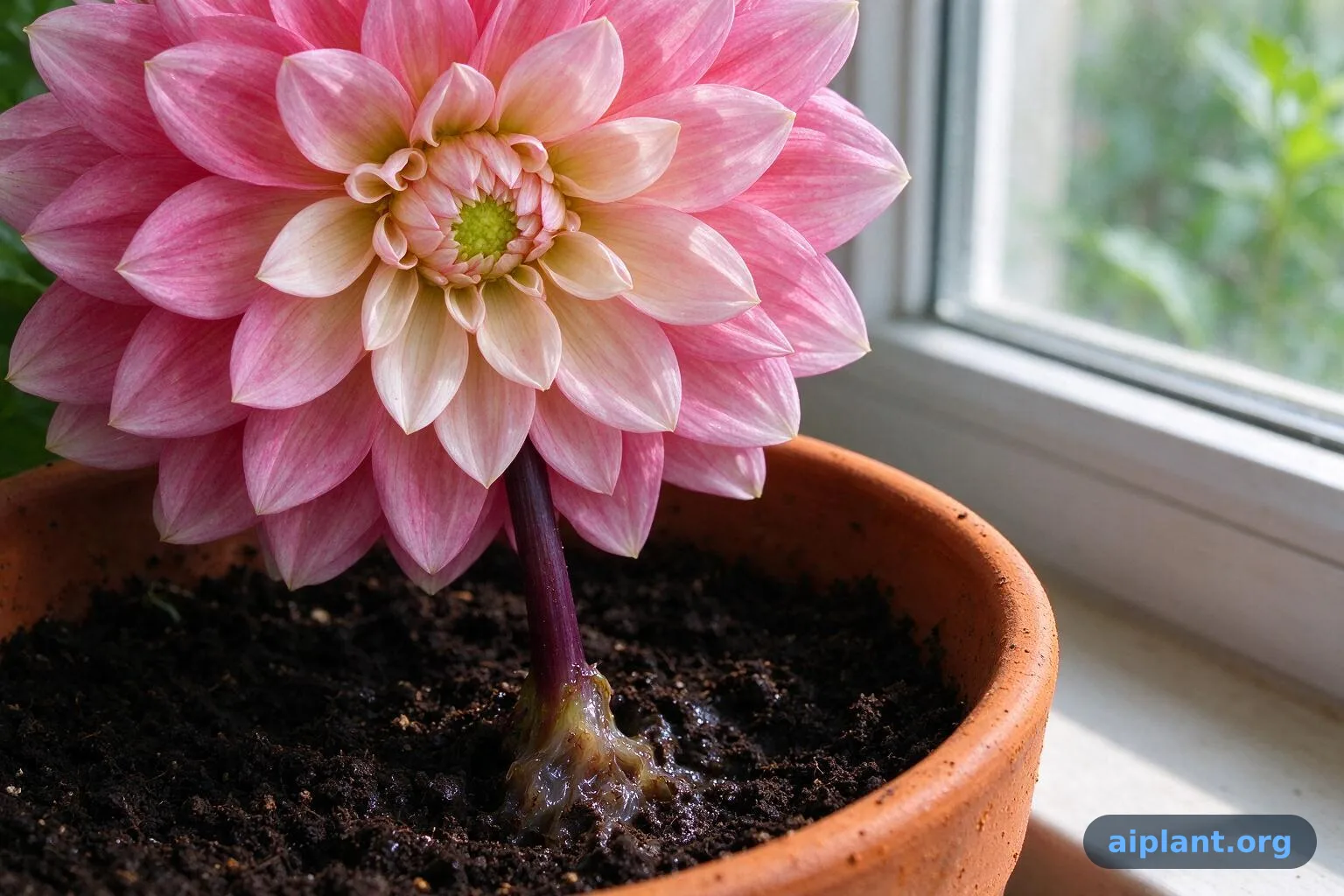
Dahlia Stems Going Mushy and Soil Never Dries Out?
Dry the root zone, cut the rot and keep the tuber growing
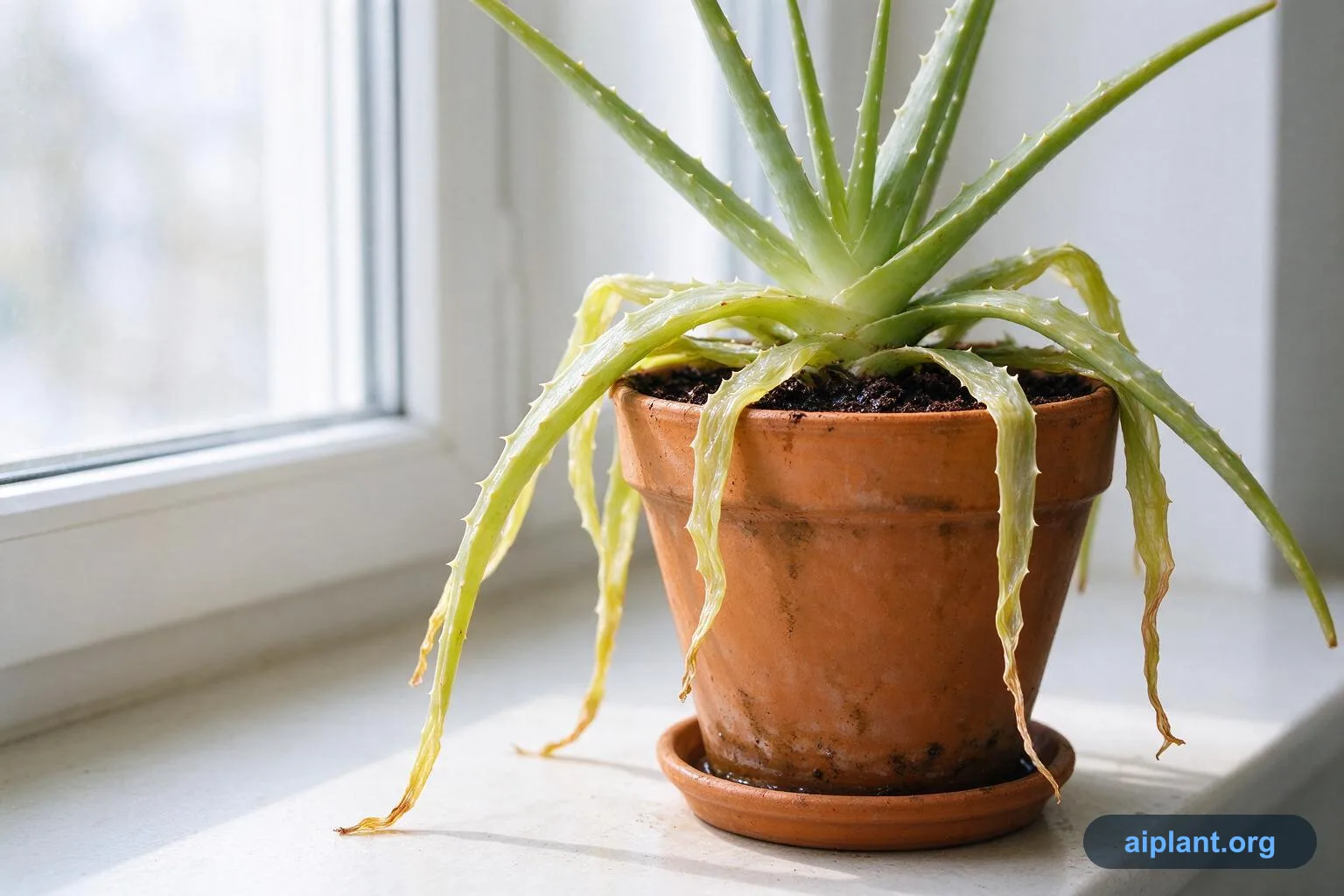
How to Save Soft Drooping Aloe Leaves?
Fix Yellow Leaves and Root Rot
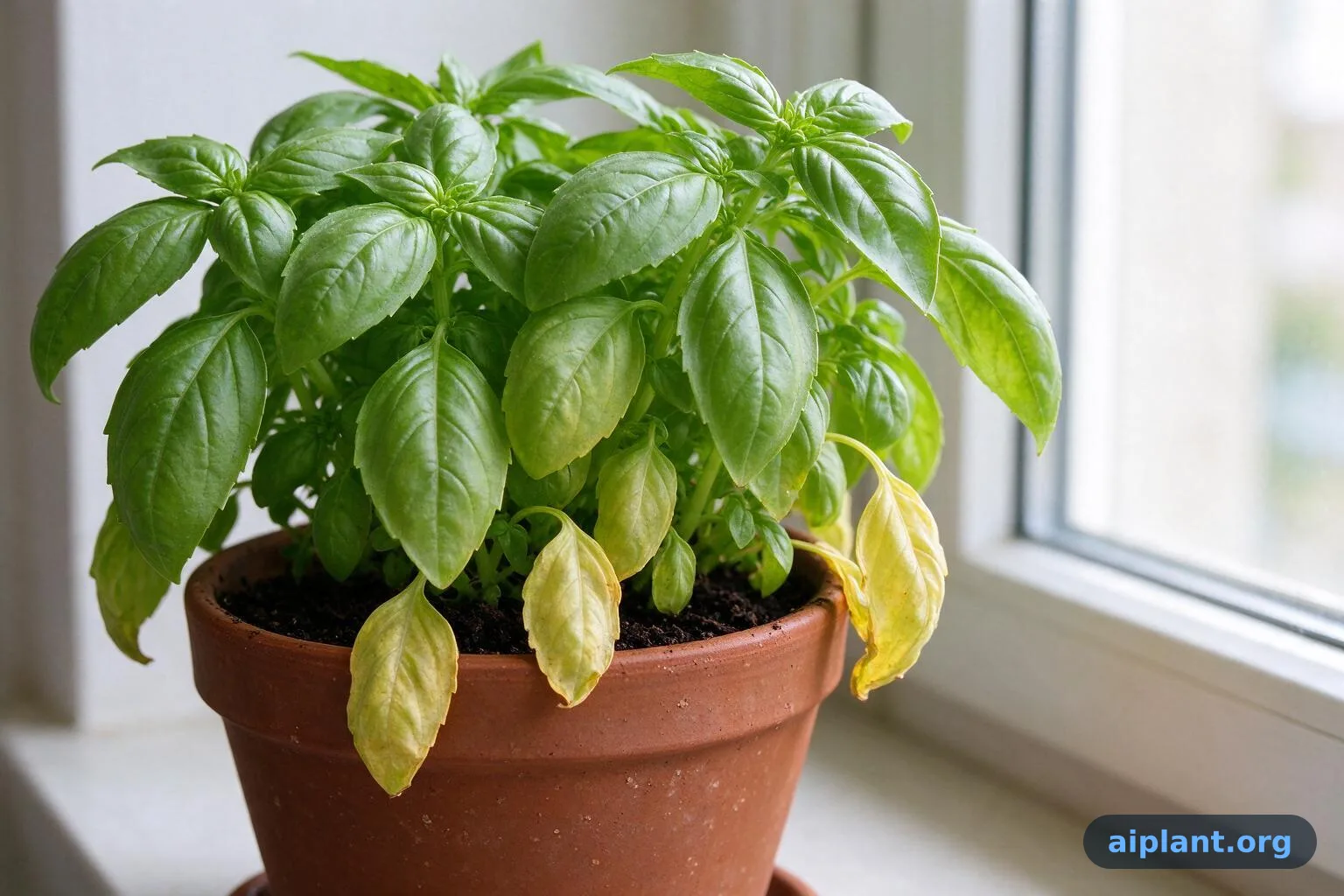
Why Are Basil Leaves Turning Yellow and Drooping?
Find the cause in minutes and get your plant back to steady harvest.
Why Is My Ginger Plant Dying and Rotting?
Match the symptom, fix the rot, and still get a harvest.