
Why Is My Arugula Growing Tall and Leggy Instead of Bushy?
Find the cause, cut it back correctly, and get tender leaves again.
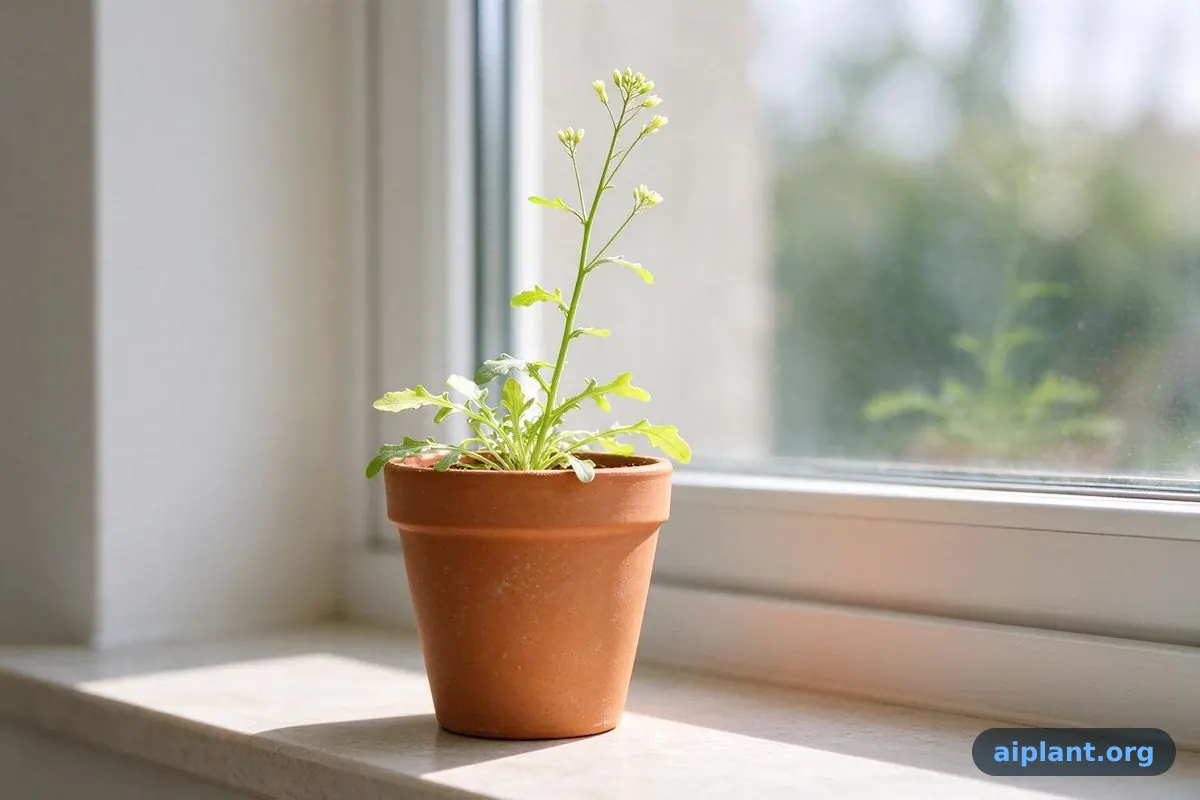
Arugula (Eruca vesicaria) that shoots upward on a thin stem, with small pale leaves spaced far apart, is not growing the way you want because it is either reaching for light, crowded by its neighbours, or switching to flower. The fix depends on which of those is happening, and the difference shows in the stem, the leaf colour and whether flower buds have appeared. This first half helps you match what you see to the cause and correct it, so the plant puts energy back into broad, tender leaves rather than a flower stalk.
Arugula Legginess: The Short Answer
- Tall, thin arugula with gaps between leaves is almost always stretching for light, sown too densely, or already bolting from warmth; each has a different fix.
- Give arugula at least 4-6 hours of direct sun or 12-14 hours under a grow light, and thin seedlings to 10-15 cm (4-6 in) apart.
- Once a flower stalk forms, cut it off low and harvest the whole plant if the leaves turn bitter; heat is the trigger, not age.
Arugula Symptom Check: Which Cause Fits Your Leggy Plant
Start with what the plant looks like rather than with a cure, because a thin stem, a crowded row and a bolting plant need three different responses. The table below sorts the most common arugula complaints into a likely cause and a first action, and the sub-headings after it explain each one in full.
The rows are an index, not the whole answer: each symptom gets its own detailed fix below, with the signs to check before you act.
Tall, Thin Stems With Wide Gaps Between Leaves
Stretching for light looks like a stem that has doubled in height in a week while the leaves stay small and pale, with several centimetres of bare stem between each one. It starts on the side of the plant facing away from the window or under a dense canopy of neighbouring seedlings. Arugula wants at least 4-6 hours of direct sun outdoors, or 12-14 hours under a grow light, and anything less pushes it to elongate rather than widen. Move the container to a brighter spot or lower the light to 10-15 cm (4-6 in) above the leaves, then turn the pot a quarter turn every few days so the stem straightens evenly. New leaves should come out broader within about two weeks; the bare stem below them will not shrink, so plan to harvest it low.
A Sparse, Patchy Row After Sowing
Thin, sparse arugula after sowing usually means the seed went in too thickly and the seedlings shaded each other, or the seedbed crusted over and germination was uneven. Look for clumps of two or three seedlings sharing one spot, with long weak stems and cotyledons that never expand. Arugula seed is small, so sowing it 0.5 cm (0.2 in) deep in rows 15-20 cm (6-8 in) apart and then thinning to 10-15 cm (4-6 in) between plants gives each one room to form a rosette. Thin in two passes: first when seedlings are 3-5 cm (1-2 in) tall, then again when they reach 8-10 cm (3-4 in), snipping the extras at soil level rather than pulling, which disturbs the roots of the plants you keep.
Flower Buds at the Top of the Stem
A central stalk rising above the leaves with small white or cream four-petalled flowers at its tip is bolting, and it is the most common reason arugula turns tall and bitter early. It is triggered by warmth, long days and stress such as dry soil, and it happens fastest once daytime temperatures pass about 24°C (75°F). Check by looking at the growing point: a tight cluster of buds means the plant has committed to flowering. Cut the stalk off 2-3 cm (1 in) above the crown as soon as you see it, keep the soil evenly moist, and sow a heat-tolerant batch in partial shade for the weeks ahead; once a plant is in full flower, the leaves turn peppery and tough and are better replaced than rescued.
Leaves Curling and Crisping at the Tips
Curled, dry-tipped arugula leaves point first to water stress, second to wind or sun scorch, and third to aphids hiding on the undersides. Feel the soil at 2-3 cm (about 1 in) depth: if it is dry and the pot feels light, the plant has been running short, and the oldest leaf margins crisp first. Water thoroughly until it runs from the drainage holes, then check daily in hot weather rather than following a fixed schedule. If the soil is damp and the tips still crisp, look under the leaves for clusters of green or grey insects and wash them off with a firm jet of water every few days until none remain.
Drooping the Day After Watering
A plant that wilts within a day of watering, with soft leaves and soil that still feels wet, is usually sitting in poorly drained compost and losing roots to rot. Lift the pot and check the drainage holes for a sour smell and brown, mushy root tips; healthy arugula roots are white and firm. Move the plant to a container with open holes, water only when the top 2-3 cm (1 in) feels dry, and stop watering entirely for a few days to let the root zone dry. If more than half the root mass is brown and soft, the plant is not worth saving and a fresh sowing in free-draining mix will crop sooner.
Safe to Eat, and How to Prepare Affected Leaves
Leaves from a leggy, bolting or aphid-affected arugula are still safe to eat as long as they are not slimy or mouldy. Wash them in cold running water, trim the crisp or damaged margins with scissors, and discard any leaf that smells sour or has soft brown patches. Very bitter leaves from a flowering plant can be blended into a cooked dish rather than eaten raw, and leaves with aphids should be rinsed and inspected leaf by leaf before use.
Arugula Symptom, Likely Cause and First Action
How Much Sun Keeps Arugula From Reaching for the Window
Arugula needs at least 4-6 hours of direct sun a day, or 12-14 hours under a grow light, to grow wide and compact rather than tall and thin. Below that, the plant stretches its stem to find brighter conditions, and no amount of feeding reverses it.
The Light Test for Indoor Arugula
Hold your hand 30 cm (12 in) above the leaves at midday: if it casts a sharp shadow, the spot is bright enough, and a soft, blurry shadow means the plant is in the stretch zone. A south- or west-facing windowsill usually passes in spring and autumn, while a north-facing one rarely does. Rotate the pot a quarter turn every two or three days so all sides receive the same light and the stem stays upright instead of leaning.
Grow Lights Without Burning the Leaves
A simple LED grow light kept 10-15 cm (4-6 in) above the canopy for 12-14 hours a day keeps arugula compact indoors. Raise the light as the plant grows so the top leaves never touch it, and use a timer so the dark period stays consistent. Leaves that bleach or curl upward at the edges are too close to the fixture, so lift it a few centimetres and watch the new growth.
Outdoor Sun and Afternoon Shade
Outdoors, arugula yields best in full morning sun with shade from the hottest afternoon light, especially once temperatures pass 24°C (75°F). In hot climates, a spot that receives 4-5 hours of morning sun and dappled shade after midday keeps leaves tender for longer. Seedlings set out from a shady windowsill need hardening off over 5-7 days, starting with an hour of morning sun and adding an hour daily, or they scorch and stall.
Arugula Light Needs by Growing Situation
When to Harvest Arugula So It Keeps Producing New Leaves
Harvest arugula leaf by leaf from the outside in, starting when plants are about 10-15 cm (4-6 in) tall, and the crown keeps sending up new inner leaves for weeks. Cutting the whole plant at once is what ends the harvest early.
Pick Outer Leaves and Leave the Crown
Snip the outermost leaves 2-3 cm (about 1 in) above the soil with scissors, taking no more than a third of the plant at one time. The growing point at the centre stays intact and pushes new leaves within a week in cool weather. Work around the rosette rather than stripping one side, so the plant keeps a balanced shape instead of leaning.
The Cut-and-Come-Again Method
For a tired or leggy plant, cut the whole rosette back to 3-5 cm (1-2 in) above the crown in cool weather and water it in. Arugula regrows from the base within 10-14 days if temperatures stay below about 21°C (70°F), giving a second, bushier flush. Do not use this method on a plant already in flower, which has spent its energy on the stalk.
Timing by Leaf Size and Season
Baby leaves are ready 21-30 days from sowing and full leaves at 35-45 days, so start picking as soon as the leaves reach the size you want rather than waiting for the plant to finish growing. In warm weather, harvest in the morning when leaves are crisp and before the day's heat builds. Leaving leaves on the plant too long makes them tough and signals the plant to flower.
Arugula Quick Care Facts
- Part Used
- Leaves and flowers
- When to Harvest
- Outer leaves from 21-30 days, cut-and-come-again
- How to Dry
- Not recommended; leaves lose flavour
- Storage Life
- Damp paper towel in a bag, fridge, 3-5 days
- Light
- 4-6 hours direct sun or 12-14 under grow light
- Water
- When top 2-3 cm (1 in) of soil feels dry
Why Arugula Bolts and Turns Bitter So Early
Arugula bolts early because it is a cool-season annual that reads warmth and long days as a signal to set seed, and once that switch flips the leaves turn peppery and tough. The trigger is cumulative: a few hot afternoons, dry soil and a plant old enough to flower are enough to start the stalk.
Heat Above 24°C Is the Main Trigger
Bolting accelerates once daytime temperatures pass about 24°C (75°F), and nights above 15°C (59°F) push it further because the plant cannot recover overnight. A short spell of 27-30°C (80-86°F) can start a stalk within a week on an older plant. Track the forecast rather than the calendar: when three or four hot days are coming, harvest heavily beforehand so you have leaves in the fridge before the plant commits to flowering.
Long Days and Mature Plants Bolt Sooner
Arugula sown in late spring flowers faster than the same variety sown in early spring, because it meets long days at a younger age and reaches the flowering size sooner. Plants older than about 50 days are the quickest to run up a stalk. Sow small batches every two to three weeks in spring and again in late summer so no single sowing has to survive the whole hot season.
Dry Soil Speeds the Switch to Flowering
A plant that dries out repeatedly bolts earlier than one kept evenly moist, because water stress is a second signal that the season is ending. Check the soil at 2-3 cm (1 in) depth every morning in warm weather and water before the leaves lose their stiffness at midday. Mulching with 3-5 cm (1-2 in) of straw or grass clippings slows evaporation and keeps the root zone cooler.
What to Do When the Stalk Appears
Cut the flower stalk 2-3 cm (1 in) above the crown as soon as the buds are visible, then water and harvest the remaining leaves within a few days. Removing the stalk buys a short delay, not a full recovery, so plan a fresh sowing in partial shade for the weeks ahead. If the plant is already in full flower, pull it and compost it, because the leaves will stay bitter no matter how much you water.
Choosing Slow-Bolting Varieties
Varieties sold as slow-bolting or wild-type arugula hold leaf quality a week or two longer in warmth than standard salad types, which is enough to matter in a short spring. Sow the slow-bolting type for the late spring sowing and the standard type for early spring and autumn, when cool nights keep it leafy. Seed packets usually state the trait on the front, so compare before buying.
Arugula Bolting Risk by Sowing Time
Keeping Arugula Leafy Through Hot Weather
Arugula stays leafy through heat when the roots stay cool and moist and the leaves never face the full afternoon sun, so the plant never receives the dry, bright signal that starts flowering. Shade cloth and afternoon cover do more than any fertilizer.
Shade Cloth and Afternoon Cover
Stretch 30-50% shade cloth over the row from late morning to late afternoon once temperatures pass 24°C (75°F). The cloth lowers leaf temperature by several degrees and cuts water loss, which keeps the plant growing leaves instead of a stalk. Leave the sides open so air still moves and dampness does not settle on the foliage overnight.
Watering to Keep the Root Zone Cool
Water in the morning rather than the evening so the soil is damp through the hottest hours and the leaves dry before night. A deep soak every two or three days in warm weather beats a daily sprinkle, because it wets the soil to 10-15 cm (4-6 in) where the roots actually feed. Check by pushing a finger in after watering: if it is dry below the first 3 cm (1 in), the soak was too shallow.
Mulch and Intercropping for Shade
A 3-5 cm (1-2 in) mulch layer keeps the soil several degrees cooler and holds moisture through a hot afternoon. Tall neighbours such as sweetcorn or trellised beans on the sunny side give arugula dappled shade without crowding it, as long as the arugula still gets its morning sun. Keep the mulch a few centimetres clear of the stems so the crown does not stay wet.
Sow a Heat-Tolerant Batch in Partial Shade
Start a new sowing in a shaded bed or a pot that receives only morning sun, so a fresh batch is ready as the first one fades. Arugula germinates best at 15-20°C (59-68°F), so a shaded seedbed in midsummer sprouts more evenly than a hot, exposed one. Sow every two to three weeks to keep a continuous supply rather than one big flush.
When Heat Has Already Won
If the leaves are already small, tough and peppery and the stalk is rising, the plant is past the point where shade will bring it back to a tender leaf. Harvest what is usable, pull the plant and sow again in a cooler spot, because a flowering arugula puts its energy into seed rather than new leaves. In hot climates, treat midsummer as a gap and plan the main crops for spring and autumn.
Can Leggy Arugula Be Cut Back to Grow Bushy Again
Leggy arugula can be cut back and will usually regrow bushy, provided the plant has not started to flower and the weather is still cool. The cut removes the stretched stem and forces new shoots from the crown.
Check the Plant Before Cutting
Look at the centre of the rosette for a tight cluster of buds: if flower buds are visible, cutting back will not restore tender leaves and the plant is better replaced. A leggy plant with a firm, pale crown and no buds is a good candidate, especially if temperatures are staying below about 21°C (70°F). Water it the day before cutting so the plant is not stressed when it loses most of its leaf area.
Make the Cut at the Right Height
- Cut the rosette low: use clean scissors to cut the whole plant back to 3-5 cm (1-2 in) above the soil, leaving the crown and a few stubby leaf bases intact so new shoots have somewhere to start.
- Water and settle the soil: water gently until the soil is damp at 2-3 cm (1 in) depth and firm any lifted roots back into place, because a cut plant has little leaf area to shade the soil and dries faster.
- Keep it cool and bright: move the pot or row to morning sun with afternoon shade and keep the soil evenly moist for the next two weeks, since heat and drought are what push the new growth straight back into a stalk.
What Regrowth Looks Like
New leaves emerge from the crown within 10-14 days in cool weather, and they come out broader and closer together than the stretched leaves they replace. If no new shoots appear after three weeks and the crown feels soft or brown, the plant has died back and a fresh sowing will crop sooner than a rescue attempt. Do not feed heavily to speed regrowth, because soft, fast growth is more attractive to aphids and more prone to tip burn.
Cut Back or Start Over
A plant that has bolted, has brown mushy roots or is more than about 60 days old is usually not worth cutting back, because arugula is a fast annual and a new sowing reaches baby-leaf size in 21-30 days. Reserve the cut-back method for a young, healthy plant that stretched in low light or a crowded row.
Storing Harvested Arugula Without Wilting or Rot
Harvested arugula keeps best for three to five days in the fridge when it is dry, lightly damp and cold, and it rots within a day when it is washed and sealed wet. The goal is high humidity without free water on the leaves.
Cool the Leaves Fast After Picking
Pick in the morning when leaves are crisp and move them out of the sun within minutes, because warm leaves wilt and lose their peppery snap. Do not wash before storing unless the leaves are muddy, and if you do wash, spin or pat them completely dry first. A salad spinner removes enough surface water to stop the leaves breaking down in the bag.
The Damp-Towel Method
Wrap the dry leaves loosely in a paper towel that is damp, not wet, and place the bundle in an open or perforated bag in the crisper drawer. The towel holds humidity around the leaves while letting excess moisture escape, which is what keeps them from turning limp or slimy. Check every couple of days and replace the towel if it becomes soaked.
What to Do With Limp or Slimy Leaves
Limp leaves that are still green can be revived in a bowl of ice water for 10-15 minutes, then dried and used at once. Discard any leaf that is slimy, smells sour or has soft brown patches, because those are signs of bacterial breakdown that washing will not fix. Trim crisp or damaged margins with scissors before eating and use the rest straight away.
Freezing and Long-Term Options
Arugula does not dry well because it loses its flavour, but it freezes acceptably when blanched for 30 seconds, cooled in ice water and squeezed dry in portions. Frozen leaves are best used in cooked dishes such as soups and sauces rather than raw salads. For the freshest flavour, grow small batches and harvest only what you will eat within a few days.
Arugula Storage Methods Compared
Arugula Look-Alikes and How to Tell Them Apart
Arugula is easy to confuse with other peppery greens at the seedling stage, and telling them apart matters because some look-alikes bolt at different speeds and have different leaf shapes. Check the leaf outline and the flower before deciding which plant you have.
Wild Rocket and Cultivated Arugula
Cultivated arugula (Eruca vesicaria) has broad, lobed leaves with a rounded tip and four-petalled cream flowers with dark veins. Wild rocket (Diplotaxis tenuifolia) has much narrower, deeply cut leaves and yellow flowers, and it is a perennial that regrows for years. The leaf width is the quickest test: if the leaf is wider than a finger, it is the cultivated type.
Mustard Greens and Mizuna
Mustard greens have a hotter, wasabi-like bite and leaves with a more ruffled, serrated edge, while mizuna has finely fringed leaves and a milder flavour. Both bolt in heat like arugula, so the difference matters mainly for harvest timing and for knowing what will regrow after cutting. Rub a leaf between your fingers: arugula smells peppery and slightly nutty, while mustard smells sharply hot.
Weedy Look-Alikes in the Garden
Some wild crucifers with lobed leaves appear in beds and can be mistaken for self-sown arugula. Crush a leaf and check the smell, then look at the flower: arugula's cream flowers with purple veins are distinctive, while most weeds carry small yellow or white flowers without veins. If a plant's identity is uncertain, do not eat it.
Telling Seedlings Apart
Arugula seedlings have rounded, slightly lobed cotyledons and the first true leaf already shows the broad lobed shape. Mustard seedlings are quicker to show a serrated edge, and wild rocket seedlings stay narrow. When in doubt, wait until the second or third true leaf, when the shape is unmistakable.
Arugula and Its Look-Alikes Side by Side
Who Should Be Careful With Arugula
Arugula is a food herb that most people eat without issue, but a few groups should take care because of its high vitamin K content and its peppery, mustard-family compounds. This is general guidance, not a personal medical assessment.
People Taking Blood-Thinning Medication
Arugula is rich in vitamin K, which interacts with warfarin and similar blood-thinning drugs, so a sudden large change in how much you eat can affect how the medication works. Anyone on such medication should keep intake steady rather than swinging from none to large bowls, and ask a doctor or pharmacist before making a big change to the diet.
Pregnancy and Breastfeeding
Arugula is commonly eaten as a salad green during pregnancy and breastfeeding, but it should be washed thoroughly to remove soil and pests, and eaten in normal food amounts rather than as concentrated extracts or juices. Anyone who is pregnant or breastfeeding and unsure about a supplement or a large daily intake should ask a doctor or pharmacist first.
Children and Sensitive Stomachs
Children can eat arugula as part of a meal, but the peppery bite is strong for young palates and large amounts can upset a sensitive stomach. Introduce it in small amounts mixed with milder leaves, and wash it well. If a child has a known reaction to mustard-family plants, ask a doctor or pharmacist before offering it.
People With Thyroid or Digestive Conditions
Cruciferous greens such as arugula contain goitrogenic compounds that matter mainly when eaten in very large amounts raw, and cooking reduces them. People with an existing thyroid condition or a sensitive gut who eat large raw salads daily should ask a doctor or pharmacist whether their intake needs adjusting. Traditional uses, such as a peppery tea brewed from the leaves, are folk practices rather than proven treatments.
Arugula: extra growing and harvesting questions
Can I grow arugula in a pot on a balcony, and what size container does it need?
Yes, arugula grows well in a balcony pot because it stays small and tolerates part shade. Use a container at least 15-20 cm deep with drainage holes, wide enough to space plants 10-15 cm apart, so a 30 cm pot holds several. Fill with free-draining compost, keep the top 2-3 cm from drying out, and give 4-6 hours of direct sun.
How do I overwinter arugula, or can I sow it in autumn for a winter crop indoors?
Arugula can be sown in autumn for indoor cutting, but it is a cool-season annual that slows in low winter light. Sow in a pot that gets 4-6 hours of direct sun or 12-14 hours under a grow light, and expect baby leaves in roughly three to four weeks. Outdoor plants usually die in hard frost, so treat autumn sowing as a protected crop rather than a garden overwintering.
What is the best way to save arugula seed from a plant that has bolted?
Let the flower stalk mature until the pods turn papery and brown, then cut the stems and bag them before they split. Dry the pods further in an airy, dry place, shell out the seed, and store it in a labelled, airtight jar away from heat and damp. Seed from a plant that bolted early may carry that tendency, so save from the last plants to flower.
Why are my arugula seedlings dying off right after they sprout?
Damping-off from overly wet, poorly drained soil is the usual cause, along with sowing too thickly so seedlings shade and weaken each other. Check for a pinched, water-soaked stem at soil level. Thin to 10-15 cm apart in two passes, water only when the top 2-3 cm feels dry, and keep good airflow.
Can arugula be grown as a microgreen, and how is that different from growing it for leaves?
Yes, arugula works as a microgreen because the seed germinates fast and the young leaves are edible. Microgreens are sown densely on shallow trays and cut whole at cotyledon or first-leaf stage, while leaf crops are thinned to 10-15 cm apart and picked outer leaves repeatedly for weeks. Microgreens need no thinning but only one harvest per sowing.
How do I stop slugs and flea beetles from shredding my arugula leaves?
Both pests attack arugula fast, so act early. For slugs, check under pots and around the bed at dusk, remove hiding places and use barriers or traps rather than relying on one method. For flea beetles, cover the crop with fine mesh before the beetles arrive, and keep plants well watered, since stressed seedlings suffer most. Inspect leaf undersides regularly.
What should I plant after arugula in the same bed, and does it improve the soil?
Follow arugula with a different family, such as beans, peas or a leafy crop, to avoid repeating the same pests and diseases. Arugula is a fast brassica that is not a heavy feeder and does not noticeably enrich soil, so add compost before the next crop. Legumes sown after it can add nitrogen, making them a useful rotation partner.
Related articles
Chia Stems Stretching and Falling Over? Diagnose and Fix
Find the cause in one look, then pinch and re-light it for a full, harvestable plant.
Why Is My Chamomile Growing Tall and Leggy? Fix Sparse Stems
Find the cause and pinch, cut back and water your way to a full, flower-covered plant.
Oregano Leggy and Sparse? Restore Bushy Stems
Find the cause, cut it back the right way, and get a full, bushy plant again.
Caraway Leaves Damaged After Cold Weather: What to Fix First
Tell frost burn from winter rot, then keep the roots alive for seed.