
Kentia Palm Leaves Curling and Crisping at Tips: What to Fix First
Find the cause in minutes and keep the next frond healthy.
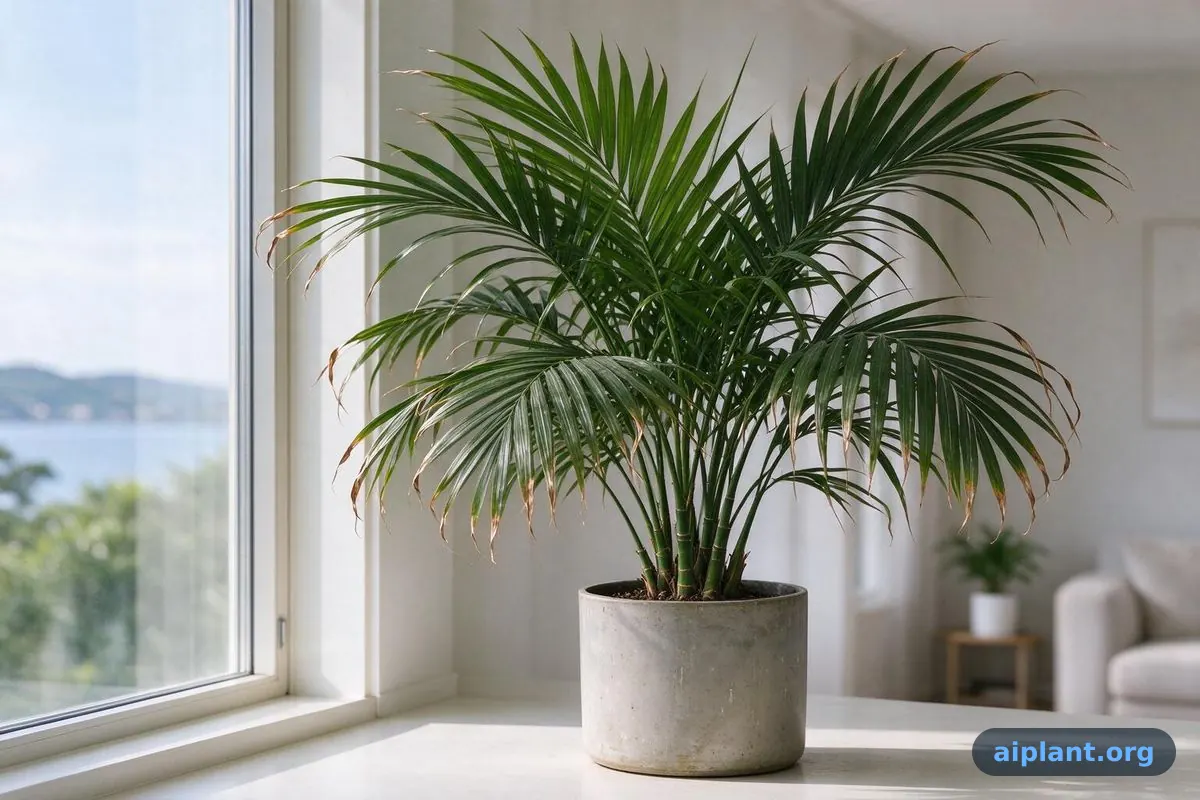
Kentia Palm (Howea forsteriana) leaves that curl and crisp at the tips are almost always reacting to dry air, a watering fault or damaged roots, not to disease. The fix starts with matching exactly what you see to the cause, because a frond that crisps from the tip inward tells a different story from one that droops or drops entirely. This article helps you diagnose the problem first, then gives the watering, humidity, temperature and pest care that keeps new fronds opening flat and green.
Kentia Palm Curling Tips: The Fast Answer
- Crispy tips with dry air and curling leaflets point to low humidity; raise it to 50-60% and keep the palm away from draughts and heating vents.
- Curling plus drooping after watering usually means soggy roots; let the top 5 cm (2 in) dry out and check that the pot drains freely.
- Brown tips on older fronds with pale new growth suggest a watering inconsistency or a potassium shortage; correct watering before feeding.
- Fine webbing and sticky residue mean spider mites or scale; isolate the palm and treat every leaf underside weekly until no new webbing appears.
Kentia Palm Symptom Check: Which Frond Problem Is It?
Use this table as an index: find the row that matches the frond in front of you, then read the detailed sub-heading below it for the full fix. The order runs from the most common indoor cause to the least common.
Crisping starts at the tips and edges
Dry indoor air is the leading cause of tip crisping on Kentia Palm. Leaflets feel papery and curl inward along their length, and the damage is worst on fronds nearest a radiator, air conditioner or open window in winter. Move the palm to a spot with steady humidity and the new frond should open without crispy margins.
Curling leaflets with drooping fronds
When the whole frond curls downward and feels limp rather than papery, the roots are either waterlogged or bone dry. Push a finger 5 cm (2 in) into the soil: damp and sour-smelling means overwatering, dusty and dry means underwatering. Correct the watering before any other change.
Brown tips on the oldest fronds only
A potassium shortage shows as brown, necrotic tips on mature lower fronds while the rest of the leaf stays green. It follows months of watering with hard tap water or a long gap without feeding. Flush the pot and resume a balanced palm fertilizer in spring.
Sudden leaf drop after a move
Kentia Palm drops older fronds when light, temperature or humidity changes abruptly, typically within two to six weeks of bringing it home. The palm is adjusting, not dying; keep conditions stable and it resumes growth once settled.
Sticky leaves with fine webbing
Spider mites leave pale stippling, fine silk on the leaf undersides and sticky honeydew from scale insects. Hold a white sheet of paper under a frond and tap it: moving specks confirm mites. Treat weekly until the paper stays clean.
Kentia Palm Frond Symptoms, Causes and First Actions
Why Kentia Palm Leaves Curl and Crisp at the Tips
Curling and crisping at the tips is the Kentia Palm's standard response to any condition that stops water reaching the leaf margins. The leaflets lose turgor first at their far ends, so the tip curls and turns brown while the base of the frond still looks green. Three faults account for nearly every case.
Low humidity drains the leaf margins
Indoor air in heated rooms often sits at 30-40% relative humidity, well below the 50-60% a Kentia Palm needs. Water evaporates from the leaflet tips faster than the roots can replace it, so the tissue collapses and crisps. Group the palm with other plants, stand it on a pebble tray, or run a room humidifier to keep a hygrometer reading above 50%.
Inconsistent watering damages fine roots
Letting the root ball dry to dust and then flooding it kills the fine feeder roots that supply the frond tips. The palm then cannot take up water even in damp soil, and the tips crisp. Water when the top 5 cm (2 in) of mix feels dry, then water slowly until it runs from the drainage holes, and empty the saucer after 20 minutes.
Direct sun scorches the exposed tips
Kentia Palm tolerates low light but not harsh midday sun. A frond pressed against a south- or west-facing window in summer can crisp along the sun-facing edge within a few days. Move the palm 1-2 m (3-6 ft) back from the glass or filter the light with a sheer curtain.
Hard tap water leaves salt at the margins
Repeated watering with high-mineral tap water deposits salts at the leaflet tips, which then brown and curl. Flush the pot with room-temperature rainwater every two to three months, letting several litres run through the mix, and use filtered water for routine watering if your tap is very hard.
Brown Crispy Tips on Kentia Palm Fronds: Watering and Root Fixes
Brown crispy tips on Kentia Palm fronds almost always trace back to the roots, either from too much water, too little, or a pot that cannot drain. Fix the root zone first; trimming the brown tips changes nothing while the cause continues.
Overwatering and soggy mix
A Kentia Palm in dense, peat-heavy soil that stays wet for more than a week develops root rot, and the frond tips brown and crisp because the damaged roots cannot absorb water. Check by lifting the inner pot: a heavy pot, sour smell or brown mushy roots at the drainage holes confirm it. Repot into a free-draining mix of two parts potting compost, one part perlite and one part orchid bark, and water only when the top 5 cm (2 in) feels dry.
Underwatering and hydrophobic soil
When the mix dries so completely that it repels water, it runs down the inside of the pot and the root ball stays dry. Tip the pot and feel the weight: unusually light means underwatered. Soak the whole root ball in a bucket of room-temperature water for 30 minutes until bubbles stop rising, then drain thoroughly before returning it.
How often to water to stop leaf curl
In a 25 cm (10 in) pot that means roughly 1-2 litres per watering, enough to moisten the whole root ball without leaving it standing in water. Never water on a fixed calendar date; test the soil each time, because light, pot size and room temperature change how fast it dries.
Pot drainage and saucer water
A decorative outer pot without drainage holes traps water at the base and rots the roots within weeks. Always keep the Kentia Palm in a nursery pot with drainage holes inside the decorative pot, and empty the outer pot 20 minutes after watering so no water sits against the roots.
Kentia Palm Watering by Season and Pot Size
Kentia Palm Dropping Leaves After a Move or Repot
A Kentia Palm that drops older fronds after being brought home, moved rooms or repotted is showing transplant shock, not a disease. The palm sheds the oldest leaves first to reduce the leaf area its disturbed roots must support, and it usually settles within four to six weeks if conditions stay stable.
Why the drop happens
Kentia Palm grows slowly and resents change. A shift in light level, a drop in humidity or a damaged root ball makes the palm abandon its lowest fronds to balance water loss. Dropping two or three older fronds after a move is normal; losing new fronds from the centre is not, and points to root rot instead.
Drooping after repotting
Repotting bruises the fine roots, so the palm wilts and droops for a week or two. Do not feed for six weeks, because fertilizer on damaged roots burns them further.
Saving a drying, frond-losing Kentia Palm
- Check the root ball: slide the palm out of its pot and look at the roots; firm and pale means they are healthy, brown and mushy means rot, so trim the damaged roots with clean scissors.
- Repot into free-draining mix: use a pot only 2-3 cm (about 1 in) wider than the root ball, because an oversized pot holds excess water that rots the roots.
- Water and settle the palm: water slowly until it drains, then place the palm in bright indirect light at 18-24°C (64-75°F) and mist the fronds daily for the first two weeks.
- Wait before feeding: hold fertilizer for six weeks while new roots form, then resume a balanced palm feed at half strength once a month through spring and summer.
When to start over
If more than half the root ball is brown and mushy, the central spear pulls out easily, or the palm keeps dropping new fronds after four weeks of correct care, it is unlikely to recover. A Kentia Palm with a firm central spear and at least three healthy fronds is still worth saving.
What Indoor Conditions Keep Kentia Palm Fronds From Crisping
Kentia Palm grows best at 18-24°C (64-75°F) with 50-60% humidity and bright indirect light, and it tolerates brief dips to 10°C (50°F) but not frost. These three conditions decide whether new fronds open flat or crisp at the tips.
How much humidity a Kentia Palm needs
Aim for 50-60% relative humidity around the palm. Below 40% the leaflet tips lose water faster than the roots supply it and crisp, especially in winter when heating dries the air. A cheap hygrometer placed beside the pot tells you the real figure; raise it with a room humidifier, a pebble tray kept topped up, or by grouping the palm with other plants.
Temperature and cold limits
Keep a Kentia Palm between 18°C and 24°C (64-75°F) for steady growth. It survives short spells at 10°C (50°F) but sustained cold below that slows growth and yellows the lower fronds, and frost kills the crown. Keep it away from single-glazed windows in winter and from radiators, which dry the air around the fronds.
Light without direct sun
Bright indirect light produces the strongest new fronds. A spot 1-2 m (3-6 ft) from an east or north window suits it well, and it tolerates a shadier corner at the cost of slower growth. Harsh midday summer sun scorches fronds pressed against south- or west-facing glass, so filter the light with a sheer curtain.
Can a Kentia Palm recover from cold damage
A Kentia Palm chilled above freezing usually recovers if the central spear stays firm and green. Move it to 18-24°C (64-75°F), stop watering until the mix dries slightly, and wait four to six weeks for new growth before judging it. Fronds blackened by frost will not green again; cut them off once the damage stops spreading, and replace the palm if the spear pulls loose.
Kentia Palm Indoor Conditions Compared
Kentia Palm Quick Care Facts
- Light
- Bright indirect; tolerates shade, no direct midday sun
- Water
- When top 5 cm (2 in) of mix is dry
- Temperature
- 18-24°C (64-75°F); cold limit 10°C (50°F)
- Humidity
- 50-60% relative humidity
- Soil
- Free-draining mix, pH 6.0-7.5, pot with holes
- Fertilizer
- Balanced palm feed monthly in spring and summer
Spider Mites and Scale on Kentia Palm: Getting Rid of Them
Spider mites and scale are the two pests that most often attack Kentia Palm indoors, and both thrive in the dry, warm air that also causes crispy tips. Mites cause pale stippling and fine webbing; scale shows as sticky honeydew and brown bumps on the fronds.
Spider mites on dry indoor fronds
Spider mites are tiny sap-suckers that leave pinprick pale dots across the upper leaf surface and fine silk on the undersides. Isolate the palm, rinse both leaf surfaces in a shower, then spray with insecticidal soap every five to seven days for three weeks, until the paper test stays clean.
Scale insects and sticky honeydew
Scale appears as brown or grey oval bumps along the stems and leaf midribs, with sticky honeydew on the leaves below. Wipe the bumps off with a cotton bud dipped in rubbing alcohol, then treat the whole palm with horticultural oil, covering leaf undersides where the crawlers settle. Repeat every 10 days for a month, because the oil only kills active crawlers, not the adults under their shells.
Preventing pests from returning
Raise humidity to 50-60% and wipe the fronds with a damp cloth every two to three weeks, because mites struggle in moist air and the wiping removes eggs and dust. Inspect the undersides of new fronds whenever you water, since early detection is the difference between one treatment and an infestation.
Kentia Palm Pest Signs Compared
Why a Kentia Palm Stops Growing New Fronds
A Kentia Palm that produces no new fronds for months is usually root-bound, underfed or sitting in light that is too dim. The palm grows slowly by nature, opening two to three new fronds a year in good conditions, so a complete standstill points to a correctable limit.
Root-bound pots stop growth
When roots fill the pot and circle the base, the palm cannot take up enough water and nutrients to push a new spear. Lift the inner pot and look at the drainage holes: roots emerging in a dense mat mean it is time to repot. Move it into a pot 2-3 cm (about 1 in) wider in spring, using the free-draining mix, and growth usually resumes within a season.
Too little light and no feeding
A Kentia Palm in a dark hallway survives but rarely grows. Move it to bright indirect light and feed a balanced palm fertilizer at half strength once a month from March to September. Do not feed in winter, when short days and cool rooms slow the palm anyway and unused salts build up in the mix.
Natural age and old fronds
Older Kentia Palm fronds brown and die from the bottom of the crown upward as part of normal aging, not disease. Cut a dead frond off at the base with clean secateurs once it is fully brown, because it no longer feeds the palm and only harbours pests. A palm with a firm, pale central spear and healthy upper fronds is growing normally even if it looks static.
Kentia Palm troubleshooting: unanswered care questions
How do I safely clean dust off Kentia Palm fronds without damaging them?
Yes, dust can be removed safely if the fronds are supported rather than bent. Hold each frond underneath with one hand, then wipe the upper surface with a soft, damp cloth or a gentle shower of room-temperature water, working from the base toward the tip. Keep the leaflet undersides clean too, since dust there hides mite eggs. Avoid dry dusting that drags leaflets and never pull a frond against its natural arch.
Can I propagate a Kentia Palm from cuttings or division, or does it only grow from seed?
No, Kentia Palm cannot be propagated from cuttings or division in any reliable way. It is a single-stemmed palm that does not branch, so a cut frond or stem section has no growing point and will not root. Division only applies to clumping palms, which this is not. Propagation is by seed, which is slow and needs fresh viable seed and warmth, so most gardeners buy an established plant.
Is Kentia Palm safe to keep in a bedroom or other low-light room overnight?
Yes, a Kentia Palm is a reasonable bedroom plant overnight. It tolerates low light and releases oxygen around the clock, and it does not need bright sun to hold its fronds. The practical limits are humidity and cold: keep the room at 18-24°C (64-75°F) and above 50% humidity, away from draughts and heating vents, and expect slower growth in a dim room rather than decline.
How do I move a large Kentia Palm to a new home without losing fronds?
Yes, a large Kentia can be moved with its fronds intact if the root ball is disturbed as little as possible. Tie the fronds loosely upward with soft twine before lifting, and carry the pot by its base rather than by the stems. Keep the palm in the same pot, expect two or three older fronds to yellow and drop over the following weeks as transplant shock, and hold fertilizer for six weeks while roots settle.
What fertilizer ratio and schedule should I use for a Kentia Palm in autumn and winter?
Use a balanced palm fertilizer at half strength, and only if the palm is actively growing. In autumn, feed roughly once a month while light and warmth remain steady; in winter, stop feeding, because short days and cool rooms slow growth and unused salts build up in the mix. Correct any watering fault first, and flush the pot with rainwater every two to three months if tap water is hard.
Why are the new fronds on my Kentia Palm opening pale or yellow instead of green?
Pale or yellow new fronds usually mean the palm is short of light, nutrients or steady watering rather than disease. Check the light first: a dim corner slows growth and new spears open weakly. Then test the top 5 cm (2 in) of mix, since soggy roots cannot supply the new frond. If the palm has not been fed through spring and summer, resume a balanced palm feed at half strength and keep humidity at 50-60%.
Related articles
Why Are My Apple Tree Leaves Turning Yellow?
Find the cause in minutes and keep the fruit coming.
Why Are Lemon Tree Leaves Turning Yellow and How Do You Save It?
Match the symptom to its cause, fix it with numbers, then keep the tree producing.
Amaryllis Leaves Turning Yellow and Drooping: What to Fix First
Find the cause fast and keep the bulb alive for next year's blooms.
Why Are Basil Leaves Turning Yellow and Drooping?
Find the cause in minutes and get your plant back to steady harvest.