
Why Is My Lemon Balm Plant Dying and How Do I Save It?
Match the symptom to the cause, fix it, and keep the harvest coming.
A Lemon Balm (Melissa officinalis) that collapses is usually reacting to one of four things: sap-sucking pests, a fungal leaf disease, waterlogged roots or cold damage, and each leaves a different signature you can read in a minute. This half of the article is diagnosis-first, so start with the symptom table, find the matching sub-heading, and follow the fix written under it. The care that prevents a repeat, plus harvesting, drying, storage and safety, follows in the second half.
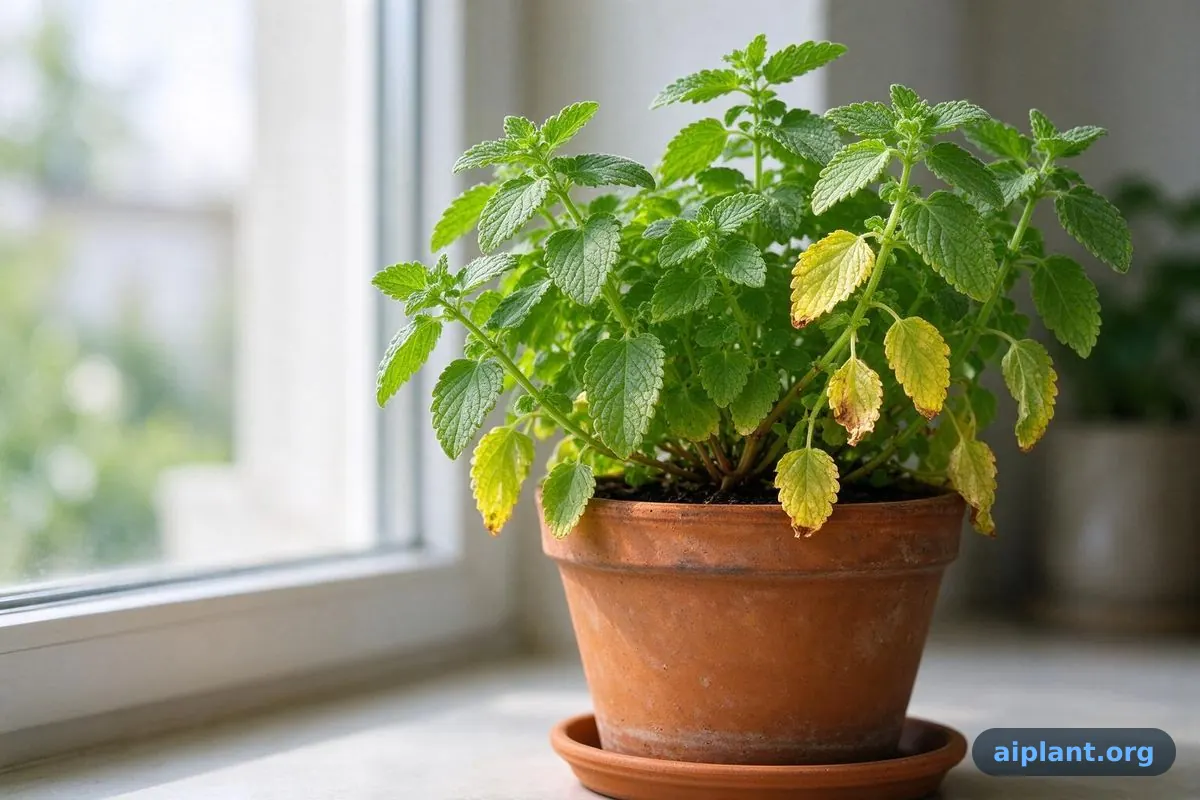
Lemon Balm Dying: The Fast Diagnosis
- Most dying Lemon Balm is killed by aphids or whiteflies, powdery mildew, or roots sitting in soggy soil, not by old age or bad luck.
- Tiny white insects and sticky leaves mean sap-sucking pests; wash them off and repeat every few days until none remain.
- Wilting and a brown, soft base mean root or stem rot from overwatering; stop watering and let the top 3 cm (1 in) dry.
- Black spots and a white powder are fungal; strip affected leaves, thin the stems and water at the soil, never the foliage.
- Lemon Balm is hardy to about -20 °C (-4 °F) but new spring growth burns below 0 °C (32 °F); cover it on frost nights.
Lemon Balm Symptom Check: Which Trouble Is Killing It
Lemon Balm rarely dies without warning, and the first visible change points to one of five kinds of trouble. Read the table for the closest match, then go to the sub-heading named in the last column, where the recognition signs, the causes in order of likelihood, and the actual fix steps are written out.
Lemon Balm leaves that are still safe to eat: damaged but unsprayed leaves remain usable. Cut away the spotted, curled or mildewed parts, rinse the rest under cool running water, and use only the clean green tissue; discard any leaf that is slimy, mouldy or smells sour rather than lemony.
Lemon Balm Symptom, Likely Cause and First Move
Tiny White Bugs and Sticky Lemon Balm Leaves
What it looks like: small white or pale-green insects sit in clusters under the newest leaves and along the soft stem tips, and the foliage feels tacky. Whiteflies flutter up in a puff when the plant is shaken, while aphids stay put and shed white cast skins that look like dust.
Why it happens: Lemon Balm's soft, thin summer growth is easy food, and indoor or sheltered plants get no rain or wind to knock the colonies back. Aphids and whiteflies both multiply fastest in still, warm air around 20–25 °C (68–77 °F).
Recognise it early: check the undersides of the top three pairs of leaves weekly; a sticky sheen with a few white specks is the earliest sign, before leaves curl.
- Isolate and wash: move the pot away from other herbs, then hold the plant in the sink and spray the undersides of every leaf with a firm jet of water, which dislodges aphids and whitefly adults and knocks the population down at once.
- Wipe or prune the worst growth: with a damp cloth, wipe the sticky film off the remaining leaves so they can breathe, and cut off any shoot that is fully curled or crowded with insects, bagging it rather than dropping it nearby.
- Repeat every three days: re-spray or re-wipe the new growth every third day for two weeks, because eggs and newly hatched nymphs survive the first pass and the cycle only breaks when no new white specks appear.
- Keep the air moving: thin crowded stems and space pots at least 30 cm (12 in) apart so wind and airflow make the soft tips less attractive to a fresh colony.
When to cut losses: if more than half the stems are curled, sticky and stunted after two weeks of treatment, cut the plant back hard to 10 cm (4 in) above the soil; Lemon Balm regrows from its crown, and clean new shoots are easier to keep pest-free than a badly infested old frame.
Aphids or Whiteflies on Lemon Balm: Telling Them Apart
Black Spots Spreading on Lemon Balm Leaves
What it looks like: small dark spots, often with a paler centre, appear first on the oldest leaves near the soil and spread upward as the tissue yellows and drops. Spots stay roughly round and separate rather than forming one large patch.
Why it happens: leaf-spot fungi splash up from the soil during overhead watering and take hold when leaves stay wet for hours in still air. Dense, unpruned Lemon Balm keeps a humid microclimate inside the clump, which is why the lower and inner leaves go first.
Fix: stop overhead watering and water the soil only, so the leaves dry within an hour; strip every spotted leaf and clear fallen debris from the surface, since both carry the spores back up on the next splash. Thin the clump by cutting one in three stems to the base so air reaches the centre, and water in the morning rather than the evening so any wet foliage dries before night.
When to cut losses: if spots keep appearing on new growth after the clump has been thinned and watered at soil level for ten days, cut the whole plant back to 10 cm (4 in); the regrowth usually comes through clean, and a plant that stays spotted after that is not worth keeping in a pot collection.
White Powdery Coating on Lemon Balm Foliage
What it looks like: a white, flour-like dusting sits on the upper leaf surface, starting on the inner, shaded leaves and spreading outward as the leaf yellows and twists. It wipes off with a finger, which separates it from the pale, greyish sheen of a healthy leaf.
Why it happens: powdery mildew thrives when days are warm and nights are cool and humid, and when Lemon Balm is crowded so air cannot move through the clump. It is the most common fungal problem on potted Lemon Balm kept on a sheltered balcony.
Fix: remove and bag every dusted leaf and shoot, then thin the clump so light reaches the centre and space pots 30 cm (12 in) apart. Water at the soil line in the morning, never over the leaves in the evening, and avoid feeding with a high-nitrogen fertiliser, which pushes soft, mildew-prone growth. Check the new leaves twice a week; if no fresh white dust appears on them over two weeks, the outbreak has stopped.
When to cut losses: a plant that is more than half white and dropping leaves is best cut back to 10 cm (4 in) and allowed to reshoot; keep the clean regrowth and discard the mildewed stems rather than trying to wipe a large plant leaf by leaf.
Lemon Balm Wilting and Collapsing at the Base
What it looks like: the whole plant flags even when the soil is damp, and the stems at soil level are brown, soft and give way when pressed. Healthy Lemon Balm stems are firm and green at the crown; rotted ones pull away with a wet, dark base.
Why it happens: waterlogged soil is the usual cause, from a pot with no drainage hole, a saucer left full, or heavy garden soil that holds winter rain. Root rot follows, and the crown collapses because the roots can no longer move water up. A second cause is a stem canker entering through a pruning cut made too low in wet weather.
Fix: stop watering immediately and tip any standing water out of the saucer; push a finger 3 cm (1 in) into the soil and water again only when it feels dry at that depth. If the base is already brown and soft, lift the plant, cut away the mushy roots and stems with clean scissors, and repot into fresh, free-draining mix in a container with holes. Water sparingly for the first week while new roots form.
When to cut losses: if the crown is brown and hollow through the centre, the plant will not recover; take healthy tip cuttings from any green stem before discarding it, because Lemon Balm roots easily from cuttings and the old root ball is not worth saving.
Lemon Balm Quick Care Facts
- Part Used
- Leaves and soft stem tips
- When to Harvest
- Cut stems to 10 cm, before flowering
- How to Dry
- Bunch and hang in dark, dry air
- Storage Life
- Airtight jar, whole leaves, cool dark
- Light
- Full sun to light shade, 4-6 hours
- Water
- When top 3 cm (1 in) feels dry
Lemon Balm After Frost: Blackened Leaves and Cold Damage
What it looks like: leaves on the exposed outer stems turn limp and water-soaked, then blacken and crisp within a day or two of a cold night. The damage is worst on the tallest, softest shoots and on plants in pots, where roots freeze faster than in the ground.
Why it happens: established Lemon Balm is hardy to roughly -20 °C (-4 °F), but soft new growth in spring is damaged by any dip below 0 °C (32 °F), and a pot whose compost freezes solid loses roots even when the top growth looks alive. Cold damage is a spring and late-autumn problem, not a midwinter one.
- Wait before pruning: leave blackened stems in place until the last frost date, because they shelter the crown and the living buds beneath; cutting early exposes soft growth to the next cold night.
- Check for life: scrape a thumbnail along a stem near the base; green tissue under the bark means the plant is alive, while brown, dry tissue all the way down means that stem is dead.
- Prune back to green: once frosts have passed, cut each stem to just above the highest green point, which removes the dead wood and lets the crown push fresh shoots.
- Protect pots: move container Lemon Balm against a wall or into a cold frame, and wrap the pot in bubble wrap so the root ball does not freeze through; in the ground, a 5 cm (2 in) mulch of compost over the crown insulates it through winter.
When to cut losses: in-ground Lemon Balm almost always reshoots from the roots in spring; a potted plant whose root ball froze solid and whose crown is brown and dry is best replaced, since regrowth from a dead crown will not come.
What Lemon Balm Is and How to Tell It From Look-Alikes
Lemon Balm is a soft, clump-forming perennial herb: Lemon Balm (Melissa officinalis) grows 30–60 cm (12–24 in) tall and wide, with square stems, opposite pairs of heart-shaped, toothed leaves, and a clean lemon scent released when a leaf is crushed. It dies back to the crown in winter and returns in spring; in mild climates it stays semi-evergreen. The small white flowers appear in summer and are a bee magnet, which is where the genus name Melissa (honey bee) comes from.
The lemon scent is the decisive test: crush one leaf between finger and thumb and smell it. Lemon Balm is sharply lemony with a faint minty edge, and the scent stays on your skin for a minute. Any plant that looks similar but smells of nothing, or of cat musk, is not Lemon Balm and should not be used in the kitchen.
Lemon Balm versus lemon verbena: lemon verbena (Aloysia citrodora) has narrow, rough, pointed leaves on woody stems and a much stronger, almost sherbet lemon scent, and it is a tender shrub that must be overwintered indoors. Lemon Balm has broad soft leaves and dies back to the ground each winter, so the two are easy to separate by stem and habit alone.
Lemon Balm versus catnip and catmint: catnip (Nepeta cataria) has greyer, downier leaves and a pungent, somewhat skunky smell that cats react to strongly; catmint (Nepeta × faassenii) is a low, grey-leaved ornamental with lavender-blue flowers. Both are harmless look-alikes, but neither gives the clean lemon aroma that identifies Lemon Balm.
Lemon Balm versus mint: mint (Mentha species) has the same square stems and opposite leaves but a sharp peppermint or spearmint smell, and its leaves are usually narrower and more textured. Lemon Balm leaves are broader and softer, and the scent is lemon rather than mint, so a crushed leaf settles the question in seconds.
Lemon Balm versus stinging nettle: young nettle leaves are similar in shape but are covered in fine stinging hairs and have no lemon scent, and nettle stems are not square in the same way. Never pick a look-alike for tea without crushing a leaf first; if it does not smell of lemon, leave it alone.
Lemon Balm Look-Alikes and How to Tell Them Apart
Growing Lemon Balm in Pots and Beds Without Repeat Problems
Lemon Balm wants sun and air, not rich wet soil: give it 4–6 hours of direct sun and a free-draining spot; the plant tolerates light shade but grows softer and more mildew-prone in it. The ideal growing temperature is 15–25 °C (59–77 °F), it handles summer heat if the roots stay evenly moist, and established plants survive winter to about -20 °C (-4 °F). Soil pH of 6.0–7.5 suits it, and mature plants need 45–60 cm (18–24 in) of spacing so air moves through the clump.
Water by the finger test, not by the calendar: push a finger 3 cm (1 in) into the soil and water only when it feels dry at that depth, then water until it runs from the drainage holes. In summer that is usually every two to three days in a pot and weekly in the ground; in winter, once every two to three weeks is enough for a potted plant, because cold wet compost is what kills the crown.
Drainage is the single most important soil property: use a mix of two parts potting soil to one part coarse perlite or grit, and plant in a container with holes at least 25 cm (10 in) across. In the garden, fork in grit and plant on a slight mound if the soil holds water in winter, because Lemon Balm roots rot in standing water far faster than they dry out.
Feed lightly or not at all: Lemon Balm is a light feeder and rich nitrogen pushes soft, floppy, mildew-prone growth. A single handful of compost in spring is enough for a garden plant, and a potted plant needs only a half-strength liquid feed once in early summer; stop feeding by late summer so the plant hardens before winter.
Pinch and cut to keep it bushy: pinch out the tips of young plants when they reach 15 cm (6 in) to force side shoots, and cut one in three older stems to the base in midsummer to open the clump. Without this, Lemon Balm goes leggy and woody in its second year and the centre dies out, which is the most common reason an older plant stops producing usable leaves.
Divide crowded clumps every two to three years: lift the plant in early spring as new shoots appear, split the crown into two or three pieces with a spade, and replant the healthiest outer sections, discarding the woody centre. This restores vigour and prevents the pot-bound, root-circled condition that makes container plants wilt despite damp soil.
Choose the right container and winter spot: a pot 30 cm (12 in) wide gives roots room for a season, and any potted Lemon Balm should be moved against a sheltered wall or into a cold frame before the first hard frost. Wrap the pot in bubble wrap or bury it to its rim so the root ball does not freeze solid, and never leave it standing in a full saucer through winter.
When a plant is still worth saving: if the crown is green when you scrape it and at least a third of the stems are firm, the plant will recover with the care above. If the crown is brown and hollow through the centre, or the root ball is a solid mass of circling brown roots with no white tips, start over from seed or a cutting rather than spending a season on it.
Harvesting, Drying and Storing Lemon Balm Without Browning
Harvest before flowering for the best leaf: cut stems when the plant is 20–30 cm (8–12 in) tall and before the small white flowers open, because leaf flavour and scent are strongest then. Take no more than a third of the plant at once, cutting 10 cm (4 in) above the soil, and harvest in the morning after the dew has dried so the leaves carry less surface moisture into the drying room.
A second and third cut follow through summer: after the first cut, feed lightly and water as before, and the plant pushes fresh stems within two to three weeks; cut again when they reach the same height. Stop harvesting about six weeks before your first expected frost so the plant hardens and goes into winter with enough stored energy to reshoot.
Dry whole stems, not loose leaves: bundle five or six stems with string and hang them upside down in a dark, dry, airy room at 20–25 °C (68–77 °F), or lay them on a mesh screen if humidity is high. Whole stems dry in seven to fourteen days; the test is a leaf that crumbles between finger and thumb rather than bending. A dark room matters because light bleaches the leaves brown and drives off the oils that carry the lemon scent.
Speed drying with gentle warmth if air is humid: an oven on its lowest setting with the door ajar, or a dehydrator at 35–40 °C (95–104 °F), dries leaves in two to four hours. Keep the temperature below 40 °C (104 °F), because higher heat evaporates the aromatic oils and leaves you with brown, hay-scented material instead of lemon-scented herb.
Strip and store whole, not crushed: once dry, run your fingers down each stem to strip the leaves and pack them whole into an airtight glass jar, because crushing releases oils and exposes more surface to air. Keep the jar in a cool, dark cupboard, label it with the date, and use within twelve months; whole dried Lemon Balm holds its scent for about a year, ground leaf for only a few months.
Why dried Lemon Balm turns brown or mouldy: browning means the leaves were dried too slowly, too hot, or exposed to light, so the chlorophyll and oils broke down before the tissue was crisp. Mould means leaves went into the jar before they were fully dry, or the jar was opened and closed in a steamy kitchen; any jar with a musty smell, grey fuzz or clumped leaves should be discarded whole, because mould toxins spread through the batch.
Recheck the jar a week after packing: open it, feel for dampness and smell the contents; if the leaves have softened or the scent has turned musty, spread them back on the screen for another two days and repack in a clean, dry jar. This single check catches the most common storage failure before it ruins a whole season's harvest.
Lemon Balm Harvest and Drying by Stage
Who Should Be Careful With Lemon Balm
Pregnant and breastfeeding readers should ask first: Lemon Balm is commonly brewed as a tea, but there is not enough reliable information to confirm it is safe in larger amounts during pregnancy or breastfeeding, so keep intake modest or avoid it and ask a doctor or pharmacist before using it regularly.
Children and people on medication need a professional check: a weak tea is traditionally given to children, but concentrated extracts and large daily amounts are not for them, and Lemon Balm may interact with thyroid medication, sedatives and other prescribed drugs. Anyone taking regular medication should ask a doctor or pharmacist before drinking it daily rather than assuming an herb is risk-free.
Stop if you react: a small number of people develop a rash or digestive upset after handling or drinking Lemon Balm, and anyone with a known sensitivity to mint-family plants should test a small amount first. If a reaction appears, stop using it and seek advice rather than continuing.
Traditional uses are folk uses, not treatments: Lemon Balm is traditionally used in European herbal tea blends and commonly brewed as a mild, lemony evening drink, and the fresh leaves are used in salads, cold drinks and stuffings. It is not a medicine, and it should never replace prescribed care for a health condition.
Lemon Balm: Pests, Diseases, Cold Damage and Harvest Storage
Can I grow lemon balm indoors on a windowsill year-round, and what light and pot size does it need?
Yes, lemon balm can grow indoors year-round on a bright windowsill. Give it 4-6 hours of direct sun or a light shade position, and turn the pot regularly so stems grow evenly. Use a container at least 25 cm (10 in) across with drainage holes; a 30 cm (12 in) pot suits a plant for a season. Pinch tips at 15 cm (6 in) to keep it bushy rather than leggy.
How do I propagate lemon balm from cuttings or by dividing an existing plant?
Lemon balm roots readily from tip cuttings of green, non-flowering stems; cut just below a leaf node, strip the lower leaves and push the stem into free-draining mix, keeping it moist and out of harsh sun until new growth shows. To divide, lift the plant in early spring as shoots appear, split the crown into two or three sections with a spade, and replant the healthiest outer pieces, discarding the woody centre.
Why does my lemon balm stop producing fragrant leaves and turn woody in its second or third year?
Lemon balm goes woody because it is a short-lived perennial that naturally ages, and without pruning the centre of the clump dies out while stems harden. Cut one in three older stems to the base in midsummer and pinch young tips at 15 cm (6 in) to force side shoots. Lift and split the crown in early spring, replanting the vigorous outer sections and discarding the woody middle.
Can I freeze fresh lemon balm leaves instead of drying them, and how do I do it?
Yes, fresh leaves freeze well and keep more lemon aroma than slow-dried leaf. Strip clean, dry leaves from the stems, spread them loose on a tray or pack small amounts into bags, and freeze; frozen leaves soften on thawing, so use them straight into drinks, stuffings or cooking rather than as a garnish. Label with the date and use within a season for best scent.
What companion plants grow well with lemon balm, and which should I keep it away from?
Lemon balm's bee-attracting summer flowers and lemony foliage suit many garden neighbours, and its scent is often said to confuse pests near brassicas and fruit. Keep it away from plants that need dry, open ground, because its self-seeding habit and vigorous spread crowd low growers. Avoid pairing it with other strong spreaders such as mint, which compete for the same space and water.
How do I stop lemon balm from spreading and taking over a garden bed?
Lemon balm spreads by seed and by creeping roots, so plant it in a container sunk into the bed, or set it where a hard edge and regular mowing contain it. Cut flower stems before the small white blooms set seed, and lift and divide the clump every spring, removing runners beyond the boundary. Seedlings pull easily when young and the soil is damp.
Why are my lemon balm leaves turning yellow even though the soil is not waterlogged?
Yellow leaves with dry soil point to other stresses rather than waterlogging. Check for sap-sucking pests under the newest leaves, since aphids and whiteflies cause yellowing and a sticky film; wash undersides with a firm jet every few days until no new white specks appear. Also check for powdery mildew or leaf spot, thin crowded stems for airflow, and water at the soil in the morning.
Can I make lemon balm tea from fresh leaves, and how much should I use per cup?
Yes, fresh leaves make a pleasant lemony tea. Use a small handful of clean, crushed leaves per cup, pour over hot but not boiling water, and steep a few minutes before drinking. Crushing releases the lemon oils. Lemon balm is traditionally used as a mild evening drink, not a medicine; anyone pregnant, breastfeeding, giving it to children or taking medication should ask a doctor or pharmacist first.
Related articles
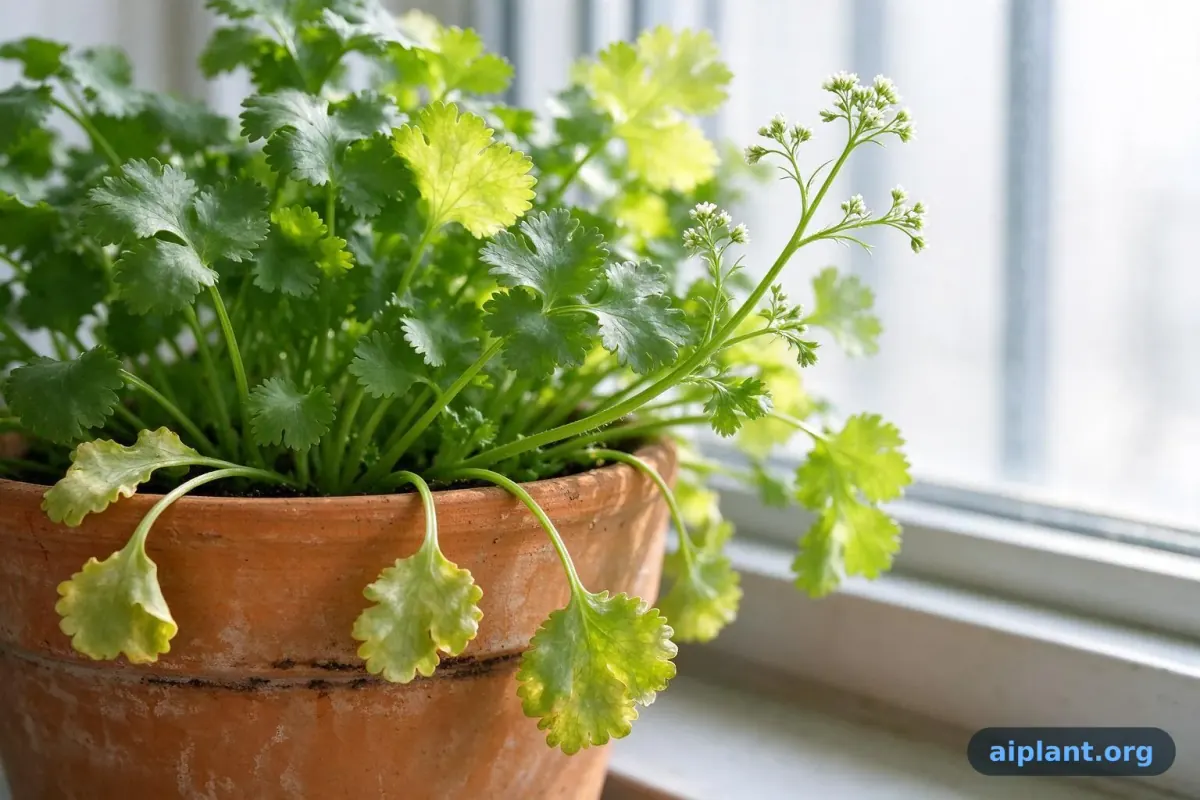
Why Is My Cilantro Bolting and Dying So Fast?
Find the exact cause in minutes and keep the leaves coming.
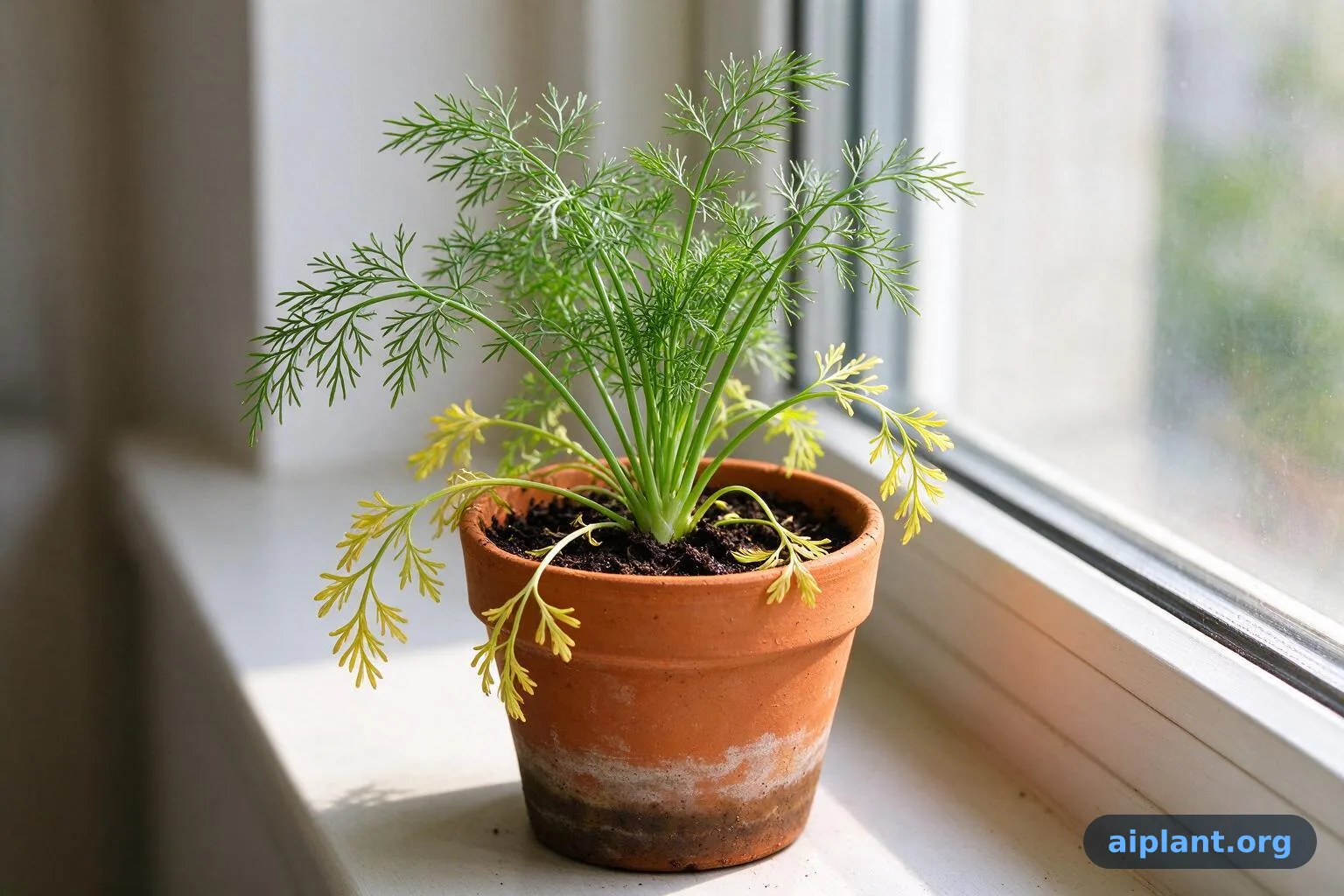
Why Is My Dill Plant Turning Yellow and Drooping?
Match the symptom, find the cause, and save the plant before it bolts.
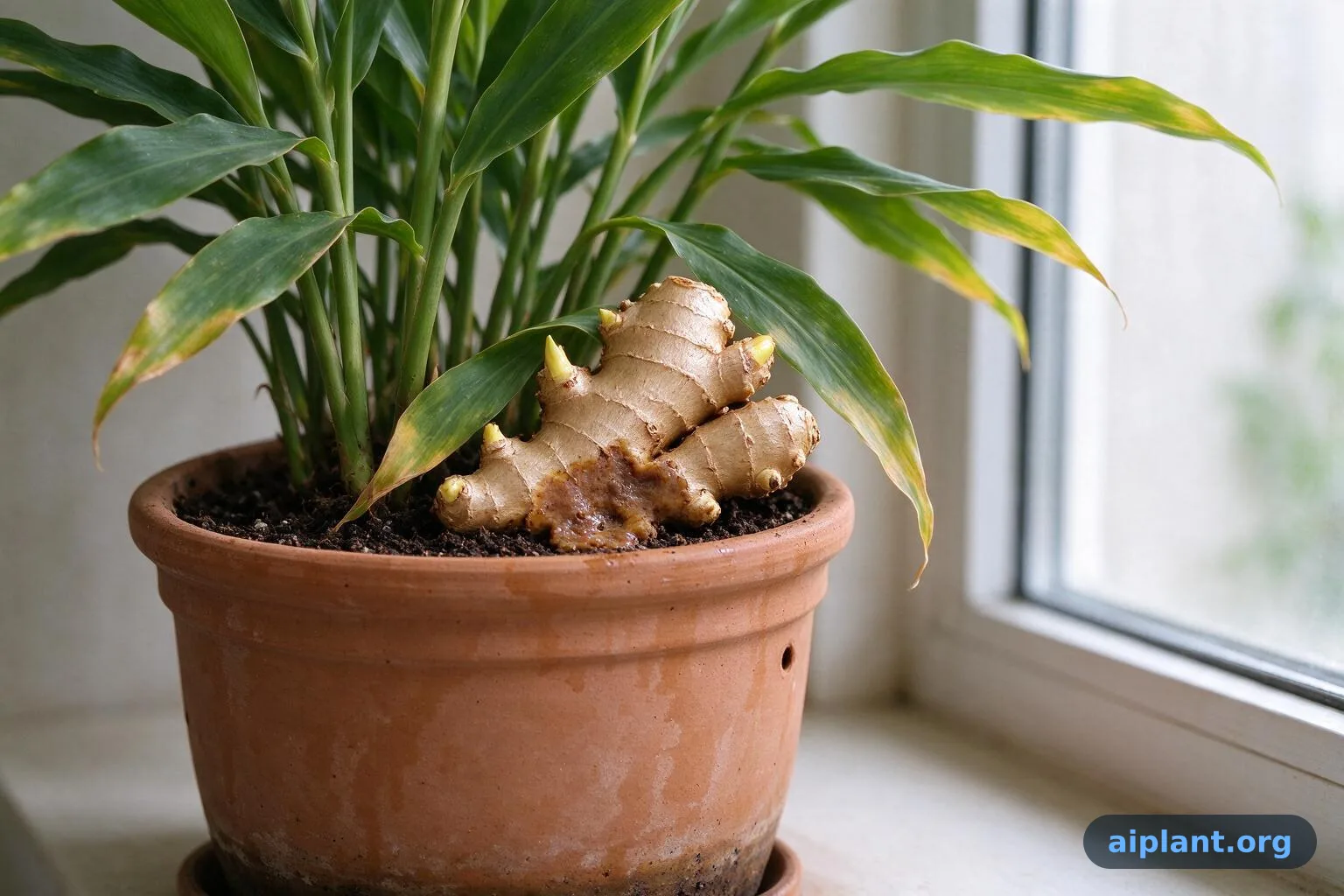
Why Is My Ginger Plant Dying and Rotting?
Match the symptom, fix the rot, and still get a harvest.
Oregano Leggy and Sparse? Restore Bushy Stems
Find the cause, cut it back the right way, and get a full, bushy plant again.