
Moringa Leaves Damaged After a Cold Night: Can It Still Be Saved?
Test the trunk, treat the damage, and keep a backup plant growing.
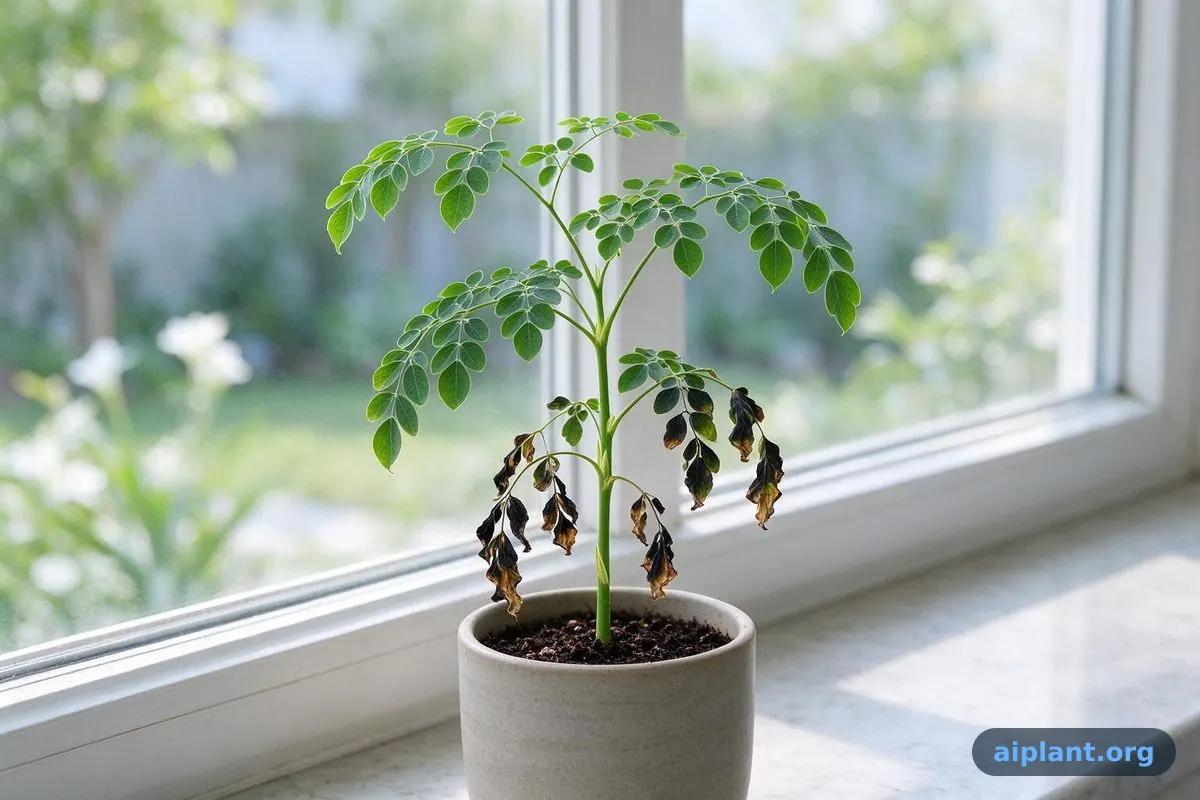
Moringa (Moringa oleifera) leaves that turn black and wilted after a cold night are almost always frost-damaged foliage, and the tree underneath is often still alive. The answer depends on how cold it got and how low the damage reaches: leaves and soft tips die first, while a woody trunk can survive and resprout. This article shows how to read the damage, test whether the trunk is still alive, prune at the right time, protect the plant through the rest of winter, and grow a backup cutting so one bad night never costs you the harvest.
Moringa Cold Damage: The Fast Answer
- Black, limp leaves after a cold night are frost-killed tissue; the trunk may still be alive if it stays firm and green under the bark.
- Cold damage starts around 0 °C (32 °F); moringa grows best between 25–35 °C (77–95 °F) and suffers below 10 °C (50 °F).
- Do not prune the whole tree now: wait until spring, then cut back to live wood once new shoots show where the damage ends.
- Move potted moringa indoors before night temperatures drop below 10 °C (50 °F) and give it the brightest window you have.
Moringa Damage Check: Which Cold Symptom Matches Your Tree
Start with what the plant looks like the morning after the cold night, because each symptom points to a different depth of damage and a different fix. The table below is an index; the sub-headings after it explain how to recognise each problem, why it happens, and exactly what to do.
Are damaged moringa leaves still safe to eat? Leaves that are only wilted or slightly chilled can be washed and used, but trim away black, mushy or slimy parts first, and discard any leaf that smells sour or feels soft. Leaves that froze solid and turned dark should be composted, not eaten.
Moringa Cold Symptom, Likely Cause, and First Action
Why Moringa Leaves Turn Black and Wilted After a Cold Night
Frost kills the leaf tissue first: moringa leaves are thin and hold a lot of water, so ice crystals form inside the cells and rupture them. The morning after a frost the leaves look water-soaked, then turn black and limp within a day or two. This is dead tissue, not a disease, and it will not recover.
The cold limit is around 0 °C (32 °F): moringa is native to the foothills of the Himalayas and tolerates heat far better than cold. Growth slows below 10 °C (50 °F), leaves may yellow or drop between 5–10 °C (41–50 °F), and damage to leaves and soft tips begins at 0 °C (32 °F). A mature tree can survive brief dips to about −1 to −2 °C (28–30 °F) if the wood is hardened, but seedlings and potted plants are much more vulnerable.
Cold wind does damage without frost: a dry, windy night at 3–5 °C (37–41 °F) can scorch leaf edges even when no ice forms, because the wind pulls water out of leaves faster than chilled roots can replace it. Brown, crispy margins with a green centre are the signature.
Wet soil makes cold worse: roots in cold, saturated soil take up almost no water, and the combination of wet feet and low temperature kills roots faster than cold air alone. If the cold night followed heavy rain, check drainage before blaming the temperature.
Recovery depends on the trunk, not the leaves: a moringa whose leaves are all black but whose trunk is firm and green under the bark will usually resprout from the lower stem once warmth returns. A tree whose trunk is soft and brown down to the soil line is unlikely to recover.
Moringa Cold Tolerance by Temperature
Testing Whether a Frosted Moringa Trunk Is Still Alive
The leaves tell you nothing about survival, so test the wood. A live moringa trunk is firm, and a shallow scratch through the bark shows green, moist tissue underneath. A dead trunk feels soft or hollow, and the scratch shows brown or grey dry wood.
Do the scratch test on the lower trunk: use a fingernail or a clean knife to scrape a 2 cm (0.8 in) patch about 15 cm (6 in) above the soil line. Green means the tree is alive and worth keeping; brown means that section is dead, so test higher up to find where the live wood starts.
Check for soft, mushy bark at the base: press the trunk near the soil. If it gives under your thumb and smells sour, the base has rotted after the freeze and the plant is unlikely to recover. In that case, take cuttings from any firm upper branches immediately.
Wait for spring before deciding: a moringa can sit leafless and apparently dead for weeks after a frost. Scratch-test again every two weeks; if the wood is still green by the time night temperatures stay above 15 °C (59 °F), new shoots will usually appear from the lower trunk.
When to start over: if the scratch test is brown at the soil line, the base is mushy, or no green wood can be found anywhere on the plant, replace it. Moringa grows fast from seed or cuttings, so a new plant can reach harvest size within a season in warm weather.
Moringa Trunk Scratch Test Results
Pruning a Cold-Damaged Moringa: When to Cut and How Far
Wait until spring to prune: cutting a frost-damaged moringa in winter exposes fresh wood to more cold and can kill a trunk that would otherwise survive. The dead leaves and soft tips actually insulate the lower stem, so leave them on until the risk of frost has passed.
Cut back to live wood once new shoots appear: in spring, when the danger of frost has passed and buds begin to break on the trunk, make the cut about 5 cm (2 in) above the highest live shoot, using clean secateurs. This removes the dead top without wasting the tree's stored energy.
Remove only black, mushy stems earlier if they threaten the trunk: if a soft, dark branch is rotting down toward healthy wood, cut it back to firm tissue immediately, even in winter, and wipe the blade with alcohol between cuts. Rot spreading into the main trunk is more dangerous than the cold itself.
Do not strip every damaged leaf at once: leaves that are merely brown at the edges can still photosynthesise and feed the plant. Remove them only when they are fully black, dry and ready to fall, usually within two to three weeks of the cold night.
Moringa Pruning Timing After Cold Damage
Protecting Moringa From Frost and Cold Wind Before the Next Cold Night
Move potted moringa indoors before 10 °C (50 °F): a container plant cannot survive a hard freeze, so bring it inside when nights drop below 10 °C (50 °F). Place it in the brightest window or under a grow light for 12–14 hours a day, and keep it away from cold draughts.
Wrap the trunk of outdoor trees: for a tree in the ground, wrap the trunk from the soil line to the lowest branches with fleece, burlap or several layers of newspaper, tied loosely. This protects the living wood even if the leaves above are lost.
Water deeply before a cold night: a well-watered tree handles cold better than a dry one, but do it early in the day so the soil surface dries before night. Never leave the soil waterlogged, because wet roots in cold soil rot quickly.
Create a windbreak: plant moringa on the south or west side of a wall or hedge, or tie a temporary screen of horticultural fleece on the windward side. Cold wind strips moisture from leaves and worsens frost damage even when the air temperature stays above freezing.
Use fleece over the canopy for light frosts: drape double-layer fleece over the whole plant and secure it to the ground, removing it during the day so the plant can breathe. This gains a few degrees and is enough to save leaves in a light frost down to about −1 °C (30 °F).
Moringa Quick Care Facts
- Part Used
- Leaves, pods and seeds harvested young
- When to Harvest
- Leaves from 60–90 days after sowing
- How to Dry
- Shade-dry leaves at under 40 °C (104 °F)
- Storage Life
- Airtight jar, dark cupboard, up to 12 months
- Light
- Full sun, at least 6 hours daily
- Water
- Deeply, when top 3 cm (1 in) is dry
Why Moringa Drops Leaves Indoors in Winter and How Much Light It Needs
Low light is the usual cause of indoor leaf drop: moringa needs at least 6 hours of direct sun a day, and a winter window often delivers far less. When light drops, the plant sheds older leaves to balance its energy, starting from the bottom of the stem.
Dry indoor air makes it worse: central heating drops humidity below 30%, and moringa leaves curl and drop at the edges. Group plants together or run a humidifier to keep the air around 40–50% relative humidity.
Cool room temperatures slow everything down: keep the plant at 18–24 °C (64–75 °F) if possible. Below 15 °C (59 °F) growth stops and leaves yellow; above 30 °C (86 °F) in dry air, spider mites multiply quickly.
Water less in winter: check the top 3 cm (1 in) of soil with a finger; water only when it feels dry, which may be every 10–14 days in a cool room. Soggy soil in low light is the fastest route to root rot and more leaf drop.
Give it a grow light if the window is dim: a full-spectrum LED panel 30 cm (12 in) above the canopy for 12–14 hours a day keeps a moringa growing through winter and reduces leaf drop dramatically.
Moringa Indoor Winter Conditions
Growing Moringa Cuttings as a Winter Backup Plant
A backup cutting taken in autumn means one cold night never costs you the whole plant. Moringa roots easily from hardwood cuttings, and a cutting kept indoors over winter can be planted out in spring.
- Choose a firm, healthy branch: cut a 20–30 cm (8–12 in) length of woody stem about 1 cm (0.4 in) thick, taken from growth made in the current season. Avoid soft green tips, which rot before they root.
- Strip the lower leaves and let the cut callus: remove leaves from the bottom half and leave the cutting in a dry, shaded spot for 24 hours so the cut surface seals. This reduces rot when it goes into compost.
- Plant in free-draining mix: push the cutting about 5 cm (2 in) into a pot of half compost and half perlite or sharp sand. Water once, then keep the mix barely moist until new leaves appear, usually within 3–4 weeks in warmth.
- Keep it warm and bright: place the pot at 20–25 °C (68–77 °F) in bright indirect light. Roots form fastest in warmth, and a heated propagator or a warm windowsill speeds the process.
- Pot on and plant out after the last frost: when roots show at the drainage holes, move the cutting to a larger pot. Plant it outdoors only after the final spring frost has passed and the soil has warmed.
Moringa Pests, Yellowing and Watering Problems That Weaken It Before Winter
Spider mites thrive in dry indoor air: look for fine webbing under the leaves and pale stippling on the upper surface. Wash the plant with a strong jet of water, then repeat every 5 days until no new webbing appears; raise humidity to make the room less favourable.
Yellow leaves from the bottom up usually mean overwatering: moringa roots need air, and cool wet soil suffocates them. Let the top 3 cm (1 in) dry before watering again and make sure the pot drains freely; a saucer of standing water is the most common culprit.
Pale new leaves with green veins point to iron deficiency: this is common in alkaline soil or hard tap water. Water with rainwater where possible and repot into a mix with a pH of 6.0–7.0; avoid over-liming.
Aphids cluster on soft new shoots: they appear as tiny green or black insects on the youngest growth in spring. Knock them off with water or wipe them with a damp cloth, and check the undersides of new leaves weekly.
Root rot shows as wilting despite wet soil: the plant collapses even though the compost is damp, and the roots are brown and mushy. Unpot, cut away rotten roots, and repot in fresh, free-draining mix; water sparingly until new growth starts.
Moringa Leaf Symptoms and Their Causes
Moringa Harvest, Drying and Kitchen Use After a Cold Snap
Harvest only healthy leaves: after a cold night, pick leaves that are still green and firm, wash them in cool water, and trim away any black or mushy edges before use. Discard any leaf that feels slimy or smells sour, because damaged tissue spoils quickly.
Dry leaves quickly in shade: spread clean leaves on a rack in a shaded, airy spot at under 40 °C (104 °F) until they crumble, which usually takes 2–4 days. Shade drying keeps the colour and flavour better than direct sun.
Store in an airtight jar: crumble the dried leaves and keep them in a sealed jar in a dark cupboard for up to 12 months. Label the jar with the drying date so older stock gets used first.
Use fresh or dried leaves in cooking: moringa leaves are commonly cooked in soups, stews and dals, and the dried leaves are brewed as a tea. Traditional uses include leaf teas and leaf powders in some regions, but they are not a treatment for any condition.
Who should be careful: pregnant and breastfeeding women, children, and anyone taking medication should ask a doctor or pharmacist before adding moringa leaves or pods to the diet, because the plant contains compounds that may interact with medicines or affect blood sugar.
Moringa Harvest and Drying by Season
What Moringa Needs to Grow Back Strong After Winter
Sun and warmth drive recovery: once the danger of frost has passed and nights stay mild, move the plant outdoors into full sun. Wait until nights stay reliably mild, since cold nights stall root and shoot growth; full sun then fuels the new growth that signals recovery.
Feed lightly after new growth starts: apply a balanced fertiliser at half strength every 4 weeks during the growing season. Do not feed a dormant or frost-damaged plant, because roots cannot take up nutrients until they are actively growing.
Space outdoor trees 2–3 m (6–10 ft) apart: moringa grows into a small tree up to 6–8 m (20–26 ft) in warm climates, so give it room and full sun. In containers, choose a pot at least 40 cm (16 in) wide with drainage holes.
Check soil pH between 6.0 and 7.0: moringa tolerates poor soil but grows best in slightly acid to neutral, well-drained ground. Test the pH once a year and add compost rather than lime unless a test shows the soil is too acid.
Prune lightly after harvest to keep it bushy: cut back the tips of long branches by about 15 cm (6 in) after picking leaves, which encourages side shoots and more harvestable leaf. Do this in warm weather so the plant can seal its cuts before the next cold season.
Moringa cold damage and winter care: supplemental questions
How long does it take moringa to regrow leaves after frost damage?
Moringa regrowth timing is not fixed, so judge by the wood rather than the calendar. Leaves killed by frost are dead tissue and will not green again; new shoots come from live stem once warmth returns. Scratch the bark 15 cm above soil: green, moist tissue means the plant is alive. Scratch-test every two weeks and expect shoots once nights stay above 15 °C (59 °F).
Can moringa grown from seed survive its first winter outdoors in a cold climate?
No, a moringa seedling grown from seed is unlikely to survive its first winter outdoors in a cold climate, because its thin stem and small roots lack the hardened wood and stored energy of a mature tree. Treat it as a container plant: bring it indoors before nights fall below 10 °C (50 °F), give it the brightest window or a grow light, and keep it at 18–24 °C (64–75 °F).
Why are my moringa seedlings collapsing after a cold night when the adult tree is fine?
Seedlings collapse because their thin stems and small root systems have little stored energy or insulation, while an adult tree's woody trunk buffers the same cold. Below 10 °C (50 °F) growth stalls, and damage to soft tips starts at 0 °C (32 °F). If the cold night followed rain, also check for waterlogged, cold soil, which rots seedling roots quickly.
How do I harden off a moringa cutting or seedling before planting it outside in spring?
Harden off gradually over about a week, starting with a sheltered spot out of direct sun and cold wind for short periods, then lengthening exposure and moving toward full sun. Bring plants back in at night at first, and only leave them out once nights stay above 10 °C (50 °F). Reduce watering slightly during hardening so new growth is firm, not soft, and delay planting out if frost is forecast.
What should I do if a late spring frost hits moringa that has already started shooting?
Leave the damaged shoots and leaves on for now, because they insulate the lower stem, and protect the plant with double-layer fleece if more frost is forecast. Do not cut back to live wood yet. Wait until buds break, then cut about 5 cm above the highest live shoot. Scratch-test the trunk to confirm live green wood.
Can I root moringa cuttings in water instead of potting mix?
Yes, moringa cuttings can root in water, but potting mix is safer because water roots are fragile and rot easily. If using water, change it regularly and pot up as soon as roots appear. For the more reliable method, use a 20–30 cm woody cutting, let the cut surface seal for 24 hours, then push it about 5 cm into half compost and half perlite, kept barely moist at 20–25 °C.
How often should I fertilize a moringa that is recovering from cold damage?
Wait until the plant is actively growing again before feeding it. A cold-damaged moringa has stalled roots, so fertilizer sits unused and can burn them. Once new shoots appear and nights are mild, apply a balanced fertilizer at half strength every 4 weeks through the growing season. Stop feeding well before the next cold season.
Why do moringa leaves turn yellow after I move the plant indoors for winter?
Yellowing after moving indoors usually reflects low light and dry air, not cold damage. A winter window often gives far less than the 6 hours of direct sun moringa needs, so it sheds older leaves starting from the bottom. Central heating can drop humidity below 30%, causing crispy edges. Give the brightest spot or a grow light for 12–14 hours, keep the room at 18–24 °C, and water only when the top 3 cm is dry.
Related articles
Why Is My Cilantro Bolting and Dying So Fast?
Find the exact cause in minutes and keep the leaves coming.
Why Are My Apple Tree Leaves Turning Yellow?
Find the cause in minutes and keep the fruit coming.
Oregano Leggy and Sparse? Restore Bushy Stems
Find the cause, cut it back the right way, and get a full, bushy plant again.
Why Is My Rosemary Not Flowering and How Do I Fix It?
Find the cause, fix it, and bring the blue blooms back.