
Why Is My Poinsettia Dropping Leaves and Drying Out?
Find the exact cause and fix it before the stems go bare.
A Poinsettia (Euphorbia pulcherrima) that drops leaves and dries out is almost always reacting to one of three things: cold air, soggy roots, or a watering gap. The fix depends on which one you have, so this article starts with a symptom check that matches what you see to the likely cause, then gives the exact steps for each problem. Once the plant is stable, the care sections show how to keep it healthy through winter and how to bring the red bracts back next year.
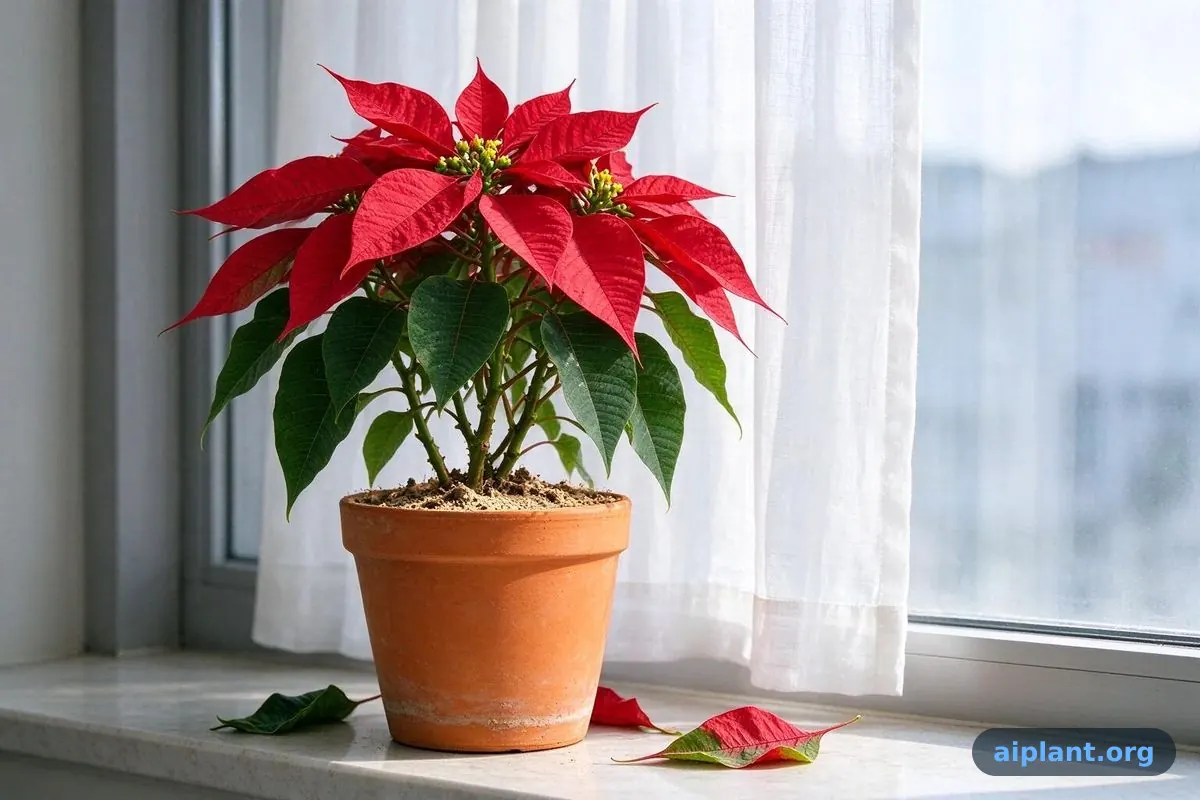
Poinsettia Leaf Drop and Crisping: The Short Answer
- Cold drafts and temperatures below 10°C (50°F) are the most common cause of sudden leaf drop; move the plant away from doors, windows and vents.
- Crisping at the edges usually means the roots are too dry or the air is too dry; check the soil 2 cm (1 in) down before watering.
- Soggy soil and a saucer of standing water suffocate roots and cause wilting even after watering; empty the saucer and let the top 2 cm (1 in) dry.
- Poinsettias are short-day plants: to get red bracts again, give 14 hours of uninterrupted darkness daily for 8–10 weeks from early October.
Poinsettia Symptom Check: What Leaf Drop and Crisping Mean
Use this table as an index, then read the detailed fix under each symptom heading below. The order runs from the most common cause of sudden collapse to the least common.
Sudden leaf drop after a cold night or a move
Poinsettias are tropical shrubs and suffer chilling injury below 10°C (50°F). Leaves fall within 24–72 hours of exposure to a cold windowpane, an open door, or a delivery van. The fix is to move the plant to a spot that stays between 15°C and 24°C (60–75°F) and keep it there; do not fertilize or repot while it is recovering, because the roots are already stressed.
Crispy brown edges on otherwise green leaves
Edge crisping means the plant is losing water faster than the roots can replace it, usually from dry soil or dry indoor air. Feel the mix 2 cm (1 in) below the surface: if it is dry, water thoroughly until it drains from the bottom, then discard the excess. If the mix is damp but the air is dry, group the plant with other houseplants or set it on a pebble tray to raise humidity around the leaves.
Wilting that does not improve after watering
When the plant stays limp after a good soak, the roots are damaged, not thirsty. Overwatering in a pot without drainage is the usual cause: the roots rot, stop taking up water, and the leaves wilt. Tip the pot, check for a sour smell and brown mushy roots, and repot into fresh, free-draining mix after trimming the damaged roots.
Bracts fading and falling while the green leaves stay
Bracts are modified leaves that colour in response to short days. They drop early when the plant is exposed to artificial light at night, when it is too warm (above 24°C/75°F), or when it is allowed to dry out severely during colouring. Move it to a room that is not lit in the evening and keep the soil evenly moist, not wet.
Brown spots with a powdery grey film
Powdery mildew and grey mould (Botrytis) both appear as a dusty film on leaves and bracts, often in cool, humid, still air. Remove affected leaves, increase air movement, and water at the soil line rather than overhead. If the film spreads, apply a sulphur-based fungicide according to the label.
Poinsettia Symptom, Likely Cause and First Fix
Why Poinsettia Leaves Drop Suddenly and How to Stop It
Sudden leaf drop is the number-one complaint about Poinsettia, and it is nearly always environmental rather than infectious. The plant reacts to a change in temperature, light or water by shedding leaves to reduce demand on its roots.
Cold drafts are the most common trigger
A Poinsettia placed near a door, a single-glazed window or an air-conditioning vent can lose half its leaves within three days. The chill damages cell membranes in the leaves, which then yellow, curl and fall. Keep the plant at least 1 m (3 ft) away from any opening window or exterior door, and check the temperature at the leaf level with a room thermometer; it should stay above 15°C (60°F) day and night.
A sudden move to a darker or hotter spot
Poinsettias adapt to the light level where they were grown. Moving a plant from a bright shop to a dark hallway, or from a cool room to a hot one, triggers leaf drop as the plant rebalances. Acclimatize it by placing it in bright, indirect light for the first week and keeping the temperature steady; do not rotate or move it again once it settles.
Water stress in either direction
Both drought and waterlogging cause leaf drop, and the leaves look similar at first. Drought-affected leaves feel papery and the mix is dry 2 cm (1 in) down; waterlogged leaves feel limp and the mix smells sour. Water when the surface is dry to the touch, and never let the pot stand in water for more than 30 minutes.
Ethylene from ripening fruit
Ripening apples, bananas and avocados release ethylene gas, which causes Poinsettia bracts and leaves to drop prematurely. Keep the plant out of the fruit bowl room, or at least 2 m (6 ft) away from ripening fruit, especially in the first two weeks after purchase.
Why Poinsettia Leaves Curl and Crisp at the Edges
Crisping at the leaf edges is a water-balance problem: the leaves lose moisture faster than the roots can supply it. The cause is usually dry soil, dry air, or damaged roots that cannot absorb water even when the mix is wet.
Dry soil is the first thing to rule out
Push a finger 2 cm (1 in) into the mix. If it feels dry and the pot is light, the plant has been left too long between waterings. Water slowly until it runs out of the drainage holes, then empty the saucer. In a warm room a Poinsettia in a 15 cm (6 in) pot may need water every 2–3 days; check daily rather than following a fixed schedule.
Low humidity and hot, dry air
Indoor humidity below 30% pulls water out of the leaf edges, especially near radiators and heat pumps. Raise humidity by standing the pot on a tray of wet pebbles (the pot sits above the water), or group it with other plants. Do not mist the bracts, because standing water on them encourages Botrytis.
Root damage from overwatering or fertilizer burn
If the mix is wet but the edges still crisp, the roots may be rotting or burned. Overwatering suffocates roots; too much fertilizer draws water out of them. Flush the pot with plain water until it drains freely, then let the top 2 cm (1 in) dry before watering again. Do not feed a stressed plant until it produces new, unblemished leaves.
Harsh direct sun through glass
A Poinsettia needs bright light, but midday sun magnified through a window can scorch leaf edges, especially on plants moved from a shaded shop display. Filter the light with a sheer curtain for the first month, then gradually expose the plant to more direct morning sun.
Why Poinsettia Wilts Even After Watering and What Saves It
A Poinsettia that stays limp after a thorough watering has a root problem, not a water shortage. The roots are either rotted, compacted, or sitting in a pot that cannot drain, so water cannot reach the leaves.
Check drainage before anything else
Lift the pot and look at the base. If there are no drainage holes, or the saucer is full of water, the roots are drowning. Empty the saucer, tilt the pot to let excess water run out, and never leave it standing in water for more than half an hour. A pot with at least one 1 cm (0.4 in) drainage hole is essential.
Root rot from repeated overwatering
If the mix smells sour and the roots are brown and mushy when you slide the plant out, root rot has set in. Trim the brown roots with clean scissors, dust the cut ends with sulphur, and repot in fresh mix that drains freely. Water sparingly for two weeks, then resume normal watering when new growth appears.
Compacted, exhausted potting mix
After a year in the same pot, the mix breaks down and loses its air spaces, so water runs down the sides without wetting the root ball. If water pours straight through, submerge the pot in a bucket of water up to the rim for 10 minutes, then let it drain. Repot in spring into a pot only 2–3 cm (1 in) wider than the root ball.
Fertilizer salt buildup
White crust on the soil surface and pot rim signals salt accumulation from repeated feeding. Flush the pot with three times its volume of plain water, let it drain completely, and skip fertilizer for the next month. Feed only during active growth, from spring to early autumn.
Poinsettia Pests and Diseases That Cause Leaf Loss
Poinsettias are troubled by a short list of pests and diseases, and most are visible on close inspection. Catch them early, because a stressed plant loses leaves quickly.
Whitefly: tiny white insects and sticky honeydew
Whitefly adults rise in a white cloud when the plant is disturbed, and their nymphs cluster under leaves, producing sticky honeydew and sooty mould. Isolate the plant, then spray all leaf surfaces with insecticidal soap every 5–7 days for three weeks. Yellow sticky traps placed near the plant catch adults and break the cycle.
Spider mites: fine webbing and speckled leaves
Spider mites thrive in dry indoor air and show as fine webbing between leaves and stems, with pale speckling on the upper leaf surface. Raise humidity around the plant and wash the foliage with a strong jet of water, then apply a miticide or insecticidal soap, repeating every 5 days until no new webbing appears.
Fungus gnats: small black flies around the soil
Fungus gnats breed in constantly wet potting mix. Let the top 2 cm (1 in) dry between waterings, and place a yellow sticky trap at soil level to catch adults. For a heavy infestation, drench the soil with a biological control such as Bacillus thuringiensis israelensis according to the label.
Powdery mildew and Botrytis: grey or white film on leaves
Powdery mildew looks like a dusting of flour on leaves, while Botrytis causes brown, soft spots with a grey fuzzy coating. Both favour cool, humid, still air. Remove affected leaves, space plants apart, and water at the base. If the infection spreads, use a sulphur-based fungicide and improve airflow with a small fan on low setting.
Poinsettia Pest and Disease Identification
How to Save a Poinsettia That Is Dying After the Holidays
A Poinsettia that looks half-dead in January is usually still worth saving, because the roots and lower stems often survive even when most leaves have fallen. The rescue takes about four weeks and follows a fixed order.
- Inspect the stems and roots: Slide the plant out of its pot and look for firm, green stems and white or pale roots. If the stems are brown and mushy all the way down, the plant is beyond saving and should be replaced; if only the leaves are gone, continue.
- Prune dead growth: Cut back any shrivelled or black stems to healthy green tissue with clean scissors, and remove all fallen leaves from the soil surface. This reduces the source of rot and lets the plant direct energy into new shoots.
- Repot into fresh, free-draining mix: Use a clean container with drainage holes that gives the roots a little room to spread. Water lightly after repotting and keep the plant at 18–22°C (65–72°F) in bright, indirect light.
- Water sparingly until new growth appears: Check the mix every 2–3 days and water only when the top 2 cm (1 in) is dry. New leaves usually appear within 3–4 weeks if the roots survived; once they do, resume normal care and begin feeding every two weeks with a balanced houseplant fertilizer.
When to cut losses and start over
If the main stem is brown and hollow from the base upward, or the roots are entirely black and slimy with no white tips, the plant will not recover. Replace it rather than spending weeks on a plant that cannot push new growth.
Why a stressed Poinsettia stops growing new leaves
A plant that survives but refuses to grow is usually short of light or root space. Move it to the brightest spot in the room, out of direct midday sun, and check whether roots are circling the pot; if they are, repot in spring. Do not feed a plant that is not growing, because unused fertilizer salts accumulate and burn the roots.
Poinsettia Care That Prevents Leaf Drop and Crisping
The care that keeps a Poinsettia healthy is simple, but it has to be consistent. Most problems come from abrupt changes, so keep light, temperature and moisture steady.
Light: bright and indirect, with short days for colour
Give the plant at least 6 hours of bright, indirect light a day, such as an east or west window with a sheer curtain. Direct summer sun can scorch leaves, while too little light produces weak, leggy stems and no bract colour. From early October, cover the plant with a light-proof box from 5 pm to 8 am daily for 8–10 weeks to trigger bract colouring.
Water: check the top 2 cm (1 in) before watering
Water when the surface feels dry, using tepid water, and let it drain completely. Never leave the pot in a saucer of water, and reduce watering in winter when growth slows. A plant in a 15 cm (6 in) pot may need water every 2–3 days in a warm room and every 4–5 days in a cooler one.
Temperature and humidity: steady warmth, no cold snaps
Keep the plant between 15°C and 24°C (60–75°F) and protect it from drafts, radiators and cold windows. Humidity around 50% is ideal; raise it with a pebble tray if the air is dry. Avoid temperatures below 10°C (50°F), which cause chilling injury and leaf drop.
Soil and pot: free-draining mix and a modest pot
Use a potting mix that drains freely, such as two parts peat-free potting soil to one part perlite. The pot should be only 2–3 cm (1 in) wider than the root ball, because an oversized pot holds excess water and encourages root rot. Repot in spring, before new growth starts.
Feeding: only during active growth
Feed every two weeks from spring to early autumn with a balanced liquid fertilizer at half strength. Stop feeding when the plant is in colour or resting, because excess nutrients cause salt buildup and burned leaf edges. Flush the pot with plain water every few months to remove accumulated salts.
Pruning and pinching for bushy growth
After the bracts fade in late winter, cut the stems back to 10–15 cm (4–6 in) above the soil to encourage side shoots. Pinch out the tips of new shoots once or twice in spring and early summer to keep the plant compact. Stop pinching by early September so the plant can set bracts for the winter display.
Poinsettia Care by Season
Poinsettia Quick Care Facts
- Light
- Bright, indirect light; 6+ hours daily
- Water
- When top 2 cm (1 in) of soil is dry
- Temperature
- 15–24°C (60–75°F); never below 10°C (50°F)
- Humidity
- Around 50%; raise with a pebble tray
- Soil
- Free-draining mix, two parts soil to one part perlite
- Fertilizer
- Every 2 weeks in spring and summer, half strength
Getting Poinsettia Bracts Back Next Year
Poinsettias can colour again, but only if you control day length precisely. The red bracts form when the plant receives at least 14 hours of uninterrupted darkness each night for 8–10 weeks.
Start the dark treatment in early October
Move the plant to a room that is not used in the evening, or cover it with a cardboard box from 5 pm to 8 am every day. Even a few minutes of artificial light can break the cycle, so the darkness must be complete. Continue for 8–10 weeks, until the bracts begin to colour, then stop the treatment and keep the plant in bright indirect light.
Keep temperatures cool during colouring
Temperatures above 24°C (75°F) during the dark period can delay or prevent bract colour. Keep the room at 18–21°C (65–70°F) and avoid placing the plant near a heater or a warm appliance.
Feed and water consistently
During the 8–10 weeks, keep the soil evenly moist and feed every two weeks with a balanced fertilizer until the bracts show colour. Inconsistent watering during this period causes bracts to drop before they fully develop, which is why a steady routine matters more than any special product.
Poinsettia troubleshooting: what the guide does not cover
How do I overwinter a poinsettia after the holidays so it survives to spring?
Yes, poinsettias can be overwintered if kept warm and bright. After the holidays, place the plant in bright indirect light at 15–24°C, away from drafts and cold windows. Water only when the top 2 cm of mix is dry, and stop feeding while it rests. Cut stems back to 10–15 cm above the soil in late winter to encourage fresh side shoots; do not fertilize or repot a stressed plant until new growth appears.
Can I move a poinsettia outdoors in summer, and how do I acclimatize it?
Yes, once nights stay reliably above 10°C, move it outdoors gradually. Acclimatize by placing it in bright shade for the first week, then expose it to morning sun only, filtering strong midday light with a sheer cloth. Keep it out of wind and check the mix often, since outdoor warmth dries small pots faster. Bring it back inside before autumn nights cool.
How do I take cuttings from a poinsettia to propagate a new plant?
Take cuttings in late spring or early summer from healthy green side shoots, each with several nodes. Cut just below a node, remove the lower leaves, and dip the cut end in water to stop the milky sap bleeding. Insert into free-draining mix, keep warm and humid in bright indirect light, and water when the surface dries. Roots form in a few weeks; pinch new growth to shape the plant.
Related articles
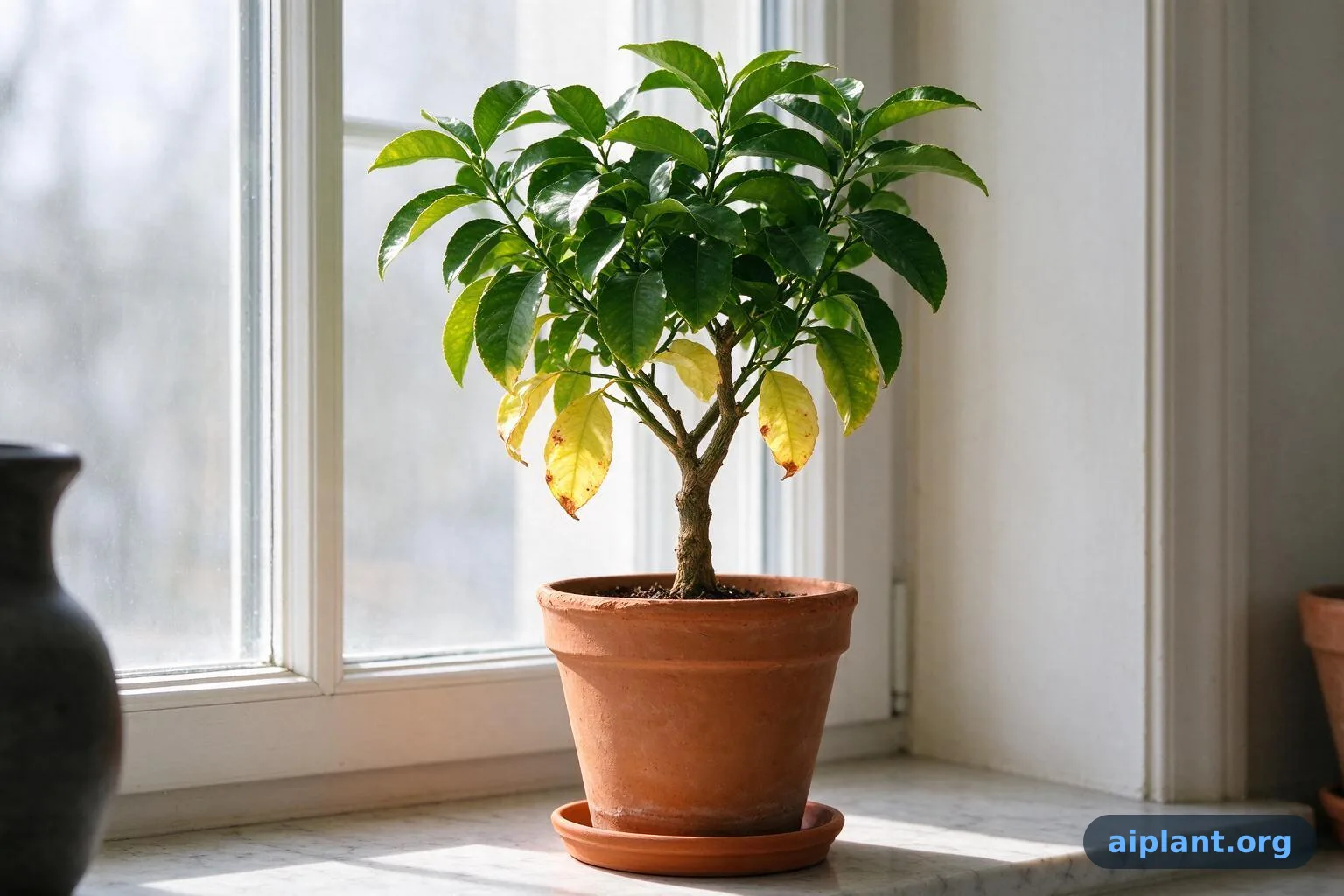
Why Are Lemon Tree Leaves Turning Yellow and How Do You Save It?
Match the symptom to its cause, fix it with numbers, then keep the tree producing.
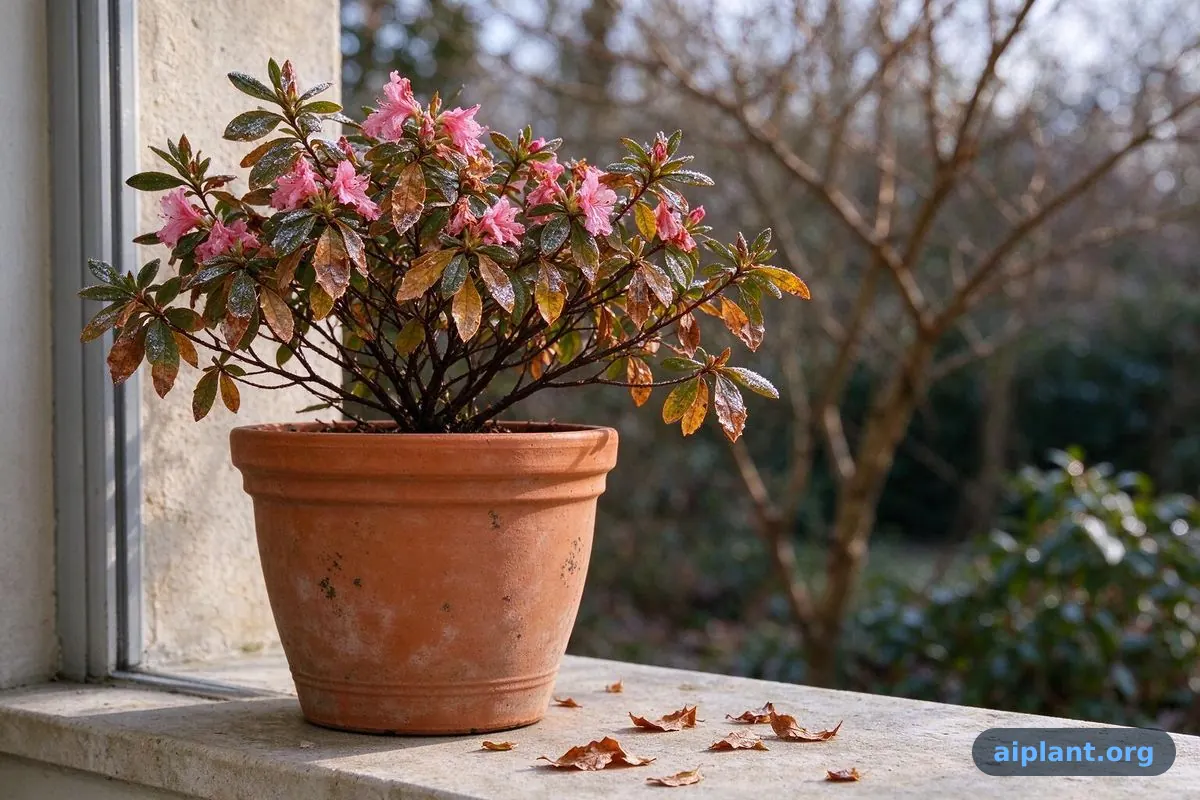
Azalea Leaves Damaged After a Cold Night: Frost Burn or Dieback?
Tell frost burn from real dieback, then help the shrub regrow and bloom again.
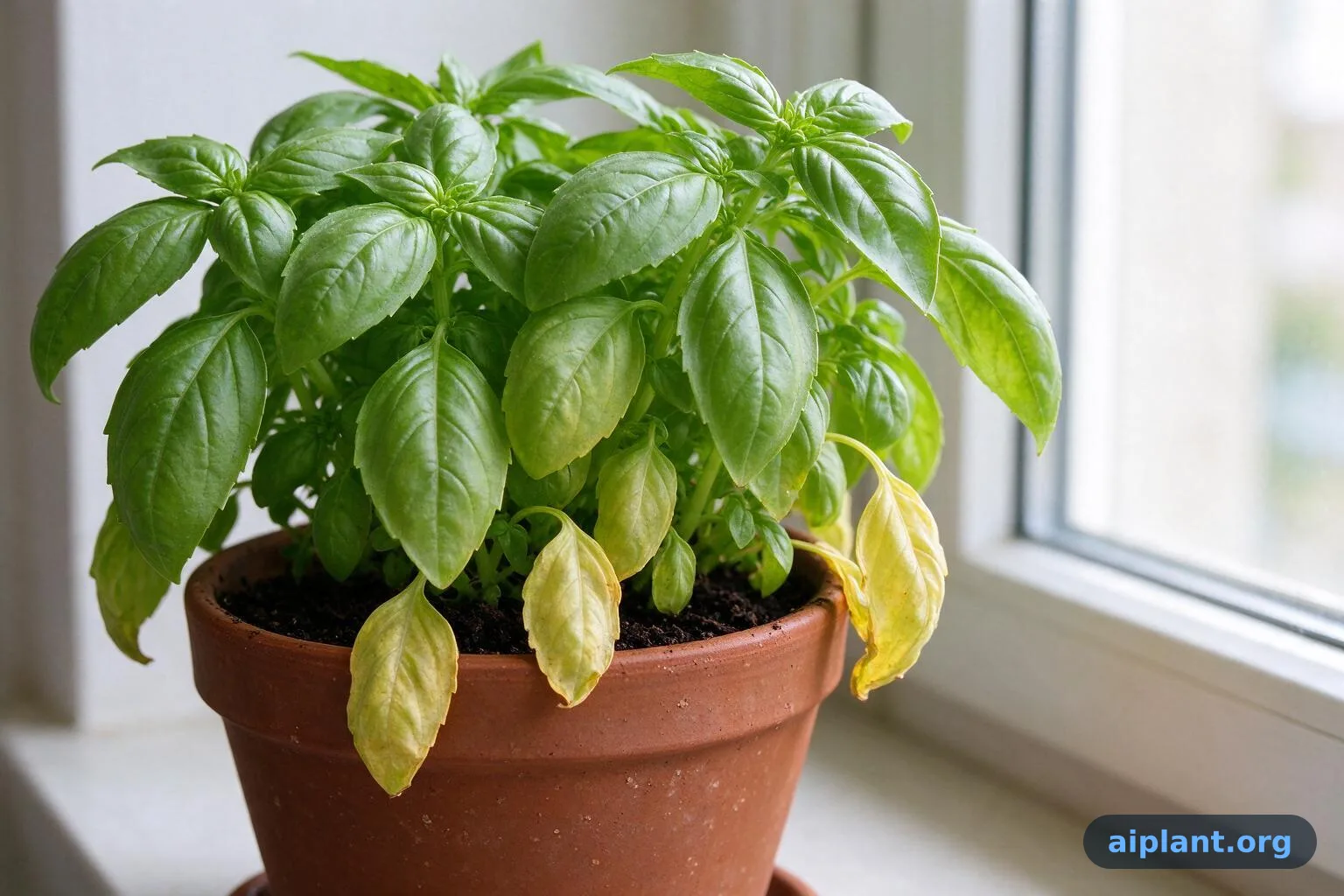
Why Are Basil Leaves Turning Yellow and Drooping?
Find the cause in minutes and get your plant back to steady harvest.
Why Is My Dill Plant Turning Yellow and Drooping?
Match the symptom, find the cause, and save the plant before it bolts.