
Azalea Leaves Damaged After a Cold Night: Frost Burn or Dieback?
Tell frost burn from real dieback, then help the shrub regrow and bloom again.
Azalea (Rhododendron simsii) leaves that look scorched, curled or dropped after one cold night are usually showing frost burn rather than a dead shrub, and the direction of the answer is to check the stems and buds before cutting anything. Frost damages the thinnest, most exposed tissue first, so the leaves tell you how cold it got while the wood tells you whether the plant is still worth saving. This article shows how to read those signs within the first week, how to protect an azalea through the rest of winter, and what keeps it healthy enough to flower again next season.
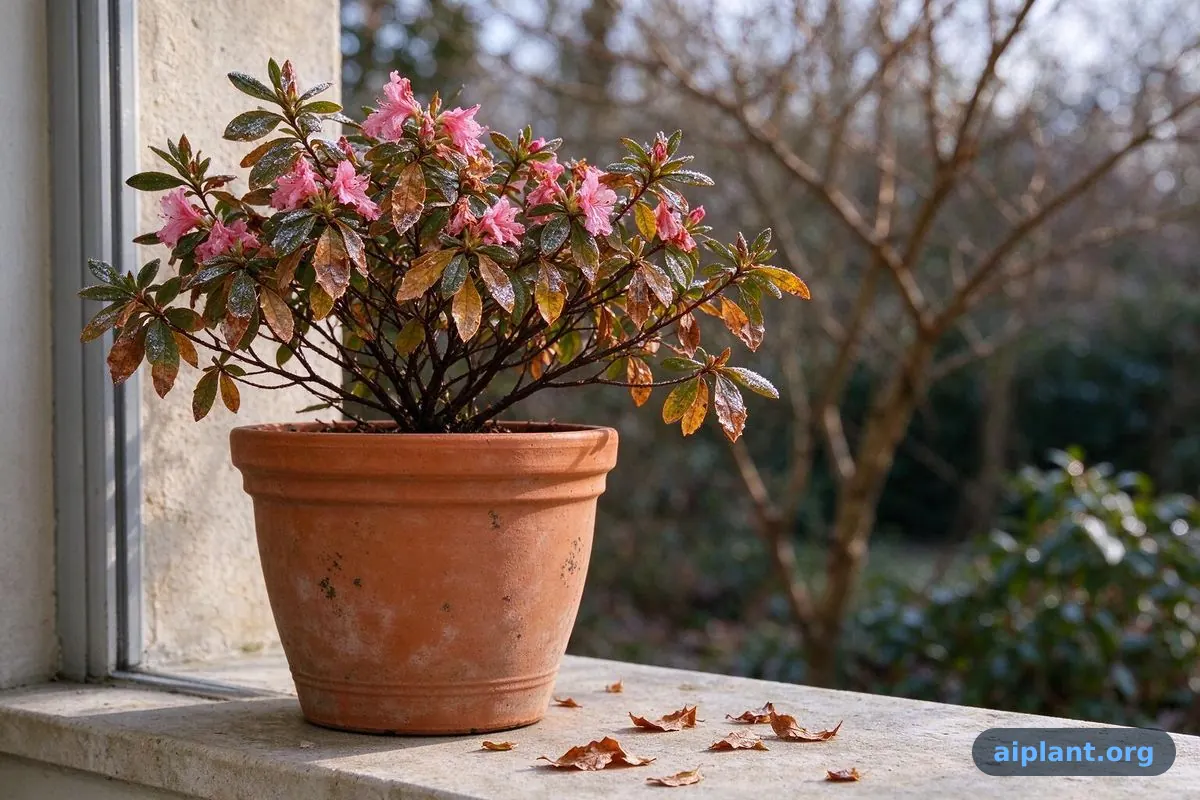
Azalea Cold Damage in Brief
- Frost-burnt azalea leaves turn dull green, brown or crispy within 24-72 hours, but the shrub usually survives if the stems stay firm and green under the bark.
- Scrape a stem: green, damp cambium means living wood, while brown or mushy tissue means that branch has died back and should be cut.
- Move potted azaleas to a sheltered, bright spot at 5-10 °C (41-50 °F) and keep the soil barely moist; do not bring them into a hot, dark room.
- Wait until late spring to prune cold-damaged wood, because buds that look dead in February often push new growth in April.
Azalea Cold-Damage Check: Which Symptom Means What
The fastest way to judge an azalea after a cold night is to match what the leaves and stems are doing to the cause behind it, then act on the most likely one first. Frost injury looks dramatic within three days, while dieback from frozen roots or waterlogged soil develops over two to three weeks. Use the table as an index, then read the symptom sections below for the full fix.
Why Azalea Leaves Are Damaged After One Cold Night
Azalea leaves are thin, evergreen and hold little water in winter, so a single drop to -2 °C (28 °F) can freeze the outer cell layers while the wood stays alive. Damage appears first on the leaves most exposed to sky and wind: the top and outer canopy, and the side facing the prevailing wind. Expect dull, water-soaked patches that dry to brown or grey within 24-72 hours, often with a crisp edge where ice crystals ruptured the tissue. Newly bought florist azaleas forced into soft growth in a greenhouse are the most vulnerable, because their leaves never hardened off before the cold arrived.
Brown, Crispy Leaves on the Outer Canopy
These are classic frost-burnt leaves: brown from the tip or margin inward, dry and brittle, but still attached to firm green stems. The cause is ice forming in the leaf tissue on a clear, still night when the temperature at leaf level drops 2-3 °C (3-5 °F) below the forecast air temperature. Check the damage by bending a damaged stem between your fingers; if it flexes and the bark is green when scratched with a fingernail, the branch is alive. Do not strip the brown leaves yet, because they shelter the buds beneath them from the next frost.
- Wait three days before judging: give the plant 72 hours after the cold night so frost-burnt tissue finishes browning and the true boundary between dead and living tissue becomes visible to the eye.
- Scratch-test the stems: use a fingernail to nick the bark 10 cm (4 in) below each damage patch; green, damp cambium means the branch is alive, so leave it and only remove tissue that is brown all the way through.
- Shelter the shrub from the next frost: drape horticultural fleece over the canopy at dusk and remove it by mid-morning, because leaving it on in sun traps warmth and can cook the recovery growth underneath.
Leaves Dropping in Winter From the Inside Out
An azalea that sheds its oldest inner leaves in December and January is usually responding to low light and dry indoor air, not to frost. Normal leaf drop is gradual, yellowing first, and limited to the oldest leaves near the base of each shoot. Sudden drop of green leaves across the whole plant points to a frozen root ball, waterlogged compost or a move from a cold windowsill into a hot room. Feel the soil before watering: if it is cold and sodden, stop watering for two weeks and move the pot somewhere at 5-10 °C (41-50 °F) with good airflow.
Mushy Stems and Brown Wood at the Base
Soft, dark stems that collapse at soil level after a freeze are the sign of true winter dieback, where the root ball froze solid and the bark split. This is most common in small pots, in azaleas standing in saucers of water, and in plants that were watered heavily in late autumn. Cut back to firm, pale-green wood with clean secateurs, sterilised with alcohol between cuts, and stop watering until new shoots appear. If the whole stem ring at soil level is brown and mushy, the plant is not worth saving and should be replaced in spring.
Azalea Buds That Turn Brown and Fail to Open
Flower buds are the least cold-hardy part of Rhododendron simsii and can be killed at -4 °C (25 °F) while the leaves and stems survive. A bud that feels soft and pulls away easily in late winter was frozen; a bud that stays firm and plump is still viable. The fix is patience plus protection: keep the shrub sheltered from further hard frost with a fleece wrap, and feed nothing until new growth starts, because fertiliser pushes soft tissue that the next cold night will kill.
Sticky Leaves With Fine Webbing Underneath
Cold-stressed azaleas indoors are prime targets for two-spotted spider mite, which thrives in the dry, warm air of a heated room. Look for pale stippling on the upper leaf surface, fine silk along the midrib and leaf axils, and tiny moving specks when you tap a leaf over white paper. Raise humidity around the plant, wash the foliage with a soft damp cloth every week, and repeat an insecticidal soap spray at five-day intervals until no new webbing appears. Isolate the plant, because mites spread quickly to neighbouring houseplants.
Yellow Leaves With Green Veins on New Growth
Winter chlorosis in azalea shows as yellow new leaves with veins that stay green, and it comes from iron or magnesium being locked up by compost above pH 6.0. This is not frost damage, but cold, wet roots make it worse because they take up nutrients poorly. Test the soil pH with a kit, then repot into ericaceous compost at pH 4.5-5.5 or water with a sequestered iron feed according to the label until the new leaves colour up. Do not lime the soil to correct it.
Azalea Cold-Night Symptom Index
How to Protect Azalea Shrubs From Frost and Freezing Nights
Protection works best when it starts before dusk on the night the cold is forecast, because an azalea loses most of its heat through the leaves after sunset. The aim is to keep the canopy 2-3 °C (3-5 °F) warmer than the open air and to stop the root ball freezing solid, which is what actually kills potted plants.
Fleece, Cloches and Windbreaks
Drape two layers of horticultural fleece over the shrub and peg it to the ground on the windward side, so the trapped air insulates the canopy without touching the leaves. Remove the cover by mid-morning, because sunshine under plastic or fleece can push the temperature inside above 15 °C (59 °F) and wake buds too early. For a permanent windbreak, plant or place a solid barrier 60-90 cm (2-3 ft) upwind; this raises night temperatures around the shrub by reducing the wind chill that strips heat from the leaves.
Water Before a Cold Night, Not After
Water the azalea thoroughly the morning before a forecast freeze, because moist soil holds and releases heat better than dry soil and a hydrated plant tolerates ice in its tissue. Stop watering once the soil is frozen, since water pooling around the crown then refreezes into a block that suffocates the roots. In pots, check that the drainage holes are clear before watering, so excess drains away rather than sitting against the root ball overnight.
Move Pots Against a House Wall
A potted azalea survives -5 °C (23 °F) far better when it stands against a south- or west-facing wall, because the masonry radiates stored daytime heat through the night. Group pots together and wrap the outside of each container with bubble wrap or hessian, leaving the drainage holes open. Raise the pot on two bricks so it never stands in frozen water, which is the most common cause of winter root death in containers.
Mulch and a Root Blanket
Spread 8-10 cm (3-4 in) of leaf mould, pine bark or compost over the root zone of garden plants in late autumn, keeping it 5 cm (2 in) clear of the stem. The mulch insulates the shallow azalea roots, which sit in the top 20 cm (8 in) of soil and are easily frozen in a bare border. Do not firm or dig around the roots in winter, because frozen roots snap rather than bend.
What Not to Do in a Cold Snap
Do not wrap the shrub in plastic sheeting, because it traps condensation that freezes on the leaves and causes more damage than open air. Do not feed a cold-stressed azalea, because nitrogen pushes soft new growth that the next frost kills outright. Do not prune frost-burnt leaves in winter, because the dead tissue insulates the buds and the true dieback line only becomes clear in late spring.
Azalea Frost Protection by Temperature
Can a Cold-Damaged Azalea Recover and Regrow?
Yes, a cold-damaged azalea can recover and regrow, provided the stems and crown are still alive and you give it the right conditions through spring. Recovery is slow: expect new shoots from surviving buds within four to eight weeks of warm weather, not within days.
The Scratch Test Decides Whether to Keep It
Nick the bark with a fingernail at several points from the tip down to the base. Green, damp tissue means living wood; brown, dry or mushy tissue means that section has died. If you find green wood within 15 cm (6 in) of the soil on at least two main stems, the plant is worth saving and will usually rebuild a full canopy over one to two seasons. If the entire crown is brown and the base is mushy, replace the plant rather than nurse it.
Prune Only After the Last Frost
Wait until late spring, when night temperatures stay above 5 °C (41 °F) and new buds are swelling, then cut each dead branch back to 1 cm (0.4 in) above a live, outward-facing bud. Pruning earlier exposes live tissue to further frost and removes buds that might still have survived. Sterilise the blades with alcohol between cuts so the wounds are not infected by dieback fungi.
Support Regrowth Without Pushing It
Once new shoots are 3-5 cm (1-2 in) long, water when the top 3 cm (1 in) of soil feels dry and apply a half-strength ericaceous feed every four weeks until midsummer. Keep the plant out of harsh midday sun while it rebuilds, because the new leaves are soft and scorch easily. Do not expect flowers in the first season after severe damage; most azaleas need a full growing year to set buds again.
When to Cut Losses and Replace
Replace the azalea if the crown is brown and mushy at soil level, if the roots are dark and smell sour, or if no new shoots appear by mid-June. A plant that has lost every leaf but has green wood is still worth keeping, while one with a rotten base rarely recovers and risks spreading root rot to neighbouring plants.
Azalea Recovery Care Facts
- Light
- Bright indirect light; shelter from harsh midday sun
- Water
- When top 3 cm (1 in) of soil feels dry
- Temperature
- 5-18 °C (41-64 °F); protect below -2 °C (28 °F)
- Humidity
- Moderate to high; mist or group pots indoors
- Soil
- Ericaceous compost at pH 4.5-5.5, free-draining
- Fertilizer
- Half-strength ericaceous feed every 4 weeks in spring
Why an Azalea Struggles Through a Dark Winter Indoors
An azalea that sulks indoors in winter is almost always short of light and too warm, not short of water or food. Rhododendron simsii is an understorey shrub that wants cool, bright conditions, and a heated living room at 20-22 °C (68-72 °F) pushes it into soft growth that cannot cope with low winter light.
How Much Light an Azalea Needs in Winter
Give an indoor azalea at least four to six hours of bright indirect light a day, ideally on an east- or west-facing windowsill or within 1 m (3 ft) of a south-facing window behind a sheer curtain. Direct midday sun through glass can heat the leaves above 30 °C (86 °F) and scorch them, so filter it. If the plant is more than 2 m (6 ft) from a window, supplement with a cool-white LED grow light for 10-12 hours a day.
Why Warm Rooms Cause Leaf Drop
Dry, warm air pulls water out of the leaves faster than cool roots can replace it, so the oldest leaves yellow and drop and the buds may abort. Move the pot to an unheated porch, a cool conservatory or a bright hallway at 5-10 °C (41-50 °F), where the plant rests rather than grows. Keep it away from radiators, fires and hot-air vents, which create the same drying effect as a desert wind.
Watering an Azalea Indoors Without Drowning It
Check the compost with a finger before each watering and irrigate only when the top 3 cm (1 in) feels dry, using rainwater at room temperature and letting the excess drain away completely. Never leave the pot standing in a saucer of water, because azalea roots are fine and suffocate within a few days. In a cool room, that may mean watering only every 7-10 days; test the soil rather than following a fixed schedule.
Raising Humidity Around an Indoor Azalea
Stand the pot on a tray of damp pebbles so evaporating water raises humidity without the roots sitting in it, and group azaleas with other plants to create a damper microclimate. Aim for 50-60% relative humidity; a cheap hygrometer takes the guesswork out. Misting helps briefly but evaporates fast in a heated room, so the pebble tray and grouping do more of the work.
Overwintering an Azalea in a Pot Without Losing It
A potted azalea overwinters best in a cool, bright, frost-free place at 2-10 °C (36-50 °F), where it rests without freezing and without being pushed into growth. The root ball in a container freezes far faster than garden soil, so the pot itself needs insulation as much as the leaves.
Choose the Right Spot Before the First Frost
Move the pot into position in late autumn, before the first hard frost, so the plant adjusts gradually rather than being shocked by a sudden move. A cold greenhouse, an unheated conservatory, a glazed porch or a garage with a window all work, provided the temperature stays above -2 °C (28 °F). Check the spot with a max-min thermometer for a week before committing the plant to it.
Insulate the Root Ball, Not Just the Leaves
Wrap the outside of the container in two layers of bubble wrap or hessian and stand the pot on bricks so it is off the frozen ground. The insulation keeps the root ball from freezing solid, which is what kills container azaleas in a cold snap. Leave the drainage holes clear, because trapped water freezing around the roots does more harm than cold air.
Water Sparingly Through Winter
Water only when the compost feels dry 3 cm (1 in) down, which may be every 10-14 days in a cool, bright spot. Use rainwater at room temperature and let it drain fully, because cold tap water straight onto a chilled root ball shocks the roots. Never feed between November and February, as the plant cannot use nutrients while it is resting.
Bring It Back Into Growth Gradually
Shift the pot to a brighter, slightly warmer position in early spring, once the risk of hard frost has passed and new buds begin to swell, then resume ericaceous feeding at half strength. Sudden moves from a cold porch to a warm living room cause leaf drop, so take two weeks to shift it. Repot into fresh ericaceous compost only after flowering, when the roots are active again.
Potted Azalea Winter Care by Month
Why an Azalea Flowers Poorly After a Cold Winter
An azalea that survived winter but produced few or no flowers usually lost its flower buds to cold rather than its leaves. Rhododendron simsii sets buds in late summer and carries them through winter, and those buds are the most frost-sensitive part of the plant.
Buds Killed Above the Snow Line
Buds on the exposed top and outer canopy freeze at around -4 °C (25 °F), while buds sheltered lower down survive. Check in late winter: a viable bud is firm and green under the scales, while a dead one is soft, brown and pulls away easily. There is no fix for buds already killed; the plant will flower from surviving lower buds and set a full crop the following year.
Pruning That Removes the Flower Wood
Azaleas flower on growth made the previous summer, so hard pruning in late summer or autumn cuts away the shoots that would have carried buds. Prune only in the four to six weeks after flowering, so the plant has the rest of the season to ripen new wood. Light tipping of long shoots in June is safe; cutting back into old wood after July is not.
Feeding That Favours Leaves Over Buds
High-nitrogen feed in late summer pushes leafy growth at the expense of flower buds, and soft growth is also the first thing a frost kills. Switch to a low-nitrogen, high-phosphorus ericaceous feed from midsummer until early autumn, following the label rate, then stop feeding entirely by October. A soil test that shows pH above 6.0 also reduces flowering, so correct it with ericaceous compost rather than lime.
Winter Dryness and Bud Drop
An azalea that dries out in late winter, especially in a pot or under the rain shadow of a wall, drops its buds before they open. Do not let the root ball dry completely, because even a short drought in February can abort the whole flower crop.
Azalea Flowering Problems and Their Causes
Azalea Care That Prevents Winter Damage Next Year
The azalea that comes through winter undamaged is the one that went into winter hardened, hydrated and in the right soil. Every care choice from spring onward affects how much cold the plant can take the following January.
Light and Position
Give garden azaleas dappled shade or morning sun with shelter from harsh afternoon light, and keep them out of the windiest corner of the garden. A plant that grew in good light through summer ripens its wood before autumn and tolerates frost far better.
Watering and Drainage
Water azaleas when the top 3 cm (1 in) of soil feels dry, using rainwater where possible, and never let the pot stand in a saucer of water. In the garden, plant on a slight mound if the soil is heavy, because azalea roots rot in waterlogged ground long before they freeze. Good drainage is the single most effective protection against winter root death.
Soil and pH
Grow azaleas in ericaceous compost or soil at pH 4.5-5.5, because at higher pH the roots cannot take up iron and the plant goes into winter yellow and weak. Test the pH with a kit every two years and top-dress with pine bark or leaf mould rather than lime. A healthy, dark-green azalea in October is a much better bet to survive a cold snap.
Feeding and Pruning Timing
Feed with an ericaceous fertiliser from spring until midsummer, then stop, so the plant ripens rather than pushes soft growth into autumn. Deadhead spent blooms by pinching them off, but do not cut into the old wood unless you are removing cold-killed branches in late spring.
Pests and Diseases to Watch
Spider mite, vine weevil and powdery mildew all weaken an azalea before winter, so deal with them in summer. Vine weevil grubs eat the roots in autumn and leave the plant loose in its pot and unable to survive frost; check the compost for white C-shaped grubs when repotting and use a nematode drench according to the label. Powdery mildew, a white dusting on the leaves, is worse in dry, still air, so improve airflow and avoid overhead watering in the evening.
Repotting and Root Health
Repot potted azaleas every two to three years after flowering, into a container one size larger with fresh ericaceous compost and crocks at the base for drainage. Trim any circling roots and firm the compost gently, leaving a 2 cm (0.8 in) gap below the rim for watering. A pot-bound azalea dries out fast and freezes harder in winter, so timely repotting is part of cold protection.
Cold-damaged azalea recovery and winter care
Can I move a cold-damaged azalea outdoors in spring, and when is it safe?
Yes, move it outdoors once night temperatures stay above 5 °C (41 °F) and buds swell. Harden it gradually over two weeks, keeping it out of harsh midday sun, because soft indoor growth scorches easily.
Related articles
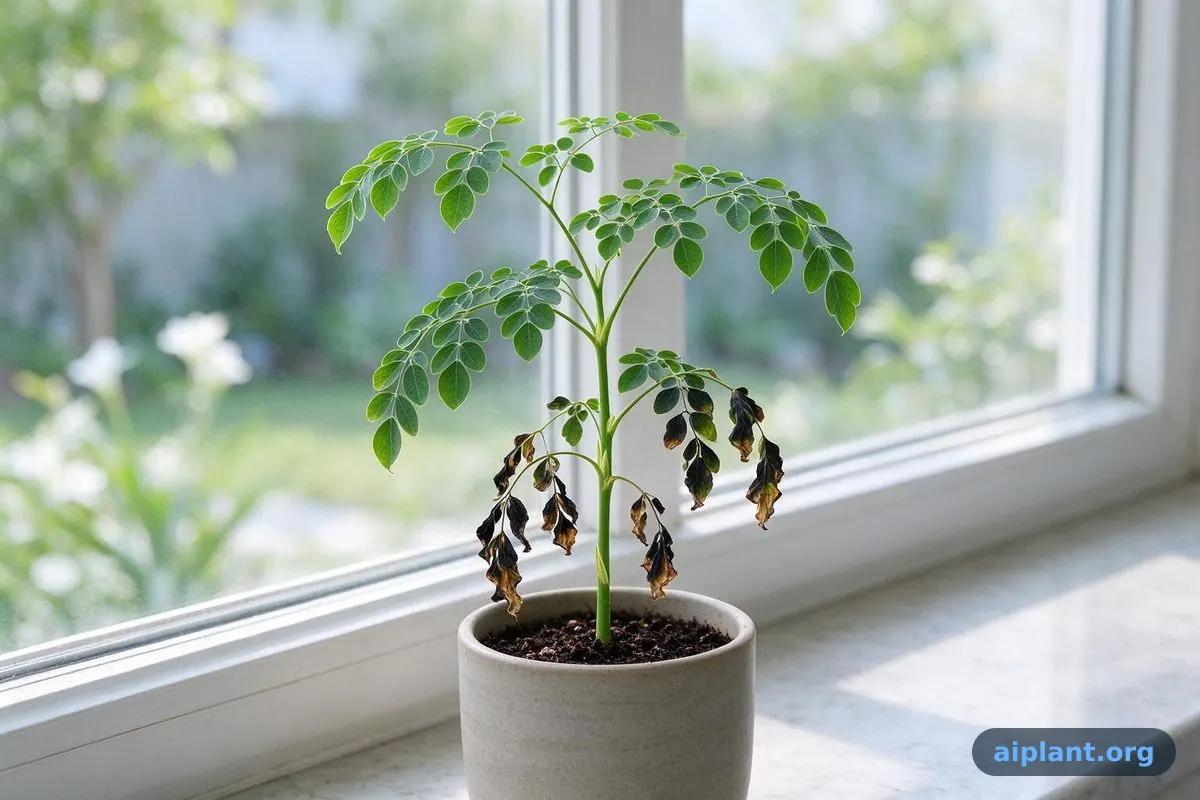
Moringa Leaves Damaged After a Cold Night: Can It Still Be Saved?
Test the trunk, treat the damage, and keep a backup plant growing.
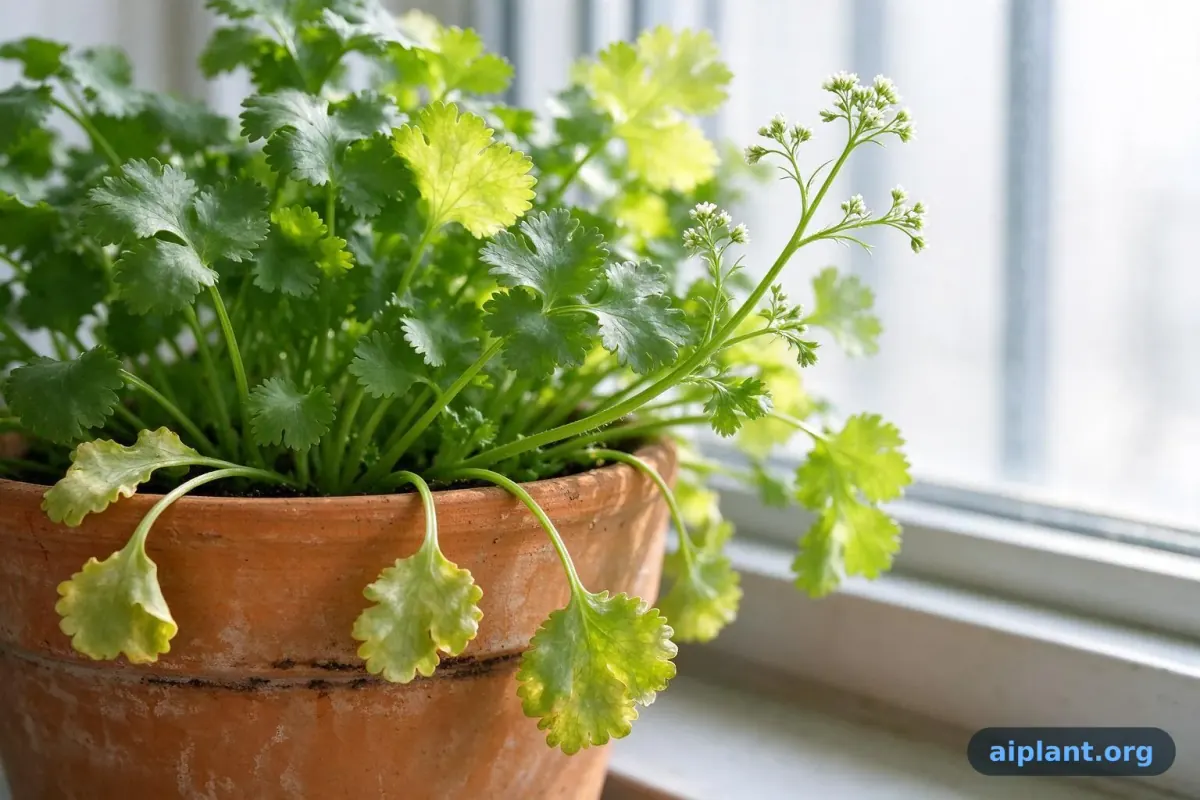
Why Is My Cilantro Bolting and Dying So Fast?
Find the exact cause in minutes and keep the leaves coming.
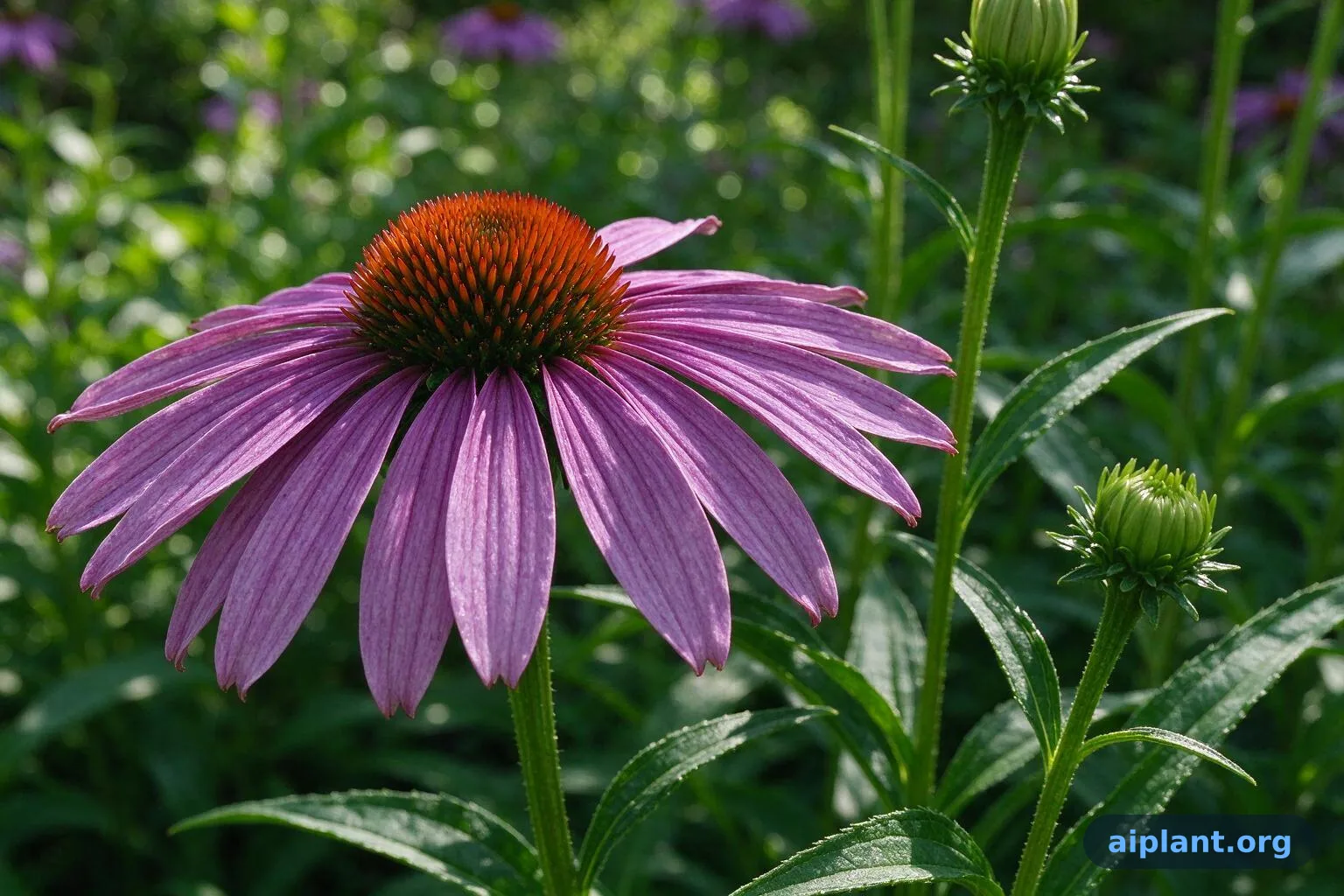
Why Is My Echinacea Not Flowering or Dropping Buds?
Find the cause in minutes and get your echinacea blooming again.
Kentia Palm Leaves Curling and Crisping at Tips: What to Fix First
Find the cause in minutes and keep the next frond healthy.