
Why Is My Rhododendron Not Flowering and Dropping Buds?
Find the cause, fix it, and get blooms back next spring.
A Rhododendron (Rhododendron catawbiense) that refuses to flower is almost always reacting to something specific: buds killed by a late frost, roots that stayed dry or drowned, too much shade, or wood that has not been pruned in years. The direction of the answer is diagnosis first. Match what you see on the plant to a cause, correct it with the timing and figures below, and the shrub can set buds again for the following spring rather than simply producing leaves.
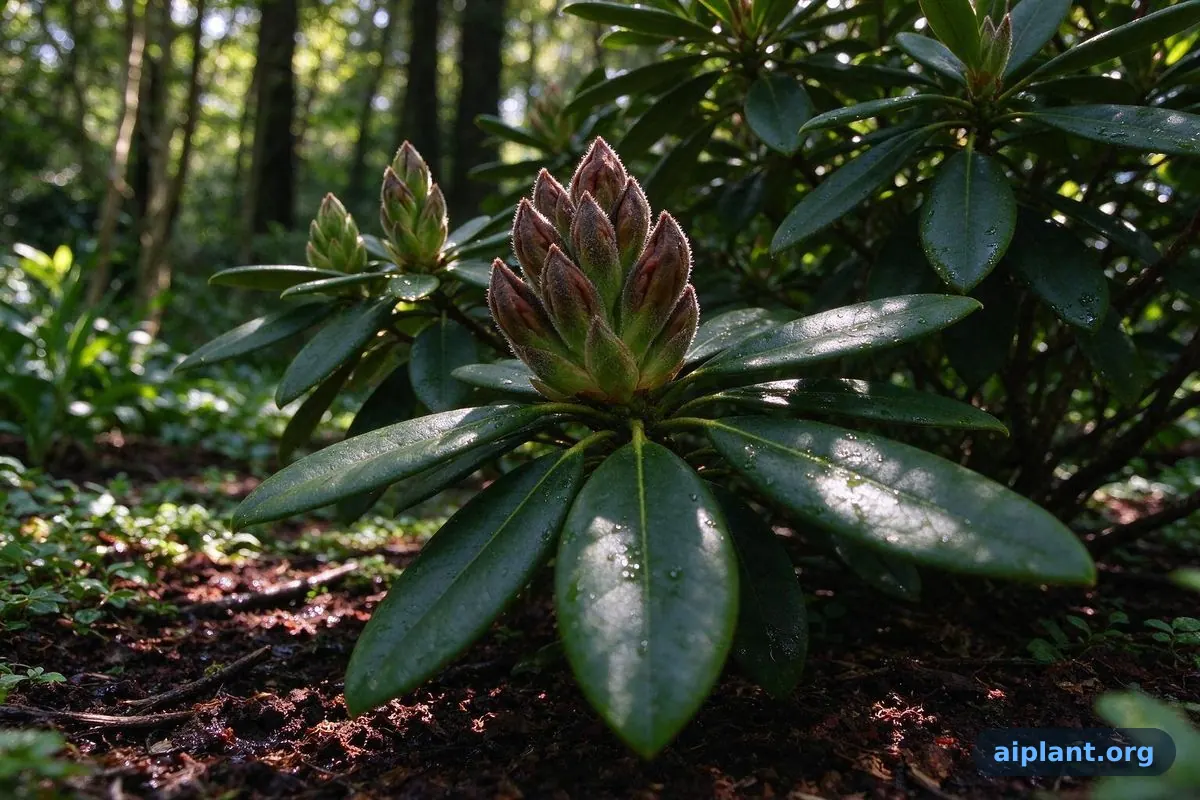
Rhododendron Bloom Failure at a Glance
- Most Rhododendron bloom failures come from buds frozen in late frost, dry summer roots, deep shade, or pruning done after midsummer that cut off next year's flower buds.
- Buds that turn brown and drop before opening usually suffered frost or dry soil in the weeks before bloom; buds that never form at all point to shade, age or feeding.
- Prune immediately after flowering in late spring, never in autumn, because Rhododendron catawbiense sets the next season's buds on summer growth.
Which Rhododendron Symptom Points to Which Cause
The fastest way to solve a Rhododendron that will not bloom is to read the whole plant, not just the missing flowers. The table below indexes the common patterns against their likely cause and the first action to take, and the sub-headings that follow explain each one in full.
Buds Turn Brown and Drop Before Opening
Bud drop on Rhododendron catawbiense is most often frost damage: flower buds are the least cold-hardy part of the shrub, and a late spring night at -4 °C (25 °F) after buds have swelled can kill them while the leaves look untouched. The buds go soft, brown and fall within days. The second common cause is dry soil in the six weeks before bloom, when the plant aborts buds to protect itself. Third is a heavy infestation of rhododendron bud blast, a fungal disease that blackens buds and leaves them hanging on the bush.
- Check the timing against frost: if buds dropped after a cold night, accept the loss for this season and cover the shrub with horticultural fleece on any forecast night below -2 °C (28 °F) next spring, because the buds that survive are the ones that bloom.
- Test the soil moisture at 15 cm (6 in): push a finger or trowel down beside the root ball; if it is dry, water slowly until the top 20 cm (8 in) is damp, then repeat every 10-14 days in dry spells, because bud abortion follows weeks of drought.
- Inspect the fallen buds for blackening: grey-black buds that stay attached rather than dropping cleanly suggest bud blast, so pick them off and bin them rather than composting, since the fungus overwinters in the bud tissue.
Tiny White Bugs and Sticky Leaves on Rhododendron
Sticky, shiny leaves with small white insects underneath are the signature of rhododendron whitefly or lace bug, both of which feed on the leaf underside and excrete honeydew. Whitefly adults are moth-like and fly up when the leaf is disturbed, while lace bug leaves a pale stippled upper surface and black faecal specks below. Sooty mould grows on the honeydew and can coat the leaves within a few weeks.
- Turn the leaves over in the evening: whitefly and lace bug congregate on the underside, so check five leaves per branch and treat when you find more than a few insects or fresh honeydew, because early treatment stops the sooty mould that blocks light.
- Spray the undersides with insecticidal soap: apply in the cool of the evening, wetting the whole leaf underside until it drips, and repeat every 7-10 days for three rounds, because the soap kills only the insects it touches and the eggs hatch between sprays.
- Wash off the honeydew and sooty mould: wipe the upper leaves with a damp cloth after treatment so the black film does not harden, and clear fallen leaves from under the shrub because they shelter the next generation.
Wilting Leaves and Mushy Roots in Wet Soil
A Rhododendron that wilts while the soil is wet, with brown mushy roots and a sour smell at the base, has root rot, usually from Phytophthora in poorly drained ground. Rhododendrons are shallow-rooted and need air at the roots; standing water for even a few days in warm weather can start the rot. Leaves droop, turn dull green then yellow, and the shrub declines over weeks rather than hours.
- Lift the shrub and inspect the root ball: healthy roots are pale and firm, rotted ones are brown and slip off in the hand, so cut away every brown root with clean secateurs until only firm tissue remains.
- Replant in a raised mound of ericaceous compost: set the root ball so its top sits 2-3 cm (1 in) above the surrounding soil and mound well-drained acidic compost around it, because the raised crown keeps water from pooling at the stem.
- Water only when the top 5 cm (2 in) is dry: check with a finger before watering and never water on a schedule, since the rot returns fastest when the roots stay saturated for more than a day or two.
Leaves Curling and Crisping at the Tips
Curled leaves with brown, crisp tips on Rhododendron catawbiense usually mean the roots are dry or the plant is in harsh sun and wind. Rhododendron leaves roll inward in cold weather as normal protection, but curling that persists in mild weather with scorched tips points to drought, salt burn from fertilizer, or wind exposure. Leaf scorch from afternoon sun shows as browning from the tip and margins inward.
- Check the soil at root depth before watering: if the top 10 cm (4 in) is dry, water deeply and then mulch with 7-10 cm (3-4 in) of pine bark, because the mulch holds moisture and keeps the shallow roots cool.
- Move or shade the shrub from midday sun: a position with morning sun and afternoon shade suits Rhododendron catawbiense, and a windbreak of open fencing reduces the leaf desiccation that crisps the tips.
- Flush the soil if fertilizer was applied heavily: water heavily once to leach excess salts away from the shallow roots, then stop feeding until new growth looks normal, since salt burn shows as crisp margins on the newest leaves.
Brown Spots and a Powdery Film on Rhododendron Leaves
Brown spots with a grey-white powdery coating are powdery mildew, which thrives on Rhododendron in still, humid air and on plants stressed by dry roots. The spots start small and yellow, then spread and carry the white fungal bloom on the upper leaf surface. It rarely kills the shrub but weakens it enough to reduce flowering the following year.
- Improve airflow around the shrub: thin crowded branches in late spring after flowering so air moves through the canopy, because mildew establishes where leaves stay damp and still for hours.
- Remove and bin affected leaves: pick off the worst-spotted leaves and clear leaf litter from beneath the plant, since the fungus overwinters in fallen tissue and reinfects the new growth.
- Apply a sulphur-based fungicide at the first spots: spray in mild weather when the leaves are dry, following the label interval, and repeat as new growth appears, because protecting the young leaves is what stops the cycle next season.
Rhododendron Symptom, Cause and First Action
Why Rhododendron catawbiense Fails to Set Flower Buds
A Rhododendron that grows well but never flowers is usually missing one of four things: enough light, the right pruning timing, adequate feeding, or youth. Rhododendron catawbiense sets its flower buds in late summer for the following spring, so anything that disturbs the plant between July and September costs the next season's bloom rather than the current one.
Too Much Shade Stops Bud Formation
Rhododendrons tolerate shade but flower best with morning sun and dappled afternoon light. A shrub in deep, dry shade under dense evergreens may live for years without a single bud, because the low light keeps it in vegetative growth. The test is simple: if the canopy above casts solid shade all day and the shrub's growth is thin and long-jointed, light is the limiting factor. Thin or lift the overhead branches to let in two to three hours of direct morning sun, and the buds usually return within two seasons.
Pruning at the Wrong Time Removes the Buds
Rhododendron catawbiense forms next year's flower buds on the current season's growth, so pruning in late summer, autumn or winter cuts off the very wood that would have flowered. The only safe window is immediately after flowering in late spring, within about three weeks of the flowers fading, while the new shoots are still soft. A shrub pruned in October will usually skip the following spring entirely and may take two years to recover its flowering wood.
An Old, Leggy Rhododendron Needs Renewal Pruning
A Rhododendron that has grown tall and bare at the base with flowers only at the top can be brought back, but it takes a staged approach. Cut back one third of the oldest, tallest stems to 30-45 cm (12-18 in) from the ground in late spring right after flowering, leaving the rest to flower and feed the plant. Repeat on another third the following year, and by the third season the shrub has bushy new growth low down that will carry buds. Feed with an ericaceous fertilizer in spring and keep the soil consistently moist through summer so the new shoots ripen into flowering wood.
Feeding and Soil pH Affect Flowering
Rhododendron catawbiense needs acidic soil between pH 4.5 and 6.0, and a shrub in limy soil turns yellow between the veins and flowers poorly. Use an ericaceous fertilizer in early spring as growth starts, and mulch with pine bark or leaf mould rather than mushroom compost or manure, which raise the pH. Do not feed after midsummer, because soft late growth does not ripen and the plant spends its energy on leaves instead of buds.
Rhododendron Pruning Timing and Its Effect
Rhododendron Cold Damage and Winter Dieback
A Rhododendron that looks dead after winter is often only winter-burned, but the distinction matters because the recovery action differs. Rhododendron catawbiense is one of the hardier rhododendrons, rated to about -25 °C (-13 °F) once established, but flower buds and new growth are far more tender than the leaves and stems.
Tell Winter Burn From Real Dieback
Winter burn shows as brown, crisp leaf margins and curled leaves that stay on the shrub, while the stems underneath remain green and pliable when scratched with a fingernail. True dieback from cold or root damage shows blackened, sunken stem tissue and branches that snap rather than bend. Scratch the bark on a few branches in early spring: green, damp tissue means the branch is alive and will push new growth, while brown, dry tissue means that stem is dead and should be cut back to live wood.
Why Buds Freeze but Leaves Survive
Flower buds are the most cold-sensitive part of Rhododendron catawbiense, so a winter that damages no leaves can still destroy the entire bloom. A sudden drop to -18 °C (0 °F) in early winter, before the shrub has fully hardened, kills buds that would have survived the same temperature in February. This is why a shrub flowers well some years and not others with no change in care: the buds were lost to an early cold snap rather than to anything the gardener did.
Protect the Shrub Before the Next Cold Snap
Water deeply in autumn before the ground freezes, because a Rhododendron going into winter with dry roots suffers far more cold damage than one with moist soil. Mulch 7-10 cm (3-4 in) of pine bark around the base to insulate the shallow roots, and erect a windbreak of burlap on the exposed side, since cold wind desiccates leaves faster than still cold air. Do not wrap the shrub in plastic, which traps moisture and encourages rot; breathable fleece or burlap is the material that protects without suffocating the plant.
When a Cold-Damaged Rhododendron Is Worth Saving
A shrub with green stems below the damaged top is worth keeping: cut back to live wood in late spring after the last frost, feed lightly with ericaceous fertilizer, and expect new shoots from the lower buds within six to eight weeks. A shrub whose stems are brown and dry down to the crown, or whose roots are mushy, is unlikely to recover and is better replaced with a fresh plant sited in better-drained soil.
Rhododendron catawbiense Quick Care Facts
- Light
- Morning sun, dappled afternoon shade
- Water
- Deeply when top 5 cm (2 in) is dry
- Temperature
- Hardy to about -25 °C (-13 °F); buds tender below -4 °C (25 °F)
- Humidity
- Moderate; shelter from drying winter wind
- Soil
- Acidic pH 4.5-6.0, moist and well drained
- Fertilizer
- Ericaceous feed in early spring only
Watering a Rhododendron Without Drowning Its Shallow Roots
Rhododendron catawbiense roots sit in the top 30 cm (12 in) of soil and need both moisture and air, so the aim is steady dampness rather than saturation. Water stress is the most common reason a shrub holds its leaves but refuses to set buds, and it is entirely preventable with the right test and mulch.
The Finger Test Beats a Watering Schedule
Push a finger or a wooden skewer 5 cm (2 in) into the soil beside the root ball; water only when it comes out dry. In cool spring weather that may mean once every 10-14 days, while a hot July can need a deep soak every 4-5 days. A schedule ignores rain, soil type and temperature, and rhododendrons die from kindness far more often than from thirst.
Water Slowly and Deeply at the Drip Line
Run a hose at a trickle for 20-30 minutes around the drip line rather than splashing the crown, because a fast jet runs off the sloping root ball and leaves the centre dry. Aim to wet the top 20 cm (8 in) of soil, which is where the feeding roots live. Early morning is the best time, since foliage that stays wet overnight invites mildew.
Mulch Is the Real Drought Insurance
Spread 7-10 cm (3-4 in) of pine bark or leaf mould over the root zone but keep it 5 cm (2 in) clear of the stem, because mulch touching the bark holds moisture against the trunk and rots it. The mulch keeps the shallow roots cool and slows evaporation, which matters more for this shrub than any fertiliser.
Why Wet Soil Is Worse Than Dry Soil
Rhododendron catawbiense in heavy clay or a low spot can drown even while the surface looks dry, because water sits in a perched layer under the root ball. If the leaves wilt in wet weather and the soil smells sour, drainage is the problem, not watering frequency. Plant on a slight mound or in a raised bed, and never let the crown sit below the surrounding soil level.
When a Failing Rhododendron Is Still Worth Saving
Most failing Rhododendron catawbiense shrubs can be rescued if the stems are still green, but a few situations call for replacement rather than more effort. The decision comes down to how much live tissue remains and whether the site itself is the problem.
Green Cambium Means the Shrub Can Recover
Scratch a small patch of bark on several branches with a fingernail; damp green tissue underneath means that branch is alive and will push new growth. A shrub with live stems from the base upward is worth keeping even if every leaf has dropped, because rhododendrons regenerate from dormant buds on old wood. Cut back to live tissue in late spring and keep the soil evenly moist while it rebuilds.
Replace When the Roots Are Gone
If the root ball is brown, mushy and smells sour, or the stems are dry and snap down to the crown, the shrub has little to rebuild from and replacing it is the cheaper choice. The same applies when the site is wrong: a rhododendron in limy soil or a waterlogged hollow will fail again no matter how good the new plant is. Fix drainage and pH before replanting, or choose a different position.
Give a Rescue Six to Eight Weeks to Show Signs
After cutting back and correcting the soil, watch for new buds swelling at the base of the stems within six to eight weeks in the growing season. If nothing pushes by midsummer, the plant is unlikely to return. Do not feed a struggling shrub heavily to speed it up, because fertiliser on damaged roots burns what little remains.
Rhododendron Rescue or Replace Decision
Rhododendron Care That Keeps Buds Coming Back
Once the immediate problem is fixed, the routine that keeps Rhododendron catawbiense flowering is simple: the right light, steady moisture, acidic soil, one spring feed and pruning at the correct moment. Each of these directly protects the buds that form in late summer for the following spring.
Light and Air Decide How Many Buds Form
A position with two to three hours of morning sun and dappled shade after midday gives the shrub enough energy to set flower buds without scorching the leaves. Deep all-day shade produces foliage but few or no buds, while full afternoon sun in a hot climate crisps the leaf margins. Thin overhead branches rather than moving an established shrub, since rhododendrons resent root disturbance.
Feed Once in Early Spring With an Ericaceous Product
Apply an ericaceous fertiliser as new growth starts in spring, following the product rate, and stop by midsummer. Late feeding pushes soft growth that does not harden before winter and diverts energy from bud formation. Yellow leaves with green veins are the sign of iron chlorosis from alkaline soil, not hunger, so lower the pH with pine bark mulch and sulphur rather than adding more fertiliser.
Prune Within Three Weeks of Flowering
Deadhead spent flowers and shape the shrub in late spring, within about three weeks of the blooms fading, because the new shoots that carry next year's buds develop immediately after. Leave the late-summer and winter wood alone, since cutting it removes the buds already set. On an old leggy shrub, remove one third of the oldest stems each year to encourage bushy low growth.
Keep the Root Zone Cool and Acid
Maintain a 7-10 cm (3-4 in) mulch of pine bark or leaf mould over the root area and top it up each autumn, because the shallow roots dry out quickly in bare soil. Avoid cultivating around the base, which damages surface roots. A soil pH between 4.5 and 6.0 keeps the foliage green and the plant able to use the nutrients it needs for flowering.
Rhododendron Flowering and Care: Unanswered Questions
How do I take cuttings from a Rhododendron catawbiense to propagate a new shrub?
Take cuttings from semi-ripe current-season shoots in late summer, cutting just below a leaf node and removing the lower leaves. Insert into moist acidic propagating mix with the node buried, cover to hold humidity, and keep out of direct sun. Roots form slowly on this species, so leave cuttings undisturbed through the first season before potting on.
Can I grow Rhododendron catawbiense in a container, and how should I care for it?
Yes, provided the container is wide and shallow rather than tall. Use an ericaceous, well-drained mix and a pot with generous drainage holes, setting the root ball so its crown sits slightly above the mix. Water when the top few centimetres are dry, site in morning sun with afternoon shade, and mulch the surface to keep shallow roots cool.
What is the best way to move or transplant an established rhododendron without killing it?
Move it during cool, moist weather while dormant, ideally in early spring before growth starts. Water the root ball deeply the day before, then lift as large a root ball as possible because the feeding roots are shallow. Replant at the same depth with the crown slightly raised, in acidic soil, water in, and mulch without touching the stem.
How do I lower soil pH for a rhododendron planted in slightly alkaline ground?
Work sulphur into the soil around the root zone and top with pine bark or leaf mould mulch, which acidify slowly rather than shocking the shallow roots. Avoid lime, mushroom compost and manure. Confirm the change with a soil test before adding more, and use an ericaceous feed in spring while the pH settles.
Why are the leaves on my rhododendron turning yellow between the veins, and how do I treat it?
Yellowing between green veins is iron chlorosis, usually from alkaline soil rather than hunger, so adding general fertiliser will not fix it. Lower the pH with sulphur and pine bark mulch, apply an ericaceous feed in spring, and avoid lime or manure. Green veins with yellow tissue confirm the diagnosis.
How should I protect rhododendron buds from deer or rabbit browsing in winter?
Protect buds with a breathable barrier, not plastic, which traps moisture and rots tissue. Erect burlap or mesh fencing around the shrub on the exposed side, or drape horticultural fleece over the canopy, leaving gaps for air. Keep the barrier clear of foliage where possible, and water deeply in autumn so the shrub enters winter hydrated.
Related articles
Tiny White Bugs and Sticky Leaves on African Violet?
Find the pest or disease behind the mess and fix it before rot spreads.
Why Are Hibiscus Leaves Turning Yellow and Dropping?
Find the cause and fix it before the whole plant defoliates.
Amaryllis Leaves Turning Yellow and Drooping: What to Fix First
Find the cause fast and keep the bulb alive for next year's blooms.
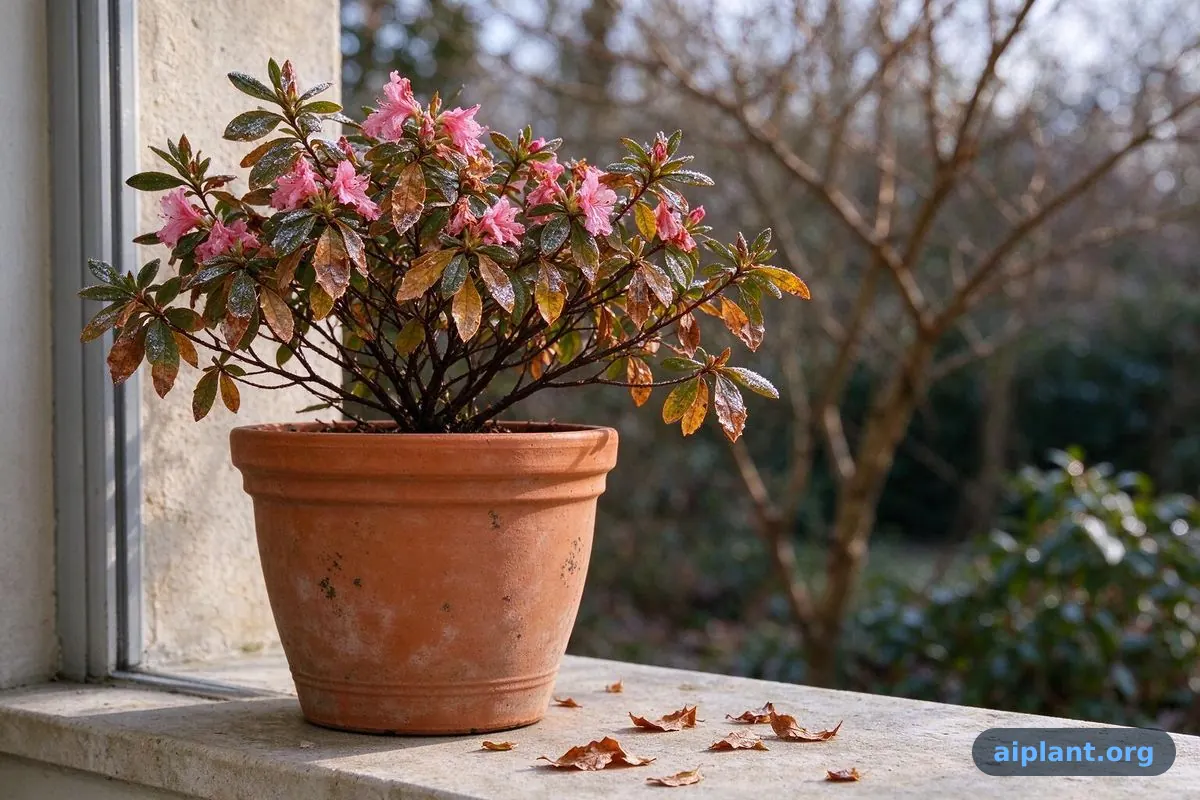
Azalea Leaves Damaged After a Cold Night: Frost Burn or Dieback?
Tell frost burn from real dieback, then help the shrub regrow and bloom again.