
Why Are My Rubber Plant Leaves Curling and Falling Off?
Find the cause from the leaves, then fix it before the plant is bare.
Rubber Plant leaves that curl, crisp and drop are telling you something specific, and the direction of the answer is usually water, roots, light or cold rather than disease. Ficus elastica is a tough indoor tree, but it reacts fast to a soggy pot, a dark corner or a cold draught, and it sheds lower leaves first. This opening half helps you read the symptoms, match them to the likely cause and start the right fix, so the plant stops dropping leaves and keeps growing.
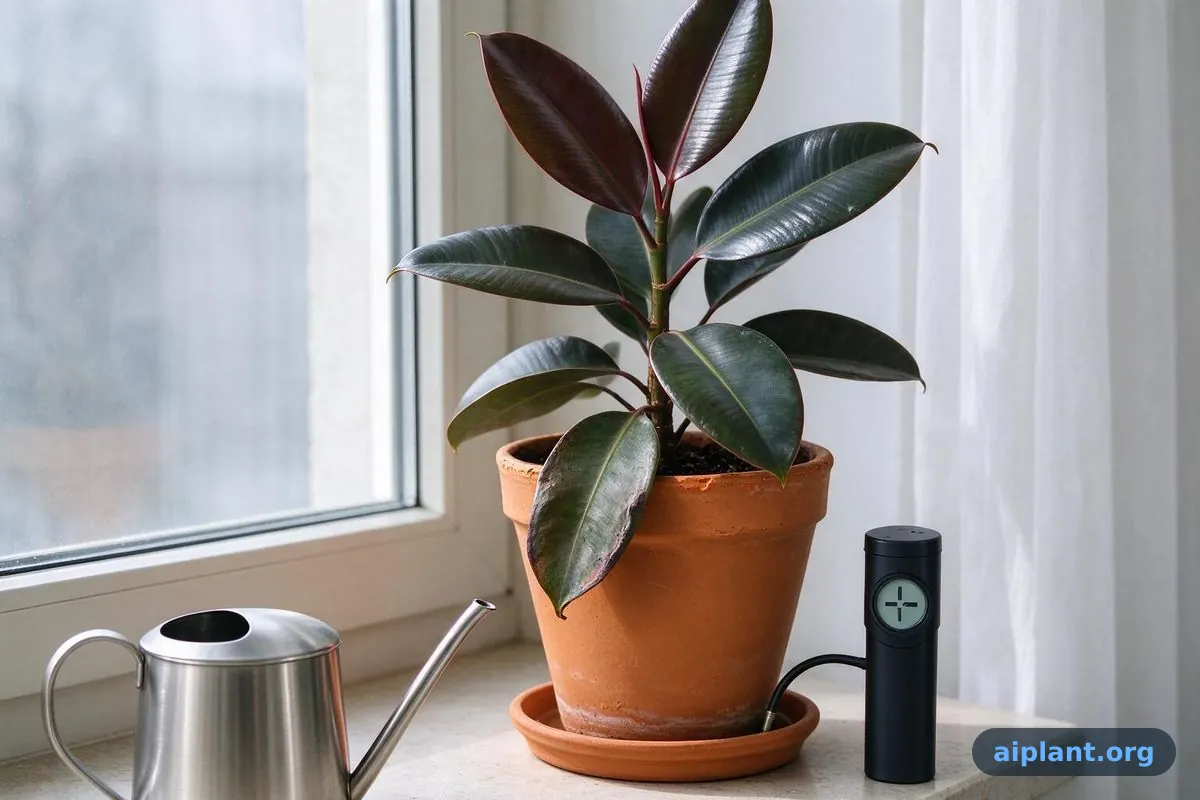
Rubber Plant Leaf Curl and Drop: The Short Answer
- Curling and dropping leaves most often mean the roots are staying wet too long, so check the soil 3 cm (1 in) down before the next watering.
- Crispy brown tips point to dry air, inconsistent watering or a build-up of fertilizer salts rather than a disease.
- Sudden leaf loss after a cold night means chilling damage; move the plant where it stays above 10 °C (50 °F).
- Sticky leaves with tiny bugs mean sap-sucking pests such as scale or spider mites, which need cleaning and treatment.
Reading Rubber Plant Leaves to Find the Cause of Curling and Drop
The fastest way to help a Rubber Plant is to match what you see on the leaves to the cause behind it, because each symptom narrows the problem to one or two fixes. Use the table as an index, then read the detailed symptom sections below for the full fix.
Leaves Curling Inward and Drooping While the Soil Stays Damp
Curling leaves on a damp pot are the classic sign that the roots are suffocating, and this is the most common reason a Rubber Plant loses leaves indoors. The leaf edges roll inward as the roots fail to move water, then the lowest leaves yellow and fall.
- Check the root ball before watering again: push a finger or a wooden skewer 3 cm (1 in) into the soil; if it comes out damp and cool, wait and let the top half dry before the next drink.
- Lift the plant out of its pot to inspect roots: healthy roots are firm and pale; brown, soft or smelly roots mean rot, so trim them with clean scissors and repot in fresh, free-draining mix.
- Improve drainage and reduce pot size if needed: a pot only 2–3 cm (1 in) wider than the root ball with a drainage hole prevents the soggy layer that keeps roots wet for weeks.
Brown Crispy Tips on Otherwise Green Rubber Plant Leaves
Crispy brown tips that stay dry and papery usually mean the plant is losing water faster than it takes it up, and the cause is most often dry indoor air or watering that swings between bone dry and soaked.
- Raise humidity around the leaves: group the plant with others or set the pot on a pebble tray; indoor humidity below 40% in heated rooms dries leaf edges faster than roots can replace the water.
- Water on a consistent rhythm: check the top 3 cm (1 in) of soil and water when it feels dry, rather than waiting until the whole pot shrivels and then flooding it.
- Flush the pot to clear fertilizer salts: run water through the soil until it drains freely from the bottom, once every two to three months, because salt build-up burns leaf tips.
Leaves Dropping After a Cold Night Near a Window
A Rubber Plant sheds leaves quickly after chilling, and the damage shows as limp, darkened leaves that fall within days of a cold night. Ficus elastica prefers 18–24 °C (65–75 °F) and suffers below 10 °C (50 °F).
- Move the plant away from cold glass and draughts: single-glazed windows and open doors can drop to near freezing on winter nights, so keep at least 30 cm (12 in) back from the glass.
- Check the stem before cutting anything: if the stem is still firm and green under the bark, the plant will push new leaves from the top; wait two to three weeks before pruning damaged growth.
Sticky Leaves With Tiny Bumps or Fine Webbing
Sticky leaves are a sign of sap-sucking pests, most often scale insects or spider mites, which excrete honeydew that coats the leaves. Look for small brown bumps along stems and leaf veins, or fine webbing under the leaves.
- Wipe the leaves and stems with a damp cloth: remove visible scale and honeydew so the pests cannot keep feeding and the leaves can photosynthesize again. Wipe both leaf surfaces and along stems where bumps sit, then check the undersides a week later for new sticky film before deciding whether to treat again.
- Treat with insecticidal soap every 7–10 days: spray the undersides of leaves and stems, repeating for three or four rounds, because eggs and newly hatched pests survive the first application.
- Isolate the plant for a month: keep it away from other houseplants until no new sticky patches or webbing appear for two consecutive weeks. Check leaf undersides and stem joints each week; the month gives eggs time to hatch so you can catch survivors before returning it to the group.
Tall, Thin and Bare With No Side Shoots
A Rubber Plant that grows tall and bare is reaching for light, and it will not branch on its own until the growing tip is cut. The stem stretches between leaves and the lower leaves drop as they shade out.
- Move it to brighter, indirect light: a spot within 1 m (3 ft) of a bright window with filtered sun stops the stretch and encourages fuller growth.
- Prune the stem in spring to force side shoots: cut 10–15 cm (4–6 in) off the top just above a leaf node, and new shoots will emerge from the nodes below the cut within a few weeks.
Mushy Stem Base and Collapsing Leaves
A soft, dark stem at the soil line with leaves that collapse is root rot, and it is the stage where the plant may not be worth saving. Rot spreads upward from waterlogged roots and cannot be reversed once the stem is mushy.
- Cut back to firm, white tissue: slice the stem with a clean knife until the cut surface is white and firm; if rot reaches the soil line, the plant is unlikely to recover and should be replaced.
- Propagate a healthy top cutting before discarding: a 10–15 cm (4–6 in) tip with two leaves can root in water or moist mix, keeping the plant's growth going if the base is lost.
Rubber Plant symptom, likely cause and first action
Rubber Plant leaf symptoms compared: curling vs crispy vs dropping
Rubber Plant Watering and Root Health That Stops Leaf Drop
Watering is the single biggest lever on Rubber Plant leaf drop, and the goal is a pot that dries partly between drinks rather than staying constantly damp. Ficus elastica stores water in its thick leaves and roots, so it tolerates a missed watering far better than a soggy week.
How Often to Water Without Causing Root Rot
There is no fixed calendar interval, because pot size, light and room temperature change how fast the soil dries. In bright light and warm rooms, a Rubber Plant in a 20 cm (8 in) pot may need water every 7–10 days in summer, while in winter the same plant can go 2–3 weeks.
- Use the finger test, not a schedule: water only when the top 3 cm (1 in) of soil feels dry; in a deep pot, check with a wooden skewer down to mid-depth before watering.
- Water thoroughly until it drains: pour until water runs from the drainage hole, then empty the saucer after 15 minutes so the pot never stands in water.
- Reduce watering in winter: growth slows below 15 °C (59 °F) and the plant uses far less water, so let the top half of the soil dry before watering again.
Why a Rubber Plant Droops the Day After Watering
Drooping right after watering usually means the roots were already damaged or the soil is staying saturated, not that the plant needs more water. When roots are compromised, the plant cannot take up the water sitting around them and the leaves lose turgor.
- Check whether the soil is actually drying: if the mix is dense and peaty, it can stay wet for two weeks after one watering; repot into a mix with bark and perlite so air reaches the roots.
- Look for a sour smell or dark roots: these confirm rot, and the fix is to trim damaged roots, repot in fresh mix and water sparingly until new growth appears.
Soil and Pot Choices That Prevent Soggy Roots
A free-draining mix is the difference between a Rubber Plant that thrives and one that rots. Use a mix of two parts potting soil, one part orchid bark and one part perlite, which holds moisture without staying waterlogged.
- Always choose a pot with a drainage hole: decorative pots without holes trap water at the bottom, and the roots sitting in that layer are the first to rot.
- Repot only when roots fill the pot: check every spring by sliding the plant out; if roots circle the edge densely, move up one pot size, otherwise refresh the topsoil and wait a year.
Rubber Plant watering by season and pot size
Rubber Plant Light, Cold and Feeding That Keep Leaves On
Light and temperature decide whether a Rubber Plant holds its leaves through winter, and feeding keeps the new growth strong once the basics are right. Get these three in balance and the plant stops shedding lower leaves and starts pushing new ones.
How Much Light Stops the Leaf Drop
A Rubber Plant needs bright, indirect light for at least six hours a day, and too little light is a common reason lower leaves yellow and fall. In dim corners the plant cannot maintain all its leaves and sheds the ones it cannot support.
- Place it within 1 m (3 ft) of a bright window: an east or west window suits it well, and a south window works if a sheer curtain filters the harshest midday sun.
- Rotate the pot a quarter turn each week: even light on all sides stops one side stretching and dropping leaves in shade. Mark the pot rim so you turn the same amount each time, and watch whether new leaves emerge evenly rather than all leaning toward the window.
- Watch for scorch in direct summer sun: leaves facing harsh afternoon sun can develop pale, bleached patches, so move the plant back or diffuse the light. Check the sun-facing leaves after hot afternoons; bleached patches stay pale, so shift the pot or hang a sheer curtain before more appear.
Cold Limits and Winter Positioning
Rubber Plant grows best at 18–24 °C (65–75 °F) and should never sit below 10 °C (50 °F). Cold damage shows as limp, darkened leaves that drop within days, and it is often caused by a windowsill rather than the room itself.
- Keep it away from cold glass and draughts: winter window glass can be several degrees colder than the room, so leave 30 cm (12 in) of space between the leaves and the pane.
- Avoid hot radiators and cold air returns: both dry and stress the leaves, and a stable spot away from both keeps humidity and temperature even. Feel the air where the leaves sit; if it is noticeably warm or cold, move the pot until the spot feels the same as the room.
Feeding for Strong New Leaves
Feed a Rubber Plant with a balanced liquid fertilizer at half strength every four weeks from spring to late summer, and stop in autumn and winter when growth slows. Overfeeding causes salt build-up and brown tips, so less is safer.
- Watch new leaves for pale colour with green veins: this pattern suggests magnesium deficiency, and a fertilizer containing magnesium, applied monthly in the growing season, corrects it. Check the newest leaves as they unfurl; if the pale pattern spreads to older leaves, review watering and feeding before adding more.
- Never feed a dry or struggling plant: fertilizer on damaged roots burns them further, so fix watering and repotting problems first and feed only once new growth appears.
Saving a Rubber Plant That Is Dying: When to Rescue and When to Replace
A Rubber Plant is worth rescuing when the stem is still firm and at least one healthy leaf remains, and it is time to replace it when the stem is mushy at the soil line. Root rot that has reached the main stem cannot be reversed, so check the base before you invest effort in a plant that is already lost.
The firm-stem test decides whether to rescue or replace
Press the stem just above the soil with your thumbnail; a firm, green or white layer under the bark means living tissue, while a soft, brown, easily indented stem means rot has won. If the stem is firm, the plant can recover even after losing every leaf, because Ficus elastica regrows from dormant buds on the trunk. If the stem is soft, cut it back with a sterile knife until you reach white, firm tissue; if that point is below the soil line, discard the plant and root a tip cutting instead.
Rescue order matters: roots first, then light, then feeding
- Unpot and inspect the root ball: shake off the old mix and look for roots that are brown and mushy against firm pale ones; trim the damaged roots with sterilised scissors until only healthy tissue remains.
- Repot into fresh, free-draining mix in a clean pot: a pot with a drainage hole and only slightly larger than the surviving root mass prevents the new roots from sitting in wet soil again.
- Water once and then leave the plant alone: keep the mix barely moist for two to three weeks and place the pot in bright, indirect light, because damaged roots cannot absorb water and extra watering causes a second rot.
- Wait for new growth before feeding: a struggling Rubber Plant cannot use fertilizer, so hold off until a new leaf unfurls, then feed at half strength every four weeks during the growing season.
When to cut losses and start over
If the stem is mushy above the soil line, the rot has entered the vascular tissue and no amount of repotting will save the plant. Take a 10–15 cm (4–6 in) tip cutting with two leaves from any still-firm growth and root it in water or moist mix, then discard the rotting base so the problem does not spread to other plants.
How to tell a dying Rubber Plant from a dormant one
A dormant Rubber Plant in winter stops producing leaves but keeps firm stems and glossy foliage, while a dying one shows dull, limp leaves and a stem that wrinkles or darkens. Check the stem and roots before assuming the worst, because a plant that looks bare in January is often simply resting until longer days return.
Why a Rubber Plant Stops Producing New Leaves in Winter
A Rubber Plant stops producing new leaves in winter because short days and cooler rooms slow its growth to a near halt, and this dormancy is normal rather than a sign of disease. Ficus elastica puts out most of its new leaves from spring to late summer, when light levels and temperatures are high.
Light is the trigger for new growth
A Rubber Plant needs six or more hours of bright, indirect light to push new leaves, and winter daylight indoors often falls short of that. Move the pot to the brightest window available, and clean the leaves with a damp cloth so the reduced light is not further blocked by dust.
Temperature and watering slow down together
Below 15 °C (59 °F) a Rubber Plant almost stops growing, so a cool spare room in winter keeps it dormant. Keep the plant in a room at 18–24 °C (65–75 °F) and water far less often, because wet soil around inactive roots is the fastest route to rot during the quiet months.
When to expect the next new leaf
New growth usually resumes within four to six weeks of longer, brighter days in early spring, and the first sign is a red sheath at the tip of the stem. If no new leaf appears by mid-spring despite bright light and warm temperatures, check the roots and the stem before assuming the plant is still dormant.
Feeding during dormancy does more harm than good
Fertilizer applied in winter sits unused in the soil and builds up salts that burn leaf tips, so stop feeding from autumn until new growth starts in spring. Resume at half strength every four weeks once a new leaf is visibly unfurling, which tells you the roots are active again.
Rubber Plant Quick Care Facts
These are the core conditions a Rubber Plant needs to hold its leaves and avoid the problems described above, summarised for quick reference. Use them as the baseline for a plant that is recovering, and adjust only one factor at a time so you can see what helps.
The numbers behind healthy Ficus elastica growth
A Rubber Plant grows best at 18–24 °C (65–75 °F), tolerates a soil pH of 5.5–7.0, and can reach 1.5–3 m (5–10 ft) indoors over many years. It needs bright, indirect light for at least six hours a day and humidity of 40–60% to keep leaf edges from crisping.
Rubber Plant Care at a Glance
- Light
- Bright indirect light, 6+ hours daily; filter harsh midday sun
- Water
- When top 3 cm (1 in) of soil feels dry; less in winter
- Temperature
- 18–24 °C (65–75 °F); never below 10 °C (50 °F)
- Humidity
- 40–60%; raise with pebble tray or grouping
- Soil
- Free-draining mix with bark and perlite; pot with drainage hole
- Fertilizer
- Half-strength balanced feed every 4 weeks spring to late summer
Repotting and Pruning a Rubber Plant for a Fuller Shape
Repotting and pruning are the two operations that turn a leggy, bare Rubber Plant back into a full plant, and both are best done in spring when the plant can recover quickly. Timing matters because a Rubber Plant cut or moved in autumn may sit dormant for months before producing new growth.
When and how to repot without shocking the roots
Repot a Rubber Plant when roots circle the inside of the pot or emerge from the drainage hole, which usually happens every two to three years. Slide the plant out, loosen the outer roots gently, and move it into a pot one size larger with fresh mix, then water once and keep it out of direct sun for a week while it settles.
Pruning to force side shoots and a bushier top
A Rubber Plant branches only after the growing tip is removed, so cut the stem 10–15 cm (4–6 in) below the top in early spring, just above a leaf node. New shoots emerge from the nodes below the cut within a few weeks, and the removed tip can be rooted as a new plant.
Cleaning leaves and managing sap
Wipe the leaves with a damp cloth every few weeks to remove dust that blocks light, and wear gloves when pruning because the white sap can irritate skin. Seal cuts on the stem with a damp tissue until the sap stops flowing, which usually takes a few minutes.
Supporting a tall plant after pruning
A tall Rubber Plant with a single trunk can lean after cutting, so stake it with a cane tied loosely at two points until new side shoots balance the top. Rotate the pot a quarter turn each week so the new growth develops evenly rather than reaching to one side.
Rubber Plant Pests, Diseases and Seasonal Care
Pests and diseases on a Rubber Plant are mostly preventable with clean leaves, steady watering and good airflow, and the few that do appear are easier to stop early. The seasonal routine below keeps the plant strong enough to resist them through the year.
Scale insects and spider mites are the main pests
Wipe both off with a damp cloth and follow with insecticidal soap every 7–10 days for three or four rounds, because eggs survive the first spray.
Fungal leaf spots follow wet leaves and still air
Dark brown spots with yellow halos spread when water sits on leaves or the plant is crowded against a wall. Water the soil rather than the foliage, space the plant away from walls, and remove affected leaves so the fungus has no wet surface to spread on.
Spring and summer care
Spring is the time to repot, prune and resume feeding, because the plant has the light and warmth to heal cuts and push new growth. Check the root ball and the undersides of leaves at the same time, so problems are caught before they spread.
Autumn and winter care
In autumn, reduce watering, stop feeding and move the plant away from cold windows before the first frost. Keep the room at 18–24 °C (65–75 °F) and humidity at 40–60%, and check for pests monthly, because dry heated air favours spider mites.
Rubber Plant leaf drop and recovery: what the guide does not cover
How do I propagate a Rubber Plant from a stem cutting in water or soil?
Yes, a 10–15 cm (4–6 in) tip with two leaves roots in either water or moist mix, keeping growth going if the base is lost. Cut just below a leaf node, remove lower leaves, and keep the cut end in water or free-draining mix in bright indirect light. Change water when cloudy, and pot up in free-draining mix once firm white roots appear.
Can I move my Rubber Plant outdoors for the summer, and how do I acclimate it?
Yes, once nights stay reliably above 10 °C (50 °F), because Ficus elastica suffers below that. Harden it over about a week: start in deep shade, then gradually shift toward morning sun and filtered light, keeping it out of harsh midday sun that bleaches leaves. Bring it back inside before autumn nights cool, and check undersides for pests before it rejoins other plants.
Why are my Rubber Plant's new leaves small, pale or failing to unfurl?
Small, pale new leaves that fail to unfurl usually signal a nutrient shortfall, most often magnesium, or roots too wet to take up food. Pale blades with veins still green point to magnesium; feed a balanced or magnesium-rich fertilizer at half strength monthly in the growing season. If the soil stays damp, correct watering and drainage first, since feeding damaged roots burns them further.
How do I clean and shine Rubber Plant leaves without damaging them?
Yes, dust the leaves gently, because a soft cloth lifts grime without scratching the glossy surface. Support each leaf from underneath with one hand, wipe along the midrib outward with a barely damp microfiber cloth, then dry with a second cloth so no water sits in the leaf axils. Skip commercial leaf-shine sprays and oils, which can clog the leaf pores and attract dust.
Is my Rubber Plant safe to keep in a bedroom or low-light hallway?
A bedroom is fine if it offers bright, indirect light for six or more hours daily; a low-light hallway is not, because dim corners make the plant shed leaves it cannot support. In a dark hallway, growth slows and lower leaves yellow and fall. If the hallway is the only option, add a grow light or choose a brighter spot.
When and how should I repot a root-bound Rubber Plant without causing leaf drop?
Repot in spring, when the plant can recover quickly, and only when roots circle the pot or emerge from the drainage hole, usually every two to three years. Slide it out, loosen outer roots gently, and move it one pot size larger into free-draining mix with a drainage hole. Water once, keep it out of direct sun for a week, and avoid overwatering, which causes leaf drop.
Related articles
Why Are Sage Leaves Turning Yellow From the Bottom Up?
Find the cause, fix the roots, and keep the harvest
Tiny White Bugs and Sticky Leaves on African Violet?
Find the pest or disease behind the mess and fix it before rot spreads.
Why Are My Apple Tree Leaves Turning Yellow?
Find the cause in minutes and keep the fruit coming.
Why Are Basil Leaves Turning Yellow and Drooping?
Find the cause in minutes and get your plant back to steady harvest.