
Why Are Sage Leaves Turning Yellow From the Bottom Up?
Find the cause, fix the roots, and keep the harvest
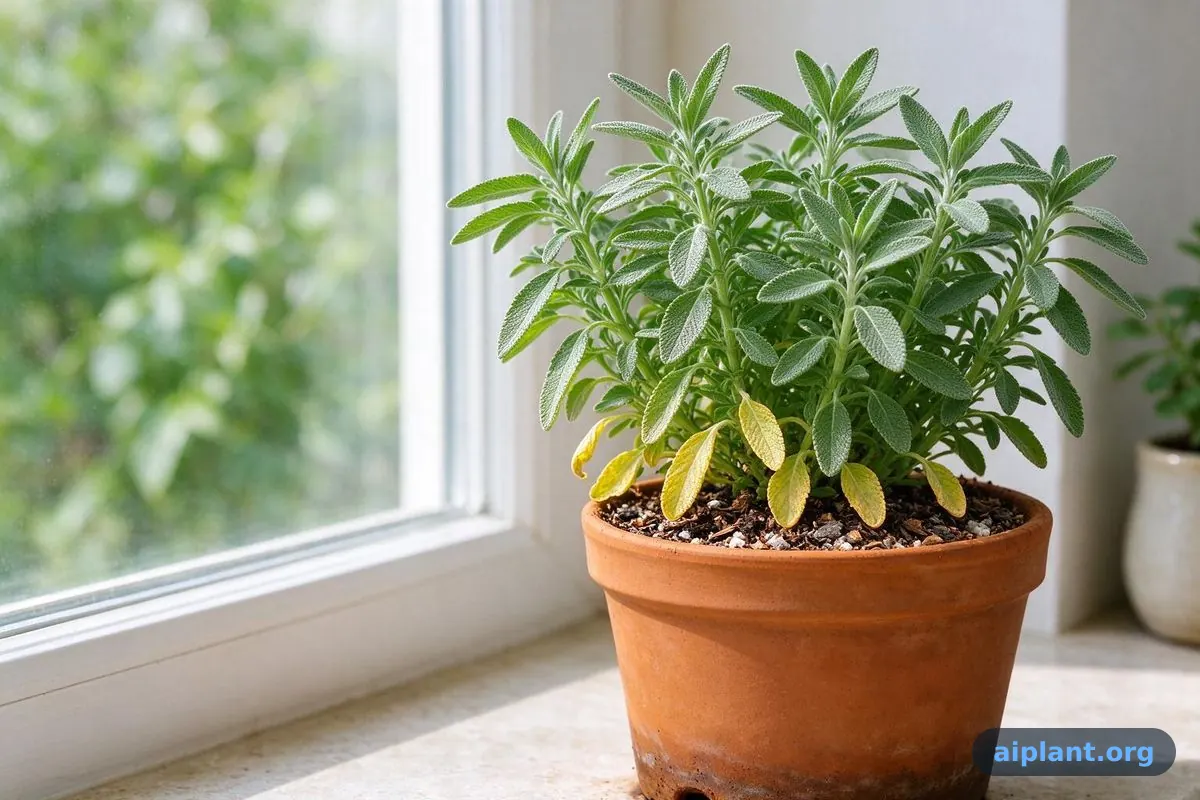
Sage (Salvia officinalis) leaves turning yellow from the bottom up is a signal, not a disease in itself. The oldest leaves sit closest to the soil, so they show the first effects of soggy roots, exhausted nitrogen, or cold damage. This article helps you match what you see to the actual cause, fix it before the whole plant collapses, and then keep the plant healthy enough to harvest and flower again.
Sage Yellowing: The Short Answer
- Bottom-up yellowing is most often waterlogged roots: dense soil or a pot without drainage keeps the root zone wet, and the lowest leaves yellow first.
- If the yellow is even and the veins stay green, suspect nitrogen shortage, especially in pots or after heavy rain has leached the soil.
- Check the soil before watering: push a finger 5 cm (2 in) down, and if it feels wet, wait. Sage needs fast drainage and full sun.
- Trim yellow leaves only after the cause is fixed; healthy green leaves further up the stem are still safe to eat after washing.
Sage Symptom Check: What the Yellowing Tells You
Sage yellowing from the base upward has a short list of likely causes, and the pattern of the yellow, the feel of the soil, and the state of the stem narrow it down quickly. Use the table as an index, then read the symptom sub-headings below for the full fix.
Yellow Leaves With Wet Soil and a Sour Smell
This is the classic waterlogging pattern: the lowest leaves turn pale yellow, then limp, while the soil stays damp for days and smells slightly sour or earthy in a bad way. It happens most in heavy clay soil, in pots without drainage holes, or when a saucer holds water under the pot. The fix is to stop watering, lift the pot onto feet, and if the plant is in the ground, open the soil with a garden fork around the root zone without slicing close to the crown. Check the drainage by digging a 30 cm (12 in) hole nearby and filling it with water: if it still holds water after 24 hours, the site needs grit or a raised bed.
Pale Leaves With Green Veins on the Oldest Growth
When the yellow is even and the veins stay green, the plant is usually short of nitrogen, and the oldest leaves show it first because the plant moves nitrogen to new growth. This is common in containers after months of watering and in sandy soil after heavy rain. Feed with a balanced liquid fertiliser diluted to half strength, applied to damp soil, and repeat every four weeks through the growing season. Do not overcorrect: too much nitrogen makes soft, floppy growth that is more prone to pests.
Yellow Leaves After a Cold Night or Wet Winter
Sage is hardy to about -15 °C (5 °F) but suffers in wet cold, and the lower leaves yellow and drop after a soggy winter. Look for yellowing on the side facing the wind or on leaves touching cold, wet soil. Improve air movement by thinning crowded stems, and in future winters mulch with gravel rather than compost to keep the crown dry. Remove the damaged leaves; the plant usually regrows from the woody base in spring.
Stems Going Brown and Mushy at the Soil Line
If the stem at soil level is soft, dark, and pulls away easily, root or crown rot has started, and yellowing is the first sign. This is the point to act: lift the plant, cut away soft roots and brown stem with clean secateurs until you reach firm, pale tissue, and repot into fresh free-draining mix in a clean pot. Water sparingly until new growth appears, and discard the plant if the rot reaches more than half the crown.
Yellow Speckling With Fine Webbing Under the Leaves
Spider mites cause pale stippling that can look like yellowing from a distance, especially in hot, dry indoor air. Turn a leaf over and look for fine webbing and tiny moving specks along the veins. Raise humidity, wash the leaves with a firm jet of water, and repeat every three days for two weeks; for heavy infestations use insecticidal soap according to the label.
Affected leaves are still safe to eat or use once the cause is addressed: wash them under running water, trim away brown or mushy patches, and discard any leaf that smells musty or has mould. Do not eat leaves from a plant treated with a pesticide unless the product label says the crop can be harvested after the stated interval.
Sage Yellowing Symptoms, Causes and First Actions
Why a Watered Sage Plant Still Wilts and Dies
Watering a Sage plant that is already drowning only speeds up the rot, because the real problem is not too little water but too little air around the roots. Work through these checks in order and the cause becomes obvious.
- Test the soil before you water: Push a finger about 5 cm (2 in) down beside the root zone; if that depth still feels damp, skip the watering and check again in a day or two instead of adding more.
- Weigh the pot after watering: Lift a potted Sage straight after it drains and again two or three days later; a pot that stays heavy is holding water the roots cannot use, so cut back how often you water before you change anything else.
- Repot into a grittier mix: Move a waterlogged potted plant into two parts potting soil, one part coarse grit and one part perlite, in a pot only 2-3 cm (1 in) wider than the root ball so the roots fill it and the mix dries evenly.
- In open ground, plant on a raised mound: Set the crown 5-10 cm (2-4 in) above the surrounding soil so rain and irrigation shed away from the stem base, where rot starts, instead of pooling around it.
- Rescue a plant already wilting in wet soil: Stop watering at once, move the pot to a dry, airy spot in strong light, and let the surface dry down to about 5 cm (2 in) before the next drink; trim back any black, mushy stems you find.
Sage Watering Signals and What They Mean
Sage Cuttings That Rot in Water or Wilt Before Rooting
Sage cuttings fail in water because the stems sit in stagnant, oxygen-poor water and rot before roots form, and they wilt because too much leaf area loses water faster than a stem without roots can replace it. The fix is to take the right cutting, reduce water loss, and change the water often.
Take Cuttings From Firm New Growth
Choose a healthy side shoot 8–10 cm (3–4 in) long with soft but firm stem, not a woody old branch and not a soft tip. Cut just below a leaf node with clean secateurs, strip the lower leaves, and leave two or three leaves at the top. A node is where roots form most readily, so a cutting without one roots slowly or not at all.
Root in Water Changed Every Two Days
Stand the cuttings in a glass with 3–4 cm (1–1.5 in) of water, and change the water every two days so it stays oxygenated. Keep the glass in bright, indirect light, not direct sun, and roots usually appear in two to four weeks. If the stem turns brown and soft at the water line, cut it back to firm tissue and start again in fresh water.
Root in Free-Draining Mix Instead
Where water rooting keeps failing, dip the cut end in rooting hormone and push it into a small pot of moist perlite or a half-and-half mix of perlite and potting soil. Cover with a clear bag for the first week to hold humidity, open it daily for air, and water only when the surface feels dry. This method avoids stagnant water entirely and suits Sage better in humid climates.
Stop Cuttings Wilting Before They Root
Wilt before rooting usually means the cutting is losing more water than it can take up. Trim the largest leaves in half, keep the cutting out of direct sun, and mist the leaves once a day rather than soaking the soil. A plastic bag over the pot for the first five to seven days keeps humidity high while the cut end calluses and begins to root.
Sage Cutting Methods Compared
Sage That Never Flowers and How to Divide an Old Clump
A Sage plant that never flowers is usually too young, too shaded, or pruned at the wrong time, because Sage flowers on the previous season's growth and needs full sun to initiate buds. Give it at least six hours of direct sun, avoid hard pruning in late summer and autumn, and let the stems stand through winter so flower buds can form for the next spring. Feed lightly: too much nitrogen produces leaves at the expense of flowers. Plants grown from seed may take two years to bloom, so patience is part of the answer.
Divide an Overgrown Clump in Early Spring
Divide Sage every three to four years when the centre of the clump turns woody and bare, and do it in early spring as new growth starts. Lift the whole plant with a fork, cut the clump into two or three sections with a sharp spade, keeping roots and several healthy shoots on each piece. Replant the outer, younger sections at the same depth and water them in; discard the old woody centre. Water the divisions for the first two weeks, then return to the normal dry-between-waterings routine.
Sage Quick Care Facts
- Part Used
- Leaves and soft stems, harvested fresh or dried
- When to Harvest
- Pick leaves from spring to early summer before flowering
- How to Dry
- Hang small bundles in a dark, dry, airy room
- Storage Life
- Airtight jar away from light, use within a year
- Light
- Full sun, at least six hours direct
- Water
- Water when the top 5 cm (2 in) feels dry
Harvesting, Drying and Storing Sage Without Mould
Sage has the strongest flavour just before the flower buds open, when the leaves are full of aromatic oils, and drying it fast in the dark keeps that flavour. Harvest in the morning after the dew has dried, cutting stems no more than 10 cm (4 in) above a leaf node so the plant regrows bushy. Take no more than one third of the plant at a time, and stop heavy harvesting in late summer so the plant can harden for winter.
Dry in Small Bundles Out of Direct Sun
Tie stems into loose bundles of five to eight stems and hang them in a dark, dry, airy room at about 20–25 °C (68–77 °F). Bunches that are too tight, or a room without air movement, trap moisture and grow mould. The leaves are ready when they crumble easily between the fingers, usually in one to two weeks.
Dry Individual Leaves on a Rack
For humid climates, spread single leaves on a drying rack or a clean screen so air reaches both sides. Turn them once after three days and keep them out of sunlight, which fades the colour and the flavour. A dehydrator on its lowest setting also works; the leaves should feel papery, not leathery, when done.
Store Only Bone-Dry Leaves
Strip the dried leaves from the stems and pack them into an airtight jar as whole leaves, crushing them only when you cook. Store the jar in a dark cupboard, and discard any batch that smells musty or shows white specks, because mould spreads through the whole jar. Whole dried leaves keep their aroma for about a year.
Sage Harvest and Drying by Season
Sage Look-Alikes and Who Should Be Careful With It
Sage is easy to confuse with other grey-leaved herbs, and the difference matters because some look-alikes have a much stronger or different flavour. Rub a leaf and smell it: true Sage has a warm, savoury, slightly camphor-like aroma, while lavender smells floral and rosemary smells of pine. The table below separates the common look-alikes.
Who Should Ask a Doctor First
Sage contains thujone, and large amounts or concentrated extracts are best avoided in pregnancy and breastfeeding; children should not be given strong Sage tea or extracts. People taking medication, especially blood-pressure or blood-sugar medicines, should ask a doctor or pharmacist before using Sage regularly as a tea or supplement. Traditional uses include brewing the leaves as a tea after meals and using them to flavour stuffings, soups and bean dishes; these are culinary and traditional uses, not medical treatment.
Sage troubleshooting and propagation FAQ
Can I grow sage in a pot indoors on a windowsill, and what does it need?
Yes, sage can grow on a sunny indoor windowsill if the pot drains freely and the plant gets at least six hours of direct light. Use a small pot with drainage holes, water only when the top 5 cm (2 in) of soil feels dry, and keep it out of still, humid air. Turn the pot regularly so growth stays even, and expect slower, leggier growth than outdoors.
How do I overwinter sage in a cold climate without losing it?
Overwinter sage by keeping the crown dry rather than warm. It is hardy to about -15 °C (5 °F) but suffers in wet cold, so mulch with gravel instead of compost and avoid cutting hard in late summer or autumn. Leave stems standing through winter so buds can form. In pots, move the container to a sheltered, airy spot and water sparingly.
Is sage safe to plant next to other herbs, and what are good companion plants?
Yes, sage mixes well with most herbs because it is a dry-loving, full-sun plant. Good companions are rosemary, thyme, oregano and lavender, which share its drainage and light needs. Avoid placing it beside moisture-loving herbs such as mint or parsley, and give it space so air moves around the stems and lower leaves stay dry.
How do I prune sage to keep it bushy and stop it going woody?
Prune sage lightly in spring as new growth starts, cutting stems back to a leaf node rather than into bare old wood, which may not resprout. Remove flower stems after flowering to encourage bushiness, and take no more than one third of the plant at a time. Replace plants every few years when the centre turns woody and bare.
Can I freeze sage leaves instead of drying them, and how?
Yes, sage freezes well and keeps more aroma than poorly dried leaves. Harvest in the morning after dew has dried, wash and pat dry, then freeze whole leaves on a tray before bagging, or chop and pack into ice-cube trays with a little water. Use frozen leaves in cooking rather than as a fresh garnish, since they soften on thawing.
Why are my sage leaves losing their flavour or aroma?
Flavour loss usually comes from harvesting at the wrong time or storing badly. Sage is most aromatic just before flower buds open, so pick then, in the morning after dew has dried. Drying in sunlight or heat fades the oils, and jars that are not airtight let aroma escape. Store whole dried leaves in a dark cupboard and crush only when cooking.
How do I grow sage from seed, and how long does it take?
Sow sage seed in spring in a free-draining mix, barely covering it, and keep it warm and lightly moist in bright light. Germination is often slow and uneven, so be patient. Seed-grown plants are slower to establish and may take two years to flower, which is why cuttings are often preferred for a quicker, bushier plant.
What pests and diseases besides spider mites and root rot affect sage?
Besides spider mites and root rot, watch for aphids clustering on soft new tips, whitefly on indoor plants, and powdery mildew in humid, still air. Slugs and snails can damage young seedlings. Improve airflow, avoid overhead watering, and treat infestations promptly with a jet of water or insecticidal soap according to the label.
Related articles
Why Are Basil Leaves Turning Yellow and Drooping?
Find the cause in minutes and get your plant back to steady harvest.
Why Are Hibiscus Leaves Turning Yellow and Dropping?
Find the cause and fix it before the whole plant defoliates.
How Do You Grow and Care for Kale?
A complete, season-by-season guide to growing crisp kale leaves in beds, pots or indoors.
Why Is My Philodendron Losing Colour and Going Pale?
Find the cause in minutes and bring back deep, healthy green.