
Why Does My Turmeric Have Sticky Leaves and Tiny Bugs?
Identify the pest, clear the sticky honeydew, and still lift a healthy crop.
Sticky turmeric leaves with tiny bugs almost always mean sap-sucking insects are feeding on the underside and excreting honeydew. The fix is to identify which pest is present, treat it before the colony spreads, and check the rhizomes are still sound. This article diagnoses the problem first, then covers the watering, light, and harvest care that keeps Curcuma longa productive.
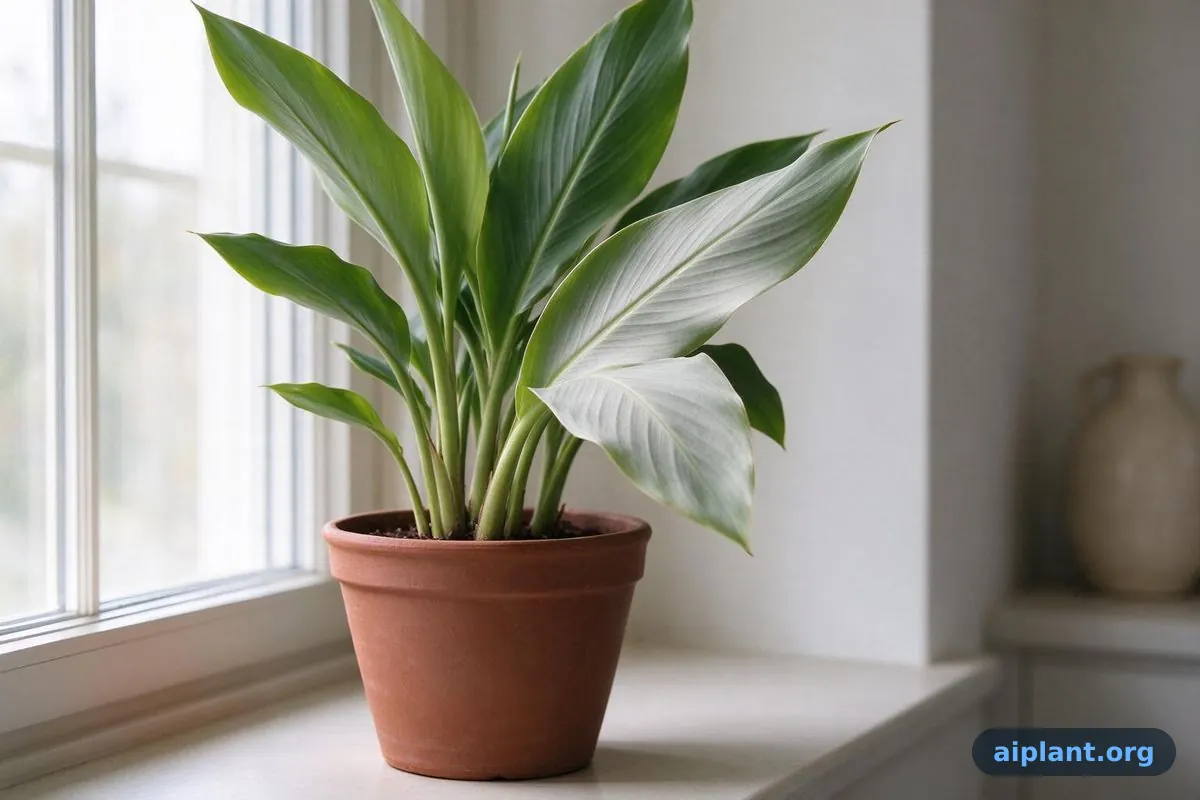
Turmeric Sticky Leaves and Tiny Bugs: The Short Answer
- Sticky leaves are honeydew from sap-sucking pests, most often aphids, whiteflies, or spider mites hiding under the leaf.
- Flip the leaf: aphids and whiteflies cluster on the underside, while spider mites leave fine webbing and pale stippling.
- Wash the undersides with a soft soap spray, then repeat every 5–7 days until no new insects appear.
- Black sooty mould grows on the honeydew and clears once the pests are gone; brown spots and root rot need separate treatment.
Turmeric Symptom Check: What Sticky Leaves, Spots, and Tiny Bugs Mean
Sticky turmeric leaves with tiny bugs are a pest problem first, not a watering problem, so start by matching the exact symptom to its cause in the table below. Turmeric (Curcuma longa) grows 60–120 cm (24–47 in) tall with broad, canna-like leaves, and the underside of each leaf is where most trouble begins. Work through the sub-headings for the symptom closest to what you see, then use the later sections to keep the problem from returning.
Affected leaves are still safe to eat or use: wash them under running water, trim away sticky or mouldy patches with clean scissors, and discard leaves that are fully blackened or yellowed. The rhizomes are the main crop and remain usable unless the root rot section applies.
Turmeric Symptom, Likely Cause, and First Action
Sticky Turmeric Leaves With Tiny Bugs Underneath
Sticky leaves mean honeydew, not sap: the shiny film is sugar water excreted by sap-sucking insects feeding on the leaf underside, and the insects themselves are usually 1–3 mm long and clustered near the midrib or in leaf folds. Check the newest leaves first, because aphids and whiteflies prefer soft growth. Rinse the sticky coating off with a gentle jet of water so the honeydew does not attract ants or feed sooty mould while you treat the insects.
Aphids are the most common cause: look for pear-shaped green, black, or pale insects in dense colonies on the underside. Wash them off with a soft jet of water, then spray the undersides with insecticidal soap diluted per the label, repeating every 5–7 days until no new colonies appear. Isolate the pot while treating so the colony does not spread to nearby plants.
Whiteflies fly up in a white cloud when disturbed: the adults look like tiny white moths and the nymphs are flat, translucent scales on the leaf underside. Hang yellow sticky traps 10–15 cm above the foliage to catch adults, and spray the undersides every 5–7 days for three rounds, since the traps alone will not clear nymphs.
Ants farm the pests and protect them: if ants run up the stems, place a band of sticky insect barrier around the pot rim and clear any ant nests nearby. Removing the ants lets natural predators such as ladybirds work, and the sticky film stops reappearing within a week or two once the colony is gone.
Tiny Turmeric Bugs: Which Pest Is It?
Tiny White Insects Hiding Under Turmeric Leaves
Whitefly nymphs look like flat white scales: the young stages attach to the leaf underside and do not move, so they are easy to mistake for dust or mould. Turn a leaf over in good light; if the white specks do not wipe off easily, they are nymphs.
Spray the underside, not the top: most contact sprays miss the target because the pests sit below the leaf. Use a hand sprayer with a narrow nozzle, angle it upward, and coat the underside until it drips, then repeat every 5–7 days for three applications to catch newly hatched nymphs.
Yellow sticky traps catch the adults: hang one trap per pot at canopy height and replace it when it is covered. The traps reduce egg-laying but will not clear an infestation alone, so pair them with soap or horticultural oil sprays and keep the leaves dry between treatments.
Spider Mites on Turmeric: Webbing and Pale Stippling
Fine webbing and pale dots mean spider mites: these 0.5 mm mites suck sap and leave a stippled, bronzed look on the upper leaf, with silk threads where the leaf meets the stem. They thrive in hot, dry air, so a sudden indoor spell in winter often triggers them.
- Isolate and shower the plant: move the pot away from other plants and rinse both leaf surfaces under a gentle shower for a full minute to knock off mites and webbing, repeating every 3 days for two weeks because eggs hatch quickly in warmth.
- Raise humidity around the canopy: set the pot on a tray of wet pebbles or group plants together so the local humidity stays above 50%, since dry air is what lets mite populations explode; keep the leaves themselves dry between showers.
- Spray with horticultural oil or soap: coat the undersides and stems every 5–7 days for three rounds, and stop when a close look with a torch shows no moving mites or fresh silk for two consecutive checks.
Black Powdery Film on Turmeric Leaves: Sooty Mould
Sooty mould is a fungus feeding on honeydew, not a disease of the leaf: the black powdery coating wipes off with a damp cloth and blocks light, but it disappears once the insects producing the honeydew are gone. Treat the pests first, then clean the leaves.
Wipe leaves with a damp cloth and mild soap: support the leaf with one hand and wipe gently from base to tip, rinsing the cloth often. Do not scrub hard, because the leaf surface damages easily; repeat weekly until no new film forms.
Improve airflow around the clump: thin crowded stems so air moves between leaves, and water at the soil line rather than overhead. Dense, still canopies stay damp and let both honeydew and mould persist longer than an open, breezy clump.
Brown Spots on Turmeric Leaves and How to Stop Them
Brown spots with yellow halos are usually fungal leaf spot: they start small and dark, then enlarge with a yellow ring, often after overhead watering or in a crowded pot. Pick off affected leaves and bin them rather than composting, since spores survive on debris.
Sun scorch causes dry brown patches, not halos: leaves moved suddenly into harsh midday sun develop bleached, papery brown areas between the veins. Move the pot to bright but filtered light, and introduce direct sun gradually over a week or two.
Water at the base and space the clump: keep foliage dry by watering the soil, and give each rhizome 30–45 cm (12–18 in) of space so leaves dry quickly after rain. A copper-based fungicide labelled for edible crops can be used if spots keep spreading after two weeks of these changes.
Turmeric Root Rot: Treating It Without Losing the Plant
Mushy, foul-smelling rhizomes mean root rot: the base of the plant turns soft and dark, leaves yellow from the bottom up, and the soil smells sour. It is the most common way a turmeric pot dies, usually from a pot with no drainage hole or a saucer left full of water.
- Lift the clump and inspect the rhizomes: tip the pot out, shake off wet soil, and cut away every soft, brown, or smelly section with a clean knife, leaving only firm white or orange flesh; dust the cuts with cinnamon powder as a mild antifungal.
- Repot into fresh, free-draining mix: use a mix of two parts potting soil to one part perlite or coarse sand in a pot with drainage holes, and set the rhizome so the top sits 2–3 cm (about 1 in) below the surface.
- Water sparingly until new growth appears: keep the mix barely damp for the first two weeks, then water when the top 3 cm (1 in) feels dry; new shoots within three to four weeks show the plant has recovered.
Know when to start over: if more than half the rhizome is soft or the smell is strong, discard the clump and start with fresh rhizomes, because surviving fragments rarely produce a worthwhile crop.
Turmeric Quick Care Facts
- Part Used
- Rhizome and leaves
- When to Harvest
- 8–10 months after planting
- How to Dry
- Boil 30–45 min, dry at 50–60°C
- Storage Life
- Airtight jar, cool dark place
- Light
- Bright filtered light, 4–6 hours sun
- Water
- When top 3 cm of soil is dry
Why Turmeric Wilts and Dies Despite Regular Watering
Regular watering can still drown the roots: if the pot has no drainage or the mix stays soggy, roots rot and the plant wilts because it cannot take up water, not because it is dry. Push a finger 5 cm (2 in) into the soil; if it feels wet and smells sour, stop watering and repot.
Pot-bound roots also cause wilting: a clump left too long in a small pot fills it with rhizomes and runs short of soil and moisture. Lift the root ball; if roots circle the edge densely, move it to a pot one size larger with fresh mix.
Cold and heat stress mimic watering problems: turmeric grows best at 20–30°C (68–86°F) and stops growing below 15°C (59°F), when leaves yellow and drop. Keep it above 15°C, and shade it from harsh afternoon sun above 35°C (95°F) to prevent scorch and wilting.
Turmeric Watering and Temperature by Season
Harvesting, Drying, and Storing Turmeric Rhizomes
Harvest when the leaves yellow and fall, about 8–10 months after planting: lift the clump with a fork, keeping the largest rhizomes for drying and replanting a few fingers for next season. Fresh turmeric keeps in the fridge for two to three weeks.
- Boil the rhizomes for 30–45 minutes: this gelatinises the starch and gives the dried turmeric its deep orange colour and firmer texture; cool them, then slice into 3–5 mm (about 1/8 in) pieces.
- Dry at 50–60°C (122–140°F) until brittle: use a dehydrator or oven on its lowest setting with the door ajar, and test by snapping a piece; it should break cleanly with no soft centre, which usually takes 6–12 hours depending on thickness.
- Store in an airtight jar away from light: keep whole dried pieces in a cool, dark cupboard and grind small amounts as needed; properly dried turmeric keeps its colour and aroma for about a year, while any piece that feels soft or shows mould should be discarded.
Turmeric Harvest and Drying by Stage
Turmeric Uses and Who Should Be Careful
Fresh and dried turmeric differ in strength: fresh rhizome is aromatic and mild, grated into curries and teas, while dried powder is more concentrated and earthy, so use about half the volume when substituting. Turmeric is traditionally used in warm milk and broths, and the leaves are used to wrap food in South Asian cooking.
Pregnancy, breastfeeding, and children need caution: turmeric is a strong-tasting spice, and concentrated supplements are not the same as culinary amounts, so anyone pregnant or breastfeeding, giving it to young children, or taking regular medication should ask a doctor or pharmacist before using it in larger or supplemental amounts.
Turmeric Pest and Care Follow-Ups
Can I use neem oil instead of insecticidal soap on turmeric, and how do I apply it safely to the leaf undersides?
Yes, neem oil can replace insecticidal soap, but it must be diluted per the label and mixed with a little mild soap to emulsify it. Spray in cool, low-light conditions to avoid leaf burn, angle a narrow nozzle upward, and coat the undersides until they drip. Repeat every 5–7 days for three rounds, and keep leaves dry between sprays.
How do I treat sticky-leaf pests on turmeric growing outdoors in a garden bed rather than in a pot?
Treat the bed as a whole: rinse honeydew off with a gentle water jet, then spray leaf undersides with soap or horticultural oil every 5–7 days for three rounds. Hang yellow sticky traps at canopy height for whiteflies, and band stems with sticky barrier if ants are farming the pests. Clear weeds and debris nearby so colonies cannot reinvade.
Can I propagate turmeric from rhizome pieces that had pests or root rot, or should I start with fresh rhizomes?
Start with fresh rhizomes. Pieces that carried pests or rot are a poor risk: rot often spreads internally, and soft or smelly sections rarely yield a worthwhile crop. If only a small firm portion remains, cut away all soft, brown or smelly flesh, dust cuts with cinnamon, and plant in fresh free-draining mix, but expect weak results.
How do I overwinter a turmeric pot indoors without triggering spider mites or whiteflies?
Move the pot indoors before temperatures drop below 15°C, keep it in bright filtered light, and water sparingly so the mix stays barely damp. Rinse both leaf surfaces gently before bringing it in, and check undersides weekly with a torch for mites, webbing or whitefly nymphs. Keep humidity above 50% with a pebble tray, since dry air triggers spider mites.
Why are the new turmeric leaves coming out small and pale after I treated the pests?
Small pale new leaves after pest spraying usually reflect the damage and stress the colony caused to soft growth, not a new disease. Check undersides first: if no live insects or fresh webbing appear for two consecutive checks, the pests are cleared. Keep the plant in bright filtered light, water when the top 3 cm is dry, and let new growth size up.
How long after treating aphids or whiteflies should I wait before harvesting turmeric leaves or rhizomes?
Wait until the pests are gone and no new colonies appear, which the article's repeated 5–7 day spray rounds are designed to confirm. Wash harvested leaves under running water and trim sticky or mouldy patches before use. For rhizomes, harvest at 8–10 months when leaves yellow and fall, and wash thoroughly; if any pesticide residue concern remains, ask a doctor or pharmacist before using larger supplemental amounts.
Related articles
Tiny White Bugs and Sticky Leaves on African Violet?
Find the pest or disease behind the mess and fix it before rot spreads.
Why Are My Apple Tree Leaves Turning Yellow?
Find the cause in minutes and keep the fruit coming.
Why Are Basil Leaves Turning Yellow and Drooping?
Find the cause in minutes and get your plant back to steady harvest.
Why Are Hibiscus Leaves Turning Yellow and Dropping?
Find the cause and fix it before the whole plant defoliates.